Two things I’d bet you’ll like right away: the tour stays focused on what enslaved people endured, and it gives you a clear set of places to process that story—starting with the slave cabins and ending at the memorial. You’ll also visit Freedmen’s Church, a powerful symbol of resilience right in the middle of the site.
One consideration: it’s not wheelchair accessible, and the topic is heavy. If you’re looking for a laid-back plantation day, this is the wrong fit.
Key things to know before you go
- You’ll follow a self-paced audio route with a headset, so you control the pace at each stop.
- Slave cabins come first, setting the tone with daily life, not just big-picture facts.
- Freedmen’s Church is a must-see stop for anyone wanting the story of hope and survival made visible.
- The 1790 owner’s house creates a stark contrast you can’t ignore.
- Everything is walk-connected with stops reportedly within a few blocks of each other.
- You get 30 minutes afterward for the gift shop, restrooms, or a quick snack before returning to New Orleans.
The 70-Mile Transfer: Leaving New Orleans With a Focused Schedule

The day starts with pickup from your New Orleans hotel, then a drive about 70 miles to Whitney Plantation. That ride matters more than you might think, because it gives you a quiet buffer before you walk into the museum’s story. I like that the tour isn’t just a ticket drop-off; it’s a structured outing that begins with care.
The whole experience runs about 390 minutes, which is roughly a long half-day. Plan to wear comfortable shoes and keep your expectations realistic for a museum day that covers difficult history. Also note that it’s not listed as wheelchair accessible, so you’ll want to think about your own mobility needs before booking.
Self-Guided With an Audio Headset: How the Pace Really Works
Once you arrive, you’ll get an audio headset for a self-guided, self-paced visit. That format is practical because you can slow down where your attention needs to be—and move on when you’re ready. It also helps you avoid the all-too-common issue of being rushed through a site that deserves your time.
You’ll also be walking between stops that are close together—reported within about 3 to 4 blocks of each other. That’s a big deal because it keeps your energy for reading, listening, and absorbing what each place is trying to communicate. There’s no mention of guided narration in a group setting, so the headset is the heart of the experience.
The museum is designed around the lives of enslaved people, not a general plantation “view.” Based on the strongest praise from recent bookings, many people appreciate that the focus stays where it should: on enslaved people and what they endured rather than centering the owner.
Slave Cabins: Where Daily Life Becomes the Starting Point

Your first major stop is the slave cabins. This is where the tour’s tone sets itself, because it brings you into the reality of day-to-day living and the hardships that shaped it. If you’re hoping for a history visit that feels grounded, this is the part that usually delivers.
In plain terms, these cabins help you understand enslaved life as more than an abstract concept. The audio guide is used to explain working conditions and the pressure of routine under slavery. I like starting here because it prevents the story from turning into distant facts.
One practical consideration: because the topic is serious, don’t plan to multitask on your phone through the cabin sections. If you let the audio lead, you’ll get more from each room and setting.
Freedmen’s Church: Hope and Resilience in Plain Sight
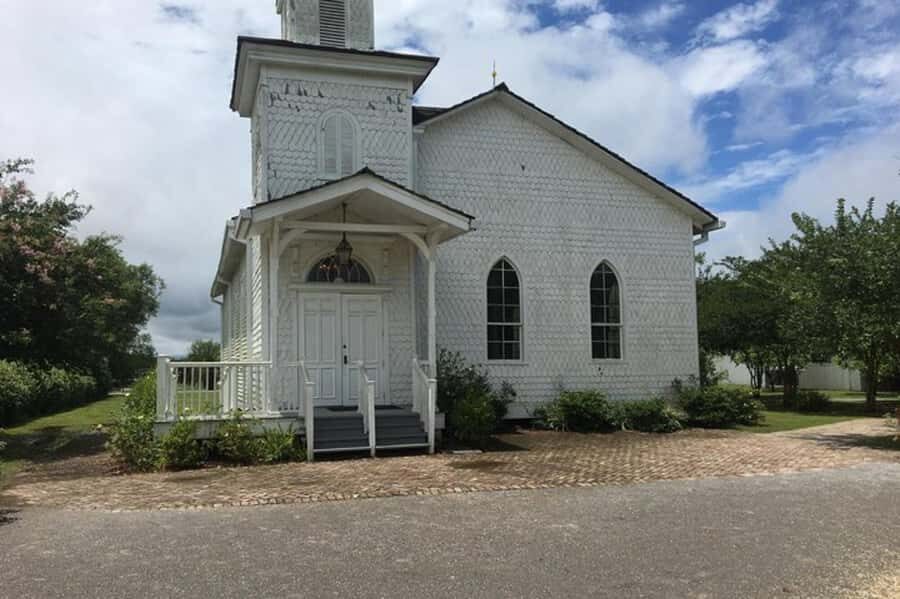
Next comes Freedmen’s Church. This stop is more than a site on a route—it’s a visible reminder that people pursued freedom and rebuilt community even after unimaginable violence. In the tour highlights, it’s called out specifically as a symbol of hope and resilience, and you’ll feel that emphasis as you listen.
I also think this is one of the most important stops for pacing emotionally. After learning about harsh conditions, Freedmen’s Church shifts the story toward survival and the human drive to find meaning and safety. The contrast helps you keep the full arc of the experience in mind.
If you prefer your history experiences to include a sense of where people went next, this is the stop that helps you do that. It’s also the kind of place where you’ll likely pause, reflect, and spend a bit longer than you intended—because the message isn’t only educational.
Detached Kitchen and Outbuildings: Understanding the Machine of Work
After Freedmen’s Church, you’ll head to the detached kitchen and outbuildings. This is where the tour explains how the plantation operated—through the structures that supported labor and daily production. It’s the practical side of the plantation story, but presented through the conditions endured by enslaved workers.
This portion helps you connect the dots between what you learned in the cabins and what you see in the plantation’s operational spaces. You’re not only hearing about suffering; you’re learning how the system worked to produce results. I find that this makes the history feel more concrete.
If you’re the type who likes to understand how things function—what was built for what—this stop will give you that. Just remember: function here is tied to control, forced labor, and strain on human lives.
The 1790 Owner’s House: Seeing the Disparity Without Filters

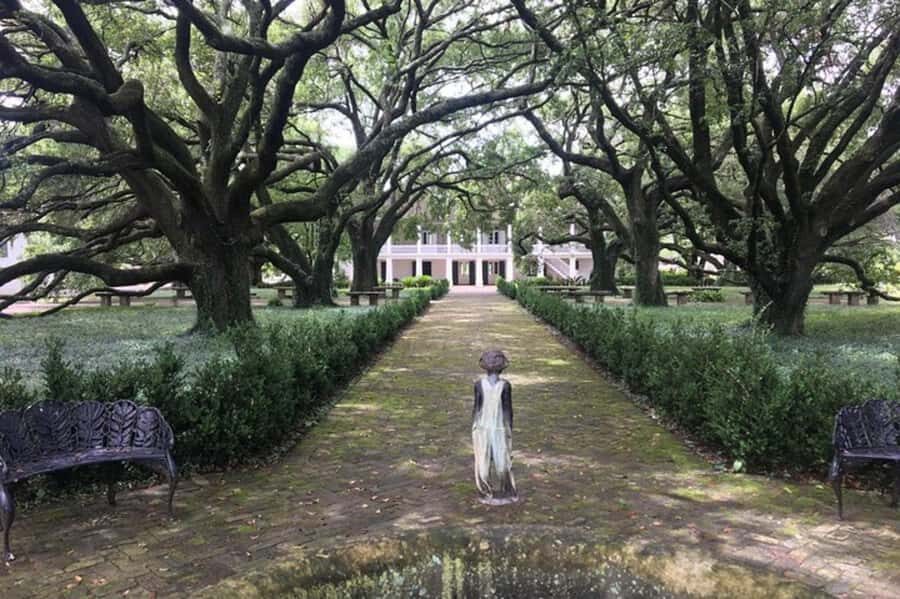
Then the tour brings you to the 1790 owner’s house. The point isn’t subtle. It’s designed to show the stark disparities of the era, letting the difference between living conditions and power structures speak for itself.
This is also where you may notice your own reaction shift. In many museum experiences, people want to “learn everything,” but a contrast like this can hit faster than words. The audio guide is there to help you interpret what you’re seeing, but you may still feel that emotional weight.
I appreciate that the tour includes this house rather than avoiding it. When you see the contrast after learning about cabins and work spaces, the story becomes harder to misunderstand.
The Memorial: Closing With Respect (Not a Quick Exit)
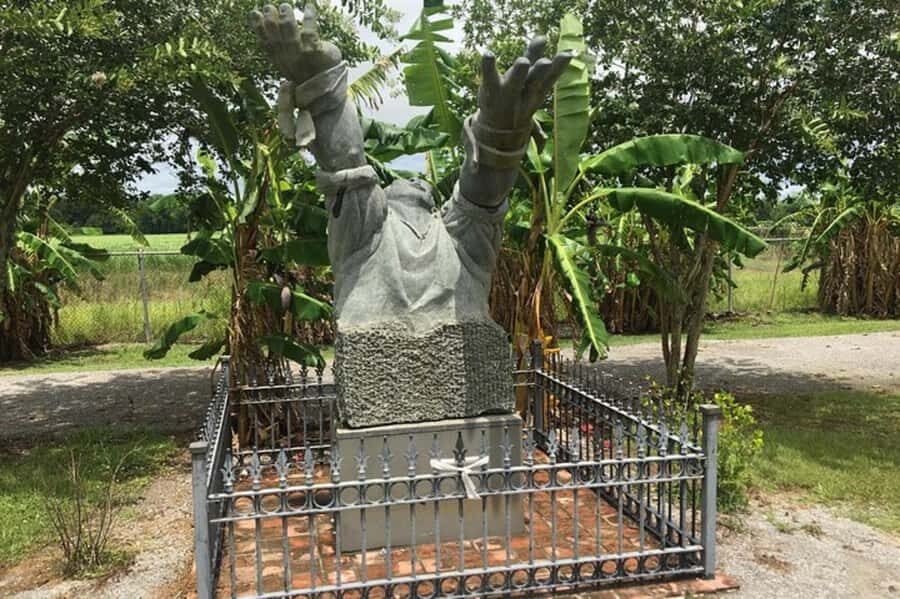
At the end, you pay your respects at the memorial honoring those who suffered under slavery. This final stop matters because it gives the experience a respectful landing point, not just a “thanks for visiting” finish.
If you’re visiting on a day when you want to keep your schedule tight, resist rushing through the memorial moment. Even without detailed instructions in the format, the design of the closing stop signals what it’s for: remembrance, reflection, and acknowledging loss.
Based on strong feedback from a verified booking, one of the top reasons people rate this so highly is the way the experience stays anchored in what enslaved people endured. The memorial is part of why that focus holds through the end.
30 Minutes After the Tour: A Practical Window to Recharge

Once the audio route ends, you’ll have about 30 minutes to visit the gift shop, use the restrooms, or enjoy a quick snack before heading back to your hotel. I like this buffer because it recognizes that museum days can be draining—especially with subject matter like this.
It’s also a good chance to reset without overcommitting. You can browse or grab something small to eat, then settle back into the ride home. Since meals and beverages aren’t included, having this window for a snack is genuinely helpful.
If you’re sensitive to sound or stimulation, use that time to step away and breathe for a minute before your drive back.
Price and Value: Is $81 Worth It?
At $81 per person, this isn’t a budget outing—but it can still feel fair for what you’re getting. You’re paying for three main pieces: hotel pickup and drop-off, the entry ticket, and the audio guide.
That transfer component is a big part of the value. Whitney Plantation is about 70 miles from the French Quarter, and the tour takes you out and back without you having to manage driving, parking, or timing. In my view, that alone can turn a potentially stressful day into something manageable.
Then there’s the museum focus. The audio headset supports a self-paced route through multiple key spaces: cabins, Freedmen’s Church, kitchen and outbuildings, the 1790 owner’s house, and the memorial. That’s a lot of content for one visit, and it’s content you can’t replicate at a quick drive-by.
The one cost-related tradeoff: meals and beverages aren’t included. If you usually forget snacks until you’re hungry, bring your own small plan for what you’ll eat during that 30-minute window.
Who This Tour Suits Best (And Who Should Skip It)
This is a strong match if you want history that stays centered on enslaved lives and the reality of plantation operations. The Freedmen’s Church and the memorial create an emotional arc that doesn’t end at “this happened.” It moves toward resilience and remembrance.
It’s also a good choice if you like audio at your own pace. The self-guided setup means you’re not stuck listening to everything at once or being rushed past places that call for more time.
Skip it if you want a light sightseeing day, or if you need wheelchair-friendly access, since it’s not suitable for wheelchair users based on the activity details. And if you’re not ready for heavy subject matter, you might want a different type of New Orleans day first, then return when you feel emotionally prepared.
Should You Book Whitney Plantation Audio Tour With Transfers?
I’d recommend booking if you want a thoughtful, structured visit that doesn’t treat slavery as a side note. The route covers the key spaces you should understand—slave cabins, Freedmen’s Church, the work areas, the 1790 owner’s house, and the memorial—so you leave with a clearer mental map of how the plantation system functioned and what it cost.
I’d be cautious if you’re expecting a classic plantation tour vibe. This one is different by design: it’s built to focus on the lives, struggles, and working conditions of enslaved people. If that focus is what you’re seeking, the $81 price becomes easier to justify because the transfers and audio guide take a lot of friction off your day.
If you can handle a serious museum experience and want New Orleans to include real history beyond the postcard version, this is one of the best ways to do it.
FAQ
How long is the Whitney Plantation audio tour?
The duration is listed as 390 minutes.
Is hotel pickup and drop-off included?
Yes. Pickup and drop-off are included, and pickup is available from most New Orleans hotels (if yours is not listed, you choose the nearest option).
Is the tour guided by a person or audio only?
It uses an audio guide. You’ll receive an audio headset for a self-guided, self-paced tour at the plantation.
What stops are included during the visit?
The experience includes the slave cabins, Freedmen’s Church, the detached kitchen and outbuildings, the 1790 owner’s house, and a memorial honoring those who suffered under slavery.
Are meals included in the price?
No. Meals and beverages are not included.
Is the tour wheelchair accessible?
No. It is not suitable for wheelchair users.
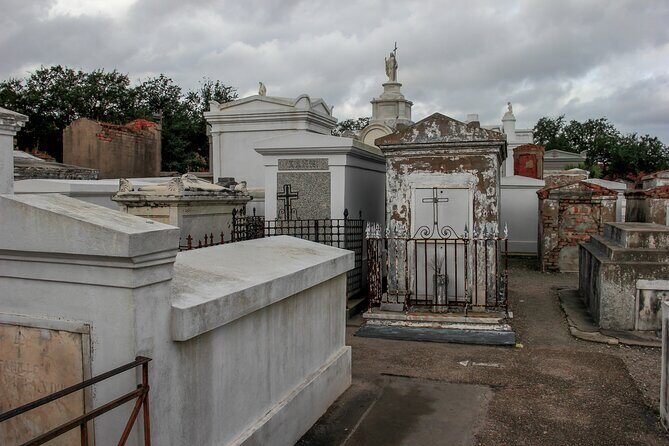
]]>Here’s the big picture: this is a private, self-guided walk that focuses on one stop—St. Louis Cemetery No. 3—plus the surrounding sights you pass by while you listen. The cemetery is established in 1852 and built on the site of a former leprosy colony, which gives the walk real emotional weight beyond sightseeing. You’ll be guided through a mix of above-ground tomb styles and architectural designs that reflect how varied the cemetery is.
If you prefer a human guide who can adapt on the spot, this may feel a bit more rigid. And if you rely on Bluetooth audio, plan for the possibility of a playback hiccup, because one user had trouble getting the VoiceMap voice app working even after following steps. Still, if your setup is solid, this is a straightforward way to get meaningful context in a place that rewards careful attention.
Key things to know before you go
- Self-guided GPS with offline access keeps the experience usable even with spotty service.
- Unlimited lifetime playback means you can revisit the route without buying again.
- One main stop keeps your time focused: St. Louis Cemetery No. 3 in about 45 minutes to 1 hour.
- Admission is free for the cemetery portion, so your money goes to the audio.
- VoiceMap support is available by email or telephone if technical issues happen.
- Bring your own smartphone and headphones since they are not included.
St. Louis Cemetery No. 3: what you’re walking through
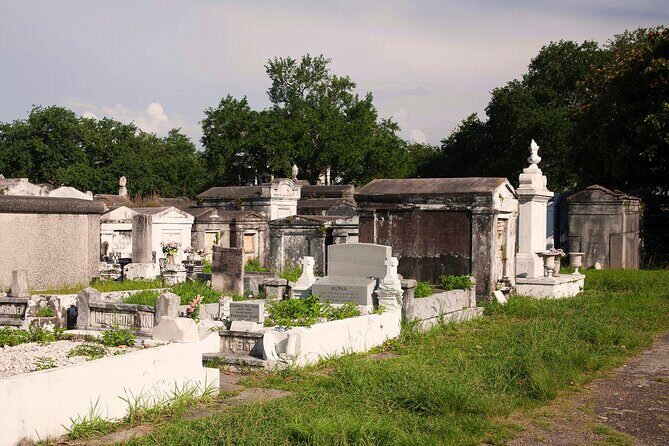
This experience is all about St. Louis Cemetery No. 3, one of New Orleans’ historic cemeteries with above-ground tombs. The cemetery’s official founding date is 1852, and it sits on the footprint of a former leprosy colony. That detail changes how you read the space. You are not only looking at architecture. You are looking at layers of survival, grief, and community space shaped over time.
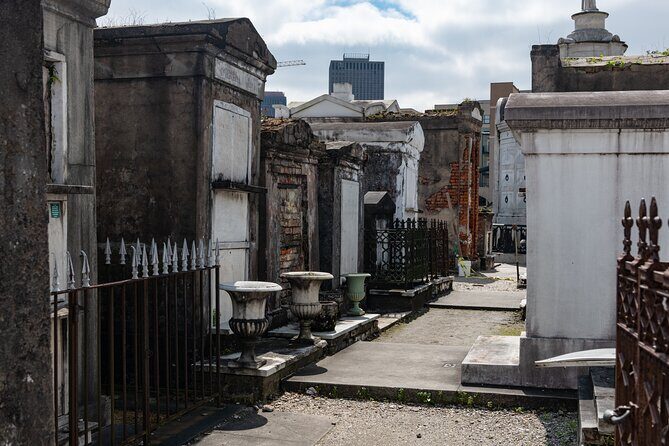
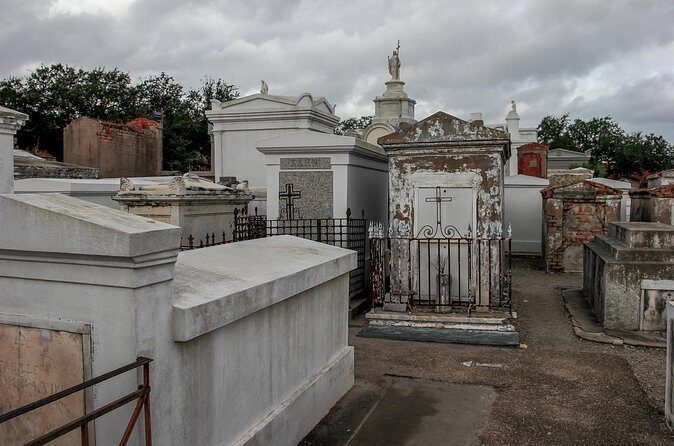
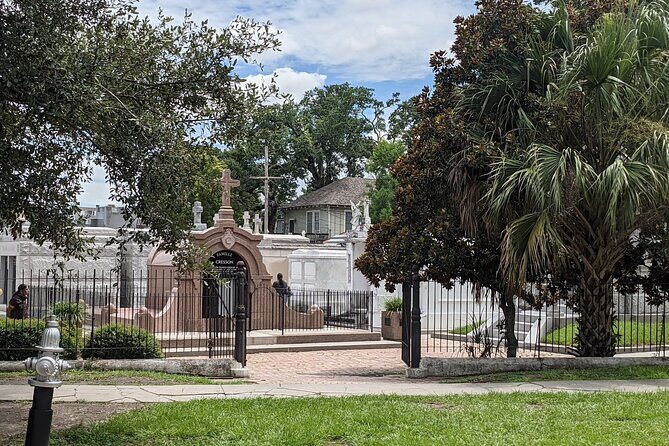
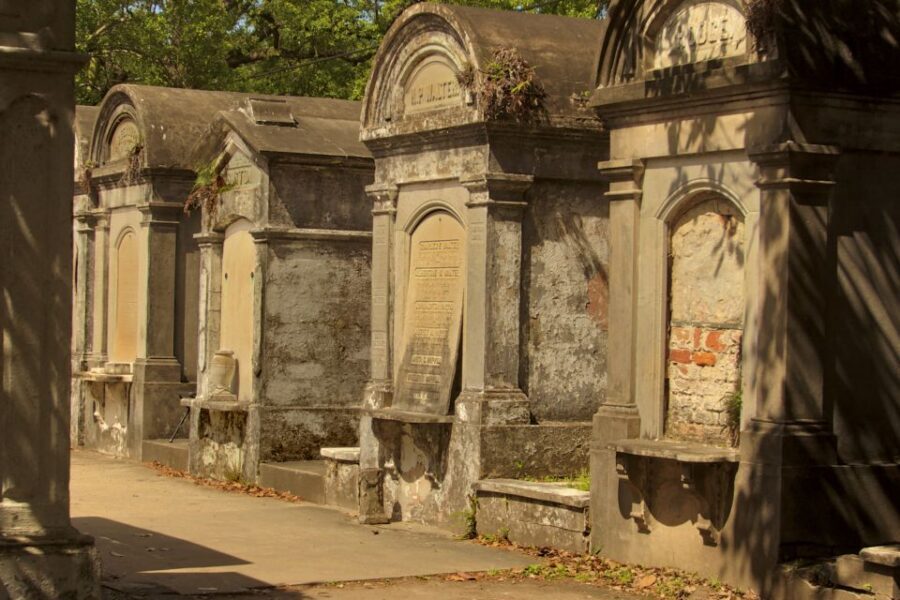
Because the tombs are above ground, the walk encourages a slower gaze. You will be able to look up at the variety of designs rather than just scanning headstones at eye level. The cemetery is known for a diverse range of tomb styles and architectural designs, and the audio guide is designed to help you notice those differences as you move.
Practical reality check: the cemetery visit is not a museum with big indoor rooms. It’s a walking setting where your experience depends on how you move—pausing, stepping aside for views, and choosing how long you linger near specific tombs. The tour’s structure supports that, since the pace is yours, not a group schedule.
The “45 minutes to 1 hour” reality: how much time you should set aside
The stated duration is about 45 minutes to 1 hour, and that means walking time as you pass by the listed sights. It does not include extra time you might spend at any attractions. In other words, plan for a little breathing room if you tend to stop and stare.
In cemeteries, it’s normal to slow down without meaning to. You might need a moment when you spot a tomb style you want to read carefully through the audio. Or you might just want to take in the overall look of the cemetery. If you have a tight schedule, start early enough that you can finish without racing the audio.
Also note the tour is open basically all day during the date range listed. The opening hours are shown as 12:00 AM to 11:59 PM for Monday through Sunday across 09/18/2024 to 02/07/2027. That’s a huge window, but I still recommend you go when you can walk comfortably—especially if you’re traveling in warm or humid months.
How the VoiceMap self-guided system works (and how to avoid frustration)
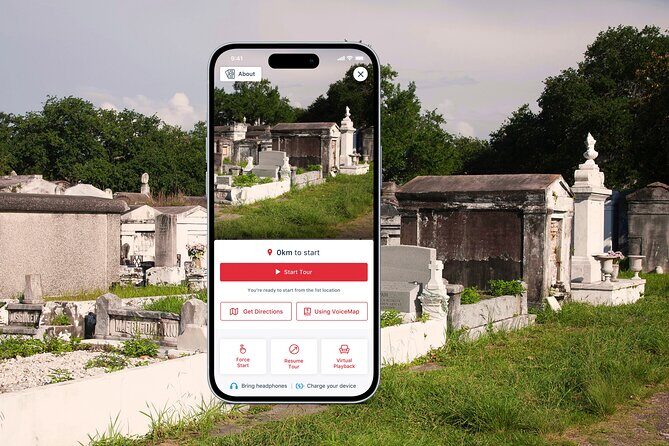
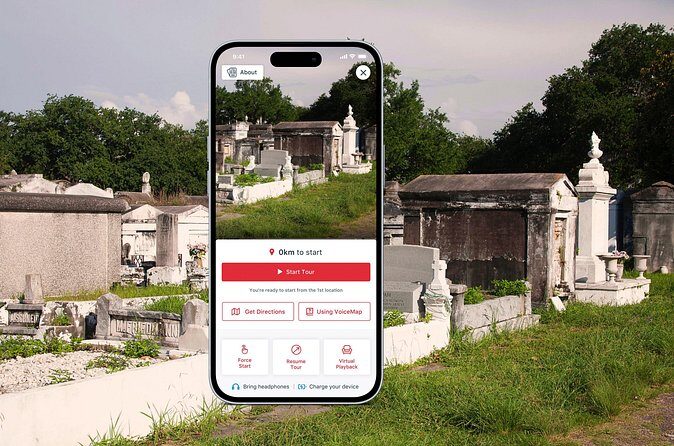
This isn’t a live group tour. It’s a self-guided GPS audio tour provided by VoiceMap Audio Tours. The experience includes directions to the starting point, plus offline access so you can use audio, maps, and geodata without relying on cell service.
You also get a “virtual playback” option, which means you can listen to the tour like an audiobook from anywhere. That can be useful if you want to get oriented before you step into the cemetery.
What you need matters here. The tour does not include a smartphone or headphones. You’ll want to have a phone ready with enough battery for audio playback, and you’ll need headphones you’re comfortable using in an outdoor walking setting.
One review highlights a real-world tech risk: a user couldn’t get the VoiceMap voice app working and blamed the experience on difficulty using newer technology, even with Bluetooth ear buds. That’s not the same as saying it will happen to you, but it does suggest a good mindset: treat the first few minutes as a test run. If the audio fails to start, you may need to pause and troubleshoot rather than assume the voice will automatically catch up.
If you hit trouble, the provided support response indicates you can contact VoiceMap support by email or telephone so they can identify what’s going wrong. That’s reassuring because it turns a frustrating moment into something you can actually escalate.
Value and pricing: is $6.99 actually a good deal?

At $6.99 per person, this is priced like a low-cost add-on, not a premium guided tour. The big reason it can still feel like good value is the access model.
You get:
- Unlimited, lifetime use of the tour before your booking date and after it
- The option to listen via virtual playback
- Offline audio, maps, and geodata included with the experience
That means you’re not paying just for one visit. You’re paying for a tool you can reuse. If you like cemetery walking, or if you want to refresh your understanding on another trip, the lifetime access can make the price feel smaller each time you replay it.
Also, cemetery admission is free for the stop, so your fee is specifically for the audio and digital guidance, not an entrance ticket. That’s the kind of arrangement that usually benefits independent travelers who prefer to control timing.
The only time price becomes less compelling is if you know you’ll never use the audio again and you also worry about tech reliability. In that case, you might decide you’d rather hire a human guide or borrow context from other sources. But if you enjoy listening while you walk, this is a clean, affordable way to do it.
Logistics that affect your experience more than you think
This tour ends back at the meeting point, and the meeting point is 3421 Esplanade Ave, New Orleans, LA 70119, USA. If you’ve never navigated this part of New Orleans before, having a specific address helps. You’re not guessing where the tour begins.
The tour is also private, meaning only your group participates. That’s a quiet benefit. You don’t have to worry about walking pace mismatches or feeling rushed by strangers.
Directions are included, and there’s offline mapping support, which lowers the chance you’ll wander away from the route while listening. Still, you’ll be the one making choices—when to move on, when to pause, and how fast to walk.
Finally, it’s designed for “most travelers” and service animals are allowed. If you’re traveling with a companion who needs that kind of support, that’s at least clearly stated.
Who this tour fits best (and who should skip it)
This works best for you if:
- You like self-paced walks where you can control how long you linger.
- You want context without paying for a full guided group experience.
- You feel comfortable using a smartphone for audio and GPS navigation.
- You value offline access because New Orleans can be unpredictable for service.
It may be a poor fit if:
- You strongly prefer a human guide to explain things in real time.
- You know you struggle with apps, audio playback, or Bluetooth connectivity, and you don’t want to troubleshoot.
- You only want a quick glance and are not interested in noticing architectural variation tomb by tomb.
There’s also a simple emotional fit to consider. Cemeteries ask for a different kind of attention. This audio format is good at supporting respectful focus while still letting you move on when you’re ready.
Quick plan for a smoother visit
You’ll enjoy this more if you treat it like a short walking program, not a casual stroll. I’d plan to arrive ready to press play and walk without fumbling. Since the tour expects you to supply a smartphone and headphones, have them ready before you step into the main experience zone.
Because the tour can be replayed later, you don’t have to get everything right on the first run. If the first segment feels like too much information, that’s what lifetime access is for. Listen again at a slower pace once you’re back in a calmer setting.
FAQ
FAQ
How long is the St. Louis Cemetery No. 3 audio tour?
It takes about 45 minutes to 1 hour, based on the walking time as you pass by the attractions.
How much does the tour cost?
The price is $6.99 per person.
Is the tour offered in English?
Yes, it’s offered in English.
Where does the tour start?
The meeting point is 3421 Esplanade Ave, New Orleans, LA 70119, USA.
Does the tour include admissions?
Admission is listed as free for the cemetery stop.
What’s included with the audio guide?
It includes directions to the starting point, unlimited lifetime use, virtual playback, a self-guided GPS tour, and offline access to audio, maps, and geodata.
What do I need to bring?
You’ll need to bring your own smartphone and headphones.
Is this a private tour?
Yes. Only your group will participate.
Are service animals allowed?
Yes, service animals are allowed.
What’s the cancellation policy?
Free cancellation is available up to 24 hours in advance for a full refund.
Should you book St. Louis Cemetery No. 3 audio guide?
Book it if you want an affordable, self-paced way to understand what you’re seeing in St. Louis Cemetery No. 3—especially the fact that it’s established in 1852 and built on the site of a former leprosy colony. The best part for value is the lifetime access and offline audio and maps, which makes the $6.99 feel like buying a long-term interpretive tool, not a one-time ticket.
Skip or think twice if you already know you have trouble getting audio apps and Bluetooth playback working. One user reported VoiceMap voice app problems even after following instructions. If tech troubleshooting sounds like stress you don’t want on your trip, a human-led option might suit you better.
]]>I especially like the way the tour puts real people in the spotlight, starting with the Museum of the Free People of Color and its 1708 beginnings. Second, I like that the narration keeps you oriented while you stroll through the Garden District’s historic homes, shops, and green spaces.
One possible drawback: you’ll need your own smartphone (it’s app-based), and there’s no person out there to answer questions if you get stuck.
Key highlights at a glance

- Faubourg St. John stories on your schedule across a walk that’s planned for about 1 hour 15 minutes
- Museum of the Free People of Color context from early Spanish rule through a major 1864 petition to Abraham Lincoln
- Creole Garden District origins explained while you’re actually looking at the neighborhood
- St. Louis Cemetery #3 connections to a leper colony and a yellow fever burial crisis
- Offline-ready audio and maps via the VoiceMap app, plus lifetime access to the tour
Esplanade Ridge: the self-guided format that fits real sightseeing
New Orleans is a city where you can’t really rush. This tour matches that mood by letting you set the tempo. Instead of being tethered to a group, you can stop to stare at ironwork, look closely at old facades, or simply stand for a moment under the trees if you want a breather.
The route itself is built around major local touchpoints—Museum of the Free People of Color, the Garden District area, and St. Louis Cemetery #3 (also known as the Angel Cemetery). The payoff is that you’re not just hearing facts. You’re hearing how these places connect, and you see them in order.
Also, the pacing feels smart for a first-timer and for a repeat visitor. One review called it a great walk under the oaks, and that’s exactly the kind of experience the “go when you want” setup supports.
Where the tour starts and ends (and why it matters)

You begin at 2023 Esplanade Ave, New Orleans, LA 70116 and finish at 3202 Grand Rte Saint John St, New Orleans, LA 70119. Knowing that up front helps you plan your day: you’re not doing a round-trip loop. You’ll likely want the rest of your afternoon organized around ending in the St. John corridor area.
The tour is set for about 1 hour 15 minutes, which is a sweet spot. It’s long enough to feel like you learned something, but short enough that you can still mix in a coffee break or a longer look at one stop you care about most.
The activity is listed as available every day, all day (12:00 AM–11:59 PM), which is useful when your schedule changes. Just keep in mind that individual sites may have their own operating hours—this audio experience itself is what runs on your timeline.
Stop 1: Museum of the Free People of Color and a story that starts in 1708
The first major stop is the Museum of the Free People of Color. This is where the tone shifts from neighborhood scenery into lived history. The museum preserves about three hundred years of history and culture of free people of color in New Orleans, and the narrative begins in 1708.
What I find most compelling here is how the audio frames specific eras. You hear about the Spanish rule period from 1763 to 1800, including a detail that can be easy to miss in casual sightseeing: during that time, slaves were sometimes allowed to purchase their freedom. That one point alone changes how you think about the city’s timeline. It’s not just “before and after.” It’s complicated, and the museum helps make that visible.
Then comes one of the tour’s most emotional anchors: a floor-to-ceiling petition dated January 5, 1864, signed by 1,000 free men of color who were New Orleans property owners, addressed to President Abraham Lincoln. When you hear that number and the date, you understand how political pressure and personal stakes were tied together in real time.
A practical note at this stop
The tour doesn’t include museum admission. If you want to go inside and experience the exhibits, plan for an extra ticket/entry cost and whatever time you need for the space to hit you. The audio can still help you appreciate what you’re seeing on the sidewalk, but the museum content is the core of this chapter.
Stop 2: Garden District mansions built by newcomers (1832–1900)
Next, you move into the Garden District area—historic mansions, streets with character, and that “slow down and notice” feeling that New Orleans does so well. The tour explains that the Garden District was developed between 1832 and 1900, originally by wealthy newcomers building impressive homes.
This is where the audio works like a field guide. You’re not just walking past pretty buildings; you’re hearing how and why they appeared when they did. The narration also helps you connect the Garden District’s story to the larger idea of a Creole Garden District—how culture, community, and place-making shaped the neighborhood you’re seeing.
What I like about this middle section is that it doesn’t pretend the neighborhood is frozen in time. The Garden District today is described as having a mix of homes, antique shops, bars, cafes, gardens, parks, and restaurants. That mix is part of what makes the area feel alive while still rooted in the past.
How to get the most out of this stop
I recommend you treat the Garden District like a place to linger, not just pass through. Because the tour is phone-based, you can pause the audio and do the thing you should always do in old neighborhoods: pick one house, one doorway, one window detail, and let your eyes do the work.
One review emphasized that this kind of self-pacing can beat following a bigger group, because you miss fewer details. That’s exactly the advantage you’ll feel here.
Stop 3: St. Louis Cemetery #3, the Angel Cemetery, and the land’s first purpose
The final storytelling stop is St. Louis Cemetery #3, also called The Angel Cemetery. This cemetery comes with heavy context, and the audio doesn’t treat it like spooky sightseeing. It explains the land’s earlier use before it became a Catholic burial ground.
Here’s the key chain of history the tour shares:
- The cemetery is on land that once held a leper colony. Louisiana hosted communities for people affected by leprosy, and this site began as a burial ground for those who died of the disease in New Orleans.
- Later, a devastating yellow fever epidemic in 1854 left the city needing about 8,000 burial plots.
- Priests at St. Louis Cathedral purchased the land to create another Catholic cemetery.
That progression—from one community’s suffering to another moment of crisis—makes the cemetery feel like an archive you walk through. Even if you’ve heard cemetery stories in New Orleans before, this explanation gives you a more complete sense of why the site exists at all.
A respectful way to experience this stop
Cemeteries in New Orleans are not just attractions. They’re places of memory. If you’re sensitive to heavy topics, you’ll want to give yourself a moment here rather than blasting through the audio. The self-guided format helps you do that.
How the audio tour works: VoiceMap, offline audio, and pace control
This experience runs through the VoiceMap application. You get lifetime access to the tour, and you can download offline audio, maps, and geodata. That matters in New Orleans because cell service isn’t always consistent block to block.
Offline use is one of the best “hidden” benefits of a self-guided tour. You’re not just saving data—you’re protecting your momentum. If your signal drops, your tour can still carry on, and you won’t spend the walk trying to reload.
You also get a format that supports quick control:
- You can move at your speed.
- You can stop and take in a building, then restart when you’re ready.
- You don’t need to line up with a group, which is useful if you prefer to browse slowly.
One review described it as perfect for walkers, cyclists, or even motorists. The practical meaning for you: the tour doesn’t require constant physical “team movement” the way some guided group tours do. If you’re traveling as a small group or solo, the self-guided system makes it easier to stay together without rushing.
What you must bring
The tour does not include a smartphone. If you don’t already have one with enough battery, this is where you’ll feel it. Bring your charger or power bank if you can.
Also, service animals are allowed, and the tour is described as near public transportation. That’s helpful if you’re combining it with other parts of your day.
Price and value: $9.99 for three serious neighborhood stops
At $9.99 per person, this is priced like a budget-friendly add-on—except you’re getting something more than a soundtrack. You’re getting structured context for three distinct sites, including a museum stop tied to early New Orleans history and a cemetery stop tied to disease and epidemics.
That value is strongest if you like learning while you walk. You’re not paying for an hour with a guide standing in one spot. You’re paying for an on-demand explanation you can pause and replay. One review even pointed out that the tour can be stopped so you can dwell on beauty before moving on. That control is where the value tends to show.
The other part of the equation is entry cost. The audio tour itself doesn’t include tickets or entrance fees to museums or other stops. So your total spend depends on whether you step into the museum and how much extra time you give yourself.
Still, even if you do only the outdoor parts, the audio is designed to help you understand what you’re looking at.
Who should book this Esplanade Ridge audio walk
This is a good match if you:
- Want a self-guided way to explore the Faubourg St. John / Esplanade Ridge area
- Prefer to set your own pace and pause for details
- Like history that connects neighborhood streets to people, laws, epidemics, and politics
- Want an offline-capable plan so your day doesn’t fall apart when signal drops
It may be less ideal if you:
- Really want a human guide to answer questions in real time
- Don’t like phone-based tours
- Aren’t comfortable with heavier subject matter like the leper colony origins and the 1854 yellow fever burial crisis (the tour frames it respectfully, but the topics are heavy)
Finally, note one important practical point: the experience is non-refundable and can’t be changed once booked. If your schedule is uncertain, that’s something to weigh before you commit.
Should you book? My take
I’d book this if you want to understand New Orleans beyond the postcard. The best part isn’t any single stop—it’s the way the audio ties them into a single walkable storyline, from free people of color in the city’s early years, to how the Garden District formed, to the cemetery’s origins in disease and crisis.
If you’re the type who likes pausing often—eyes on ironwork, ears on context—this is a strong use of time for the money. And because it’s built for offline playback with lifetime access, you can revisit it later when you return to New Orleans and want to catch details you missed the first time.
FAQ
FAQ
How much does the New Orleans Esplanade Ridge audio tour cost?
It costs $9.99 per person.
About how long is the tour?
The tour is approximately 1 hour 15 minutes.
Is this a guided tour with a person?
No. It’s a self-guided audio tour run through the VoiceMap application.
Can I use the tour offline?
Yes. You can download offline audio, maps, and geodata, which helps if your phone signal is weak.
What language is the tour offered in?
The audio tour is offered in English.
Where does the tour start and end?
It starts at 2023 Esplanade Ave, New Orleans, LA 70116 and ends at 3202 Grand Rte Saint John St, New Orleans, LA 70119.
Is the tour refundable if I cancel?
No. The experience is non-refundable and cannot be changed for any reason.
]]>Two things I especially like are the audio quality and the freedom of going solo on your schedule. You don’t have to wait for a group or worry about keeping up; you just navigate between stops and press play when you’re ready. One possible drawback: you’re depending on your smartphone, and one French-speaking review reported that the tour didn’t match the language shown at purchase, so it’s smart to double-check before you start.
Key Highlights I’d Prioritize

- Self-guided route in New Orleans so you can move when you want
- High-quality narration paired with spooky background music
- Six language tracks: English, Spanish, Portuguese, Hindi, Mandarin Chinese, Japanese
- Seven-day validity from your first activation
- Tough stories at a bargain price ($5 per person)
A Self-Guided New Orleans Ghost Hunt You Control From Your Phone
If your ideal vacation includes walking with purpose, this style of ghost tour fits well. Instead of meeting at a fixed time and staying in a tight group, you follow the tour on your smartphone and listen as you reach each haunted location. That means you can slow down for a good photo moment, stop if the street looks too quiet, or speed up if you’re feeling fearless.
The tone is built for thrills, not lectures. The audio tracks focus on terrifying stories tied to local supernatural lore. And because it’s self-guided, you get to decide how much time you spend at each stop, which is a big deal in New Orleans where streets can feel like a maze and the vibes shift block by block.
Price and Value: Why $5 Can Still Feel Like a Win

At $5 per person, you’re not paying for a full guided production. You’re paying for a ready-made audio experience you can access for a full 7 days once you activate it. That week-long window matters more than it sounds: if your first night gets derailed by weather, dinner plans, or jet lag, you can still come back and do it later without starting over.
Is it perfect value? If you want a live storyteller and back-and-forth conversation, you’ll probably want something else. But if you’re happy to explore on your own and you care about a good set of spooky audio tracks, five bucks is the kind of price that lets you take risks—like doing it even if you’re tired, or doing it twice on different nights.
Redeeming at GhostTour.fun and Starting Without Headaches

This tour is accessed through www.ghosttour.fun. After you purchase, you redeem your voucher there to get access to the audio tour. The rest is straightforward: you use your phone to navigate to the haunted locations and start the audio tracks.
Here’s what you should plan for: self-guided tours work best when your phone is ready. Before you hit the first stop, I’d make sure your battery is charged and that you can comfortably use the interface while walking. If you’re the type who hates fiddling with screens outdoors, consider starting in a calmer area first so you can get your bearings.
Also, pay attention to what language you’ve selected. One review reported a mismatch (French expected, English encountered). That’s not “proof” something is always wrong, but it’s a strong reminder: confirm the language at the start, not halfway through when you’re already committed.
Six Languages Including Spanish: Great for Groups, But Double-Check
This ghost tour offers audio in English, Spanish, Portuguese, Hindi, Mandarin Chinese, and Japanese. Spanish is specifically called out as a highlight, which is welcome if you’ve ever struggled to find New Orleans activities in your language.
The best way to think about multilingual audio is simple: it reduces friction. When you can follow the narration clearly, you stop “decoding” and start experiencing the story. In a city like New Orleans—where you’ll naturally hear plenty of different accents and street chatter—that clarity can make the difference between a fun night and a frustrating one.
Still, treat language selection like a key step, not an afterthought. If you’re traveling with non-English speakers, I’d align on the language choice before you start. And if you see any sign the chosen track isn’t what you expected, stop and correct it early.
The Audio That Does the Heavy Lifting: Stories, Music, and Tone

The heart of the experience is the audio. The tour promises high-quality audio tracks with background music that supports the spooky atmosphere. You listen to terrifying stories as you move from one haunted location to the next.
What makes this work (when it works well) is timing. The story is meant to land while you’re standing in the right spot, not later when you’re home. Background music helps keep the mood going while you transition between locations—especially in New Orleans, where the street scenery can shift from eerie to lively fast.
The themes matter too. The audio focuses on ghosts, poltergeists, voodoo, and similar supernatural stories. If you like ghost lore that leans into the region’s cultural imagination, you’ll likely find the topics more satisfying than generic “boo in an old house” storytelling.
How the Haunted Stops Work When You Go at Your Own Pace
Because you’re self-guided, the “itinerary” is more like a repeating rhythm than a fixed schedule. Here’s what that rhythm looks like, and why it matters:
1) Navigate to the next haunted location
You use the smartphone experience to figure out where to go next. That’s the core skill here: moving efficiently while keeping the mood. The advantage is control. You can pause to cross streets, take a breath, or step into a better viewing spot.
2) Start the audio track at the location
Once you’re there, you listen to the narration. This is where the tour earns its chills. High-quality audio plus background music makes the stories feel intentional, not random.
3) Listen through the story arc without rushing
This style rewards patience. If you rush, you miss the payoff. If you slow down, you can actually feel the story build—especially with topics like poltergeists and voodoo, which tend to have more dramatic momentum.
4) Move to the next stop when you’re ready
Then you repeat the cycle. You decide when to finish one segment and start another. That flexibility is useful in New Orleans, where plans change constantly.
What about drawbacks? The main risk with self-guided tours is technology friction. One review highlighted that accessing the self-guide was difficult for an older traveler. If you’re traveling with someone who isn’t comfortable with modern smartphone use, plan extra time for setup and help them early, not in the middle of the spooky part.
When 7 Days of Access Helps (and When It Doesn’t)

The tour is valid for 7 days from your first activation. That’s genuinely practical. New Orleans travel days are unpredictable: a long dinner runs late, rain shows up, or you decide to stay longer at a jazz venue. Seven days means you can catch the right moment without stressing.
What it doesn’t solve is a lack of interest. If you’re expecting deep, guided interpretation—like a historian walking you through documents and architecture—this format is more about atmosphere than scholarship. One review even described the narration as fairly light. So go into it expecting spooky storytelling you drive yourself, not a detailed academic tour.
Who This Tour Fits Best
This is a strong match if you want a few things:
- You like exploring New Orleans by foot and building your own route
- You want spooky audio instead of a live group
- You’re traveling with people who want different language options, especially Spanish
- You value low cost and a “try it if it feels good” approach
It’s also a good choice if you’re the kind of traveler who enjoys a flexible plan. You can start when you feel ready and revisit within the 7-day window.
Where it might not be ideal: if you absolutely need a human guide, if phone tech makes you nervous, or if you’re hoping for a guaranteed language experience with no chance of mismatch. The one reported issue about French not showing up is small in the bigger picture, but it’s important if language fluency is your priority.
Quick Tips to Get Better Fright per Minute

These are the practical tweaks that usually make self-guided audio tours work smoothly:
- Charge your phone fully before you start.
- Consider using headphones if your surroundings are noisy; it helps you focus on the narration and music.
- Pick a calmer starting time so setup doesn’t feel stressful.
- Check your language track early, then leave it alone until you’re done.
- Don’t rush between stops. The audio is designed to land where you are, not where you plan to be later.
And one more mindset tip: treat it like a walk with a soundtrack. If you expect it to feel like a live performance, you may judge it too harshly. If you accept it as guided audio + your pace, it can be a fun, cost-effective night.
Should You Book This Ghost Tour?
I’d book it if you want a cheap, flexible, smartphone-based ghost experience with high-quality audio and a real multilingual setup, including Spanish. It’s especially attractive for couples, small groups, and anyone who likes walking around New Orleans with a bit of controlled fear.
I’d hesitate if your group depends on one specific language with zero risk, or if smartphone navigation is likely to be a struggle—because self-guided tours run on your tech comfort. If that sounds like you, ask yourself one question: are you okay being the “tour operator” too?
If the answer is yes, $5 for scary stories, spooky background music, and six language options over a week is a pretty solid deal.
FAQ
How much does the self-guided audio ghost tour cost?
It costs $5 per person.
How long is the tour available after I activate it?
The tour is valid for 7 days from your first activation.
Is the tour self guided or does it require a guide?
It is self guided. You use your smartphone to navigate and listen.
Where do I redeem my voucher to access the tour?
You redeem your voucher at www.ghosttour.fun.
What languages are included?
The tour offers audio in English, Spanish, Portuguese, Hindi, Mandarin Chinese, and Japanese.
Does the tour include background music?
Yes, the audio tracks come with spooky background music.
Is the tour wheelchair accessible?
It is listed as wheelchair accessible.
Is free cancellation available?
Yes. You can cancel up to 24 hours in advance for a full refund.
Can I book now and pay later?
Yes. It offers a reserve now & pay later option, with pay nothing today.
What is the main theme of the stories?
The audio focuses on terrifying supernatural stories such as ghosts, poltergeists, and voodoo.
]]>I love the way the audio feels timed to where you are, with GPS that tracks your route. I also like the smart mix of stops: big-name art at the New Orleans Museum of Art, then a classic garden story, then the living park itself.
One consideration: it’s built for a walk, so bad weather can cut your outdoor time fast—then you’ll need to decide how long to stick with the route versus shifting your plan.
What you’re really doing on this tour
- GPS-matched audio that’s meant to line up with your walking pace
- Three standout stops: New Orleans Museum of Art, the Botanical Garden, and the park’s tree landscape
- Offline access for audio, maps, and geodata, so you’re less dependent on signal
- Lifetime access to the tour, which is handy if you want a second pass
- Stroller and wheelchair accessible routing through City Park
- Private tour for your group with start directions and self-guided control
Why City Park Feels Perfect for a Phone Audio Walk

City Park is one of those New Orleans places where you can wander for hours and still feel like you only saw the surface. This audio tour fixes that problem with a simple premise: keep you moving through the right areas, then explain what you’re seeing in plain language.
The format is self-guided, but it doesn’t feel like a random audio recording. VoiceMap gives you a route and uses GPS to help guide you along. That matters, because City Park is large enough that it’s easy to loop back on yourself if you don’t have a plan. With the audio route, you’re not guessing what to look at next—you’re nudged from one meaningful area to the next.
I also like that the tour is built around variety. You get architectural drama at the New Orleans Museum of Art, a themed outdoor garden stop, then the main event: the park’s mature trees and the stories tied to them. That keeps the walk from becoming a long sameness of shade and paths.
Starting at Beauregard Circle: Get Oriented Fast
The tour starts at Beauregard Circle, New Orleans, LA 70119, and ends back at the same meeting point. That closed-loop design is great for day planning. You’re not left wondering where you’ll end up or how you’ll get back to your starting area.
Before you head out, make sure you can access the tour through the VoiceMap application. You also get offline access to audio, maps, and geodata, which is a big deal in a city where coverage can be patchy. If your signal drops, you’re still able to follow the route and hear the commentary.
A small practical note: since the tour doesn’t include a smartphone, you’ll need your own device and the VoiceMap app installed. I suggest charging fully before you start. You’re using GPS, and GPS can quietly drain batteries faster than you expect.
Finally, the audio tour is marked as available daily, all day during the provided date range. In plain terms: it’s flexible. You can build it into a morning stroll or a slower afternoon, as long as you’re ready for the weather.
Stop 1 at the New Orleans Museum of Art: Art, Architecture, and One Name to Watch

The first major stop brings you to the New Orleans Museum of Art. This isn’t a quick photo stop. The tour highlights that the museum has a collection of over 40,000 objects. It also name-checks major artists such as Picasso, Matisse, Monet, Pollock, Renoir, and Edgar Degas, noting that Degas lived in New Orleans for a short time.
That artist list gives you an immediate anchor. When you walk through a museum, it helps to know you’re not just seeing random galleries—you’re moving through a collection that includes work from big art movements and famous painters.
Then there’s the building itself. The audio focuses on a Greek-temple feel, with a twist: the structure is described as giving the impression of a Greek temple, slightly modified. The explanation points out the Spanish tile roof and how the overall look supports a subtropical feel. When you hear that, you’ll likely find yourself looking at details you’d otherwise skip. It’s the difference between noticing the museum and noticing how it’s shaped for its climate and setting.
The trade-off
This stop is where you can lose time if you decide to do more than the audio route asks. The museum can pull you in. If the weather is nice, that can be a win. If it’s pouring, you may end up spending more time inside than the rest of the plan allows. Either way, it’s useful to remember: the audio route will keep moving outside, but you’re always the one deciding how long to linger.
Botanical Garden Stop: The WPA Link and a Classic Garden Idea
Next up is the New Orleans Botanical Garden, described as the first classical garden in New Orleans. That matters because “classical” usually implies a certain layout or design approach—think geometry, intentional sightlines, and a sense that the garden was planned rather than simply grown.
The audio also calls out where the garden’s story intersects with American public works. It notes that the Botanical Garden was funded by the Works Progress Administration (WPA). That’s a strong piece of context. When you understand that the garden wasn’t just a private project or a random planting effort, you start seeing it as part of a broader civic effort—and it changes how the place feels. Instead of only appreciating the plants, you’re also appreciating the planning and the time period that made it possible.
What to expect on this stretch
This stop tends to land well during a walk because it’s outdoors but not as open-ended as roaming the whole park. You can slow down, listen for details, and then continue without feeling you missed something.
If you like garden design, keep your eyes open for the “classical” structure the audio points toward. If you mostly like plants, the WPA story is a good reminder that gardens are made by people and institutions, not just weather and luck.
The Main Park Experience: 30,000+ Trees, Katrina Loss, and Replacement Growth
The final big theme is City Park’s tree canopy. The audio points out that there are over 30,000 mature trees in the park, including species like live oak, bald cypress, magnolia, slash pine, maple, crepe myrtle, palm, and pecan.
That list is useful because it gives you a way to look more deliberately. If you know there are live oaks and bald cypresses here, you’re more likely to spot differences in bark, growth form, and the overall look of the canopy. It turns “pretty trees” into a small field guide you can enjoy at walking speed.
The tour also brings in the park’s survival and recovery story. It notes that City Park lost more than 2,000 trees during Hurricane Katrina, but that over 5,000 replacements have been planted. That is exactly the sort of context that makes a park stop feel meaningful instead of just scenic.
Why this part is worth your time
A lot of city parks are easy to treat like background. This route fights that. You’re not just passing through shade—you’re learning how the park changed, what it lost, and how it rebuilt. When you connect that story to the trees you can actually see, the whole walk sticks with you longer.
Also, because the route is stroller and wheelchair accessible, you can enjoy the tree sections even if you’re with kids or you need flatter pacing. You’re not required to “earn” the views with strenuous detours.
How the VoiceMap GPS Route Works: Timing, Control, and Pacing
This is a private, self-guided experience. Only your group participates, and the control stays with you. That’s a big deal in a park setting. If you want to speed up between museum and garden, you can. If you want to pause for photos or sit for a minute under the trees, you can.
What makes the experience especially satisfying is that the tour is built to align with your position on the route. In practice, that means you’re less likely to hear something that doesn’t match where you are. The audio can help you keep track of progress without constantly checking signs.
I also like that the tour gives you directions to the starting point, so you’re not stuck hunting for Beauregard Circle at the moment you’re ready to begin.
A realistic tip for your schedule
The tour is listed at about 1 hour (approx.). That’s a useful planning number, but it assumes you’re following the route steadily. If you stop often for photos, or if you choose to spend extra time in the museum, your personal version may be longer. Build in wiggle room. City Park invites wandering.
Price and Value: Is $9.99 Worth It?
At $9.99 per person, this tour isn’t trying to replace a museum ticket or a guided lecture. It’s paying for three things: direction, storytelling, and the GPS “you are here” feeling.
Here’s why I think the value is fair for the right traveler:
- If you enjoy getting context while you walk, the audio turns scenery into something you can remember.
- If you don’t want to design a route on your own, the plan keeps you on track.
- If you’re visiting for the first time, the museum + garden + tree story combo gives you a balanced slice of what City Park is about.
The main “cost” isn’t money. It’s attention. You’ll want to actually listen and follow along, not just have the audio playing as background. If you’re the type who likes scenery with minimal narration, you might find the price less persuasive.
Also, because you get lifetime access, you can redo it later when you have fresh legs or different weather. That’s one way to squeeze more value from the same payment.
Who This Audio Tour Fits Best (and Who Should Think Twice)
This tour fits best if you like a structured walk without the pressure of a group schedule. You’ll enjoy it if you:
- want a quick, meaningful loop through City Park
- appreciate art and architecture alongside outdoor space
- prefer to explore at your own pace
- want offline-capable guidance during your day
It may not be your best choice if you’re looking for a deep, multi-hour guided museum experience. The route is meant to be quick and efficient. You can still spend extra time, but the audio itself is built for momentum.
It also helps if your group doesn’t all move the same speed. Since it’s self-guided, everyone can pause without waiting for a single pace-setter.
Should You Book the City Park Audio Tour?
Yes—if your goal is a smart, time-friendly way to see City Park’s most story-rich stops. The combination of the New Orleans Museum of Art, the Botanical Garden, and the park’s mature tree canopy gives you variety without turning the day into a logistics puzzle. The GPS-matched audio and offline access make it feel reliable, even when you’re busy looking around.
Book it with one expectation in mind: it’s a walking route with real outdoor time. If you’re planning for rain, bring flexible thinking. If you want a lightweight structure that helps you notice more, this one is easy to recommend.
FAQ
How long is the City Park audio tour?
The tour is listed as about 1 hour (approx.).
What does the tour cost?
It costs $9.99 per person.
Is this a guided tour with a person?
No. It’s a private, self-guided GPS audio tour using the VoiceMap application.
Where does the tour start and end?
It starts at Beauregard Circle, New Orleans, LA 70119, USA, and ends back at the meeting point.
What language is the audio available in?
The tour is offered in English.
What’s included with the tour?
You get lifetime access to the tour, the VoiceMap application, offline access to audio/maps/geodata, and directions to the starting point.
Do I need my own smartphone?
Yes. A smartphone is listed as not included.
Can I download the audio and maps for offline use?
Yes. Offline access to audio, maps, and geodata is included.
Is the tour accessible for wheelchairs and strollers?
Yes. The park route is wheelchair and stroller accessible.
What is the cancellation policy?
Free cancellation is available. You can cancel up to 24 hours in advance for a full refund; within 24 hours, the amount paid is not refunded.
]]>The good news is the experience is designed to be simple once you’re set up: it’s only for your group, it starts when you’re standing at the right spot, and it runs about 35 minutes. If you want a straightforward way to get into the feel of Metairie without joining a big group, this format can fit nicely—just plan a little extra time for your phone setup before you arrive.
Quick hits before you go

- Offline VoiceMap audio and maps mean no data worries while you walk.
- Private, GPS-guided route: it’s just your party, and the narration follows your location.
- Lifetime access to the Faith & Courage: Metairie Cemetery Stories tour after purchase.
- Start-at-the-right-spot directions help you trigger the audio once you’re in place.
- Flexible pacing: you can pause, replay, and take your time along the route.
- Rain-friendly planning: the narration can still work even when the weather turns.
Metairie Cemetery Stories: the setup and why the self-guided format works
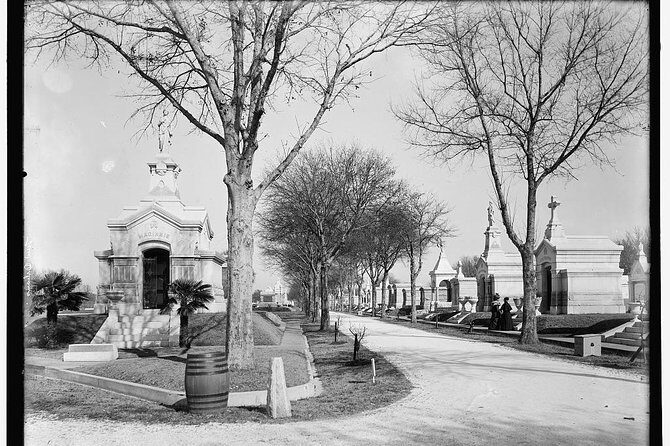
Metairie Cemetery can feel big, quiet, and easy to wander through without context. That’s exactly where a GPS audio tour earns its keep. Instead of a fixed group schedule, you get narration that responds to where you are, so you’re not just looking at names—you’re learning why those names matter.
You also get control of the pace. The tour runs about 35 minutes, but your real time depends on how long you stop for each story. If you’re the type who likes to stand, read headstones, and then listen for the next cue, this format supports that.
Another practical win is the offline approach. VoiceMap is the free app you download, and the tour audio and supporting files are available offline after you download them. In New Orleans, weather and phone connectivity are never guaranteed. Offline keeps the experience from becoming a tech support project mid-walk.
The one thing to keep in mind is that this is not a staff-led walking tour. If you prefer someone physically steering you from grave to grave, you might want that structure. Here, you provide the walking, and the app provides the storytelling.
Price and value: $8.99 for a 35-minute route you can replay forever
At $8.99 per person, the price is relatively low for a guided-style experience—especially because you’re buying into lifetime access. That means you’re not “paying for today,” you’re paying for a resource you can come back to when you’re in the mood for a different angle of the cemetery.
The time investment is also manageable. A 35-minute audio walk is long enough to feel like you did something meaningful, but short enough that it won’t derail your whole day. That matters in a city like New Orleans, where you may have other stops lined up.
Value also comes from what’s included. You get:
- Lifetime access to the Faith & Courage: Metairie Cemetery Stories tour
- The VoiceMap application
- Offline access to audio, maps, and geodata
- Directions to help you reach the correct starting spot
- GPS-style flexibility to explore at your own pace
What’s not included is also part of the value equation. You’ll need your own smartphone, and the tour doesn’t include transportation or food/drink. If you’re already planning to be in the area, that’s fine. If you’re booking this as your only activity, you might find yourself paying more in logistics than you expected.
Where the tour starts: Washington Artillery Park and the importance of the right location
The tour route is designed to begin at 5510 Pontchartrain Blvd, New Orleans, LA 70124, USA, and it’s associated with Washington Artillery Park as the key start area. The directions you receive are meant to help you reach the correct spot so the audio triggers when you’re in place.
That “right location” detail matters more than people think. Audio tours that rely on GPS can be sensitive. If you start 5–10 minutes away from where the app expects you to be, the audio may not begin correctly—or it may loop or skip ahead.
A helpful mindset: treat the start like a meeting point, not like an open-ended stroll. When you arrive, take a minute to line up with what your phone shows, then start the tour. If you’re walking in from a different point, budget a little extra time so you’re not trying to fix the app while you’re also trying to find where you are.
The tour ends back at the meeting point, which keeps the logistics clean. You don’t need to figure out a separate drop-off or plan for a long walk back.
VoiceMap offline GPS: what you’ll do on your phone (and how to avoid pain)
This tour runs through the VoiceMap app. The free app is included as part of the setup, and your purchased tour is accessed through the app.
In practice, your job looks like this:
- Install VoiceMap
- Redeem your tour access in the app
- Download the tour so it works offline
- Use GPS to follow the route cues until you finish the loop
The most positive feedback centers on how easy it is to follow once the tour is loaded: narration is clear, the route works even during rain, and the geolocation feature helps you feel like you’re being guided without being rushed.
But there are also clear cautions from people who ran into trouble:
- Downloading can be confusing if you don’t follow the steps exactly
- You may need to enter an emailed code to redeem the tour
- If the tour doesn’t start or starts looping, it can take time to troubleshoot
If you hit technical trouble, the provider’s support channels are available by both email and telephone, and reaching out is a good move rather than continuing to wrestle with the app in the cemetery.
My practical advice: do your setup at home (or at a café) before you head out. Make sure you can open VoiceMap, redeem the tour, and confirm the download completes. Then—when you arrive—your job is just listening and walking.
The 35-minute pacing: how the route feels in real life
Because the tour is GPS-based and self-guided, the experience you get is shaped by how you move. The audio is designed for a roughly 35-minute window, but you can stretch or shorten it.
Here’s what that typically means for your experience:
- You can pause for photos or to read names longer than planned
- You can stop to listen to a story fully without feeling behind
- You can drive the route rather than walk it, if that’s how you plan to explore
One reviewer-style note that’s still useful: the tour can miss a grave or two depending on your exact position and what you expect to be covered. That doesn’t mean the tour is “wrong,” but it means you shouldn’t treat it as an exhaustive list of every notable headstone. If you want a specific name or a “must see” person, bring that goal separately—then use the audio tour for atmosphere and context.
Also, if you expected a very deep level of detail at every stop, consider that this is a short format. At 35 minutes, it’s more about narrative highlights than exhaustive biographies. You’ll get plenty to think about, but it won’t replace longer cemetery research.
Rain and realism in New Orleans
New Orleans is great, but weather can change quickly. One of the best points from the experience is that it can still work when it rains. Since your audio is available offline, your phone isn’t living or dying with cellular service. And because you can drive portions of the route, rain doesn’t automatically force you to cancel the plan.
Still, being realistic: rain can slow you down, especially if you’re trying to keep your phone steady while listening and walking. If the weather is questionable, I’d plan your timing so you’re not rushing the download or the setup. Once the tour is loaded, the actual experience is more “press play and go,” not “figure out your settings.”
Who this tour suits best (and who should skip it)
This is a strong match if you:
- Want a private experience for your group only
- Like guided structure but don’t want to follow a live guide’s schedule
- Prefer a short activity that gives you context without taking over your day
- Appreciate offline tours that keep working even when connectivity is spotty
It may be less ideal if you:
- Get frustrated with app setup and want everything plug-and-play at the site
- Expect a fully comprehensive, grave-by-grave catalog
- Need a human to ensure every stop lines up perfectly with your interests
If you’re comfortable using your phone and you’re willing to do a quick setup check before you go, you’ll likely get more out of the experience.
The good parts people remember most
The highest satisfaction comes from a few repeat themes:
- Clear narration and story pacing that’s easy to follow
- The geolocation feature, which helps you feel oriented instead of wandering blindly
- The flexibility to go at your own pace and stop when you want
- The fact that it can still work during rain thanks to offline access
That combination is powerful. New Orleans cemeteries aren’t usually “just another photo stop.” They reward patience. This tour respects that by letting you control how long you linger.
Possible drawbacks to plan for before you buy
Let’s talk about the friction points so you don’t get surprised.
First, technical setup. Some people found the process confusing—having to use multiple steps, download the right tools, and redeem access properly. If you arrive without time to troubleshoot, that can ruin the mood.
Second, starting location sensitivity. If your phone’s GPS thinks you’re not at the starting point, the tour may fail to trigger correctly or feel off. The fix is usually patience and positioning—stand where the app expects you, then start.
Third, detail expectations. A short route can’t cover everything. If your goal is a deep dive into specific individuals, you may want to treat the audio tour as the entry point, then do your own reading afterward.
If you can handle those points, you’re in a good place.
FAQ
FAQ
How much does the Metairie Cemetery Stories audio tour cost?
It costs $8.99 per person.
How long is the tour?
It’s listed at about 35 minutes.
What language is the tour available in?
The tour is offered in English.
Do I need an internet connection during the tour?
No. The VoiceMap tour supports offline access, including audio, maps, and geodata.
What app do I need to use for the tour?
You’ll use the free VoiceMap app, and your purchased tour is accessed through it.
Where do I start the tour?
The meeting point/start location is 5510 Pontchartrain Blvd, New Orleans, LA 70124, USA.
Is this tour private?
Yes. It’s a private tour/activity, so only your group participates.
Can I cancel for free?
Yes. Free cancellation is available if you cancel at least 24 hours in advance for a full refund.
Should you book Faith & Courage: Metairie Cemetery Stories?
I’d book it if you want a low-cost, private, offline audio way to understand Metairie Cemetery without committing to a long guided tour. The offline VoiceMap design and the self-paced GPS approach are exactly the kind of practical travel tool that works well in New Orleans.
I’d pause before booking if you hate app setup or you’re the type who expects everything to start instantly on arrival. If that’s you, plan a little time to download and verify the tour before you get there, so your walk stays focused on the stories—not your settings.
If you’d like, tell me when you’re going and whether you plan to walk or drive, and I’ll suggest a simple “arrive-ready” plan for your phone and timing.
]]>What I like most is how the narration is customized and GPS-triggered, so you’re not just listening to random spooky facts. I also like the short, timed breaks—especially the chance to get out at City Park for a quick look at the Duelling Oaks. One drawback to consider: it’s not a live, back-and-forth ghost lecture. A lot of the experience is driven by the automated audio/video system while the bus rolls.
You’ll start at 941 Decatur St, board a small group bus (up to 34 people), and spend about 2 hours seeing different spots around New Orleans. You’ll also pass by the Buckner Mansion with GPS-triggered history, plus a free 15-minute City Park stop before you’re back on board for the remaining time. If you’re hoping for long outside roaming or frequent cemetery-style storytelling, adjust your expectations before you book.
Key Things to Know Before You Go

- GPS-triggered, customized audio: Your narration lines up with the spots you’re passing.
- You get a short walk window: Buckner Mansion offers a quick photo/stretch break, and City Park is a timed stop.
- Video and special effects onboard: Expect custom lighting and screen-based storytelling as part of the show.
- Small group cap (34): It’s not a huge crowd, which helps the experience feel more manageable.
- Not fully live-guided: The tour is mainly automated; the driver role is mostly about driving and stops.
What You’re Really Paying For on This Haunted Bus Ride

This tour is built around a simple idea: you get guided haunted storytelling without the work of planning routes or navigating at night. You’re on a bus, you hear history-and-ghost type audio, and you see landmarks from the window while the system cues up content.
That makes it a practical option if you want atmosphere over endurance. New Orleans at night is fun, but walking for hours in the dark can be tiring, and you may not know where to stand. Here, the bus becomes your moving base while the tour tells you what you’re looking at.
The value question is all about fit. If you’re the type who wants a real-time storyteller who can respond to your questions and steer the night, this may feel more like a haunted program than a classic guided tour. On the other hand, if you like consistency and a set script, the automated audio/video format can actually be relaxing. You don’t have to track directions or wonder what happens next—you just listen and look when it cues.
Also note the “ghost” promise has a tech component. The bus experience includes video, special effects, and custom lighting. That can boost the mood, but it also means you’re spending more time looking at a screen than at a guide talking to you.
Meeting at 941 Decatur St: Getting Positioned for a Smooth Start
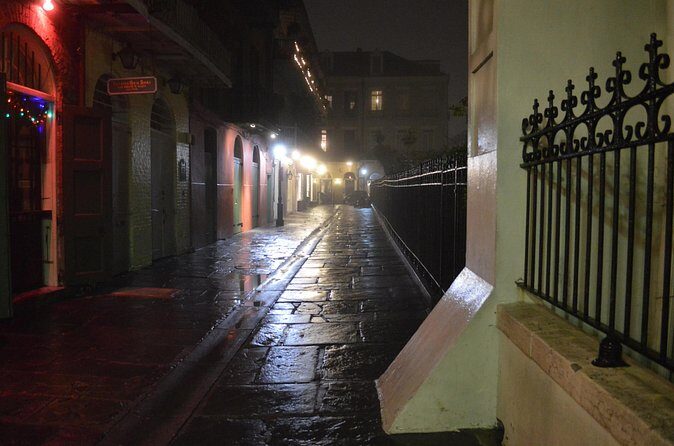
The tour begins and ends at 941 Decatur St, New Orleans, LA 70116. That matters because you don’t have to figure out a second pickup/drop-off location after dark. It’s straightforward: show up, board, enjoy the ride, and return to where you started.
You’ll also get a mobile ticket, and the tour is offered in English. Confirmation comes at the time of booking, so you should be able to plan around it without last-minute guessing.
One more planning point: the tour is about 2 hours total, so even if you feel the night slipping by faster, you’re not signing up for a half-day. This is a “fits neatly into your evening” kind of activity.
Finally, there’s a maximum of 34 travelers. That keeps the bus from feeling like a school trip crowd. Still, it’s a bus, so expect the usual realities—limited space, people shifting around for photos, and everyone timing themselves to the stops.
Buckner Mansion: The First Pass-By and the Photo Break
Early in the route, your bus will come past the Buckner Mansion while the automated system plays history triggered by GPS. This is one of the ways the tour earns its keep: you’re not just driving by famous-sounding places with no context.
The key perk here is that you’re given a chance to step off. You’ll be allowed to get off the bus to take pictures and take a short break to stretch your legs. For a night tour, that quick reset is more than comfort—it helps your camera work too. Shooting through windows at night is tough, so having a moment outside can be the difference between blurry shots and real keepsakes.
What to watch for: this is still a short stop. Don’t plan for a long wander or deep exploration. Think “quick photo and breathe” rather than “go inside and fully tour the place.”
City Park and the Duelling Oaks Stop: Why This Bit Works
The tour’s named stop that gives you the most time is City Park. Your driver stops so you can learn about the Duelling Oaks in the Historic City Park of New Orleans.
You get about 15 minutes, and the good news is that the admission ticket is free for this stop. That’s a smart way to structure a bus tour: you’re not paying extra just to stand somewhere for a moment and get a feel for the setting.
Fifteen minutes can sound short, but it’s enough to do three practical things:
- take a few photos,
- walk a little around the area,
- and get back to the bus without feeling rushed for the entire evening.
City Park at night also tends to feel a little calmer than the busier streets around it, so it’s a nice pocket break in a ride that’s otherwise about moving through the city.
One thing to keep in mind: the City Park segment is the only stop spelled out with timing and a free admission note. Everything else is described more broadly as landmark viewing while you’re driven around. So if your ideal ghost tour is heavy on long outdoor scenes, this is more of a “taste and atmosphere” model.
The Rest of the Night: Landmarks From the Bus Window
After the stops, you’re mostly on the bus again. The tour notes that the remaining hour is allotted while on the bus, which is your big clue about pacing.
This is where expectations make or break the experience. The tour includes custom lighting and special effects, plus video and audio narration. That can create a cohesive mood, especially if you like spooky visuals that stay consistent across different neighborhoods.
But if you’re hoping for long moments where the story is told in a way that feels spontaneous—like a live guide pointing out details on the sidewalk—this setup can feel more passive. Since the narration and visuals are automated, you’re more likely to experience the tour as a structured program than a conversation.
If you’re sensitive to sound, plan for it. Some people have complained that the audio and video can overpower the experience. You can counter that by bringing your own comfort tools: keep an earplug or two in your pocket if you’re the type who gets overwhelmed easily in noisy settings.
Audio, Video, and Lighting: The Good, the Boring, and the Fixable
The tech on board is part of the pitch: video, special effects, and custom lighting accompany the audio narration. In practical terms, it means the tour is doing a lot for you. The system tells you where you are and what you’re supposed to notice.
When it works, it’s effective. You don’t have to follow a map. You hear the story, you see the landmark as you pass, and the mood feels intentional. The GPS-triggered format is the biggest strength here because it reduces the “wait, what are we looking at?” moment.
When it doesn’t work for you, it usually comes down to one of these issues:
- You may feel a bit like you’re watching rather than experiencing.
- The screen-based content can make certain moments feel disconnected from the view outside.
- Night conditions—like fogged windows or low visibility—can reduce what you can actually see.
If you do book this, here’s how I’d make it more enjoyable. Sit where you get both options: a decent view out the window and a clear sightline to the screen. If your bus has a lot of glare from interior lights, angle yourself slightly or change seats if allowed before the show gets going. It sounds small, but it changes how much you enjoy the visuals.
Also, the tour is English audio. If you’re multilingual or you travel with someone who needs language flexibility, you’re covered here, but it’s still a single-language format.
Price and Value: When the Budget Math Makes Sense

The exact ticket price isn’t provided in the tour data, but the reviews you’ll see online mention prices around $60 per person. So I’ll frame this like a value-check rather than a price quote.
This tour can feel like good value if you’re getting three things you’d otherwise pay for separately:
- Transportation by bus around town at night,
- structured storytelling (GPS-triggered, customized audio),
- a couple of short, meaningful stops (Buckner Mansion photo break, plus City Park).
Where value drops is when you wanted a more classic experience: a live guide, more time on foot, or longer stops with deeper access. Since this is mostly automated, you may feel like it’s overpriced if you expected the guide to carry the entire experience through conversation.
The safest way to decide is to ask yourself: do you enjoy haunted storytelling as a show? Or do you prefer a human guide who can adapt on the fly? This tour leans toward the show side.
One more cost note: the booking experience may add a 7.9% processing fee on your payment. That’s not unusual in tourism, but it does affect your total budget.
Who This Tour Best Fits (and Who Should Skip It)
This is best for you if:
- you want an easy evening plan without long walking,
- you like audio-guided narration that stays consistent,
- you want a few quick photo moments and a landmark overview.
It may be disappointing if:
- you’re expecting a fully live guided experience the entire time,
- you want long outside roaming or lots of cemetery time,
- you dislike spending most of the tour focused on a screen.
There’s also a specific type of positive experience that shows up in the data you may find online: one person mentioned a great experience with a guide named Mr. Cornel, describing him as informative and saying he shared additional good food info. I can’t promise that kind of hosting for every departure, because the tour is primarily automated by design. But it’s a good reminder that when the human element is strong, the whole night can feel more alive.
Service animals are allowed, and most travelers can participate, so this is broadly accessible in typical tour terms. It’s also a small-group bus (up to 34), which helps for comfort and atmosphere.
Should You Book the Audio-Guided Historical Ghost Bus Tour?
Yes, you should book it if you want a low-effort, scheduled spooky evening with GPS-triggered audio and a couple of stops you can actually step out for—especially City Park’s Duelling Oaks. It’s a good fit when you want the vibe more than you want a deep, hands-on ghost crawl.
I’d skip it if you’re mainly paying for a live guide and a lot of time outside. The format is more of a programmed haunted ride than a conversation-based tour, and that mismatch is where people lose patience quickly.
My practical advice: if you go, go with the right goal. Treat it like a scripted night experience that offers a few real photo chances, then use your free time before or after to do the more hands-on New Orleans ghost activities you’re likely craving.
FAQ
How long is the Audio Guided Historical Ghost Bus Tour?
It’s about 2 hours.
Where does the tour start and end?
It starts at 941 Decatur St, New Orleans, LA 70116, USA and ends back at the meeting point.
What language is the tour offered in?
The tour is offered in English.
Is the tour audio guided, and does it use GPS?
Yes. You’ll have an audio narrated tour with customized content that is GPS triggered.
Does the tour include video or special effects?
Yes. The bus experience includes video, special effects, and custom lighting.
What stops are included during the tour?
You’ll be driven past Buckner Mansion and you’ll have a City Park stop to learn about the Duelling Oaks.
How much time do you get at City Park?
You get 15 minutes at City Park.
Is there an admission fee for City Park during the tour?
The tour notes that the City Park admission ticket is free.
Is there a processing fee?
Yes. A 7.9% processing fee is added to your payment.
What’s the cancellation policy?
You can cancel for a full refund up to 24 hours in advance. Cancellation within 24 hours isn’t refundable. The tour also depends on good weather, and if it’s canceled due to poor weather you’ll be offered a different date or a full refund.
]]>At $9.99 per person for about an hour, the value is strong, especially because you get lifetime access and offline audio plus maps and geodata. You’re basically paying for a guided walking plan you can repeat later, not a one-time ticket.
The route stays in Treme, starting at 801 N Rampart St and ending at Saint Augustine Catholic Church on Governor Nicholls St. Bring your smartphone (it’s not included), and plan on steady walking with comfortable shoes—this is a neighborhood stroll, not a sit-down tour.
Key highlights worth your attention
- GPS-triggered narration that matches what you’re looking at as you walk
- Backstreet Cultural Museum visuals: Mardi Gras Indian costumes, second line umbrellas, and photos
- New Orleans African American Museum grounds with Tremé Villa Meilleur’s original kitchen dependencies and varied home styles
- Mahalia Jackson Theater stop tying gospel fame back to New Orleans roots
- Louis Armstrong Park context for Satchmo’s early life just outside Treme
How the Walking the Tremé GPS audio tour works (VoiceMap style)
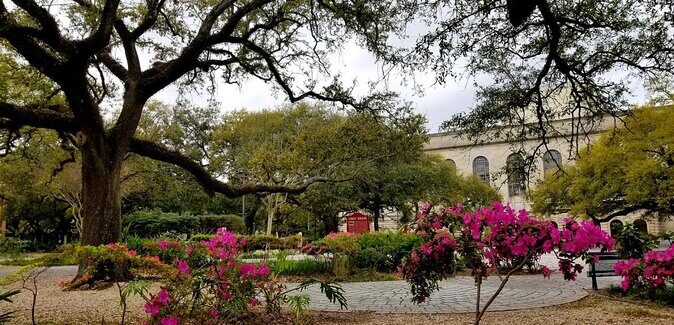
This is a self-guided walking tour powered by the VoiceMap app. You download the tour through the app, follow the on-screen directions to the start point, and then let the audio guide you as your location syncs with each stop.
What I like about this setup is how practical it feels in a city where you can easily lose time. Instead of juggling maps plus a guide plus your curiosity, you get directions to each key moment and audio that’s meant to kick in when you’re standing near it.
That GPS “start when you’re there” feature matters more than you’d think. One review noted that the system could detect where the listener was standing and start the story for that exact spot, which is exactly what you want when you’re trying to connect the words to the street in front of you.
Two practical notes for you:
- You’ll need a smartphone to run the app. It’s not included with the tour.
- Offline access is included (audio, maps, and geodata), which helps when New Orleans reception gets moody.
Price and value: is $9.99 for an hour a good deal?

At $9.99 per person, you’re paying for a lot more than “some audio.” You get lifetime access to the Walking the Tremé tour, plus VoiceMap application access and offline materials. That means if you come back to New Orleans later, or you want to revisit Treme with a fresh mindset, the tour is already in your library.
For one of the best bargains in New Orleans sightseeing, the value here is simple: you’re getting guided interpretation of specific places instead of wandering with only general knowledge. And because it’s self-guided, you’re not stuck with the pace of a group.
Just be realistic about what’s not covered. Admission fees for any stops that charge are not included as part of this tour, and food/drinks and transportation are also on you.
Where the route starts and how the walk feels in Treme
The tour starts at 801 N Rampart St (Treme) and ends at Saint Augustine Catholic Church, 1210 Governor Nicholls St. The overall experience is listed as about 1 hour, though in walking tours like this, your speed and curiosity can add a few minutes here and there.
Because it’s centered entirely in Treme, you’re not doing a big drive-and-zoom itinerary. You’re meant to feel the neighborhood as you go—church blocks, museum grounds, and the cultural landmarks that shape the area’s identity.
The meeting points are also useful because you can plan your day around a clear start and end:
- Start near Rampart, then walk inward toward the church on Governor Nicholls.
- Finish with Saint Augustine Catholic Church, which gives you a “bookend” moment for the themes the audio is talking about.
One more small practical win: the tour is marked as near public transportation. So if you’re mixing it with other plans, it’s easier to stitch into your day without long detours.
Stop by stop: what you’ll hear and what to look for
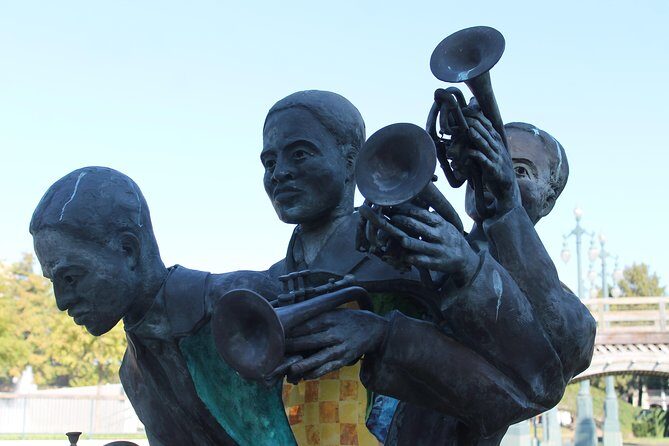
Stop 1 at Saint Augustine: the War of the Pews story

The first storyline on this route takes you back to the 1840s and the War of the Pews. The audio explains that in 1842, Creoles of color began purchasing pews inside Saint Augustine’s Church for their families’ Sunday worship. Then the news spread, and white people started a campaign of their own to buy family pews.
This isn’t just a trivia moment. It’s a strong way to understand how space and dignity played out in everyday life—how worship, family belonging, and social power got tangled in something as ordinary as a seat in church.
When you’re at this stop, look beyond the wow-factor and focus on the idea the tour is teaching. The words are designed to make you notice what “belonging” meant in public places—especially places where families returned every week.
Backstreet Cultural Museum: Mardi Gras Indian costumes and second line umbrellas

Next, you get one of the tour’s most visually rewarding segments: the Backstreet Cultural Museum. The narration points you toward the museum’s collection of Mardi Gras Indian costumes, second line umbrellas, and photographs that document the culture as it has appeared on backstreets.
This stop works because costumes and umbrellas aren’t just decoration. They’re a language—how creativity, community identity, and performance show up in public. Even if you don’t spend a long time inside exhibits, the tour encourages you to look carefully and treat what you see as part of a living tradition.
Practical tip: if you want to go beyond what’s visible from outside the museum setting and into exhibits, check whether admission is required. Admission fees aren’t included in the tour price, so plan a little extra if you want deeper access.
New Orleans African American Museum grounds and Tremé Villa Meilleur

From there, the tour moves to the tree-shaded grounds of the New Orleans African American Museum. Here, the audio brings attention to Tremé Villa Meilleur’s original kitchen dependencies and homes that reflect a range of local building styles.
What I like about this stop is that it’s not only about big-name milestones. It’s about place—how everyday life was shaped by buildings, yards, kitchens, and the way homes were constructed.
If you’re the type who walks slowly and reads plaques, this section is likely to reward you. If you’re rushing, you might miss the point, because the tour is nudging you to see the neighborhood’s everyday architecture as a kind of historical record.
Mahalia Jackson Theater: gospel fame rooted in New Orleans
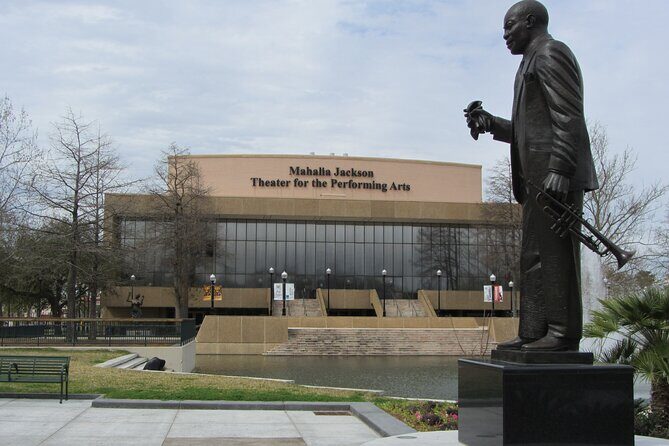
Then comes Mahalia Jackson. The audio explains that after she cut the highest-selling gospel song in history, she took her place on the international stage—but she never forgot her New Orleans roots.
This is a smart change of pace in the tour because it connects neighborhood identity to global influence. You’re reminded that the city didn’t just produce local performers; it produced artists whose voices traveled far—while staying tied to home.
When you arrive at this stop, take a minute to look at the theater setting and let the story connect. The point isn’t to treat Mahalia Jackson as a museum exhibit. The point is to understand how her New Orleans background helped shape the way she sang and carried gospel music forward.
Louis Armstrong Park: Satchmo’s early life in and around Treme
The final major cultural anchor is Louis Armstrong Park. The narration focuses on Armstrong’s nickname Satchmo and also Pops, and it places his birth in 1901 just outside Treme.
The story also frames his upbringing among churchgoers, hustlers, pimps, and musicians. That mix is important. It tells you Armstrong’s talent didn’t grow in isolation—it grew in a neighborhood where music and survival skills were both part of the daily rhythm.
This stop works well for listeners who like to connect music to geography. If you’ve heard Armstrong’s recordings for years, walking through this area with the audio’s context can make the story feel more grounded and human.
Timing, comfort, and safety in the neighborhood
This tour is set up for about one hour, so you don’t need to spend half a day zigzagging through New Orleans. Still, it’s a walk, and Treme can involve uneven sidewalks and tight crossings.
The biggest safety note is tied to the tour design itself. There are two sections that request you to cross a highway that isn’t made for pedestrian crossing. That means you should treat those moments like a careful street-crossing challenge, not a routine stop.
Here’s how to make that easier:
- Don’t rush the audio. Pause when you need to.
- If a crossing feels sketchy, wait for the safest gap in traffic and don’t force a move just because the narration says you’re at the right spot.
Also, bring a charged smartphone. Offline audio helps, but a low battery can still end your tour early.
When the app misbehaves: the one drawback you should plan for
Self-guided tech is usually smooth, but it’s still tech. One review described a situation where the tour wouldn’t start at the beginning location, freezing on the download page even with full service. That’s the kind of issue that can ruin your mood fast.
My advice is simple:
- Start the download before you set out, if you can.
- If you’re already at the start point and it freezes, take a breath and give it a few tries, then contact support if needed.
VoiceMap’s support contact shows up in the provider response in one of the experiences shared: [email protected]. If something really locks up, that’s the fastest path to help.
The narration’s angle: what you’ll get and what you might want more of
This audio tour clearly tries to connect major figures and cultural landmarks to the neighborhood’s identity. You get stories focused on church life, Mardi Gras Indian culture, museum grounds, and music legends—Mahalia Jackson and Louis Armstrong in particular.
Still, there’s a caution worth mentioning. One critique said the tour can feel softened or limited in perspective, and that it doesn’t fully wrestle with how the neighborhood relates to the park setting that visitors experience (including the idea of being physically gated out). That doesn’t make the tour wrong—it just means your expectations matter.
If you want a narration that focuses on hardship and power imbalance in a sharper, more confrontational way, you might feel the audio stays gentler than you’d like. In that case, I’d pair this with another perspective source before or after your walk so you get both the cultural spotlight and the tougher context.
Who this self-guided Tremé tour is best for
This tour is a great match if you:
- Like walking but hate waiting around for a group
- Want GPS-triggered audio instead of reading everything from plaques
- Care about music, church culture, and neighborhood identity
- Want a budget-friendly way to get real interpretation of Treme’s key sites
It may not be the best match if you:
- Get easily frustrated with phone apps and GPS
- Prefer tours that come with a live guide who can answer questions
- Are looking for nonstop street-level political debate rather than cultural storytelling
Should you book Walking the Tremé?
Yes, if you want a low-cost, high-meaning walk through Treme with audio that connects specific places to deeper themes—family worship at Saint Augustine, Mardi Gras Indian artistry at Backstreet Cultural Museum, museum grounds tied to Tremé Villa Meilleur, and the Armstrong and Mahalia Jackson links to New Orleans music.
Book it with two expectations set correctly:
- You’re doing a self-guided audio walk, so bring a charged smartphone and take care at the highway crossing sections.
- The narration is strong for cultural and personal context, but if you want the sharpest critical edge on every theme, you may want to supplement your learning with other sources.
If that sounds like your style, this is an easy “yes.” For $9.99, you’re buying a guided route you can replay—and a way to see Treme with your brain switched on.
FAQ
How long is the Walking the Tremé audio tour?
It’s listed as about 1 hour (approx.).
How much does the tour cost?
The price is $9.99 per person.
What language is the tour in?
The tour is offered in English.
Do I need an internet connection during the walk?
Offline access is included, including audio, maps, and geodata.
Do I need to bring a smartphone?
Yes. A smartphone is not included.
Where does the tour start and end?
It starts at 801 N Rampart St, New Orleans, LA 70116, USA, and ends at Saint Augustine Catholic Church, 1210 Governor Nicholls St, New Orleans, LA 70116, USA.
Does the tour take place in Treme?
Yes. The tour takes place in Treme.
Is the tour near public transportation?
The tour is listed as near public transportation.
Are service animals allowed?
Yes, service animals are allowed.
What’s the cancellation policy?
Free cancellation is available. You can cancel up to 24 hours in advance for a full refund, and within 24 hours there is no refund.
]]>I especially like the no-crowd format: you’re not stuck in a big group, and you can pause for photos, shops, or a quick drink break. I also like that the route is built around specific real places—with stories tied to famous sites like the LaLaurie Mansion and Jean Lafitte’s era.
The main drawback is simple: it’s app-based, so if your phone or directions don’t cooperate, you lose some of the fun. A few people also found the narration style a bit flat, so this is best if you’re in the mood for a spooky history audio vibe.
Key takeaways before you hit play

- Self-guided, outside-only route: you’ll stay on the street and around building fronts, not inside attractions.
- Smartphone GPS navigation: the app uses map guidance so you can keep moving without a human guide.
- Spooky meets real New Orleans facts: stories connect to known names and locations, not random jump scares.
- Pause-and-go freedom: you can linger where you want and skip ahead if you’re moving fast.
- Bonus vampire speakeasy twist: earn a password during the walk to try for entry at the end stop.
Walking the French Quarter at Your Pace (and Avoiding the Herd)
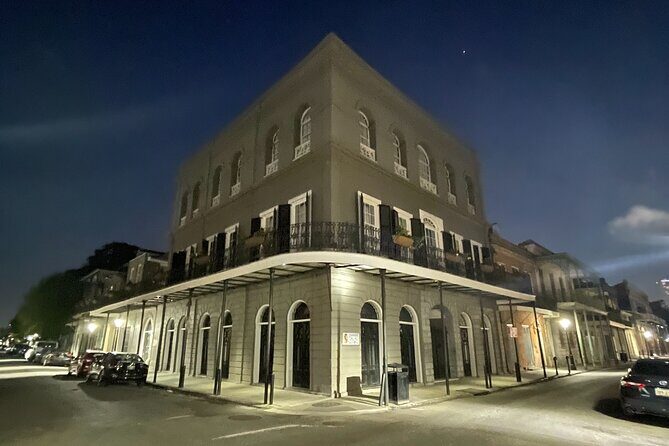
This tour is designed for the kind of night New Orleans does well: you want atmosphere, but you don’t want to feel trapped. With this self-guided haunted audio walking tour, you start at LaLaurie Mansion and follow an on-screen path stop to stop. The duration is about 1 hour to 1 hour 15 minutes, and it’s meant to fit easily between dinner plans or a bar stop.
The best part is control. You choose when to start, when to pause, and where to linger. Some of the fun comes from stepping into the street-level vibe of the Quarter—balconies, old brick, narrow lanes—while the audio adds a spooky layer to what you’re looking at.
Also, this is a private activity for just your group, not a shared cattle-car experience. Even if you’re solo, the tour format still feels social in a good way: you’ll be out walking with the Quarter energy, but you won’t be shoved along by a strict schedule.
The App Experience: GPS Directions, Sound Effects, and an EMF Tool
This isn’t a live guide talking over the street noise. It’s a smartphone tour in English, driven by GPS. The tour works as a mobile ticket, and you’ll want to plan to have your phone charged and ready.
When the app is working well, it helps you stay oriented fast. One nice detail is that the navigation uses a map with an arrow overlay, so you can tell which way to go even on busy streets. That matters in the French Quarter, where blocks can feel short but turns can sneak up on you.
The audio itself includes sound effects and a narrated storyline that leans Halloween-spooky rather than museum-serious. In at least one case, the app experience included an EMF detector feature, which turns the walk into more of a playful ghost hunt. If you’re walking with kids or you just like extra “science-y” fun, that kind of feature can make the tour feel more like an activity than a lecture.
If you’re the type who hates fighting with a webpage or link, it’s worth downloading and confirming everything before you leave. Some people reported access or link issues, so I’d treat app setup as part of the adventure.
Outside-Only Stops: How This Tour Lets You See the Quarter Without Ticket Lines
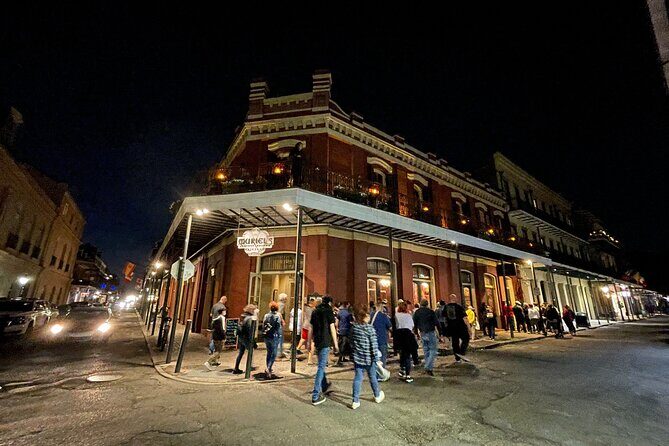
This tour is built to be all outside. That’s a big practical advantage: you don’t need timed entry, and you aren’t locked out by museum hours. It also keeps the experience flexible—if a storefront is busy, you can pause, shop, or step aside.
The tradeoff is also clear: because you never go inside, you won’t get the full interior experience of any building on the route. Some stops mention admissions not included, so if you want to tour interiors later, you’ll need separate plans.
That outside-only approach also shapes the tone. The story stays tied to what you can see from the sidewalk—front façades, alley entries, corners and thresholds—while the audio fills in the darker backstory.
Stop-by-Stop: From LaLaurie’s Dark Legacy to the Vampire Finale

Here’s the route the audio walks you through, and what makes each stop interesting. I’ll also point out where you might wish you could step inside—because the tour teases the history but keeps you outdoors.
Lalaurie Mansion (1138 Royal St) — The name everyone whispers
Your tour begins at the LaLaurie Mansion. The audio centers on the mansion’s dark past and the legend that haunted figures linger here, tied to atrocities carried out within the property. You’ll also hear about the connection to Nicholas Cage, since he lived here for a time.
Even if you don’t buy every ghost claim, this start spot is strong because the building itself feels like a character. It sets the mood immediately, and it’s an easy way to launch your walk with purpose: you’re not wandering randomly—you’ve got a story anchored to a specific place.
Old Ursuline Convent Museum — Casket Girls and the vampire rumor
Next is the Old Ursuline Convent Museum. The audio leans into legend, including the story of the Casket Girls and the idea that fear traveled with them in a more supernatural direction. You’ll also get the playful twist that vampires are part of the tale.
Since you’re only seeing the outside, treat this as a “myth-building” stop. You’re collecting atmosphere and context, not getting a full museum visit. If you’re the type who likes to research after a walk, this is a good stop to note for later reading.
An Old Hotel Used as a Civil War Hospital — Wounded soldiers and restless halls
There’s also a stop connected to a Civil War hospital used for wounded Confederate soldiers. The ghost story here is that those soldiers have been seen roaming the halls seeking medical assistance.
This one works well because Civil War New Orleans isn’t just history in a book—it’s built into streets and structures. Even outdoors, the story gives you a framework for understanding why the Quarter’s architecture can feel haunted: it has layers.
Andrew Jackson Hotel (French Quarter Inns) — Malaria deaths in an old setting
The audio then heads to the Andrew Jackson Hotel, tied to the French Quarter Inns. The haunting here is linked to deaths from malaria—an illness that shaped the city’s past in real, documented ways. The narration connects that tragedy to spooky activity, “who goes bump in the night.”
Again, you’re not stepping inside, but you are getting that New Orleans feeling where old names and old buildings overlap. This is a good stop to look up—old façades tell stories when you take a second.
Madame John’s Legacy — A rare wood survivor
You’ll visit Madame John’s Legacy, described as one of the last remaining wooden buildings in New Orleans. The audio frames it as haunted by its past, and that detail matters: fewer surviving wooden structures means fewer physical witnesses to the city’s earlier eras.
This is a stop where you can slow down. Even if you’re focused on ghosts, the building’s survival makes it feel real—and that reality makes the supernatural angle easier to picture.
Muriel’s Jackson Square — Dinner with a side of centuries-old haunting
Next up is Muriel’s Jackson Square. The story says the restaurant is haunted by a ghost from centuries ago.
This is one of those stops that’s perfect for a pause. If you’re in “I want to see the Quarter life” mode, Jackson Square-adjacent areas are great for people-watching and snapping photos—while the audio gives you a darker soundtrack.
Place d’Armes Hotel — Burned to the ground, and still blamed on the supernatural
At Place d’Armes Hotel, the audio talks about the hotel burning to the ground, like so much of the city did after fires. It also ties the lingering haunting to nearby vampire lore, including the idea of blood-draining victims living next door.
If you like your ghost stories with a gothic edge, this stop leans more fantasy. If you prefer strictly historical hauntings, treat this one as the tour’s “vampire mythology” moment.
Pere Antoine Alley — The devoted monk
Pere Antoine Alley is a key alley stop, and it’s tied to the story of a devoted monk. The narration basically dares you to see whether you catch a glimpse.
Alleyways are where the Quarter’s vibe really clicks. The audio turns the space into a stage, and the outdoor-only approach works because alleys already look like movie sets.
Pirates Alley — Jean Lafitte and freedom negotiations
Next is Pirates Alley. Here the audio brings in Jean Lafitte and the idea that he negotiated his brothers’ freedom on these streets. The pirate theme continues with the story that they didn’t leave—at least not in spirit.
This stop is fun because it mixes a recognizable New Orleans figure with a street-level story. If you’re trying to understand why the Quarter feels “myth-heavy,” this is the kind of place where the facts and the legends braid together.
Le Petit Theatre — Tragedy and ghostly performance vibes
You’ll then reach Le Petit Theatre. The story centers on tragedy and ghostly love of performing, as if the stage never truly goes silent.
This stop feels like a break in the walking momentum—good for standing still for a minute, reading the space with your eyes, and letting the audio paint motion where the building can’t.
Pat O’Brien’s — The haunted bar entrance
Your next stop is Pat O’Brien’s. The audio tells stories of ghosts that lurk inside, and the tour stops by the entrance.
This is a good moment to decide your pacing. If you want a drink break, this is the kind of area where you can do it without breaking your place in the route—just pause the audio and time it with your snack or beverage stop.
Fritzel’s European Jazz Bar — The end, plus the vampire speakeasy password
The tour ends at Fritzel’s European Jazz Pub on Bourbon St. The audio frames this as the finale, and here’s the twist: if you picked up a password earlier in the tour, you may be able to enter a secret vampire speakeasy.
Even if you don’t go for the speakeasy angle, the ending is well-chosen. Bourbon St draws energy fast, and the tour gives you a reason to show up with a goal instead of just wandering in a crowd.
Price and Value: Why $6.75 Works for a Night Like This
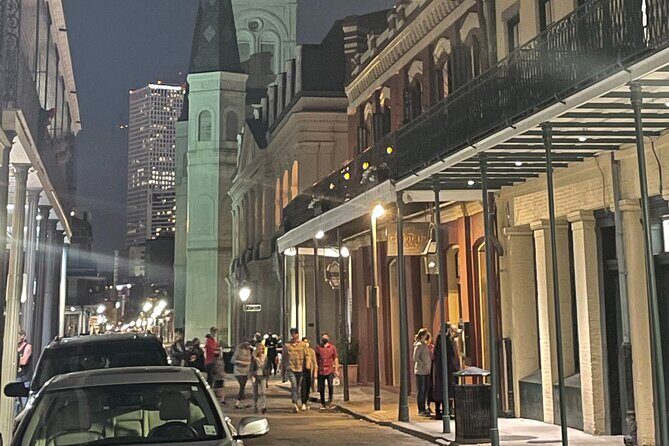
At $6.75 per person, this tour is priced for people who want the experience without spending $20 to $30 on a guided ghost walk. The real value isn’t just cost—it’s flexibility.
You get:
- A structured route with real-world locations
- A full audio narrative in English
- GPS navigation to keep you moving
- The chance to take your time and pause
- A virtual walk option after your in-person tour
That last part matters if you’re the type who likes to re-listen while you plan the next day’s sightseeing. And if you’re visiting in a group, splitting the cost can be a bargain compared to a guided tour where you pay per head.
The only “value” caution is that some people felt the narration style didn’t hit their personal preference, and app navigation can be annoying if your phone struggles. Think of the $6.75 as the entry fee to a self-paced game. If that game format is your thing, it feels like a steal.
Timing: Daytime, Nighttime, and How to Pair It With the Quarter
This tour runs whenever you want to start. The app approach means you can avoid the densest crowds by walking earlier in the day. If you want spooky mood without shoulder-to-shoulder discomfort, daytime can actually be a win.
Night can be better for atmosphere, especially around alleys and Bourbon St—but you’ll be walking among more people and more distraction. If your goal is clean audio focus and easy navigation, I’d lean toward earlier evening or late afternoon.
Rain happens in New Orleans, and the tour format still works because it’s outdoors. Just be ready with a poncho or light rain gear if the forecast looks sketchy.
Who Should Book This Haunted Audio Tour (and Who Might Not)
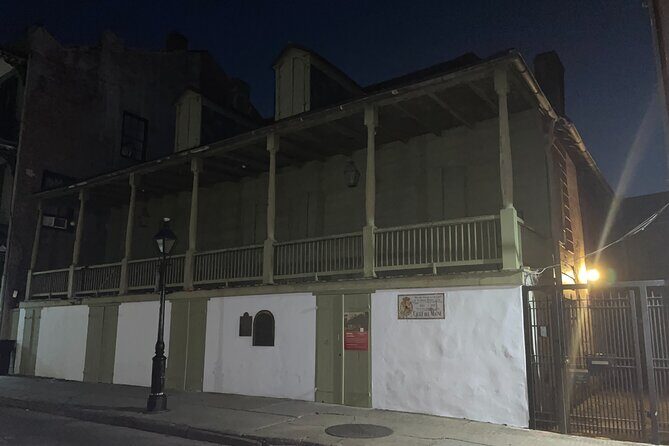
I’d recommend this tour if:
- You like spooky themes but still want real places and names tied to the story
- You prefer control over pacing rather than strict group timing
- You want something affordable that still feels like a proper activity
- You’re happy to look at buildings from the sidewalk instead of paying for interiors
I’d think twice if:
- You strongly prefer a live human guide who can answer questions on the spot
- You hate relying on an app for navigation
- You want a serious, historical lecture tone rather than Halloween-style sound effects and legends
If you’re going with kids, the idea of an EMF detector and the “ghost hunting” vibe can make it more engaging than a standard walking audio tour.
Should You Book Ghosts of New Orleans?
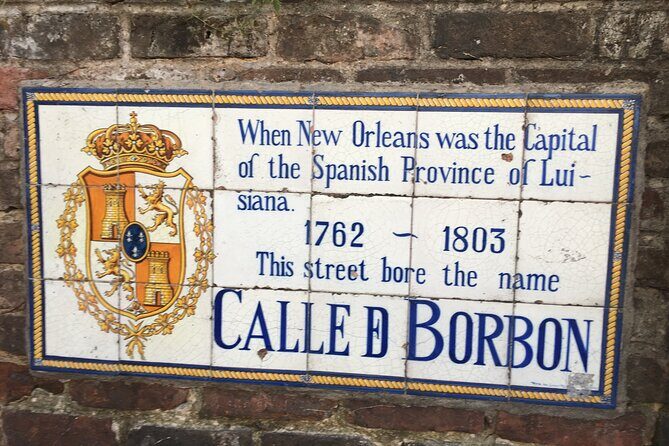
If your dream New Orleans evening includes a walk through the French Quarter with spooky audio and you want to keep costs low, this is an easy yes. The outside-only route is practical, the start-to-finish flow makes the Quarter easier to explore, and the vampire speakeasy password adds a fun goal at the end.
If you’re the type who gets frustrated with apps or wants guaranteed ease, do a quick setup check before you begin. Download, confirm your access, test your audio. The tour works best when your phone cooperates.
Overall: for $6.75, this is one of the better “go at your pace” ways to get ghost stories while you’re already sightseeing the French Quarter.
FAQ
How long is the Ghosts of New Orleans self-guided tour?
It takes about 1 hour to 1 hour 15 minutes for most people.
Where do I start and end the tour?
You start at LaLaurie Mansion, 1138 Royal St, New Orleans, LA 70116 and end at Fritzel’s European Jazz Pub, 733 Bourbon St, New Orleans, LA 70116.
Is there a live guide with you during the tour?
No. This is a self-guided smartphone tour using GPS navigation and audio.
Does the tour include tickets or entry into the buildings?
No. The tour is all outside, and admission tickets are generally not included.
What language is the tour available in?
The tour is offered in English.
Can I take it later or more than once?
There’s a virtual walk you can take after taking the in-person tour, so you can revisit the experience later.
Is the tour just for my group?
It’s a private tour/activity, so only your group participates.
]]>