REVIEW · NEW ORLEANS
Creole Louisiana: A French Quarter Walking Tour (English)
Book on Viator →Operated by Tours By Marguerite · Bookable on Viator
Creole stories start fast in New Orleans. This guided French Quarter walking tour strings together the people, places, and language behind Creole life, from Jackson Square to a 19th-century courtyard. It’s built for getting your bearings quickly, without hunting down context on your own.
What I like most is that the tour gives you a guided pass through the landmarks you already came to see. You also get an inside look at the Hermann-Grima House courtyard, which is more interesting (and more peaceful) than another quick photo stop.
One thing to consider: guide quality can vary a bit. One review flagged that the guide didn’t deliver the same depth they expected and raised questions about how Cajun topics were handled, so you’ll want to pay attention to the guide you get on the day.
In This Review
- Key highlights worth your time
- Creole Louisiana in the French Quarter: the tour idea that actually helps
- Price and walking logistics for a $35 French Quarter tour
- Jackson Square: where the Vieux Carré story starts
- St. Louis Cathedral: the history stop that shapes the whole area
- Louis Armstrong Park and Congo Square: music roots with context
- Hermann-Grima House courtyard: the included stop you’ll actually remember
- Creole language, Cajun comparisons, and the origins behind jazz, gumbo, jambalaya
- What to expect from your guide: the highs, and one possible risk
- Is $35 good value for a 2-hour walking tour like this?
- Who this tour is best for (and who should skip)
- Should you book this Creole Louisiana French Quarter walking tour?
- FAQ
- How long is the Creole Louisiana French Quarter walking tour?
- How much does the tour cost?
- Where does the tour start and end?
- What is included in the ticket price?
- What stops are part of the itinerary?
- Do I need to print anything?
- How large is the group?
- What happens if the weather is bad?
Key highlights worth your time
- Two hours to orient you in the French Quarter, with a simple walking route
- Jackson Square, St. Louis Cathedral, and Congo Square history all in one loop
- Exclusive courtyard time at the Hermann-Grima House (included entry fee)
- Creole-focused explanations of origins behind jazz, gumbo, and jambalaya
- Small-group feel with a maximum of 28 travelers
- Real guide names praised like Lawton, Laurent, and Lawson (based on past guests)
Creole Louisiana in the French Quarter: the tour idea that actually helps
The French Quarter can feel like a theme park if you only look at buildings. This tour works because it slows you down and connects the dots. You don’t just walk past pretty corners; you learn who lived there, how they talked, and why certain New Orleans traditions matter.
I also like the approach: it’s not a museum lecture. You’re moving through the Vieux Carré with a guide who keeps the story going and gives you context as you see the places. For your first visit, that’s a big deal.
Creole Louisiana is the theme, but the guide still touches the broader language around it. One review specifically called out that Lawton broke down the Creole vs Cajun terms in a way that felt understandable, not vague or academic. Even if you already know some basics, you’ll likely pick up a clearer way to use the words.
You can also read our reviews of more walking tours in New Orleans


Price and walking logistics for a $35 French Quarter tour
At $35 per person for about two hours, this is priced like a solid guided activity—not a bargain, not a splurge. The value comes from the fact that you pay once and get both storytelling and a paid courtyard stop, instead of piecing it together yourself.
You should expect a real walking tour pace. It’s short enough to fit into a day of exploring, but long enough that the route matters. With a maximum of 28 travelers, it’s not a huge crowd stampede, so you should still be able to hear your guide and follow along.
You’ll use a mobile ticket, which is handy when your phone is already out taking notes. The tour also runs with good weather in mind, so if conditions are rough, you may be offered a different date or a full refund. For a city like New Orleans, that’s a smart safeguard.
If you’re wondering about the start and finish: you begin at 2951502 Royal St and the tour ends at the Hermann-Grima House at 820 St Louis St. That end point is useful, because it means you’re not backtracking to hunt down your next stop.
Jackson Square: where the Vieux Carré story starts
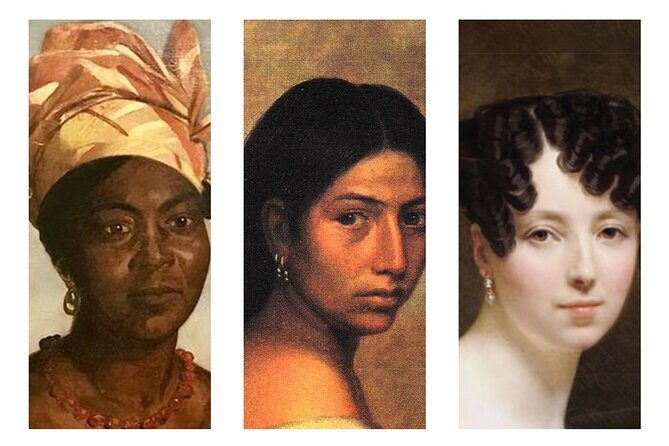
Jackson Square is the obvious first stop, and the tour uses that for a reason. The guide explains the history of the square as the center of the Vieux Carré, so you’re not just looking at a postcard spot. You start with the big map of ideas—then the rest of the walk feels more anchored.
About five minutes here might sound too short. In practice, it works because Jackson Square is open and busy, and the guide needs to keep the group together. You’ll likely leave with a mental framework, which makes the next church and park stops much easier to understand.
One practical tip: treat this as your orientation moment. If you’re planning to wander later, try to notice sight lines from the square to the streets and landmarks around it. A good guide makes you see the square like a crossroads, not just a landmark.
St. Louis Cathedral: the history stop that shapes the whole area
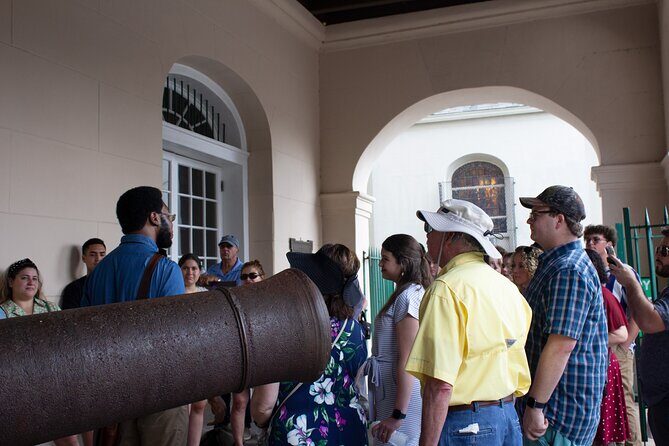
Next up is the St. Louis Cathedral, also around five minutes on the walking route. The tour frames it as the most historic church in New Orleans, which gives you a reason to look beyond architecture and into the role the church has played in the city’s identity.
This stop is short by design, but the storytelling angle is what matters. When a guide explains why a church is a cultural anchor, you start recognizing the cathedral as more than scenery. You get the feeling of a place holding memory through centuries, even if you only stand there briefly.
If you’re the type who normally skips church exteriors, this is still worth your time. The key is that the guide connects the building to the city’s bigger story of people, community, and change.
Louis Armstrong Park and Congo Square: music roots with context
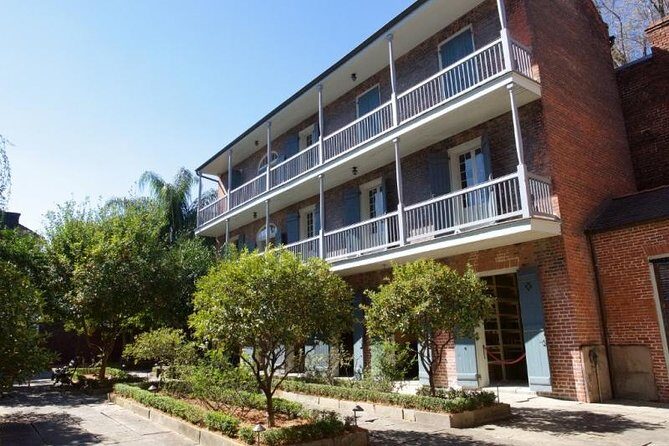
Then the tour moves to Louis Armstrong Park for Congo Square history, about ten minutes. This stop is where the tour’s promise starts clicking, because the guide connects cultural significance to what you hear in New Orleans today.
Congo Square is a name people toss around when they talk about music and culture. But a guided explanation helps you understand why it’s tied to the city’s identity, not just its reputation. The tour also links this to broader origins—so you’re hearing how jazz and other traditions fit into the bigger timeline.
Armstrong Park is a good change of pace from the tight-feeling streets of the French Quarter. Even with a short stop, you’ll likely get a mental break that makes the final courtyard visit feel like a reward.




Hermann-Grima House courtyard: the included stop you’ll actually remember
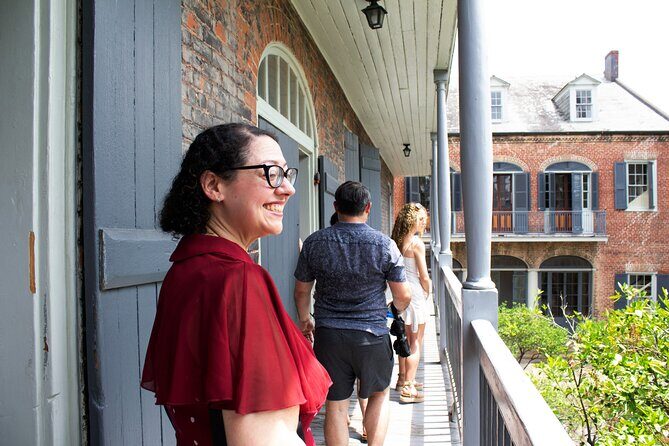
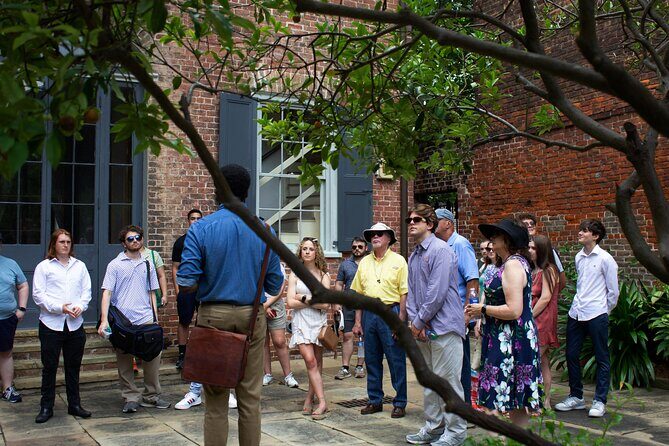
The best practical payoff on this tour is the Hermann-Grima House courtyard visit, roughly 20 minutes. This is the one place where your ticket directly buys something specific: entry to the courtyard, included in the price.
Why it works so well: a courtyard gives you a different New Orleans feeling. Streets can be loud and crowded; a courtyard invites you to slow down. You’re stepping into a space that fits the 19th-century vibe the guide is talking about, and that matters for learning. It’s hard to forget a place when you experience its mood, not just its facts.
From a value standpoint, this stop makes the $35 feel more justified. If the tour were only outside landmarks, you’d be paying mostly for narration. Here, you’re paying for narration plus a paid courtyard experience that you’d otherwise likely need to plan separately.
And because you end at the Hermann-Grima House address, you can keep exploring nearby streets right after. It’s a clean finish that doesn’t strand you far from your next move.
Creole language, Cajun comparisons, and the origins behind jazz, gumbo, jambalaya
The tour’s theme is Creole Louisiana, and it takes that seriously. You’ll hear explanations meant to help you understand the terminology, the people, and how culture traveled and mixed over time. One guest praised Lawton for breaking down the terms Creole and Cajun in a way that felt clear and not confusing.
This matters because New Orleans is full of words people throw around loosely. If you’re trying to understand what you’re hearing in restaurants, on signs, and in conversations, a tour that tackles language directly can save you a lot of guesswork.
The tour also connects stories to famous New Orleans traditions: jazz, gumbo, and jambalaya. Even if you’ve eaten those dishes before, the origin stories help explain why they’re so tied to the city’s identity. That kind of context turns a meal into a conversation you can actually follow.
And here’s a fun detail pulled from guest feedback: one review mentioned that Lawton shared a story about the first pharmacist in the United States being in New Orleans. Even if you don’t remember every name, you’ll likely keep the feeling that New Orleans isn’t just music and balconies—it’s also ideas, professions, and daily life.
What to expect from your guide: the highs, and one possible risk
Most of the ratings are excellent, and the strongest praise centers on guide skill and storytelling. Several reviews highlighted guides named Laurent, Lawson, and Lawton for being friendly, fun, and full of useful detail. One review called out how the guide helped connect culture, food, and history into a view you couldn’t easily piece together alone.
At the same time, one review dropped the score and raised a red flag. The guest felt the guide wasn’t delivering her usual tour, seemed to rely on a colleague, and they said some claims about Cajuns didn’t feel accurate to them. That’s a rare complaint, but it’s still worth noting.
So what’s the practical takeaway for you? Go in knowing that a walking tour depends on the day’s guide. If you care a lot about cultural accuracy—especially around Cajun and Creole terms—listen closely early on. If something feels off to you, don’t just nod along. Ask a question and see how the guide responds.
Is $35 good value for a 2-hour walking tour like this?
I’d call this a fair value if you want guidance and structure. You’re paying for a guide to handle navigation and storytelling across multiple landmark areas. You’re also paying for one meaningful included entry: the Hermann-Grima House courtyard.
If you’re the kind of traveler who wants to wander on your own, you could theoretically replicate parts of the route. But you’d still need context to connect Jackson Square, the cathedral, Congo Square history, and the courtyard into one coherent story. That’s where the guide earns the price.
Also, the small-group maximum of 28 helps keep the experience usable. In a big crowd, storytelling turns into background noise. Here, the format is set up to help you actually catch the points.
Who this tour is best for (and who should skip)
This is a great choice for first-timers to New Orleans. You’ll get a clean orientation loop through the French Quarter’s core sights without building a plan from scratch. It’s also ideal if you like culture explanations that connect places to language and traditions.
It’s also a strong fit if you’re interested in learning the differences between Creole and Cajun culture. The tour specifically focuses on Creole Louisiana, and at least one guide has been praised for making those terms understandable.
You might want another option if you’re allergic to short stops and prefer museum-style depth in a single building. This tour is brief at each location by design, so if you want a long sit-down experience, plan a separate attraction too.
Should you book this Creole Louisiana French Quarter walking tour?
If you want a guided way to understand what you’re seeing—plus one real courtyard entry—you should strongly consider booking. The mix of Jackson Square, the St. Louis Cathedral area, Louis Armstrong Park and Congo Square history, and the Hermann-Grima House courtyard gives you variety in a compact two hours.
I’d book especially if you care about Creole context and you want your New Orleans food and music stories to have a backbone. If you’re picky about cultural wording and you’re sensitive to accuracy around Creole vs Cajun topics, keep an ear open right from the start and ask follow-up questions.
FAQ
How long is the Creole Louisiana French Quarter walking tour?
The tour lasts about 2 hours.
How much does the tour cost?
It costs $35.00 per person.
Where does the tour start and end?
It starts at 2951502 Royal St, New Orleans, LA 70116, USA and ends at the Hermann-Grima House, 820 St Louis St, New Orleans, LA 70112, USA.
What is included in the ticket price?
Entry to the courtyard of the Hermann-Grima House is included.
What stops are part of the itinerary?
The tour includes Jackson Square, St. Louis Cathedral, Louis Armstrong Park, and an exclusive courtyard visit at the Hermann-Grima House.
Do I need to print anything?
No. It’s a mobile ticket.
How large is the group?
The tour has a maximum of 28 travelers.
What happens if the weather is bad?
This experience requires good weather. If it’s canceled due to poor weather, you’ll be offered a different date or a full refund.