REVIEW · NEW ORLEANS
French Quarter Historical Sights and Stories Walking Tour
Book on Viator →Operated by Lucky Bean Tours · Bookable on Viator
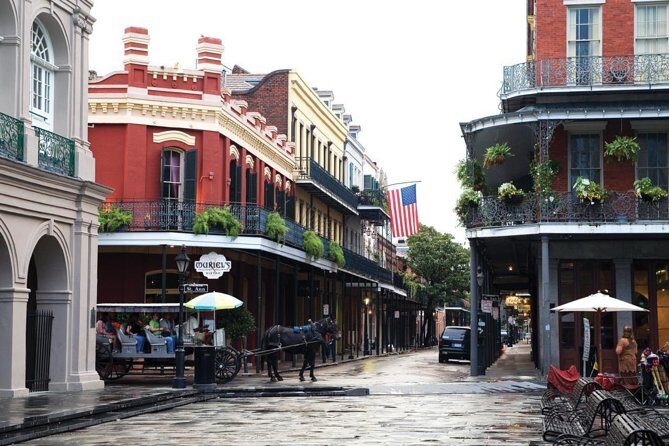
French Quarter in two hours: you get the why. This guided walk connects the oldest neighborhood in New Orleans to the buildings you see today, from Jackson Square to the Mississippi River. I love that the tour gives you clear context for French, Spanish, American, and Caribbean influences without making it feel like a lecture.
My second favorite part is the guide style: you’re not just hearing facts, you’re hearing how to notice details—architecture, religion, and even local politics—then using that understanding right away while you wander on your own. In previous departures, guides like Tim and Scott were especially praised for being friendly, funny, and great at answering questions.
One drawback to consider: the pace is intentionally efficient. If you’re hoping to linger in every doorway and take long photo stops, you may wish the route covered a bit more ground.
In This Review
- Key points before you go
- A $35 Introduction to the French Quarter’s Architecture and Cross-Culture
- Timing, Meeting Point, and Small-Group Size That Keeps You in the Story
- French Quarter to French Market: Getting the Layout and the Rhythm
- St. Louis Cathedral and the Mississippi River: Faith, Tragedy, and Survival
- Royal Street and Jackson Square: Where You Shop, Listen, and Make Sense
- Who This Tour Fits Best (and what to bring)
- Should You Book This Tour?
- FAQ
- How long is the French Quarter Historical Sights and Stories Walking Tour?
- How much does it cost?
- Where do I meet the tour and where does it end?
- Is the ticket digital and do I get confirmation right away?
- Does the tour run in bad weather?
- Can I cancel for a full refund?
Key points before you go
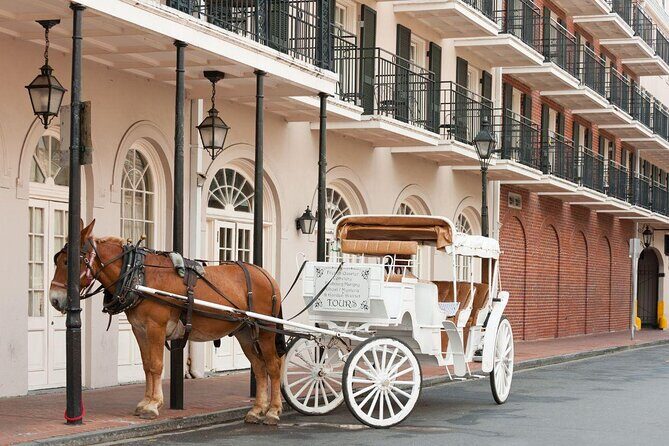
- Small group limit (12 travelers) keeps the guide easy to hear and questions welcome
- Stop highlights that actually explain the neighborhood: market, cathedral, river, shopping streets, and Jackson Square
- Three daily departures lets you pick a time that fits your day
- All-weather operation means you should dress for rain, heat, and humidity
- End right in Jackson Square so you can roll straight into more exploring
A $35 Introduction to the French Quarter’s Architecture and Cross-Culture
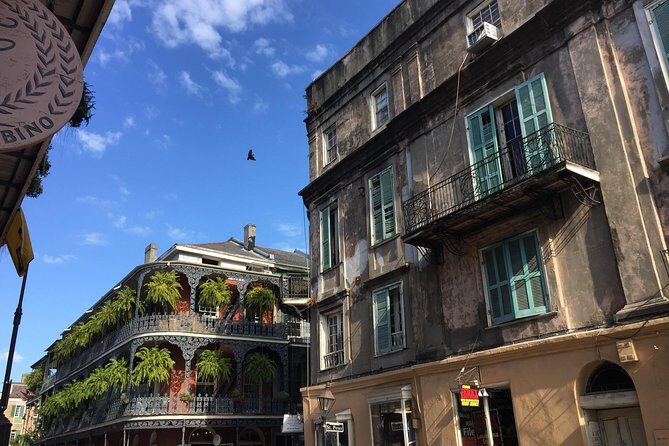
At $35 per person for about two hours, this tour is priced like a “get oriented fast” ticket. That’s the value sweet spot: you’re paying for a guide who can interpret what you’re seeing, not just point at it. And in a place like the French Quarter—where history sits in plain sight—having a translator for the streets pays off.
The route is built around big, recognizable names, but the stories aim for the connections between them. You’ll hear why colonial-era design still shapes what you see, why religious buildings matter in the city’s identity, and how the Mississippi River influenced life here. The guide also brings in practical local perspective, including where to focus for food and shopping after the tour.
I also like that the experience stays mostly about you noticing things. The French Quarter can overwhelm your senses if you’re wandering without context. With a guide, you learn what to look for—ironwork, balconies, street layout, and why certain places became gathering points. The result is that when you later pass the same corners on your own, they feel like they mean something.
And yes, the tour has a lighter side. Several guide descriptions mention humor, not just data. That matters, because New Orleans history is intense at times, and a good guide keeps it human.
You can also read our reviews of more walking tours in New Orleans



Timing, Meeting Point, and Small-Group Size That Keeps You in the Story
This is a walking tour with a maximum of 12 travelers, which is a big deal in the French Quarter. Crowds can make group tours feel like you’re being carried along. Here, the small size helps you actually hear the guide and ask questions without shouting over dozens of people.
You’ll want to plan around the schedule. The tour offers three daily departures, so you can match it to your energy level—early for orientation, later if you want a calmer pace after you’ve already sampled a few streets.
Logistically, it starts at Instrument Men, 400 Dumaine St, New Orleans and finishes in the Jackson Square area at 701 Decatur St. Ending there is smart. Jackson Square is the French Quarter’s public square, and after the last stop, you can keep exploring without having to backtrack.
The tour uses a mobile ticket, and you receive confirmation at booking. It also runs in all weather conditions, so you’re not gambling on the day falling apart. That means your best move is simple: dress appropriately and bring water, especially in warm months. Comfortable walking shoes are a must—this part of town rewards movement, but your feet will complain if you show up in the wrong pair.
One more practical note: service animals are allowed, and the meeting point is near public transportation. If you’re staying nearby or using transit, this is easier than tours that lock you into hotel pick-up.
French Quarter to French Market: Getting the Layout and the Rhythm
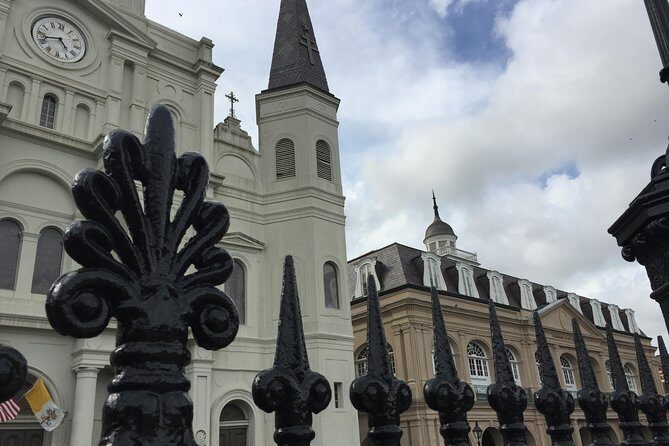
The tour begins with a French Quarter orientation stop—time is short, but it sets the tone. This first segment helps you understand that the Quarter isn’t just “pretty streets.” It’s a historic neighborhood where architecture and planning reflect the people who built it and the cultures that shaped daily life.
Then you move to the French Market, where the story meets the present. The market is known for its activity, and the guide uses that energy to anchor history. You’ll hear how trade and local commerce influenced what the neighborhood became. It’s not only about where stalls are. It’s about why markets mattered here—places where communities interacted, news moved, and goods flowed.
This is also a nice stop for first-timers. Even if you’ve seen photos of the Quarter, walking through the market area while someone explains the background helps your brain lock in the geography. Later, when you’re roaming on your own, you’ll recognize streets and intersections faster, because you’ve already mapped the area in your mind.
The French Market segment also has a pacing advantage. It’s brief enough that you won’t feel stuck, but long enough to absorb the vibe. If you’re traveling with family or you just want a manageable chunk of walking, it’s a good way to start.
St. Louis Cathedral and the Mississippi River: Faith, Tragedy, and Survival
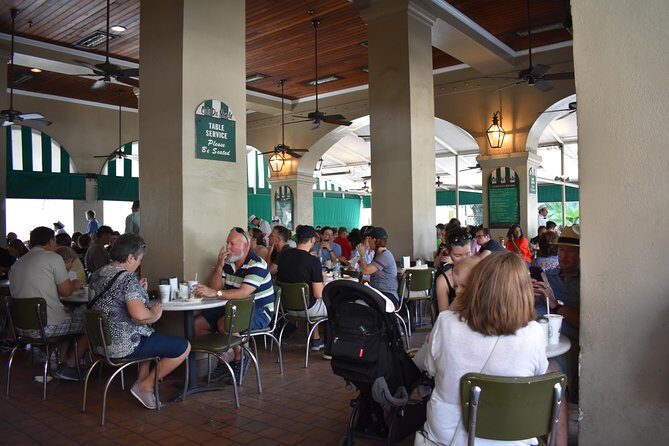
After the market, the walk reaches St. Louis Cathedral, a major visual anchor of the Quarter. It was built in the late 18th century, and the guide uses that fact to tell a fuller story than you’d get by reading a sign outside. Expect commentary on how religious life shaped the community and how the building has witnessed both heartbreaking and triumphant moments in New Orleans history.
This stop is one of the reasons the tour works even for people who’ve visited before. The French Quarter is famous for its landmarks, but without context, you’re often just collecting photos. With a guide, the cathedral becomes a lens for understanding the city’s identity: why this structure was built, why it matters, and how faith and public life intertwine.
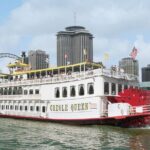
Then you head to the Mississippi River. The river isn’t just scenery here—it’s part of the city’s constant negotiation. The tour frames it with a memorable idea: the river gave the city life, but people here have to deal with it every day. That perspective helps you understand why New Orleans feels both resilient and at risk, and why so many parts of the city’s story circle back to water.
This is also a good time to notice what the guide has been building toward. Earlier stops help explain culture and architecture; the river stop shifts the lens to geography and survival. Together, they make the French Quarter story feel more complete, not just decorative.
Royal Street and Jackson Square: Where You Shop, Listen, and Make Sense
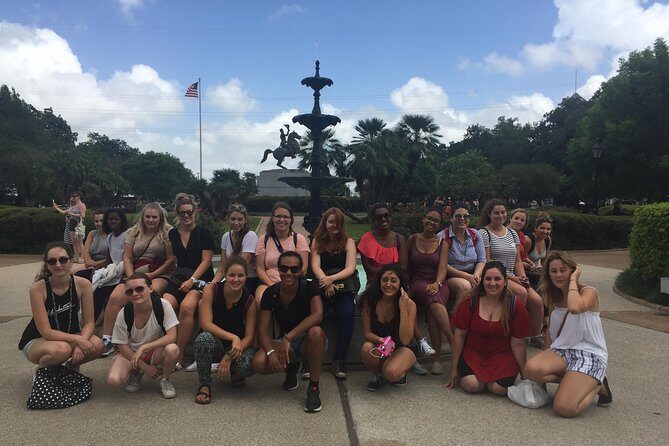
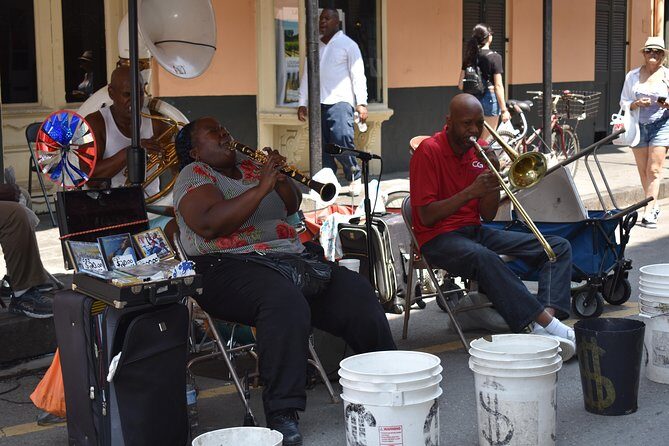
Next comes Royal Street, and this stop is where the tour becomes practical in a fun way. You’ll walk past a mix of shopping, street performers, and well-known places to eat—then the guide ties it back to stories. Royal Street isn’t only where you shop. It’s where you learn how the Quarter’s social life played out in public spaces.
If you like to plan your food and shopping with some strategy, this is a great moment. Several guides on this route are praised not only for history, but for recommendations—where to go, what to prioritize, and how to avoid wasting time. That kind of advice is gold when you have limited days.
From there, the tour finishes at Jackson Square, described as the heart of the French Quarter. This is a fitting ending because the square is where many threads—French and Spanish influence, American culture, Caribbean connections—seem to intersect in one place. The guide’s framing helps you see that Jackson Square isn’t just a postcard. It’s a public stage for the city’s blended identity.
Ending here also makes your afternoon easier. You’ll already have the background to decide what to do next: more walking, a sit-down meal, or extra time for photos and people-watching. And since the tour ends in the Jackson Square area, you avoid the “now what” feeling that can happen when tours leave you far away from the Quarter’s center.
You can also read our reviews of more historical tours in New Orleans





Who This Tour Fits Best (and what to bring)

This tour is ideal if you:
- are visiting for the first time and want a fast start that makes the neighborhood readable
- want history plus practical tips for dining and shopping
- prefer a small group where you can actually ask questions
- care about architecture and cultural influences, not just famous names
It’s also a solid pick for repeat visitors. Even if you’ve been before, a good guide can spotlight details you missed—like how specific influences show up in design, or how different parts of the Quarter connect to one another as a system.
What to bring is straightforward:
- Comfortable walking shoes
- Water, especially in warm months
- Dress for all-weather conditions since the tour operates rain or shine
And because the guide is actively answering questions, it helps to come with curiosity. If you’re thinking about where to eat later, bring those questions up during Royal Street or Jackson Square. That’s when the guide’s local perspective can save you time.
Should You Book This Tour?
If you want the French Quarter with context—history, architecture, and practical guidance in one tight walk—this is an easy yes. The $35 price feels fair for a guided experience that stays focused on how the neighborhood works, and the max 12 travelers setup makes it comfortable rather than chaotic.
The only reason not to book is if you dislike structured routes or you want long stops at every building. This is designed to teach you the big picture and get you oriented so you can enjoy the Quarter after the walk. If that matches your style, you’ll get a lot out of it.
FAQ
How long is the French Quarter Historical Sights and Stories Walking Tour?
The tour lasts about 2 hours.
How much does it cost?
It costs $35.00 per person.
Where do I meet the tour and where does it end?
You start at Instrument Men, 400 Dumaine St, New Orleans, LA 70116. The tour ends near Jackson Square at 701 Decatur St, New Orleans, LA.
Is the ticket digital and do I get confirmation right away?
Yes. The tour uses a mobile ticket, and you receive confirmation at the time of booking.
Does the tour run in bad weather?
Yes, it operates in all weather conditions. You should dress appropriately.
Can I cancel for a full refund?
Yes. You can cancel up to 24 hours in advance for a full refund.