REVIEW · NEW ORLEANS
New Orleans Small-Group Haunted History Carriage Tour
Book on Viator →Operated by Royal Carriages · Bookable on Viator
Ghost stories ride on mule power. This New Orleans haunted history carriage tour blends night views of the French Quarter with real 18th- and 19th-century tragedy—fires, floods, epidemics, and the kind of crimes that left scars on the city. You’ll travel in vintage-style comfort while your licensed guide turns landmark stops into a story you can actually follow on a dark street.
I especially like two things. First, the ride is built for comfort and focus: a max of 8 passengers means you’re not shouting over a crowd. Second, the storytelling can be great in a very human way—guides like Matt, Leman, Trish, and Michael have been praised for keeping a steady pace and making the history land with humor and energy, not just names and dates.
One thing to consider: this is haunted history more than jump-scare horror. Some people found it spooky and fun, but not a full-on ghost tour experience with lots of supernatural moments. Also, sound can be an issue if carriages are close—so if you can, choose your seat early and don’t assume the back row is your best listening spot.
In This Review
- Key things to know before you ride
- Where You Meet: Jackson Square at 700 Decatur St
- The Carriage Ride Itself: Covered Comfort and an Easy Pace
- Stop 1 at Jackson Square: Founding-Era New Orleans, in the Dark
- The French Quarter at Night: Saint Louis Cathedral, Napoleon House, and the Route That Works
- The Lalaurie Mansion Story: Where TV and Real Accounts Don’t Match
- Floods, Epidemics, and Documented Horror: The Dark History Under the Lights
- Saint Louis Cathedral View: A Classic Landmark That Adds Weight
- How to Choose Your Seat and Get the Best Listening Experience
- Price and Value: Is $65 for an Hour Worth It?
- Who This Tour Is Best For (and who may want a different option)
- Should You Book This Haunted History Carriage Tour?
- FAQ
- Where does the tour start?
- How many people are on the carriage?
- How long is the tour?
- Is the tour in English?
- What’s included in the ticket price?
- Are food and drinks included?
- What if the weather is bad?
- Can children attend?
Key things to know before you ride
- 8 riders maximum keeps the night personal and easier to hear
- Jackson Square meet-up starts the tour fast at 700 Decatur St
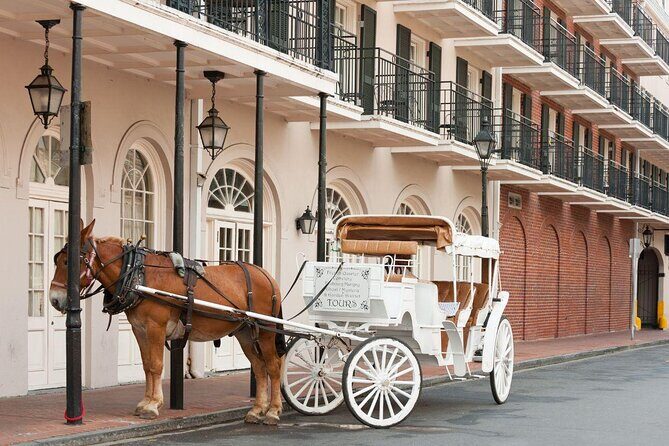
- Covered mule-drawn carriage gives you a classic New Orleans feel at night
- Major French Quarter landmarks like Saint Louis Cathedral and Napoleon House are part of the route
- Lalaurie Mansion is a headline stop with the true story compared to what popular TV made familiar
- Weather affects timing: rain can still work, but lightning or flooding can cancel
Where You Meet: Jackson Square at 700 Decatur St
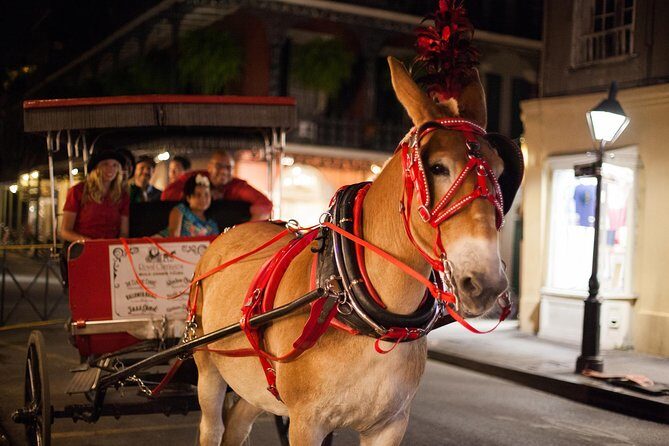
This tour launches right in the heart of the French Quarter, by the carriage stand at 700 Decatur St, opposite Jackson Square on Decatur Street. If you want an easy start, this is one of the advantages: you’re already in the thick of what you came for, so you’re not spending your evening in transit.
The timing matters. You should arrive 15 minutes early because late entry can mean you miss the tour and there’s no second ride offered. If you’re the type who likes a buffer (and you should be), give yourself extra time to park, orient, and find the correct carriage stand.
You can also read our reviews of more historical tours in New Orleans

The Carriage Ride Itself: Covered Comfort and an Easy Pace
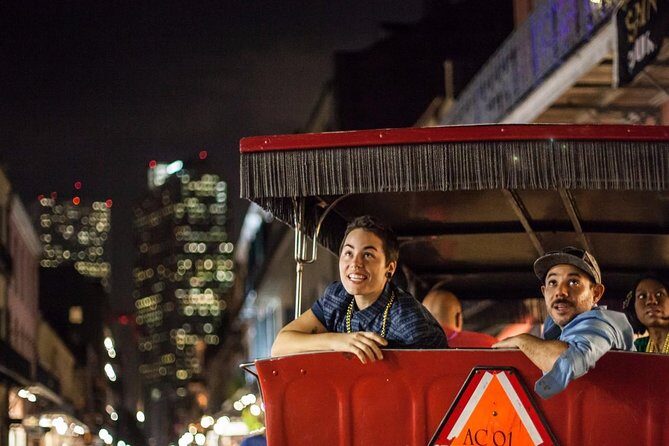
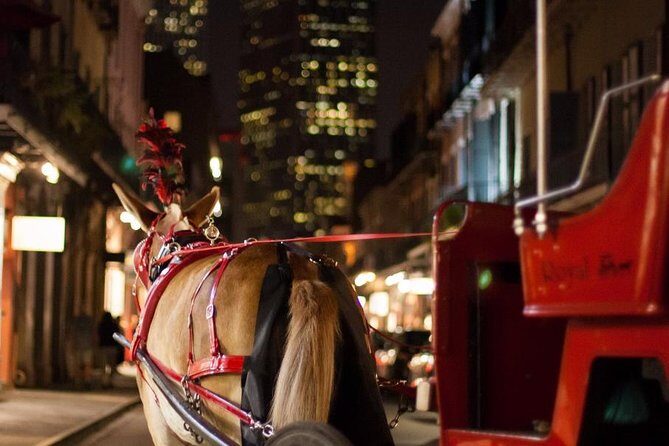
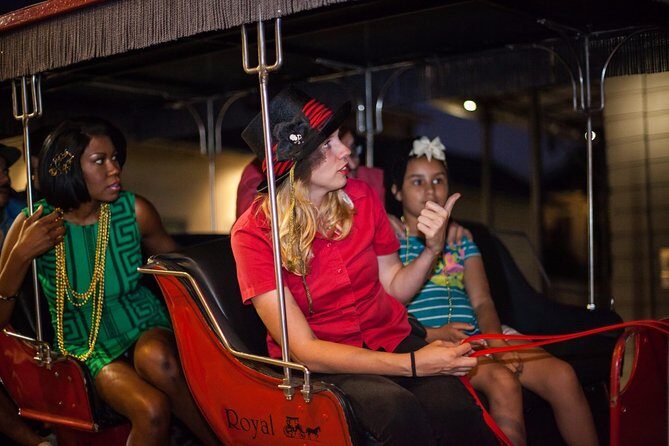
You’ll board an authentic, covered mule-drawn carriage for about an hour. With up to eight passengers, the pace feels calmer than walking tours, and the ride helps you cover distance without losing your evening to tired feet.
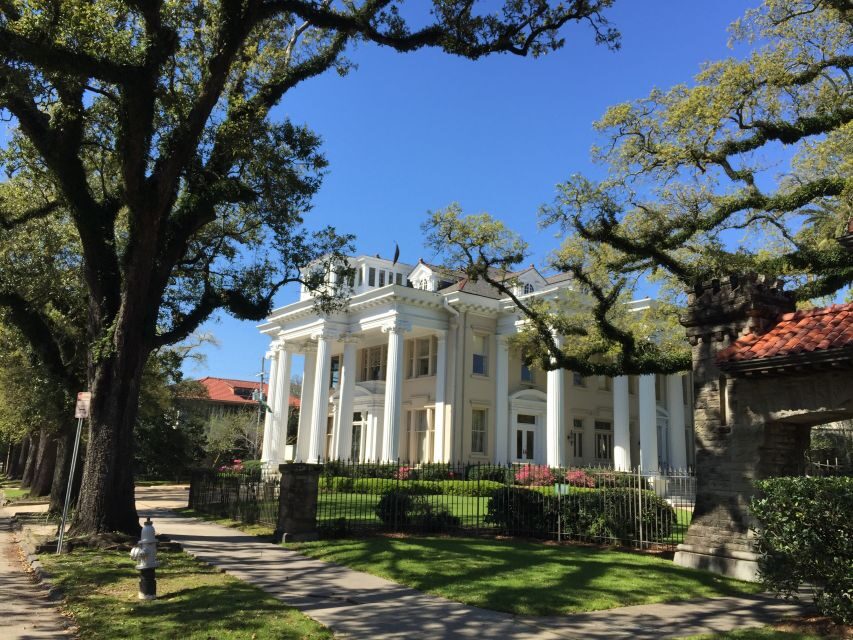
What makes this style of travel valuable is simple: it turns the French Quarter into a moving set of scenes. Instead of stopping every few minutes, you cruise past iron-laced balconies, darkened alleys, and southern mansions that look built for legend. The mule pace also creates a rhythm for listening—your guide can talk without you having to constantly “catch up” as you walk.
Seating can affect your experience. One review called out noise from other carriages and advised not sitting in the back. That’s an easy lesson for you: if you care about hearing every story, don’t wait until the last moment to pick a seat.
Stop 1 at Jackson Square: Founding-Era New Orleans, in the Dark
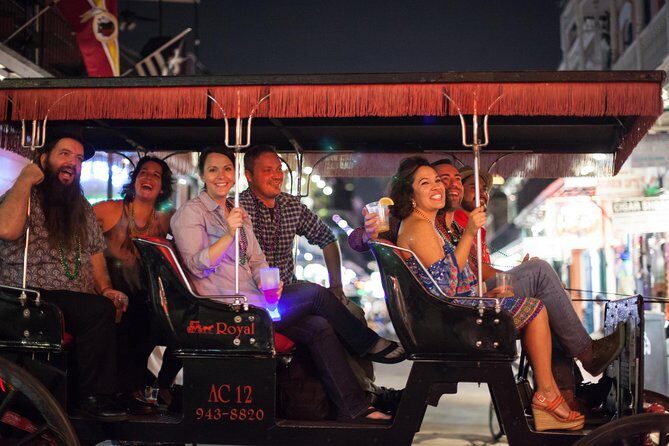
The first stop centers on Jackson Square, and the stories here set the tone for the entire hour. Your guide frames the Quarter as it would have felt in earlier centuries—when death and disease spread faster, and when disasters could wipe out whole neighborhoods.
At this point, you’re getting more than spooky vibes. You’re building context. That matters because many of the haunting tales in New Orleans don’t float in the air as vague folklore; they tie back to events that people documented, argued about, and passed down.
You also get the “time travel” effect for free. Boarding at Jackson Square makes the evening feel cinematic, because the area is already one of the city’s most recognizable public spaces. The carriage ride out of the square functions like a curtain raise: history, then street after street of it.
The French Quarter at Night: Saint Louis Cathedral, Napoleon House, and the Route That Works
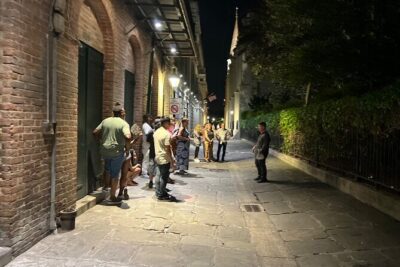
As the carriage moves through the oldest neighborhood, you’ll pass landmarks like Saint Louis Cathedral and Napoleon House, plus other historic streets that carry New Orleans’ layered story. This is where the tour shifts from “where we are” to “what happened here.”
A good guide makes this section fly. People praised guides for steady narration and for doing real work on the material. Names that came up include Charles (praised for being super informative and starting promptly), Armstrong and Matt (praised as a strong storytelling pair), and Lemen (praised for thorough research, even with photographs shared during the ride). If your guide has that kind of energy, you’ll probably feel like the hour goes by fast.
The tour also aims to keep stories appropriate for a mixed audience. If you’re bringing kids, you still get the atmosphere and the history, but it’s framed in a way that generally works as a family-friendly nighttime activity.
The Lalaurie Mansion Story: Where TV and Real Accounts Don’t Match
One of the biggest draws is a stop-and-story segment tied to the Lalaurie Mansion—often described as one of the most haunted buildings in the French Quarter. This is the point where the tour leans most clearly into the haunted-history brand.
The key detail: your guide should walk you through how the legend became popular, and how the version on TV compares to what happened in reality. That difference is exactly why this stop is worth your time. It’s not just fear for fear’s sake. It’s a lesson in how stories get reshaped over time—sometimes by entertainment, sometimes by incomplete records, and sometimes by people repeating what they heard.
If you love the culture around ghost stories—how they evolve and why certain places become magnets for myth—this part is likely to be a highlight. If you’re hoping for lots of supernatural sightings on cue, you might find it more grounded and historical than you expected.




Floods, Epidemics, and Documented Horror: The Dark History Under the Lights
As you keep moving through the Quarter, your guide covers the darker chapters that shaped the city: floods, epidemics, and other documented local horror stories. Fires and murders also appear in the overall storyline, tying the “haunted” theme to real-world disaster and crime.
Here’s the practical reason this matters to you: it explains why New Orleans haunting tales feel different from generic ghost stories. The city has a long record of suffering events, and those events are part of why legends stick. In other words, you’re not just hearing about ghosts—you’re hearing how communities explain grief, trauma, and fear.
This is also where your guide’s skill really shows. When the telling is strong, you come away thinking, not just feeling. And when it’s weaker, you can end up with a tour that’s still informative but less thrilling—one review explicitly complained about a monotone, hard-to-understand guide and said the mule seemed unwilling.
Saint Louis Cathedral View: A Classic Landmark That Adds Weight
Even if you’ve seen it in daylight, viewing Saint Louis Cathedral at night changes the feeling. The exterior reads like a quiet anchor while the guide’s stories keep the conversation on the city’s darker chapters.
This works well because the cathedral is more than scenery. It’s a reminder that New Orleans is not only built on tragedy. It’s also built on religion, community life, rebuilding, and continuity. That contrast—sacred landmark plus unsettling history—is part of why the tour can be both moving and spooky.
How to Choose Your Seat and Get the Best Listening Experience
New Orleans carriage rides are social by nature, but you can still control how much you hear. A couple of practical tips based on what people reported:
- Sit where you can hear your guide clearly without leaning or straining. One person warned that sitting in the back made it harder to catch everything due to noise from other carriages.
- Try to be early so you’re not stuck with the least convenient position.
- If you’re sensitive to sound, consider bringing a small pair of earplugs. (You won’t need them every time, but they can help on busy carriage nights.)
If you’re the kind of traveler who wants every word, make this a priority. With a short one-hour tour, missing details hurts more than on a longer day of walking.
Price and Value: Is $65 for an Hour Worth It?
At $65 per person, you’re paying for three things at once: a mule-drawn carriage ride, a licensed guide, and a tightly managed small group format. For a one-hour evening activity in a high-demand area like the French Quarter, that can feel fair—especially compared with the cost of doing multiple paid city experiences in the same day.
The real question isn’t just the cost. It’s fit.
- If you want a low-effort way to cover the French Quarter while still learning, the ride has value. You’re not just sightseeing; you’re getting guided context tied to real places.
- If you want a nonstop “ghost tour” experience with lots of supernatural moments, you may feel the price is steep for what you get. One review said it was more history than ghost theatrics.
- If your guide is strong (many were praised for research, humor, and strong narration), the hour can feel like money well spent.
In practice, I think the best approach is to treat this as haunted history on a carriage, not as a full horror production. If that’s your mindset, it’s easier to feel satisfied by what you paid for.
Who This Tour Is Best For (and who may want a different option)
This tour shines if you’re:
- Visiting for the first time and want an efficient way to get your bearings in the French Quarter
- A couple or small group that prefers calmer conversation over crowded walking tours
- Someone who likes history but wants it told in a story-friendly way
- Curious about the real backstory behind famous haunted locations like the Lalaurie Mansion
It may not be the perfect match if you:
- Want intense scares and lots of supernatural set pieces
- Are easily bothered by sound and want quiet, solitary touring
- Are expecting a longer itinerary than about an hour
Also, it’s listed as operating with most travelers able to participate, and children must be accompanied by an adult. If you’re bringing teens, you might enjoy the blend of history plus the darker tales—just know the tone is still meant to stay appropriate.
Should You Book This Haunted History Carriage Tour?
I’d book it if you want a small-group French Quarter night that’s easy on your feet and strong on guided storytelling. The combination of covered mule carriage comfort, a guided loop past major landmarks, and the heavy-hitting Lalaurie Mansion segment makes it a memorable “first night” type of activity.
Skip the rush if you’re purely after theatrical ghost effects. This tour’s haunted angle is built on the city’s documented tragedies and legends—not constant supernatural action. If you go in knowing it’s haunted history with a spooky mood, you’ll likely find the hour satisfying.
If you can, look for a time when you can arrive early and choose your seat thoughtfully. And if the guide’s style turns you off, remember you still rode through some of the most famous streets in New Orleans—and you’ll know exactly where you want to linger on your own afterward.
FAQ
Where does the tour start?
The tour starts at the carriage stand at 700 Decatur St, New Orleans, LA 70116, near Jackson Square. It ends back at the meeting point.
How many people are on the carriage?
The group size is capped at a maximum of 8 travelers, which helps keep the experience more personal.
How long is the tour?
Plan on about 1 hour for the carriage ride and stops, roughly.
Is the tour in English?
Yes, the tour is offered in English.
What’s included in the ticket price?
The ticket includes the 1-hour mule-drawn carriage ride and a licensed tour guide.
Are food and drinks included?
No. Food and drinks are not included, though they are available to purchase.
What if the weather is bad?
Tours operate in favorable weather conditions, including rain. However, the experience may be canceled due to inclement weather such as flooding or lightning, and you’ll be offered a different date or a full refund.
Can children attend?
Children can go, but must be accompanied by an adult.