REVIEW · NEW ORLEANS
New Orleans Dead of Night Ghosts and Cemetery Bus Tour
Book on Viator →Operated by Haunted History Tours · Bookable on Viator
New Orleans feels different after dark. This dead-of-night bus tour mixes haunted legends with real cemetery stops.
I especially like the licensed guide storytelling and the chance to see voodoo-linked sites beyond the French Quarter. You’ll also get multiple photo opportunities in serious dark-sky settings. The main drawback to consider: it leans on history and legends, so if you want nonstop jump-scare “chaos,” you may find some parts more informative than scary.
If you love cemeteries, odd New Orleans lore, and listening to a guide who clearly enjoys the subject (Christian is a standout name people mention), you’ll likely have a great time. Just pack patience: cemetery time can feel brief depending on the stop and what’s accessible after dark.
In This Review
- Key things to know before you go
- Dead of Night starts at Rampart Treehouse, not the usual tourist drag
- The bus tour format: great for timing, with a trade-off on cemetery access
- Bayou St. John and the Magnolia Bridge: voodoo stories start strong
- St. Louis Cemetery No. 3: yellow fever, overcrowding, and layered burial history
- Charity Hospital Cemetery and the living side of death in the city
- Katrina memorial stop: a somber pause inside the spookiness
- New Orleans City Park and Cafe du Monde: the break that keeps the night fun
- Guides make or break this tour: Christian, Drew, and the high-energy storytelling style
- Ghost photos: how to get the best results without stressing out
- Air-conditioned comfort and what’s not allowed on the bus
- Value check: why $55 can make sense for a night outside the French Quarter
- Who should book this dead-of-night tour, and who might want to choose differently
- Should you book? My straight answer
- FAQ
- How long is the New Orleans Dead of Night Ghosts and Cemetery Bus Tour?
- How much does the tour cost?
- Where do I meet the tour?
- What’s included in the price?
- Do I need tickets for the cemetery stops?
- Are alcoholic drinks allowed on the bus?
Key things to know before you go
- Small group feel: capped at 28 travelers, so it’s not a giant herd.
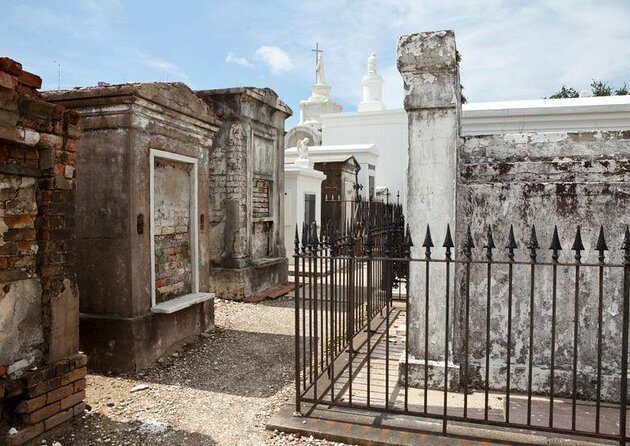
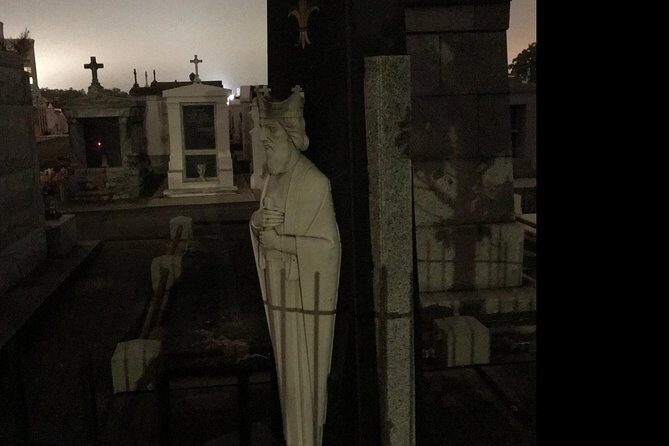
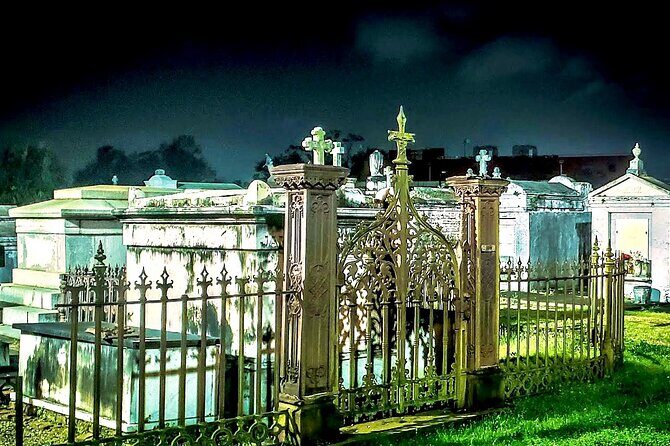
- Real night cemetery settings: you visit cemeteries after dark, not just viewpoints from the street.
- Voodoo and memorial stops in the mix: Marie Laveau-linked locations, plus a Katrina memorial with unidentified victims.
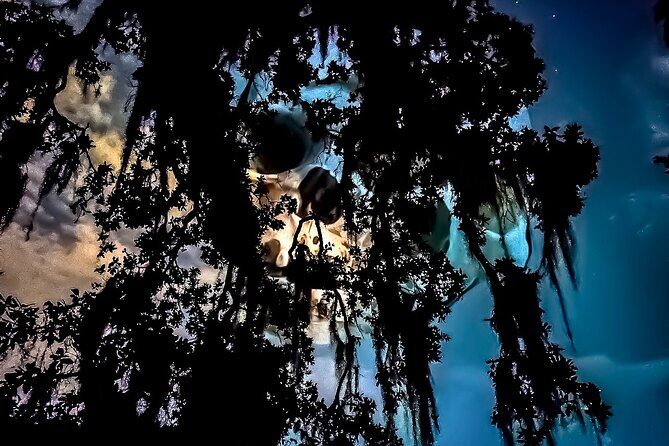
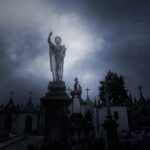
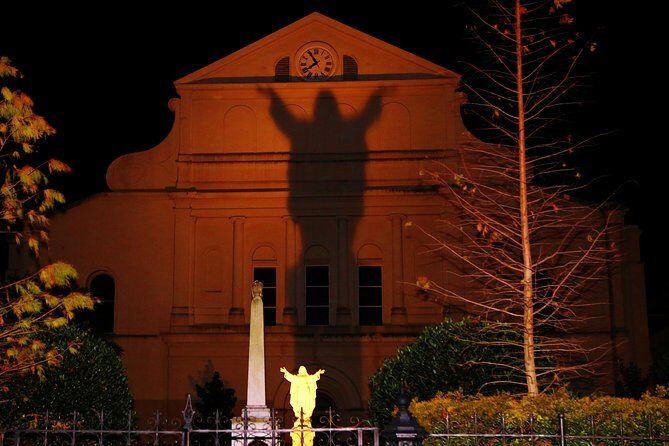
- Photo chances, not guarantees: you’ll be in dark, atmospheric spots where guests report seeing and photographing eerie-looking images.
- Comfort matters: air-conditioned bus rides keep the night pleasant even when the weather isn’t.
Dead of Night starts at Rampart Treehouse, not the usual tourist drag
You meet at Rampart Treehouse, 740 N Rampart St. That location is handy if you’re staying outside the French Quarter—or if you want to see a different slice of the city before you even consider heading toward the big-name neighborhoods.
From there, the tour settles into a simple rhythm: drive, stop, walk a bit, listen to stories, then move on again. It’s the right format for a short, 2-hour night outing. You’re not stuck committing to a long cemetery crawl, and you’re not trying to find everything alone after dark.
The bus itself is part of the value. You’re in an air-conditioned vehicle with a licensed guide. That matters in New Orleans, where the difference between a “fun night” and a “tired night” can be the weather and the heat. This tour keeps you comfortable while still getting you outside for the important dark stops.
You can also read our reviews of more evening experiences in New Orleans
The bus tour format: great for timing, with a trade-off on cemetery access
This is built for motion. You get to cover several important locations without having to drive or navigate at night. And because the guide handles the route and storytelling, you don’t need to worry about street-by-street logistics.
Here’s the trade-off: with a tight schedule, you can’t expect long, unhurried exploration everywhere. In practice, you’ll likely spend more time at certain stops than others, and some cemetery locations may be more about the surrounding area than a full interior walk. The good news is that you’re still getting genuine night cemetery atmosphere, which is the whole point.
Tip: wear shoes you can walk in comfortably. You’ll be outside at multiple stops, and you’ll want to feel steady when you’re taking photos or looking for details.
Bayou St. John and the Magnolia Bridge: voodoo stories start strong
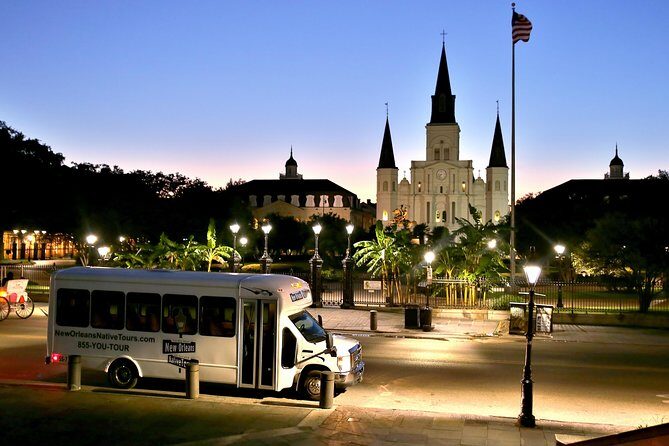
Your first stop is Bayou St. John, where the tour connects the water’s edge and nearby areas to Marie Laveau. The legend is that she carried out voodoo rituals in this part of town, and the area remains linked to ritual activity on St. John’s Eve at the Magnolia Bridge.
What I like about this opening: it sets the tone without jumping straight into a cemetery. You begin with a New Orleans-specific idea—spiritual practices tied to places you can actually see and walk past during the day. Then, right after that, you shift toward the city’s burial history. That contrast is what makes the tour feel like a story instead of a checklist.
If you’re the type who enjoys local lore (and not just generic “ghost tales”), this first stop gives you a framework for understanding why New Orleans is so willing to talk about the spiritual side of life—and death.
St. Louis Cemetery No. 3: yellow fever, overcrowding, and layered burial history
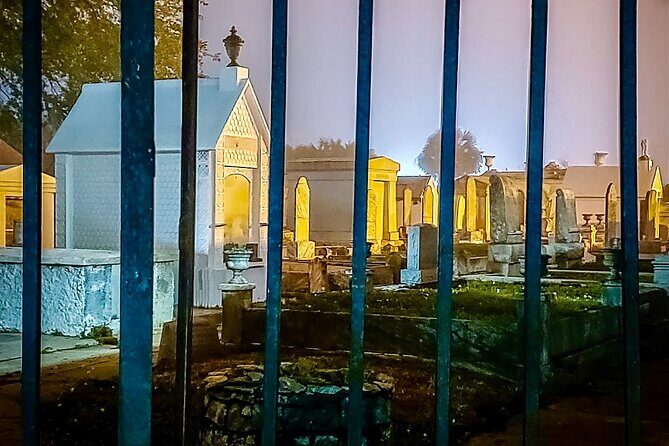
Next comes St. Louis Cemetery No. 3, one of the key cemetery stops on the city’s after-dark circuit. The tour’s story starts with the 1800s: the cemetery was built during the yellow fever epidemics when the city ran out of burial space.
And then it gets stranger, in a way that feels very New Orleans. The tour describes the site as having once served as a lepers colony area, with a cemetery of its own—so you can think of it as a cemetery built atop earlier layers of burial and illness history.
Why this stop is valuable: it explains something important about why New Orleans cemeteries look the way they do and why they feel different from what you might expect elsewhere. You’re not just looking at tombs. You’re seeing how the city responded to disease, overcrowding, and tragedy—responses that shaped the physical landscape you’re now walking through at night.
Drawback to keep in mind: you may not get the same level of roaming access you’d want if your goal is pure exploration. The tour’s goal is to tell the story fast, keep the group moving, and still fit in multiple stops after dark.
Charity Hospital Cemetery and the living side of death in the city
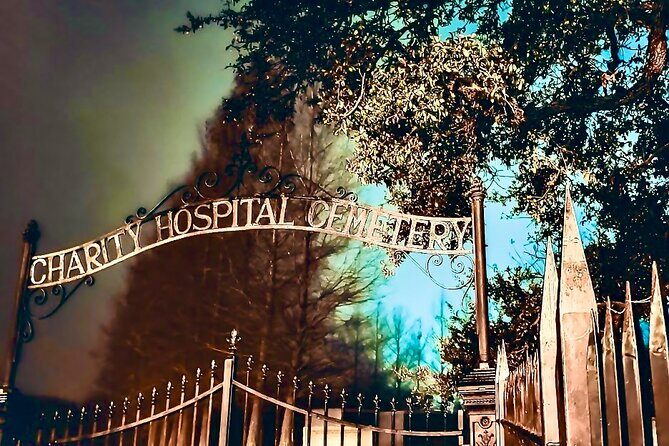
After St. Louis Cemetery No. 3, the tour moves toward Charity Hospital Cemetery—described as a place with plenty of ghost sightings. This is where the tour leans more into the “paranormal hotspots” side.
Even if you’re skeptical, I appreciate this kind of stop because it connects haunting legends to real New Orleans history around medicine and survival. Charity Hospital is part of the city’s identity, and tying it to burial grounds makes the lore feel less like fantasy and more like a local way of processing loss.
If you’re hoping for classic “spirit appears” moments: you’ll be in the right setting. But remember—what you see in a dark cemetery depends on a lot of factors (light, camera settings, your own comfort level). I suggest treating this as an atmosphere tour first, and a photo-hunt second.






Katrina memorial stop: a somber pause inside the spookiness
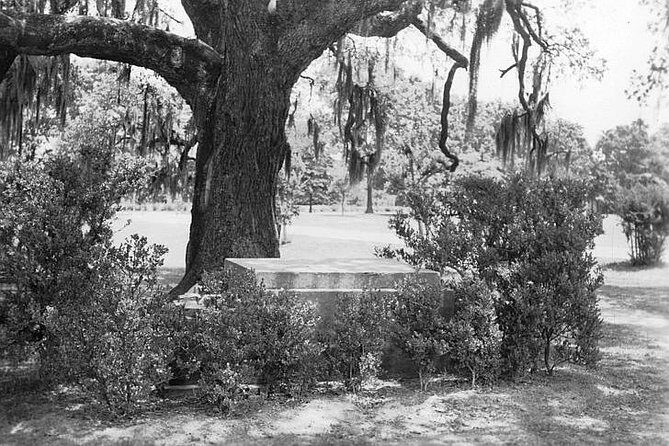
The tour includes a memorial stop connected to Hurricane Katrina, specifically with tombs of 85 unidentified victims. This is one of the places where the tour’s tone matters. You’re not only chasing ghosts; you’re paying respects where history is still very present.
This kind of stop is also why the tour can feel more meaningful than a standard “haunted bus ride.” It reminds you that New Orleans’ death-related stories aren’t only folklore—they’re also tied to major real events that changed lives and families. If you’re the kind of traveler who respects solemn spaces, this portion will likely land well.
Practical note: be ready for a quieter moment. Keep your voice down and follow the guide’s lead on timing.
New Orleans City Park and Cafe du Monde: the break that keeps the night fun
The tour concludes at New Orleans City Park, with time to grab a bite at Café du Monde (own expense). This is a smart end point. City Park gives you a lighter transition out of cemetery darkness, and Cafe du Monde is the perfect “I survived the night” comfort stop.
You’re not stuck eating a sad snack before heading back. You get an actual local routine: fried-dough comfort, hot drinks, and that iconic New Orleans energy. Many people love this moment because it’s when the group energy shifts from spooky focus to casual chat.
If you’re traveling with someone who thinks they don’t like ghost tours, this cafe stop can be the peace offering that keeps them on board.
Guides make or break this tour: Christian, Drew, and the high-energy storytelling style
A big reason this tour lands so well is the human part. Names that show up again and again include Christian, Drew, Shannon, Perry, and Israel. The common thread: guides who sound like they care about the city and enjoy connecting past events to what you’re seeing now.
I like this guide-driven approach because it makes the stops feel connected. When you’re in a cemetery at night, it’s easy to stare at tombs and miss the point. A good guide keeps you looking in the right direction—at history, symbolism, and the local reasons these places became part of ghost lore.
If you can, show up ready to listen. Bring your curiosity. The most fun part of these tours is often the story time, not the curbside sightseeing.
Ghost photos: how to get the best results without stressing out
The tour actively encourages bringing a camera, and the overall vibe is that some guests do capture eerie-looking images. That’s exciting, but I’d keep expectations grounded.
Here’s how I’d handle it:
- Turn off flash if you don’t know how it will affect your photos.
- Focus on steadier shots while you’re stopped—try not to rush.
- Shoot a mix: wide shots for the atmosphere and close shots for details on tombs.
Also, the “photo-bombing spirit” jokes are part of the lore. But what matters most is how you feel in the moment. If you’re tense, you’ll miss details. If you’re calm, you’ll notice more—and you’ll get better photos even if nothing weird shows up.
Air-conditioned comfort and what’s not allowed on the bus
The tour is built around comfort: you’re riding in an air-conditioned vehicle. That’s a big deal for night tours.
One clear rule: alcoholic drinks are not allowed on the bus. So if you were imagining a spooky party vibe, shift to a calmer mood. Night cemeteries and memorial spaces deserve a respectful tone anyway.
Value check: why $55 can make sense for a night outside the French Quarter
At $55 per person for about 2 hours, you’re paying for three main things: transportation, a licensed guide, and curated stops. The bus coverage is a real savings if you’d otherwise spend time driving, parking, and trying to piece together night access on your own.
You’re also not just visiting one cemetery. You’re hitting multiple sites and mixing in voodoo-linked lore (Bayou St. John), cemetery history (St. Louis Cemetery No. 3), a medical/burial connection (Charity Hospital Cemetery), a Katrina memorial (85 unidentified victims), and then finishing with a New Orleans payoff at City Park and Cafe du Monde.
If you’re short on time in New Orleans, this format is efficient. If you have a whole day to roam, you might still want to do independent cemetery time too—but as an “overnight story session,” this price can feel fair.
Who should book this dead-of-night tour, and who might want to choose differently
This tour is a great match if you:
- want night cemetery atmosphere without planning everything yourself
- enjoy a guide-led mix of legends + real historical context
- like photo opportunities and dark, atmospheric settings
- are visiting for the first time and want to see haunted sites beyond the French Quarter
You might think twice if you:
- expect nonstop jump scares and very little history
- want long, free-roaming access inside every cemetery you visit
- get disappointed by tours that prioritize storytelling and timing over extended wandering
One more practical fit check: this is English-language, and the group size tops out at 28. It’s small enough to feel personal, but still big enough that you’ll stay on schedule.
Should you book? My straight answer
Yes—book it if you want a well-told night tour that balances New Orleans folklore with the real places where the city remembers its dead. The guide energy (Christian is a name worth looking for) is a major part of why this works, and the route takes you beyond the usual French Quarter haunt circuit.
Skip it only if your definition of a great ghost tour is pure scare intensity and long cemetery time. This one is more “guided night stories in important locations” than “constant supernatural action.”
If you go with curiosity, comfortable shoes, and a camera you trust, you’ll get an evening that feels distinctly New Orleans.
FAQ
How long is the New Orleans Dead of Night Ghosts and Cemetery Bus Tour?
It runs for about 2 hours.
How much does the tour cost?
The price is $55.00 per person.
Where do I meet the tour?
The start point is Rampart Treehouse, 740 N Rampart St, New Orleans, LA 70116. The tour ends back at the meeting point.
What’s included in the price?
Included are a professional (licensed) guide and an air-conditioned vehicle.
Do I need tickets for the cemetery stops?
Admission tickets for the stops listed are free.
Are alcoholic drinks allowed on the bus?
No. Alcoholic drinks are not allowed on the bus.