REVIEW · NEW ORLEANS
New Orleans Garden District Architecture Tour
Book on Viator →Operated by NOLA Tours · Bookable on Viator
Garden District architecture, tightly explained. In two hours, you’ll walk away seeing Italianate details and understanding the rules of New Orleans cemeteries. This tour hits the sweet spot: beautiful streets plus real context, guided by locals like Angela, a 10th-generation New Orleanian who makes the city feel personal.
I especially love how the tour teaches you to look—not just admire. Guides point out how styles connect across the neighborhood, including standout stops designed by Samuel Jameson, and how buildings evolved over time, like the Louise S. McGehee School.
One drawback to plan for: Lafayette Cemetery No. 1 access is permitted by the city, but it can be closed during services. Add in the fact that the tour depends on good walking weather, and you’ll want to dress for heat and be flexible.
In This Review
- Key things you’ll notice on this tour
- Two Hours in the Garden District: why this walk makes sense
- Lafayette Cemetery No. 1 and the “Cities of the Dead” culture
- Commander’s Palace: architecture, ownership stories, and what you do not pay for
- Morris-Israel House: Italianate architecture tied to Samuel Jameson
- Women’s Guild of the New Orleans Opera: two eras, two styles, one smart lesson
- Louise S. McGehee School: when homes become community buildings
- Carroll-Crawford House: another Samuel Jameson Italianate example
- The Rink Shopping Center: 1884 skating history you can picture
- The two-hour format: how the pacing stays friendly
- Price and value: why $40 feels fair
- What to bring and when to go
- Who this tour is perfect for
- Should you book the New Orleans Garden District Architecture Tour?
- FAQ
- How long is the New Orleans Garden District Architecture Tour?
- How much does the tour cost?
- Is this tour in English?
- How big is the group?
- Where do I meet for the tour?
- Is transportation included?
- Are tickets included for the stops?
- Is the cemetery stop always available?
- What happens if the weather is bad?
Key things you’ll notice on this tour

- Small group size (max 14) keeps it interactive and easier to ask questions
- Licensed local guide brings neighborhood context and plenty of stories
- Lafayette Cemetery No. 1 adds the city’s “Cities of the Dead” burial culture (with possible closures)
- Samuel Jameson Italianate houses give you a clear architecture thread through multiple stops
- Design shifts in one place, like the Women’s Guild Opera house built across two eras and styles
- Oddball local recreation history, including an 1884 skating rink claim at the Rink Shopping Center
Two Hours in the Garden District: why this walk makes sense

If you’re short on time but want more than postcard views, this is a smart pick. The Garden District can feel like a sea of pretty homes until someone teaches you how to read the street: building dates, architectural style choices, and the way the neighborhood changed as people’s needs changed.
This tour runs about 2 hours and stays focused on a manageable route. You’ll start at 2727 Prytania St and finish back there. Expect a leisurely walking pace with stops built for quick, clear explanations rather than long lectures. The small-group limit of 14 travelers matters here. You’re not shouting over a crowd, and you’re more likely to get your questions answered.
Also, it’s in English, with a mobile ticket. And you can usually count on the guides adding practical tips for what to look for after the tour, so the rest of your trip feels easier.
You can also read our reviews of more tours and experiences in New Orleans.



Lafayette Cemetery No. 1 and the “Cities of the Dead” culture
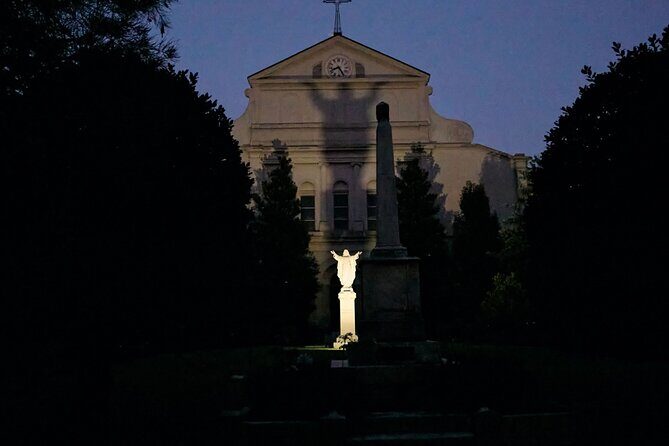
The cemetery stop is short, around 5 minutes, but it’s one of the most memorable pieces of the overall tour. You’ll learn about New Orleans’ distinctive burial customs and why cemeteries are treated as more than storage for the dead.
Here’s the part you should respect and plan around: entrance is permitted by the City of New Orleans, and it may be closed when services are being performed. If that happens, don’t treat it like a tour “failure.” It’s part of how the cemetery works. Your guide will still help you understand what you would have seen and why the burial customs are so different here.
What I like about this stop is that it sets context fast. It connects the architecture theme (stonework, layouts, and design) to culture. And it gives you a framework for seeing cemeteries not as an odd detour, but as part of New Orleans urban life.
Commander’s Palace: architecture, ownership stories, and what you do not pay for
Next comes Commander’s Palace, a quick 3-minute architectural discussion. This is less about walking inside and more about using a famous building as a teaching tool. You’ll hear how the building’s architecture fits into the area’s story, plus some background on the owners.
There’s also a nod to the culinary side of Commander’s Palace, since it’s one of the city’s biggest restaurant names. The key point for your budget: admission is not included for this stop. That doesn’t mean you’ll be missing the meal experience as part of the tour, but it does mean you should think of it as architectural context, not a guided tasting.
If you’re the type who loves the “how did this place become famous” angle, this stop works well. It also pairs nicely with the surrounding residential styles, since it reminds you that Garden District identity includes both homes and institutions.
Morris-Israel House: Italianate architecture tied to Samuel Jameson
The tour then moves into something you can connect to easily: Italianate style, through buildings designed by Samuel Jameson.
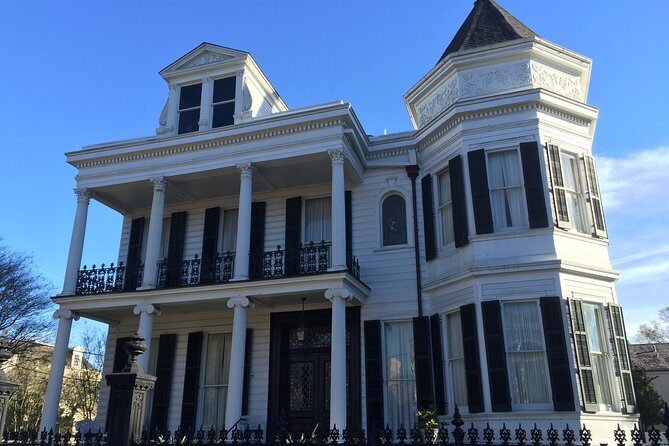
At the Morris-Israel House, you’re looking at a structure designed by Jameson in 1869. This is where the guide’s job gets especially valuable. Instead of just naming a style, you learn how Italianate relates to other styles you’ll see in the neighborhood. That means when you’re standing on a corner later, you’ll start spotting patterns instead of feeling lost.
This stop is about 5 minutes, so you won’t get stuck in a single building for too long. You’ll get the main idea, then move on. That keeps your momentum—and it helps you notice differences across multiple houses.
Women’s Guild of the New Orleans Opera: two eras, two styles, one smart lesson
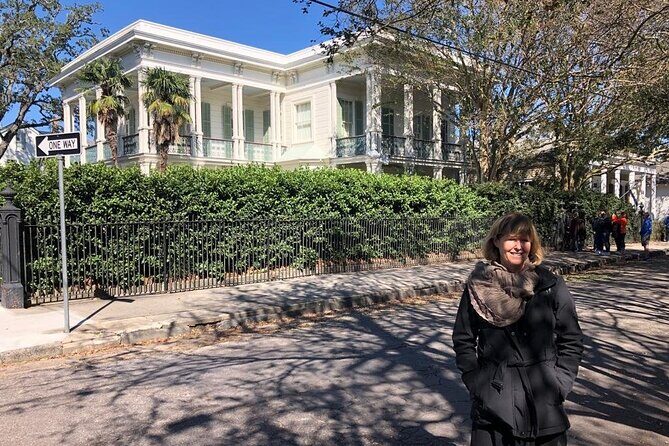
Another quick stop—about 3 minutes—but with a neat teaching twist. The Women’s Guild of the New Orleans Opera house was built in two different eras and in two different styles.
If you’ve ever looked at older buildings and thought, That seems mixed, this is your chance to understand what you’re seeing. The guide shows you how to tell the difference between those styles, which turns the Garden District into a real-life design lesson.
I like this stop because it helps you break free from the “one building, one style” assumption. Neighborhood architecture often evolves in layers, and this is a clear example you can keep in your head when you explore on your own later.






Louise S. McGehee School: when homes become community buildings
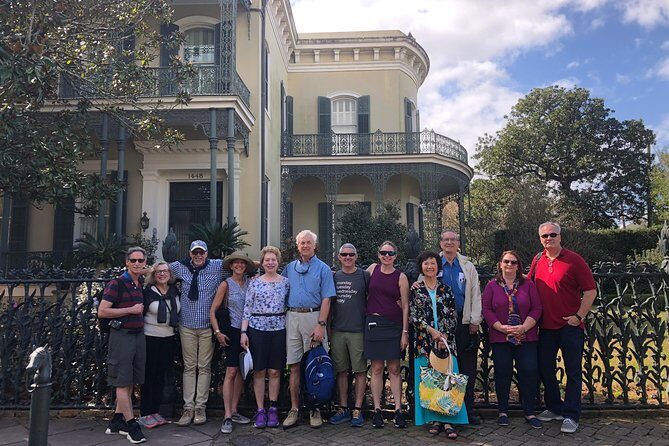
The Louise S. McGehee School stop runs longer, about 10 minutes, and it’s a good reminder that architecture isn’t frozen in time.
You’ll hear how the late 19th-century building started as a single family residence, then later became the library of the McGehee School. That transformation matters. It’s not just a change of paint or rooflines—it’s a shift in how the structure serves the community.
This is also a stop where families often seem to enjoy the story. It’s easy to understand: a building had one purpose, the neighborhood needs changed, and the space was re-used.
Even if you’re more focused on antebellum mansions, this kind of detail gives you a fuller picture of how the Garden District stayed useful as the city evolved.
Carroll-Crawford House: another Samuel Jameson Italianate example
Then you get another strong architecture thread. The Carroll-Crawford House is also tied to Samuel Jameson, with an emphasis on Italianate design again.
This stop is about 5 minutes. It’s short, but it reinforces the pattern you’re learning: how Jameson’s designs show up in different parts of the neighborhood, and how style details can be consistent even when the buildings aren’t identical.
If you enjoy architecture tours where the guide helps you build a mental checklist, this is the kind of stop that helps you lock in what you’re seeing. By the time you reach the later streets, you’ll likely be comparing what you’re looking at—because you were taught what to compare.
The Rink Shopping Center: 1884 skating history you can picture

Not every Garden District story is about formal mansions. The Rink Shopping Center stop is about 7 minutes and brings in a surprising detail: when it was built in 1884, it housed the largest skating rink in the country at that time.
That fact gives you a fun angle on local life. Your guide connects the building to residents’ recreational activities at the turn of the century. So instead of thinking of the neighborhood as only grand homes, you see it as a place where everyday play mattered too.
What I like here: it’s a reminder to keep your imagination turned on while you walk. If you can picture a skating rink inside a simple building, you’ll get more out of every street you pass later.
The two-hour format: how the pacing stays friendly
This tour is built for a smooth flow. The stops are short, so you’re never waiting forever at one spot. The group cap—14 travelers—also means the guide can keep an eye on the pace and handle questions without losing the thread.
Guides in this program are clearly strong storytellers. I’ve seen multiple accounts of guides using humor, encouraging questions, and even using pictures to clarify what you’re supposed to notice. That matters because architecture can be hard to interpret from a quick glance. When your guide shows examples, you start “reading” buildings like they’re text.
And the personal touch stands out. Several guides are described as deeply connected to New Orleans, including Angela, plus other well-liked names like Doug, Lee, Gary, John, Eva, Chelsea, Pauline, and Kelsey. You’ll feel the difference between someone who recites facts and someone who truly enjoys sharing what they know.
Price and value: why $40 feels fair
The price is $40 per person for about 2 hours. On paper, that’s simple. In practice, it’s about what you’re getting for the time.
You’re paying for:
- a licensed, insured local guide with specialized neighborhood knowledge
- a curated route where most stop admissions are free
- a small-group experience that’s easier to learn from than a big bus-style stop parade
Most of the listed stops have free admission. The one place to note is Commander’s Palace, where any admission is not included. Lafayette Cemetery No. 1 is free to enter when the city permits access, and it may be closed during services.
So your money mostly buys your guide’s selection and explanations, not ticket costs. That’s usually what you want on an architecture tour: you want someone to translate the street into meaning.
What to bring and when to go
Wear comfortable walking shoes. This is a strolling tour, and New Orleans weather can turn fast.
It also depends on favorable weather conditions. If the tour is canceled due to poor weather, you’re offered an alternative date or a full refund. Practically, that means you should book with at least one flexible slot in your schedule, especially if you’re traveling during the hottest or stormiest parts of the year.
Since it’s near public transportation, you can also plan to arrive without needing a car. And if you’re traveling with a service animal, service animals are allowed.
Who this tour is perfect for
This one works especially well if:
- it’s your first time in New Orleans and you want a clear, organized intro to the Garden District
- you care about architecture and want help seeing style differences instead of guessing
- you’re traveling with teens or family members who still have patience for stories, not just sightseeing
- you want a calmer contrast to the French Quarter’s energy, with a focus on streets and buildings
If you’re a couple, it’s a nice “talk while walking” kind of tour. If you’re solo, the small group helps you feel less like you’re watching history from a distance.
Should you book the New Orleans Garden District Architecture Tour?
Yes, if you want an efficient, guide-led way to learn the neighborhood without turning your day into a maze. The small group, the heavy emphasis on style recognition, and the mix of stops—from Lafayette Cemetery culture to Samuel Jameson Italianate houses to the 1884 skating rink story—create a tour that stays varied without feeling random.
Skip it only if you strongly prefer building interiors and long on-site access. This tour is mostly about learning to see what’s already in front of you, plus a few short, meaningful stops. Also be ready for the only real “control” issue: Lafayette Cemetery may be closed during services.
FAQ
How long is the New Orleans Garden District Architecture Tour?
It runs for about 2 hours (approx.).
How much does the tour cost?
The price is $40.00 per person.
Is this tour in English?
Yes, it is offered in English.
How big is the group?
The tour has a maximum of 14 travelers.
Where do I meet for the tour?
The meeting point is 2727 Prytania St, New Orleans, LA 70130, USA, and the tour ends back at the meeting point.
Is transportation included?
No. Transportation to and from attractions is not included.
Are tickets included for the stops?
Most stop admission tickets are listed as free, but Commander’s Palace admission is not included. Lafayette Cemetery No. 1 entrance is permitted by the City of New Orleans and may be closed during services.
Is the cemetery stop always available?
Access to Lafayette Cemetery No. 1 is permitted by the City of New Orleans, but it may be closed when services are being performed.
What happens if the weather is bad?
The tour requires good weather. If canceled due to poor weather, you can choose an alternative date or receive a full refund.