REVIEW · NEW ORLEANS
New Orleans: Oak Alley Plantation and Katrina City Tour
Book on GetYourGuide →Operated by Louisiana Tour Company · Bookable on GetYourGuide
Oak Alley hits you in a visual way fast. This full-day tour pairs the Greek Revival Oak Alley house tour with a Katrina recovery New Orleans minibus route, so you leave seeing both grandeur and hardship in the same day. The main watch-out is that the day involves walking, and the tight pickup window can be a little nerve-wracking if you’re not ready outside.
I like how the pacing splits into two clear halves: first you go out to Vacherie for River Road history, then you come back for city landmarks and neighborhoods shaped by Hurricane Katrina. It’s also built around comfort where it counts: an air-conditioned minibus, hotel pickup and drop-off, and a guided format that helps you connect dots fast.
In This Review
- Key things to know before you go
- A Full-Day Split: Oak Alley First, Katrina City Drive Second
- Oak Alley Plantation: 28 Oak Trees and a Greek Revival House Tour
- On the Grounds: Walking, Antique Machinery, and Restoration Stories
- New Orleans by Minibus: Landmarks Plus a Katrina Lens
- Jackson Square to the Cabildo: Fast Orientation You Can Use Later
- City Park, Dueling Oaks, and the Above-Ground Cemetery Stop
- Garden District and Anne Rice’s Neighborhood: Seeing the City’s Two Sides
- Lower 9th Ward: Katrina Recovery Seen Up Close
- Jean Lafitte National Historical Park: Boat Cruise and Wildlife Viewing
- Price and Value: What You Pay For (and What You Don’t)
- Getting Picked Up: The 8:15–8:45 Window and the Alert Transportation Bus
- The Comfort Tradeoff: Air-Conditioned Transport vs. Required Walking
- Who This Tour Fits Best
- Should You Book This Tour?
Key things to know before you go
- Hotel pickup and drop-off included: You’re not stuck figuring out transport on your own.
- Oak Alley by guided walking tour: You’ll move through the grounds with a guide and see antique farm machinery.
- 28 oak trees guiding the approach: Those trees are the signature feature, and you’ll be there early enough to enjoy them.
- Katrina-focused city drive: You get landmark stops plus views of areas impacted by the storm.
- St. Louis Cemetery No. 3 is included: You step into a key above-ground burial tradition on foot.
- Some schedules may include Jean Lafitte boat time: The itinerary mentions a wildlife viewing cruise, so confirm it’s part of your departure.
A Full-Day Split: Oak Alley First, Katrina City Drive Second

This is a long day in one package, roughly 510 minutes, which is about 8.5 hours once you factor in travel and time on the ground. The format is straightforward: start with Oak Alley near the Mississippi, then switch to a guided New Orleans route built around major sights and Hurricane Katrina impact.
That split is the whole point. Oak Alley shows how power and wealth were arranged on plantations. The New Orleans half shows how the city’s story changed after Katrina and how rebuilding is playing out block by block.
You’ll also get a built-in “orientation day.” Even if you plan to spend time back in the French Quarter later, this helps you recognize streets, squares, and church landmarks while they’re still fresh in your head.
You can also read our reviews of more city tours in New Orleans



Oak Alley Plantation: 28 Oak Trees and a Greek Revival House Tour

Oak Alley Plantation is about 70 miles from the French Quarter—around 1 hour 10 minutes by road—so you’re in full “River Road” territory before you know it. The grounds are known for 28 oak trees that predate the 19th century, forming a dramatic pathway toward the main house.
Inside that main structure, expect Greek Revival architecture and a guide-led walkthrough of original features. The tour is described as a guided house tour, plus time to explore the site with your guide.
One detail I love about this setup is the guide style. Your guide is described as wearing authentic plantation attire, which tends to make the stories easier to follow and less like a facts-only museum script.
On the Grounds: Walking, Antique Machinery, and Restoration Stories

Oak Alley isn’t just a pretty driveway. The tour includes a guided walking portion where you’ll learn about plantation life, framed by what’s been preserved and restored.
You’ll also spot and hear about antique farm machinery. That matters because it gives you a more practical sense of how plantation work actually ran, not just what the house looked like.
The tour also mentions a focus on Antebellum restoration along River Road. In plain terms, you’re seeing how the site is being repaired and interpreted, not just photographed. That’s a difference between “old place” and “working history.”
There’s on-site amenities too—there’s a restaurant and a shop on the property—so you won’t be completely stranded if you want a snack. Still, food and drinks are not included, so budget for meals on your own.
New Orleans by Minibus: Landmarks Plus a Katrina Lens

When you return to New Orleans, you shift from estate history to city landmarks and recovery stories. This part is listed as a 3-hour New Orleans City & Katrina Tour in an air-conditioned minibus.
I like this format because it prevents the classic problem of a first-time New Orleans walk: you can end up spending your whole day hauling yourself between far-apart sights. Here, you get ride time that keeps the day moving, while still stopping enough to see what you’re passing.
Your route includes key anchors like Jackson Square and St. Louis Cathedral, plus the Cabildo area (noted as the former seat of the Spanish colonial city hall). Think of it as a map you can walk later.
Jackson Square to the Cabildo: Fast Orientation You Can Use Later
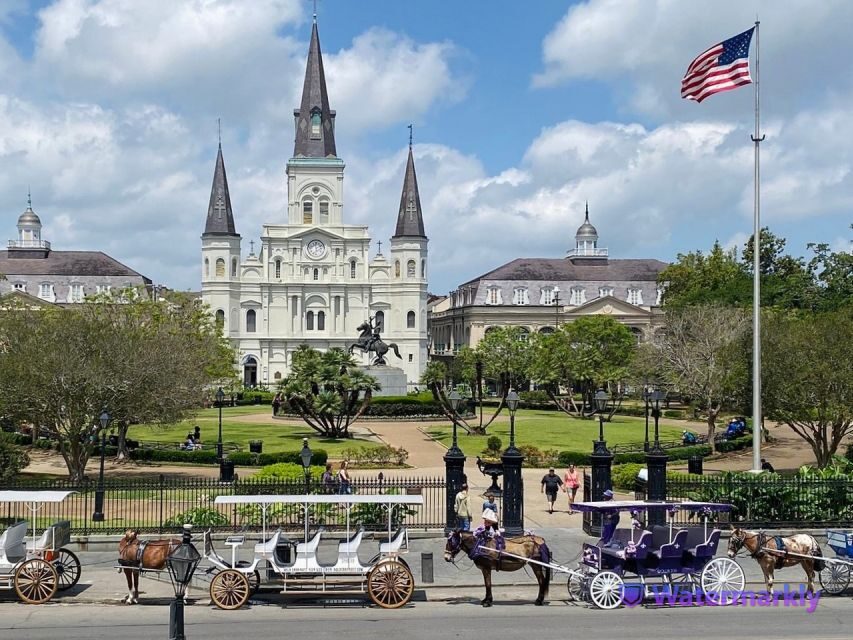
Jackson Square is one of those places where it’s hard to understand the layout unless you’ve been oriented first. With this tour, you’ll get that orientation while you’re still fresh.
You’ll also see St. Louis Cathedral, which helps connect the French Quarter’s religious and civic geography. Then there’s the Cabildo stop, which ties into the colonial layer of the city—Spanish-era governance shaping what you see.
A nice touch here is the promise of a French Quarter preview for later exploration. In practice, that means you’ll leave with a short list of “go back and look closer” streets and views.






City Park, Dueling Oaks, and the Above-Ground Cemetery Stop
One standout portion is the move toward City Park. The route includes passage by Dueling Oaks, and you’ll spend time walking that part of the experience rather than just watching from the window.
The tour also includes an above-ground cemetery stop on foot, with St. Louis Cemetery No. 3 specifically listed as an included entry. The reason for above-ground burial is part of what your guide is meant to explain.
Here’s why that matters for your own understanding: New Orleans burial tradition is a response to waterlogged ground and the city’s geography. When a guide connects the why to what you see, the cemetery stops feeling like a spooky roadside attraction and starts feeling like a smart adaptation.
Garden District and Anne Rice’s Neighborhood: Seeing the City’s Two Sides
The route then travels along St. Charles Avenue, which is where New Orleans starts showing you its more formal, residential face. You’ll pass into the Garden District, a neighborhood with elegant streetscapes and big-era homes.
You’ll also pass the residence of the Gothic fiction writer Anne Rice. Even if you’re not a fan, the point of this stop is to show how literary fame and neighborhood identity overlap in New Orleans.
This is also where the minibus route becomes more useful. St. Charles is beautiful, but it’s spread out. Having ride time between stops helps you enjoy the views without turning the day into constant back-and-forth.
Lower 9th Ward: Katrina Recovery Seen Up Close
The tour’s “Katrina lens” becomes more direct with a stop aimed at the Lower 9th ward’s post-Katrina recovery. You’ll learn about rebuilding, and you’ll see areas that were most impacted by the hurricane.
I appreciate this approach because it doesn’t treat Katrina as a single-day tragedy. Instead, it frames it as a long process of rebuilding, decisions, and living with the aftermath.
Also, notice how the city tour is positioned as both landmarks and neighborhoods. That balance helps you avoid thinking of New Orleans as only food, music, and photos.
Jean Lafitte National Historical Park: Boat Cruise and Wildlife Viewing

The itinerary you provided includes a stop at Jean Lafitte National Historical Park and Preserve with a boat cruise and wildlife viewing for about 100 minutes.
If your departure includes this portion, you’ll get a break from the city heat-and-hustle feeling and shift into marsh and water scenery. That’s a good counterweight to both Oak Alley and the Katrina city route.
Because the day includes multiple elements, I’d treat this as a segment that affects your comfort planning. Water, humidity, and time on a boat can change how you feel by the end of the day.
Price and Value: What You Pay For (and What You Don’t)
At $120 per person, this tour is priced as a full-day package, not just “a bus ride with stops.” You’re paying for hotel pickup and drop-off, transportation in an air-conditioned minibus, a licensed guide, and guided experiences.
Two included ticket items stand out: Oak Alley Plantation admission and St. Louis Cemetery No. 3 entry. Those fees add real value, especially when paired with guided explanation rather than self-guided wandering.
Food and drinks aren’t included, though. That’s the one predictable extra cost. If you want to keep the day easy on yourself, plan a meal buffer or carry water and snacks if that fits your style.
Getting Picked Up: The 8:15–8:45 Window and the Alert Transportation Bus
Pickup is included from a huge list of New Orleans area hotels and addresses, and there’s a 30-minute pickup window between 8:15 AM and about 8:45 AM. The bus is noted as Alert Transportation, so you’re looking for the right vehicle.
Here’s the practical part: set yourself up so you’re ready early. Be outside in time, not after your coffee. If pickup goes wrong, you’ll feel it immediately because Oak Alley is far enough that late starts can throw the whole schedule off.
Also, be aware that there have been reports of pickup problems on some departures—missed guests and an initial failure to connect. I can’t predict your exact day, but I strongly recommend you confirm the pickup point the night before and keep your phone accessible if they use direct communication methods.
The Comfort Tradeoff: Air-Conditioned Transport vs. Required Walking
This is a mixed-exertion day. You get comfort on the road—air-conditioned minibus service helps a lot in New Orleans heat. But you also have walking required for the plantation portion and for the above-ground cemetery stop.
So, bring shoes you can trust for uneven ground and museum-style walking, not just “pretty” sneakers. And plan that you’ll be on your feet for enough time that you’ll want breaks—especially if you’re pairing this with a lot of evening plans later.
If you’re very mobility-limited, you might find the walking requirements are the hardest piece. This tour doesn’t advertise it as an all-sit program.
Who This Tour Fits Best
I’d point this tour toward you if you want a first taste of New Orleans history that goes beyond postcard landmarks. It’s a strong fit if you like guided context—someone connecting dots between the architecture, the plantation system, and the city’s recovery after Katrina.
It also works well for visitors who hate figuring things out. Pickup and drop-off, guided narration, and a minibus route make it easier to keep the day structured.
You might want a different format if you prefer deep, slow museum time or if you want full control over pacing and stops. The day is planned, timed, and built around two major blocks—Oak Alley and the Katrina city drive—so there’s less flexibility once you’re underway.
Should You Book This Tour?
Book it if you want one day that covers Oak Alley plus a Katrina-focused New Orleans overview, with guided explanation and included entry tickets that save you time and decision-making. The structure is efficient: plantation visuals, then city landmarks and recovery stories you can build on later.
Hold off or choose something else if walking is a problem for you, or if you need flawless logistics with zero stress. Because pickup timing is crucial and some departures have had connection issues, you should go in prepared—early outside, ready to identify the bus, and expecting a long day.
If you do book, go in with the right mindset: this isn’t just about pretty trees and old buildings. It’s about seeing how the past was organized—and how the city is still living with the consequences.