REVIEW · NEW ORLEANS
New Orleans: Oak Alley Plantation Tour with Transportation
Book on GetYourGuide →Operated by Gray Line New Orleans · Bookable on GetYourGuide
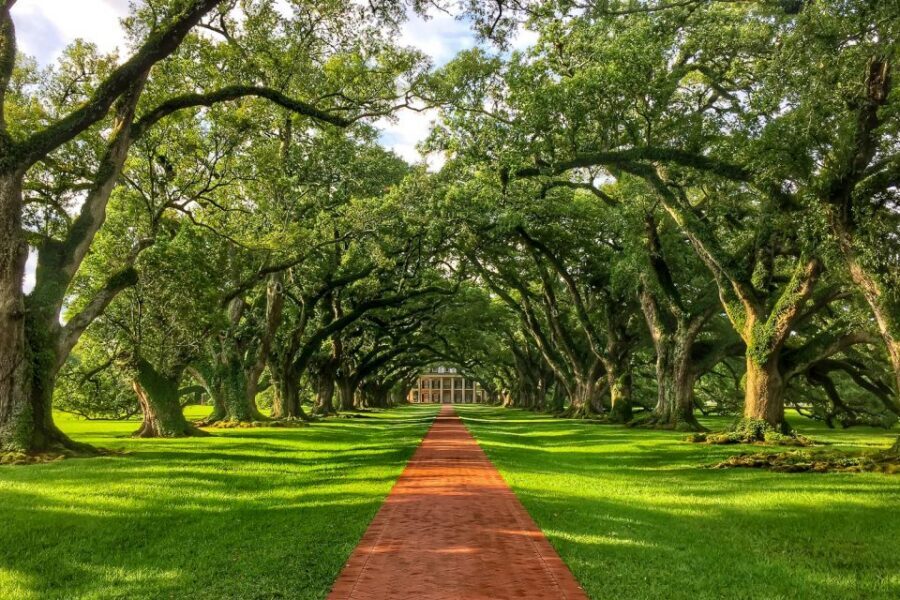
One of Louisiana’s most unforgettable visits starts on a bus ride. This Oak Alley Plantation tour combines round-trip transportation from New Orleans with guided stops that help you see how the property worked, who lived here, and how the plantation landscape changed over time. It also adds a signature walk beneath the 1/4-mile Allee of oaks.
I love that you get more than house-and-photos. The tour includes a guided look at the Greek Revival Big House exhibits, plus interpretive components tied to the enslaved people who were forced to build and maintain the plantation world. I also like the planning-friendly pace: you’re not stuck driving, and the day includes on-site options like the Plantation Café.
The main thing to watch is time. A chunk of the experience happens on set schedules, and some visitors felt the time on the grounds and in the house could be tight if you want a slow walk and plenty of reading.
In This Review
- Key things to know before you go
- Oak Alley starts on the drive: how the route sets the tone
- Where to meet at 400 Toulouse Street (and why 15 minutes matters)
- Walking the Allee of oaks: the famous photo line with heavy context
- Big House time: guided rooms, rules for cameras, and practical expectations
- Sugarcane Theater and working-plantation exhibits: why this part isn’t filler
- Reconstructed slave cabins and the slavery exhibit with an interpreter
- Gardens and post-Civil War ownership: seeing time layers on the same property
- The plantation café break: good food, limited time, and a simple strategy
- Optional 90-minute Manchac Swamp cruise upgrade: what you gain
- Transportation value: is the $89 price fair for what you get?
- Who this tour suits best (and who might want a different plan)
- Should you book Oak Alley with transportation (and the swamp upgrade)?
- FAQ
- How long is the Oak Alley tour with transportation?
- What is included in the Oak Alley Plantation tour?
- Is lunch included?
- Is there an option to add the swamp cruise?
- Where do I meet for the tour?
- Are cameras allowed?
- Is the tour wheelchair accessible?
- Do I get a guided tour of the house?
Key things to know before you go
- Round-trip transportation from New Orleans saves you the hassle of parking and navigating the route on your own.
- Guided Big House exhibit time gives you context while you’re looking at rooms, interpretive displays, and architectural details.
- Slave cabins plus a slavery exhibit with an interpreter help you connect the plantation’s story to the people who were enslaved here.
- Sugarcane Theater and working-plantation exhibits add practical texture beyond the mansion.
- East and West Gardens show how the property’s landscaping reflects different time periods.
- Swamp tour upgrade turns the afternoon into a Manchac Swamp pontoon cruise with a local captain and alligator-spotting chances.
Oak Alley starts on the drive: how the route sets the tone
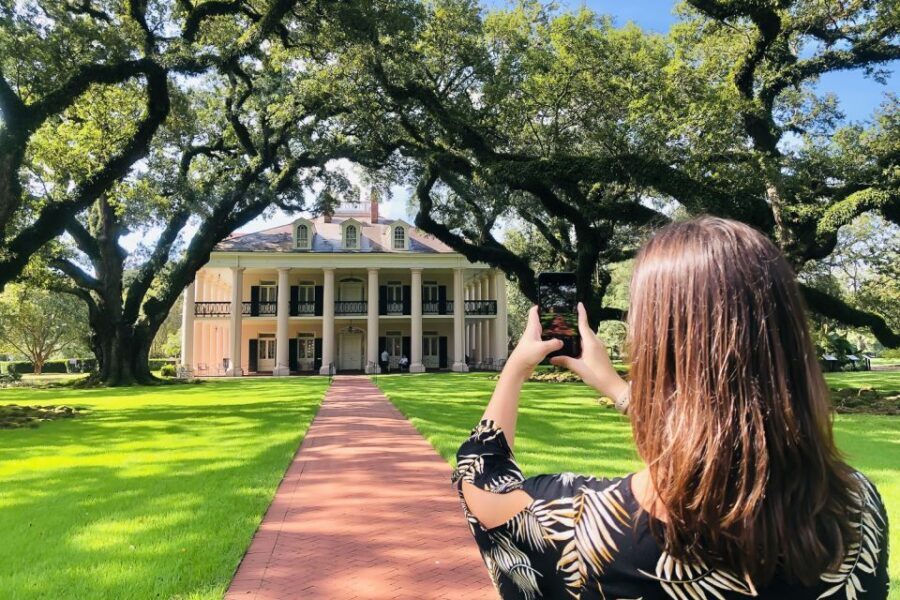
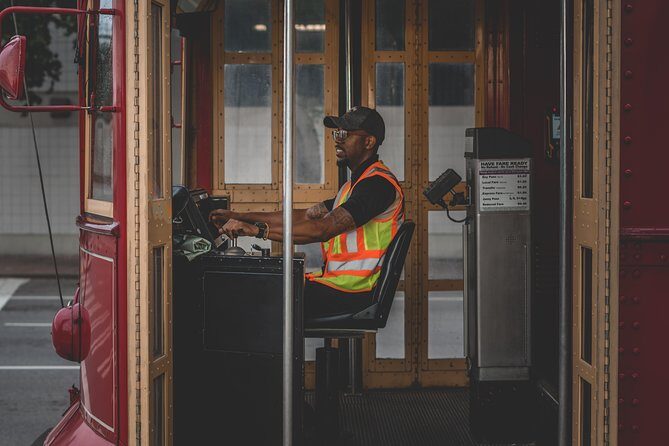
Oak Alley is famous for its oaks, but I think the best part of a good guided day is how it frames what you’re about to see. This tour includes time on the road with guidance from the bus, and that changes the vibe from just sightseeing to actually learning as you go. In several bookings, the driver-guide experience was a real highlight, with people praising guides like Robert and Michelle for making the ride feel like part of the lesson.
You’ll also pass plantation properties along the Mississippi River corridor, including Whitney, Evergreen, Felicity, and St. Joseph. That matters because it reminds you this wasn’t one isolated estate. These were linked agricultural economies, and seeing the river-side plantations in sequence helps you grasp the scale.
And then there’s the view moment that travelers talk about for a reason: you cross the Bonnet Carre Spillway for panoramic looks over Lake Pontchartrain. It’s a quick “wait, wow” stretch that helps break up a long travel day before you reach the plantation grounds.
You can also read our reviews of more tours and experiences in New Orleans.



Where to meet at 400 Toulouse Street (and why 15 minutes matters)
This tour departs from 400 Toulouse Street, New Orleans, at the Steamboat Natchez dock directly behind the JAX Brewery. The instructions are clear: display your barcoded voucher as your ticket at the Lighthouse Ticket Office, about 15 minutes before your tour time.
That timing isn’t random. The day runs like a system—bus seating, check-in, and departure. If you’re late, you’re the one who gets to solve the problem, not the staff.
Tip: keep your voucher easy to pull up. Also, if you use a phone for navigation later, plan for time where cell phones may need to be muted depending on where you are inside the exhibits.
Walking the Allee of oaks: the famous photo line with heavy context
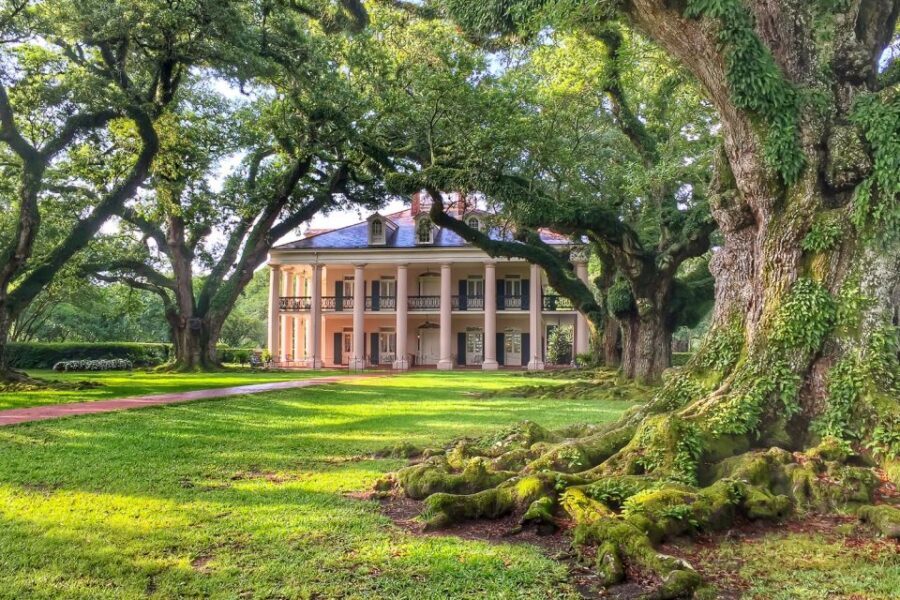
The icon here is the Allee of oaks: a 1/4-mile walkway shaped by the plantation’s long timeline. The tour notes that these oaks were created using slave labor between the 1820s and 1840s. So yes, you’ll get the classic shaded path, but you’ll also be walking through part of the forced labor story.
I like this because it avoids a common trap: photographing the beauty without understanding the cost. You’ll get guidance as you go, and the alley often becomes the first moment where people realize the day is meant to be thoughtful, not just pretty.
Expect a long, shaded walk. Wear shoes you can trust on uneven paths, especially if you’re visiting during warmer or humid months.
Big House time: guided rooms, rules for cameras, and practical expectations
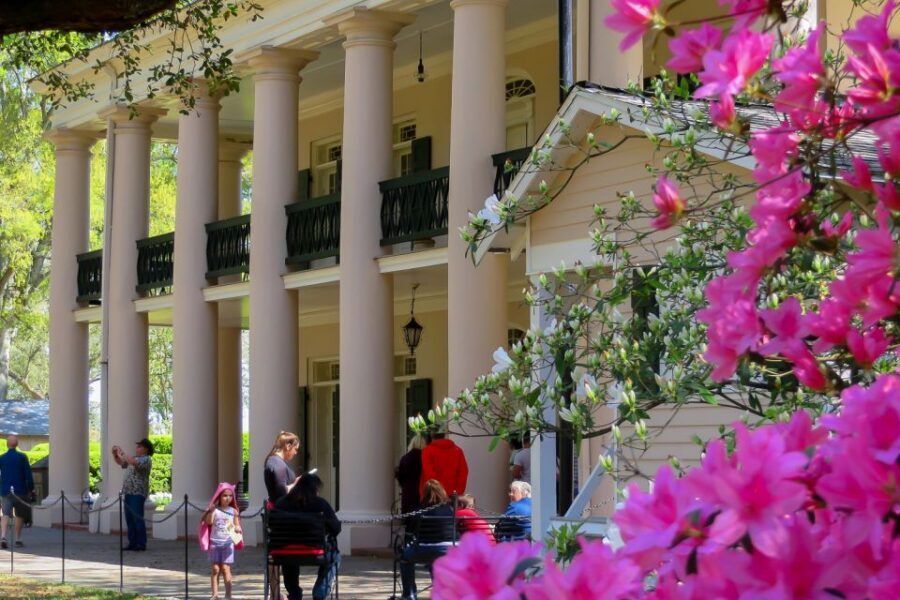
The guided tour of the Big House exhibits is one of the core reasons to choose the tour with transportation. This is a Greek Revival mansion from 1839, built to show success, prestige, and power.
Inside the Big House exhibit, there are clear content rules:
- Cell phones must be muted and electronic devices turned off.
- Photography and video are not allowed inside the plantation home.
- On the balcony, grounds, and self-paced exhibits, photography is encouraged.
That means your camera isn’t useless. It just needs boundaries. If you love photos, plan on using outdoor moments for shots and letting the indoor rooms be about the guide’s explanation and your own attention.
One accessibility detail you’ll want to know: the second floor requires climbing 22 stairs. For guests who can’t climb them, there’s a video tour in the media room. Because seating is limited, that video option needs to be reserved for those who can’t reach the second floor.
Sugarcane Theater and working-plantation exhibits: why this part isn’t filler
It would be easy for a plantation tour to focus only on the house. This one spreads attention across how the plantation produced and functioned. You’ll see the Sugarcane Theater, which includes a film on sugarcane production and related displays. It’s a straightforward way to connect the “what you see” to the economic engine behind the plantation.
There’s also a blacksmithing exhibit featuring the plantation’s original forge. That detail matters because it turns history from abstract into practical. You’re looking at tools and craft work that supported the daily operation of a plantation system.
These stops are also a good time-saver for your brain. When the day starts to feel emotionally heavy, practical exhibits can give you a moment to focus on how the property operated—without forgetting who paid the price.





Reconstructed slave cabins and the slavery exhibit with an interpreter
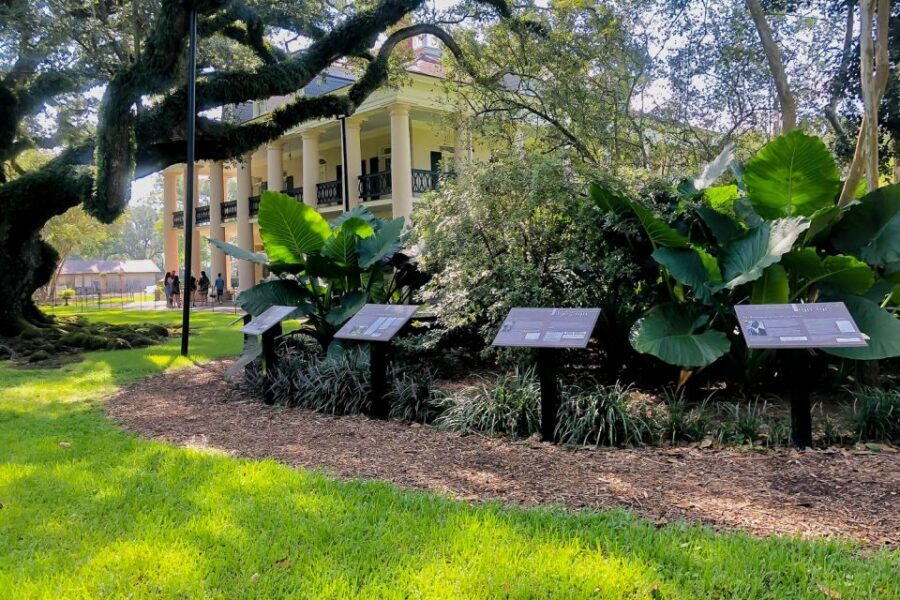
If you’re choosing this tour, make room in your schedule for the slavery at Oak Alley exhibit and the reconstructed slave cabins. This is not handled as an afterthought. The tour includes an interpreter, and the framing is about life and legacy, including what Oak Alley Foundation research has revealed about enslaved people who lived and worked here.
A key point: this portion changes how people interpret the entire site. Once you’ve seen the cabins and the exhibit context, the Big House doesn’t read as just beautiful architecture. It reads as part of the same system.
I recommend you take your time with placards here. Skimming is tempting on tight schedules, but the payoff is in the connections you make between the housing, the exhibits, and the plantation’s daily workings.
Gardens and post-Civil War ownership: seeing time layers on the same property
After the main interpretation stops, you’ll move through the East and West Gardens—areas reflective of the 1840s and 1930s. This is where you get a different kind of understanding: how plantings and design reflect changing eras.
The tour also includes an exhibit on subsequent owners following the Civil War. That helps you avoid a common simplification. Oak Alley doesn’t freeze in 1860. The property continued to change hands and meanings after slavery ended, and the exhibits are meant to show that timeline.
I like gardens for a simple reason: they slow the day down. If you feel overwhelmed, this part gives you space to look, breathe, and reset without leaving the story behind.
The plantation café break: good food, limited time, and a simple strategy
On-site, the Plantation Café sells snack, salad, or sandwich options. You can eat at picnic tables or even aboard the coach if the day’s flow allows.
Some visitors said the café break felt rushed, or that more time on the grounds would be helpful to truly enjoy the property. That’s the tradeoff when a tour is designed around transportation plus set guided times. You can still eat well, but you can’t count on a long, wandering lunch unless your schedule gives it to you.
My practical suggestion: if you’re hungry, plan to eat sooner rather than later once you arrive. Bring water if allowed for your comfort. And if you’re hoping to shop at the gift area after the house, keep that in mind when you’re deciding how long to linger outdoors.
Also note one small point from review experience: some people wished the full schedule gave them extra time for wandering, not just house tour and a short free window. If you’re the type who reads every sign, this is where you’ll feel it.
Optional 90-minute Manchac Swamp cruise upgrade: what you gain
The upgrade is where this tour can feel like more than a half-day plantation stop. If you choose it, you’ll ride to Manchac Swamp for a 90-minute cruise through a privately-owned wildlife refuge.
You travel by covered pontoon boat with a local captain. Expect commentary around the history of Frenier and Cajun culture tied to fishing, hunting, and trapping. And yes, alligators are part of the excitement—keep your eyes peeled for them leaping up for snacks.
This is a great choice if:
- You want a change of scenery after the plantation’s heavy theme.
- You like wildlife and local culture in the same afternoon.
- You prefer a guided nature experience rather than figuring out the logistics yourself.
One practical note: a pontoon cruise can feel cooler or warmer depending on weather and wind. Wear layers you can adjust.
Transportation value: is the $89 price fair for what you get?
For $89 per person, you’re paying for more than “a ride.” You’re paying for a structured day that includes round-trip transportation, guided Big House exhibit access, interpretive exhibits (including the slavery exhibit with an interpreter), and several on-site feature stops like Sugarcane Theater and blacksmithing.
If you’re traveling without a car, the transportation value is easier to justify. You don’t have to park, navigate, or plan your own timing around a site that runs on set schedules. Several review experiences also highlighted that the bus ride itself can be fun, with driver-guides sharing stories during the drive.
The only real price argument against it is time pressure. If you strongly prefer slow, unstructured exploration of the entire grounds with lots of lingering, a timed tour might feel tighter than you’d like. In that case, you may decide to add the swamp upgrade (to expand the day) or choose a different format that offers more flexible on-site time.
Who this tour suits best (and who might want a different plan)
I think this tour fits best if you want:
- A guided interpretation of Oak Alley, including slavery-focused exhibits.
- Easy transport from New Orleans with someone handling the route and timing.
- A day that mixes architecture, working-plantation exhibits, and gardens.
It’s less ideal if you:
- Hate schedules and want long, free wandering time.
- Want to spend extra time reading every exhibit label without time limits.
- Are sensitive to rules around electronics and no photography inside the Big House.
For families, it can work well because the day is structured and there’s variety in stops—though the pacing will depend on your group’s comfort level.
And if you’re visiting in a group and want an organized day, the round-trip transportation is a real convenience.
Should you book Oak Alley with transportation (and the swamp upgrade)?
Book this tour if you want a guided Oak Alley day that covers both the mansion and the interpretive exhibits, including reconstructed slave cabins and a slavery exhibit with an interpreter. The guided Big House time and the working-plantation components add depth, not just sightseeing.
I’d strongly consider the swamp tour upgrade if you want the day to feel bigger and more varied. Manchac Swamp gives you a guided, nature-and-culture counterpoint that helps balance the emotional weight of a plantation visit.
Don’t book it expecting a slow, choose-your-own-adventure pace. If you read signs carefully and want lots of unstructured time, plan your expectations and be ready to prioritize what you care about most—especially the slavery-focused exhibits and the alley walk.
FAQ
How long is the Oak Alley tour with transportation?
The duration is listed as 315 to 465 minutes, depending on the starting time and the tour flow.
What is included in the Oak Alley Plantation tour?
It includes round-trip transportation and guided access to the Big House exhibit, Sugarcane Theater, reconstructed slave cabins and a slavery exhibit with an interpreter, exhibits on subsequent owners, East and West Gardens, and a blacksmithing exhibit with the original forge. It also includes access to on-site restaurant/café/bar options and passing nearby plantations on the route.
Is lunch included?
Lunch is not included. You can buy Grab & Go meals and snacks at the Plantation Café.
Is there an option to add the swamp cruise?
Yes. You can upgrade to include a 90-minute pontoon swamp tour in Manchac Swamp. It’s a ride through a privately-owned wildlife refuge with a local captain.
Where do I meet for the tour?
Meet at the Lighthouse Ticket Office at Toulouse St. and the Mississippi River. All tours depart from 400 Toulouse Street, New Orleans, at the Steamboat Natchez dock directly behind the JAX Brewery.
Are cameras allowed?
Photography and video are not allowed inside the plantation home. The tour info says photography is encouraged on the balcony, grounds, and self-paced exhibits, so plan accordingly.
Is the tour wheelchair accessible?
It is listed as wheelchair accessible. Most exhibits are handicapped accessible, but the second floor of the Big House exhibit requires climbing 22 stairs, with a video tour option available for guests who can’t climb.
Do I get a guided tour of the house?
Yes. The package includes a guided tour of the Big House exhibit.