REVIEW · NEW ORLEANS
Private New Orleans Garden District Highlights Tour
Book on Viator →Operated by WeVenture · Bookable on Viator
A walk can feel like a time machine. This private Garden District highlights tour strings together mansions, film-ready streets, and real local rituals, with a guide keeping it all clear and human. You’ll shift from the polished Garden District to the above-ground burial world of Lafayette Cemetery No. 1, then end in the Irish Channel with that distinct hanging-beads vibe.
I like the balance here: Antebellum architecture and neighborhood contrasts happen back-to-back, so you understand why New Orleans looks the way it does. I also like that the guide story is paired with small, specific stops—cemeteries aren’t just photo ops, and Magazine Street gives you context beyond a quick drive-by.
One drawback to consider is the walking and heat. It’s a 2-hour outdoor stroll, and the sidewalks in New Orleans can be uneven—plus it can get brutally hot fast.
In This Review
- Key takeaways
- Garden District first: why this neighborhood feels calm, then surprising
- Starting at 2729 Prytania St and settling into a 2-hour rhythm
- Stop 1: Antebellum homes, mid-1800s lots, and Spanish moss street theater
- Stop 2: Lafayette Cemetery No. 1 and the logic of above-ground burials
- A visual “break” at Commander’s Palace: turreted Victorian charm with a serious reputation
- Magazine Street to the Irish Channel: shotgun houses, Irish roots, and hanging beads
- Price and value: what $143 covers in a private 2-hour format
- Who this tour fits best (and who might want another plan)
- Should you book this private Garden District Highlights Tour?
- FAQ
- How long is the Private New Orleans Garden District Highlights Tour?
- Is this a private tour?
- Where does the tour start and where does it end?
- What stops are included during the tour?
- Do I need to pay admission fees for the stops?
- Can I get a refund if my plans change?
Key takeaways
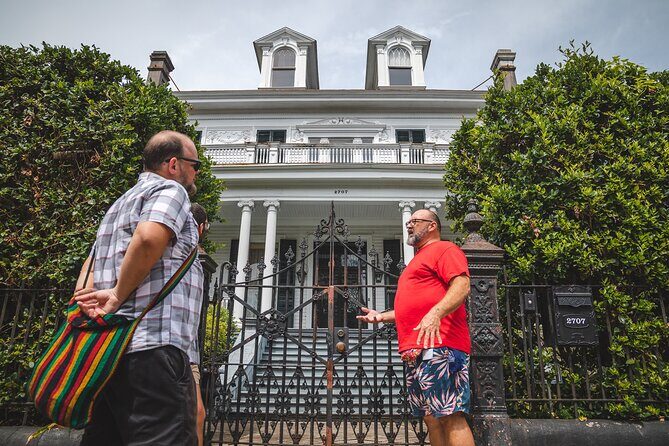
- Private, local-guided pace: one group, one guide, with time for questions.
- Hollywood-adjacent Garden District: you’ll see why certain homes keep showing up on screen.
- Lafayette Cemetery No. 1: learn why burials are above ground and done in multiple-burial arrangements.
- Commander’s Palace exterior stop: a turreted Victorian landmark tied to big celebrations.
- Irish Channel finishing stretch: working-class roots, shotgun-style houses, and hanging beads.
Garden District first: why this neighborhood feels calm, then surprising
The Garden District can make you exhale. The streets are lined with stately homes, big lawns, and those slow-moving shadows that come with Spanish moss. Even when New Orleans is roaring somewhere nearby, this area often feels like it’s on a different clock.
What makes the tour smart is that it doesn’t treat the Garden District like a generic pretty-picture neighborhood. Your guide frames it as a real place with origins tied to plantation-era land and then later development into private residential lots. That turns what could be simple sightseeing into something you can actually read—windows, gates, courtyards, and streets start to make sense.
You’ll also get the film connection that New Orleans is famous for. The Garden District’s mansions have been used in movies and productions for years, so you may recognize details from screen portrayals. Even if you don’t, it’s still fun to hear how the neighborhood became a go-to location and why certain streets keep being reused.
You can also read our reviews of more private tours in New Orleans



Starting at 2729 Prytania St and settling into a 2-hour rhythm
The tour starts at 2729 Prytania St in the Garden District area. It’s a central meeting point that’s designed to be easy to find, and that matters in New Orleans where wrong turns can waste time. After the meet-up, you’ll head into the Garden District and spend the first stretch walking past historic homes and garden-front streets.
This is about 2 hours total, so it’s not a full-day endurance walk. Still, the time adds up—especially if the group keeps asking questions (which is part of the point of a private tour). I’d plan your day around it, then build in downtime afterward, because walking in the heat is not a hobby, it’s a requirement.
If you’re nervous about getting the most out of a short tour, this one is a good fit. It targets a few high-impact stops and keeps the route tight enough that you’re not waiting around for logistics.
Stop 1: Antebellum homes, mid-1800s lots, and Spanish moss street theater
Your first stop is the Garden District itself, often called one of the best-preserved concentrations of historic mansions in the United States. That preservation isn’t accidental. The neighborhood’s layout grew from plantation land being divided into smaller—still large—lots, which then became private homes with their own gardens.
As you walk, expect to see:
- classic Antebellum architecture and restored facades
- a mix of grand public-looking fronts and more intimate garden details
- streets where the scale makes you feel like you’re moving through a set, but it’s real life, not movie backdrops
Spanish moss is a key part of the vibe. You’ll see it draped over trees and along street corners, and that creates a kind of visual “cooling.” It also helps your brain slow down. Even if you’re focused on photo angles, your guide will steer you toward the stories behind the scenes—how the homes relate to the neighborhood’s development and why people keep coming back to look.
A practical tip: wear shoes you trust. One person noted that New Orleans sidewalks can be a challenge, and that’s exactly the kind of detail that can make or break a walking tour. Bring water, too. One guide handled intense summer heat while still answering questions, which tells you two things: you should dress for weather, and you’ll still have a high-energy guide presence.
Stop 2: Lafayette Cemetery No. 1 and the logic of above-ground burials
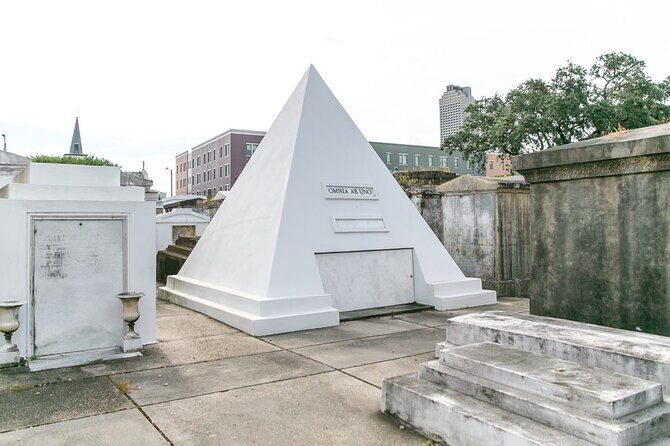
Next you’ll head to Lafayette Cemetery No. 1, one of the oldest cemeteries in New Orleans. This is where the tour gets more than aesthetic. It turns into cultural explanation.
New Orleans cemetery practices can feel unusual if you’re used to in-ground burials. The big idea you’ll learn here is above-ground, multiple-burial techniques. Instead of a single grave site, families are often placed in ways that reflect how burial space and family lines are organized over time. Your guide will walk you through the cemetery grounds with an emphasis on why this approach became iconic in New Orleans.
You’ll also hear about the specific families connected to the cemetery square you’re visiting. That part is important. It’s easy to photograph headstones without understanding what they represent. With a guide, those markers become names, timelines, and family decisions made within the realities of the city.
A quick note on tone: cemeteries are serious places. Even though this is a tour, keep your volume down and move carefully. The guide’s role is to make history understandable without turning it into a spectacle.
A visual “break” at Commander’s Palace: turreted Victorian charm with a serious reputation
After the cemetery, the tour includes a view of Commander’s Palace. You’ll see the turreted Victorian building from the outside, and you’ll learn why it’s such a recognizable name in upscale dining and special events.
Commander’s Palace is known for hosting weddings and dinners across the year, so it carries a strong reputation. Even as an exterior stop, it works well in the itinerary. It gives you a moment to refocus on architecture—different from the cemetery experience, but still tied to how New Orleans buildings reflect status, community, and celebration.
If you want to turn the day into a food plan later, the exterior stop is a good trigger. You’ll come away seeing the building as more than a pretty facade—more like a local institution.






Magazine Street to the Irish Channel: shotgun houses, Irish roots, and hanging beads
To reflect the full Garden District story, the tour continues toward Magazine Street and then across to the Irish Channel. This shift is the point of the contrast. The Garden District shows the grand side of New Orleans. The Irish Channel shows the working-class side—and why those neighborhoods developed side by side.
In the Irish Channel, your guide explains how Irish immigrants settled there, especially in the early 1800s, when the city’s shipping, alcohol, and brewing industries pulled workers in from Ireland. That’s a different kind of New Orleans history than you get from postcard descriptions.
As you walk, you’ll see shotgun-style homes, which are a major architectural signature of the area. These homes are different in feel from the mansions you saw earlier. The contrast helps your brain understand the city’s social geography: where money concentrated, where labor concentrated, and how both shaped the streets you’re walking on.
And then comes the finishing touch: you’ll end your stroll around hanging beads. It’s one of those street-level details that makes the Irish Channel feel like itself. The tour wraps with that “you’re here now” atmosphere, where the neighborhood doesn’t need to explain itself through big monuments.
Price and value: what $143 covers in a private 2-hour format
At $143 per person, this tour isn’t the cheapest way to spend two hours in New Orleans—but it’s also not trying to be “budget.” It’s priced like a private experience, which usually means you’re paying for:
- a local English-speaking guide
- a tight route with stops that teach you something, not just photos
- the ability to ask questions and adjust the pace as your group needs
The value becomes clearer when you look at the specific mix of stops. You get the Garden District’s architectural storytelling, cemetery interpretation (including burial practices that are central to the city), and an additional architectural landmark view plus a working-neighborhood context shift. In other words, you’re not just paying for scenery—you’re paying for interpretation.
If you’re traveling with a small group, you’ll often get more satisfaction than you would from something larger. When the guide can focus on your questions, the short time feels fuller.
Who this tour fits best (and who might want another plan)
This tour is a great fit if you want New Orleans history without the chaos of hopping between places on your own. It’s also perfect if you’re pairing neighborhoods—many people like the Garden District as a counterweight to the French Quarter vibe.
You’ll especially enjoy it if:
- you like architecture and want the story behind it
- you’re curious about how New Orleans cemeteries work culturally and practically
- you want a mix of beauty and real-world history in a short window
- you want a guide who can explain details without rushing you
If you’re the type who hates walking or can’t handle uneven sidewalks, you might feel constrained. It’s not a long tour, but it is still outdoors and on city streets. Plan for that reality and you’ll be happier.
Should you book this private Garden District Highlights Tour?
Yes, you should book it if you want a focused sampler of the Garden District and the nearby neighborhoods that explain it. This is the kind of tour that turns a couple of “pretty places” into a coherent story: plantation-era land shaping neighborhoods, cemetery burial practices shaping identity, and working-class Irish roots shaping what you see across Magazine Street.
Skip it if you want a long, deep, all-day itinerary or if you’re not comfortable with walking in warm weather on city sidewalks. But if you want your time to count—and you like learning while you look—this one is a strong choice.
FAQ
How long is the Private New Orleans Garden District Highlights Tour?
It runs for about 2 hours.
Is this a private tour?
Yes. It’s a private activity, so only your group participates.
Where does the tour start and where does it end?
The meeting point is 2729 Prytania St, New Orleans, LA 70130, and the tour ends in the Garden District, New Orleans area.
What stops are included during the tour?
The tour includes the Garden District area, Lafayette Cemetery No. 1, a view of Commander’s Palace, and the area around Magazine Street and the Irish Channel (including hanging beads).
Do I need to pay admission fees for the stops?
The tour indicates that admissions are free for the Garden District and Lafayette Cemetery No. 1.
Can I get a refund if my plans change?
You can cancel for a full refund up to 24 hours in advance. If you cancel less than 24 hours before the start time, the amount paid is not refundable.