REVIEW · NEW ORLEANS
Second Line Tour & Music Experience
Book on GetYourGuide →Operated by Treme Luxury Experience Tours & Transporation · Bookable on GetYourGuide
A New Orleans Second Line is street-level history. This $20 tour gives you a real sense of community through brass band energy and Treme traditions, led by a local who knows how the day flows. You’re not stuck watching from the sidelines.
I particularly love how the experience connects the parade style to older roots, with Second Lines traced back to the 18th century and also linked to 19th-century neighborhood and fraternal societies. I also like that the guide, Hollis, keeps a large group moving and explains what you’re seeing in plain English.
One thing to consider: this is a walking experience in a crowd, so you’ll be on your feet for a while and the route moves block-by-block. If you have mobility limits, plan on watching more than marching, and talk to the guide about what’s realistic for you.
In This Review
- Key Highlights Worth Your Time
- Second Line 101 in Treme: More Than a Parade Walk
- 150 Minutes on the Move: Timing, Route Rhythm, and What You’ll Do
- Meet Hollis and Get the Treme Perspective That Changes How You See the City
- The Brass Band, Costumes, and Street Dancing You Actually Join
- Food and Drinks Along the Route: Plan for Cash
- Price and Value: What $20 Buys in Real New Orleans Time
- Who This Tour Is Best For (and Who Might Want Another Plan)
- Quick Practical Tips to Make Your Day Easier
- Should You Book This Second Line Tour or Skip It?
- FAQ
- How long is the Second Line Tour & Music Experience?
- How much does it cost?
- Where do we meet for the tour?
- What is included in the tour price?
- What should I bring with me?
- Is the tour only for people who can walk the full route?
- Is there free cancellation?
Key Highlights Worth Your Time
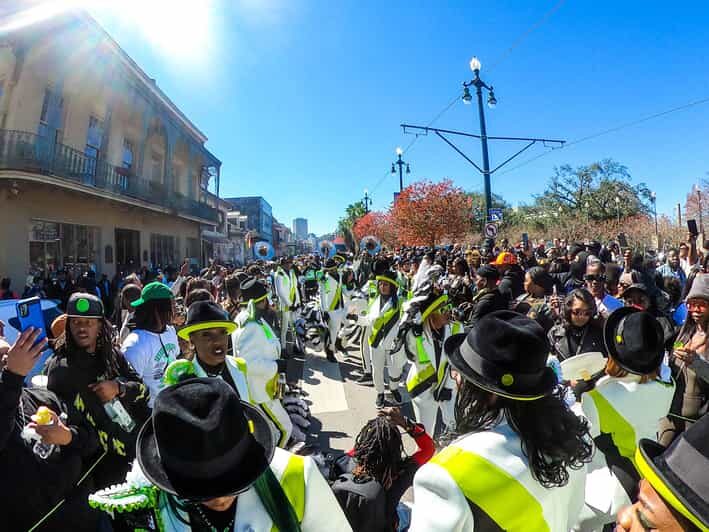
- Join the fun, not just watch it: you’ll dance in the street and sometimes on porches or vehicles as the parade moves.
- A local guide with Treme roots: tours are led by a former King of Treme, with Hollis often described as making people feel like family.
- Real Second Line context: you’ll learn why the parade happens without tying it to a specific holiday or event.
- Costumes and brass band power: brightly colored suits, sashes, hats/bonnets, parasols, and banners come with the music.
- Easy value at $20: 150 minutes, water included, and a skip-the-line express security check.
Second Line 101 in Treme: More Than a Parade Walk
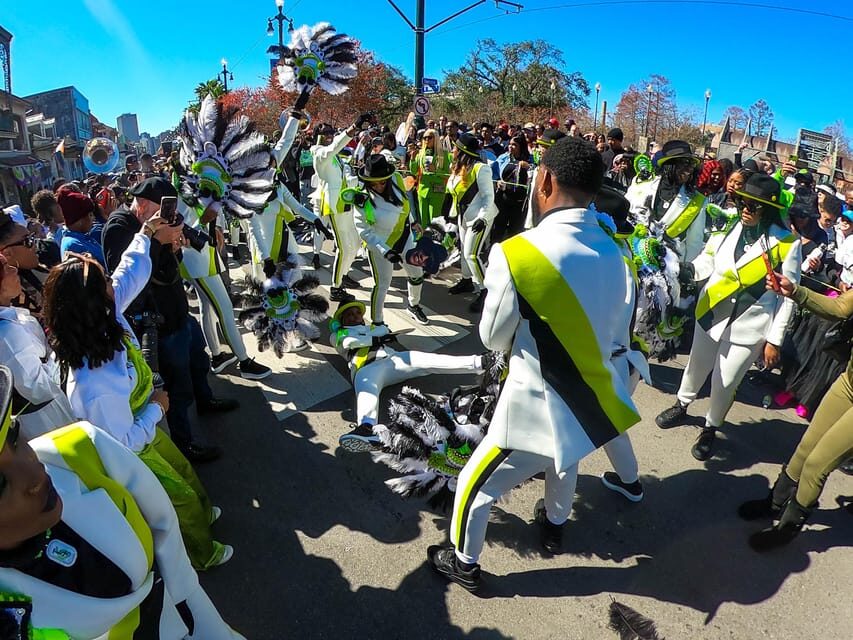
A Second Line is not a single fixed performance. It’s a moving street celebration with its own rhythm, rooted in neighborhood life and community organizations. The story often traces back to earlier centuries, including an 18th-century origin myth, and it’s also tied to the 19th-century fraternal societies that helped form identity block by block.
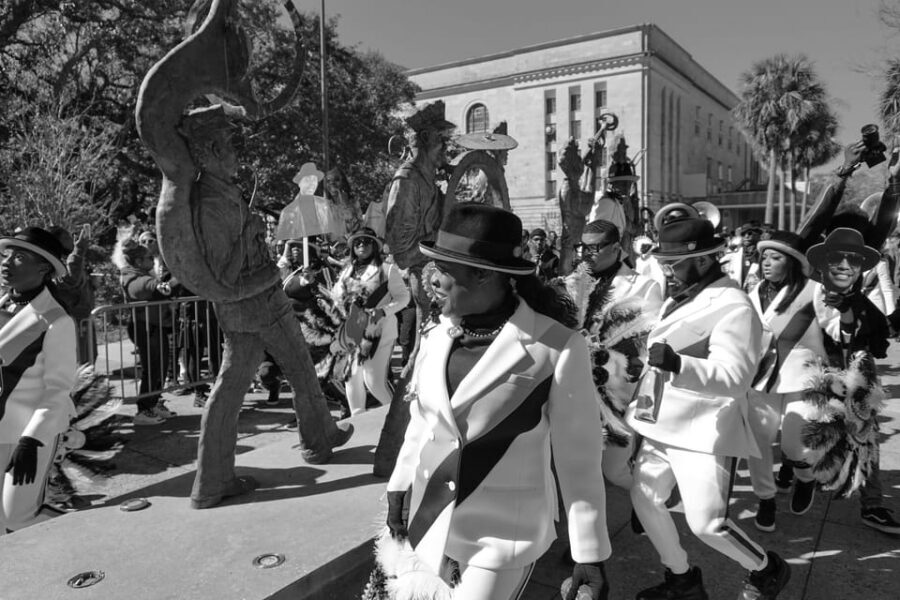
What makes this style special is the “two-part” feel. There’s a parade-like pomp to it: members dress up in matching sets with bright suits, sashes, hats or bonnets, and sometimes parasols and banners. But then the parade turns into something looser and more spontaneous—closer to a block party that happens to move down the street.
You’ll also hear that Second Lines usually aren’t tied to a single big holiday or memorial. They happen because communities want to celebrate, share joy, and keep life moving. That matters, because it explains the emotional tone you’ll feel while you’re there: it’s not a staged show for tourists; it’s a neighborhood moment.
If you’re the kind of traveler who likes culture you can touch—music you can hear up close and people who actually want to share it—this is a great fit. You’ll walk through the neighborhood and learn how the tradition works, not just what it looks like.
You can also read our reviews of more tours and experiences in New Orleans.


150 Minutes on the Move: Timing, Route Rhythm, and What You’ll Do
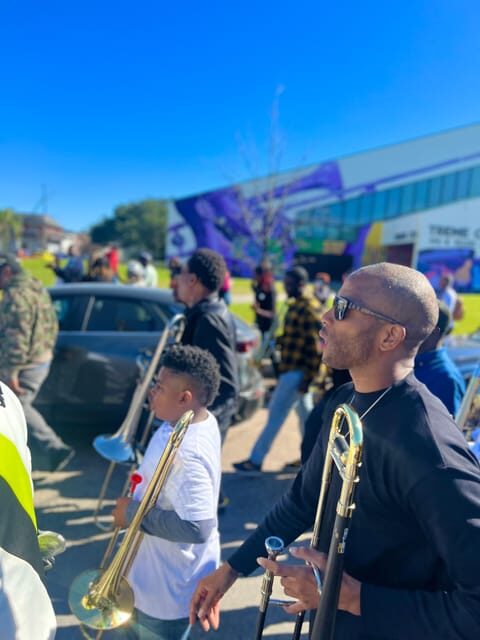
This experience runs about 150 minutes, so it’s long enough to feel like more than a quick stop, but short enough to fit into a busy New Orleans itinerary. Tours are commonly held on Sunday afternoons, and you’ll be in the French Quarter area and nearby neighborhoods depending on the specific Second Line happening.
Here’s the practical reality: you’ll be on your feet for several hours and moving with the group through the neighborhood. One of the best ways to enjoy it is to treat it like a “walk with a party” rather than a sit-down tour. You’ll likely find yourself on porches, near curbside dancing, and in the flow of people stepping off and back into the street as the music leads.
The parade itself tends to move one block at a time. That might sound slow, but it’s not. When you add dancing, stopping for instruction, and waiting for the group to stay together, the energy adds up fast.
If you want the best result from your 150 minutes, bring comfortable walking shoes and plan to be flexible. The day can feel fast in the body even when the parade is moving step-by-step.
Also, think about how you’ll handle crowd density. The experience can involve a large crowd, and it’s easy to over-plan. Instead, plan to keep moving with your group and let the music set your pace.
Meet Hollis and Get the Treme Perspective That Changes How You See the City
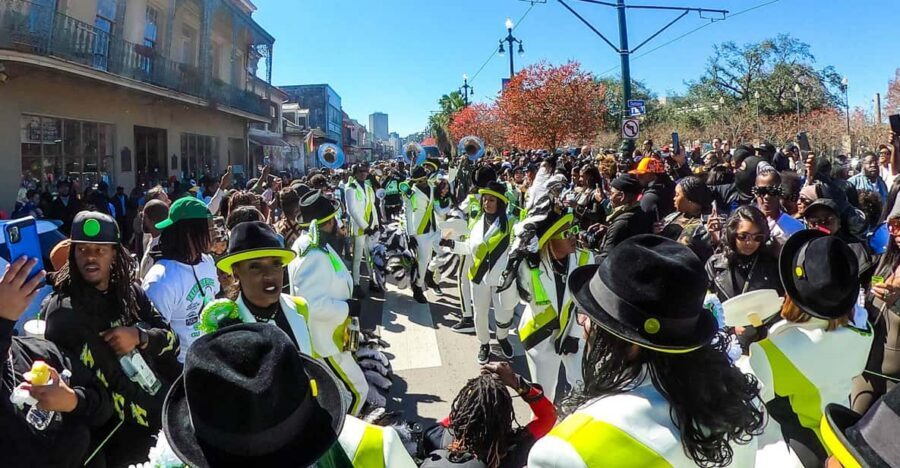
This tour’s main advantage is the guide. Hollis is the name that comes up again and again, and the way people describe him is consistent: he teaches without making it boring, and he runs the group like he’s looking out for everyone, not just leading a route.
You’re also told the tour is led by someone with deep ties to Treme traditions, described as a former King of Treme. Even if you don’t care about titles, you’ll feel the effect in the pacing: Hollis helps you understand what matters in the moment, so the parade doesn’t stay at “cool music and costumes.” It becomes a story about why communities organize, dance, dress up, and keep traditions alive.
People also highlight that Hollis explains culture directly and includes hard topics when they fit. For example, there’s specific mention of learning truths about Hurricane Katrina as part of the cultural context. That kind of context can change the way you interpret New Orleans joy, because it reminds you that celebration here exists alongside real life.
One more practical point: a strong guide helps you keep your bearings in a moving crowd. Even if you don’t follow the full walking route, the guide provides enough information that you can still understand what’s happening and why it matters. That came through in feedback from someone using a wheelchair, who still enjoyed the tour by watching and receiving guidance even without joining the entire route.
The Brass Band, Costumes, and Street Dancing You Actually Join
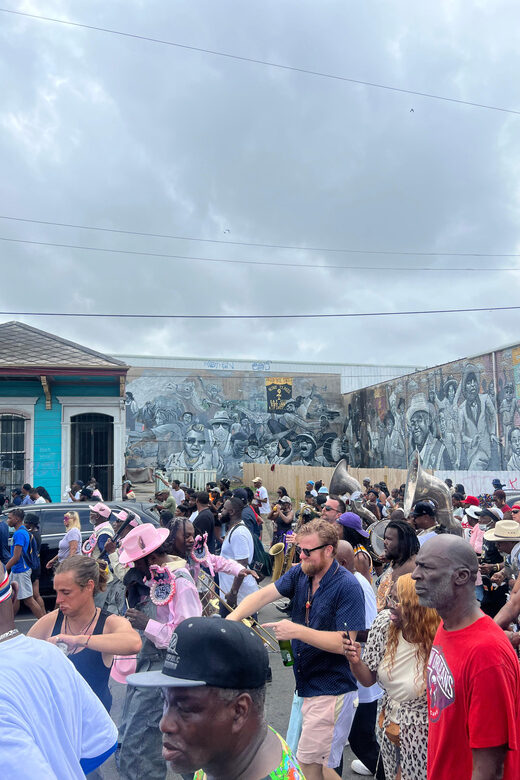
The music is the engine. You’ll be around a brass band, and the sound carries the whole street rhythm forward. This is why it works as a “music experience,” not just a parade photo op. The band drives the energy, and then people respond with dancing.
Expect dancing that isn’t limited to the center of the street. You might see people dancing from porches or from moving vehicles as the parade advances. You’ll also see the classic Second Line wardrobe: brightly colored suits with sashes, hats or bonnets, parasols, and banners. It’s part celebration, part identity display, and part signaling that this is community pride—not just a performance.
What I like about this style for first-timers is that you don’t have to be an expert. The experience invites you to participate. Instead of telling you to stand still and watch, it gives you permission to be part of the moment. That’s exactly what makes it feel different from most “look and move on” sightseeing.
And because there’s a range of organization levels among different Second Lines held throughout the year, the vibe can vary. But the core elements tend to stay: brass band, dancing, and the group identity through costumes. You’ll recognize the tradition quickly once you’re in the flow.
Food and Drinks Along the Route: Plan for Cash
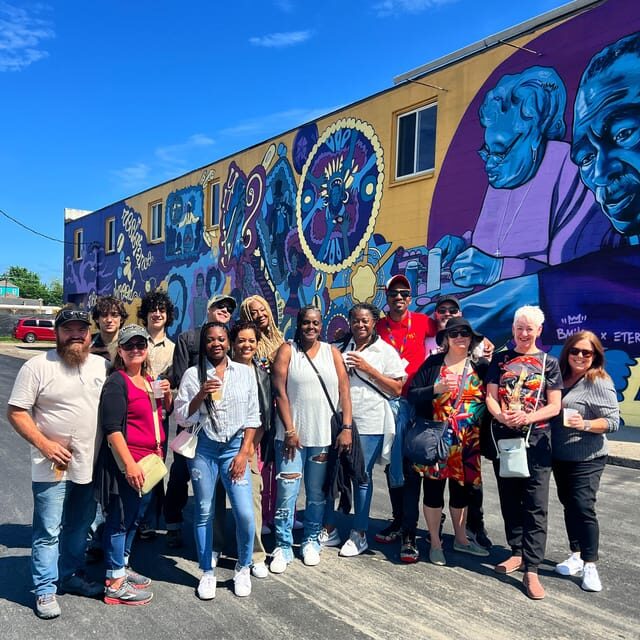
Water is included, which helps a lot when the day is warm and you’re moving. You’ll still want to think like a local: hydrate, slow down when you need to, and don’t rely on the tour to magically fix every physical need.
One of the easiest ways to enjoy the day is to budget for snacks and drinks from vendors. People note that you can buy beverages along the way, and they suggest bringing cash just in case. That makes sense in a city where not every vendor runs on the same payment systems.
Food can also happen at the end, depending on how the group plans things that day. One commonly mentioned payoff was Jamaican food, described as excellent. In another case, a favorite after-parade spot named Heard Dat Kitchen came up as a highlight.
So here’s the useful takeaway: even though this tour includes water, treat it like a culture-and-music walk first, and treat food and drinks as a “maybe along the route, then plan dinner” situation. Bringing cash keeps you flexible.




Price and Value: What $20 Buys in Real New Orleans Time
At $20 per person, you’re paying for a longish block of time with a local guide, plus the practical support that makes the experience smooth. You get a live English tour guide, water, and the plan to navigate the day as a group. You’ll also have a skip-the-line express security check, which can save you stress when crowds and waiting happen.
Value isn’t just the cost. It’s what $20 buys you in attention and access. This tour doesn’t just point at something far away. It puts you next to the music and inside the social flow long enough to understand how the tradition works.
If you’re comparing it to other New Orleans experiences, the cost stays low because you’re not paying for vehicles or big-ticket venues. Instead, you’re investing in a cultural moment that’s already happening in the streets. That’s why the price feels fair: you’re getting a guided pass into something local.
That said, it’s not a private, low-crowd experience. You should be comfortable with being in a large group and sharing space with dancing and parade energy.
Who This Tour Is Best For (and Who Might Want Another Plan)
This is a smart choice if you:
- want a New Orleans second line experience that feels like community life, not a staged show
- enjoy live brass music and street dancing
- want a guide who can explain the meaning behind what you’re seeing
- like walking tours that build from history to real-world atmosphere
It’s also great if you’ve seen Second Lines online and want to understand the texture of it. Being near the music and watching costumes in motion is the part a video can’t fully deliver.
This might be less ideal if you:
- need a mostly seated, low-walking activity
- get overwhelmed quickly by crowds
- want a tightly scheduled “fixed stops” itinerary without any day-to-day variation
If you have mobility needs, you still might enjoy it through watching and guided information, but you should expect that you may not follow the entire parade route end-to-end. The best move is to communicate your needs early with the guide before you show up.
Quick Practical Tips to Make Your Day Easier
A few things will make or break your comfort.
- Bring comfortable shoes. You’ll be on your feet and moving with the parade.
- Wear comfortable clothes and expect lots of activity.
- Pack a hat if you’re sensitive to sun.
- Hydrate. Water is included, but you’ll still want to pace yourself.
- Bring cash for snacks and beverages from vendors along the way.
- Bring some flexibility. This experience is about the street flow, not a rigid script.
One more important detail: you should call to confirm the meeting location the day before your tour. That helps you avoid wasting time hunting around when the parade world starts moving.
Language is English, so it’s a good fit if you want clear explanations without guessing.
Should You Book This Second Line Tour or Skip It?
If your goal is to feel New Orleans the way people who live there feel it, this is an easy yes. The mix of brass band energy, street dancing, and local context led by Hollis is exactly what makes a Second Line more than a photo. And at $20 for 150 minutes, it’s a bargain compared to most “guided culture” experiences that cost far more for far less time and access.
I’d skip it only if walking in a crowd would ruin your day. If you can handle a moving, active street atmosphere, you’ll likely leave with stories, photos you actually like, and a better understanding of why these parades matter.
FAQ
How long is the Second Line Tour & Music Experience?
The tour duration is 150 minutes.
How much does it cost?
The price is $20 per person.
Where do we meet for the tour?
You should call to confirm the meeting location the day before the tour.
What is included in the tour price?
The tour includes a tour guide, water, and the experience (great vibes). It’s also a live English tour.
What should I bring with me?
Bring comfortable shoes and comfortable clothes. It’s also smart to bring cash, and you may want to bring a hat and hydrate.
Is the tour only for people who can walk the full route?
The experience involves walking and moving with the parade, so if you have mobility limitations, you might not be able to follow the entire route, but you can still enjoy watching and learning with the guide’s support.
Is there free cancellation?
Yes. You can cancel up to 24 hours in advance for a full refund.