REVIEW · NEW ORLEANS
From New Orleans: Destrehan Plantation Haunted Night Tour
Book on GetYourGuide →Operated by NOLA Ghost Riders · Bookable on GetYourGuide
Night history has a different sound. You ride out of the French Quarter for a haunted experience at Destrehan Plantation, with exclusive time after sundown on the historic home and grounds. I really like the way the tour ties the eerie parts to real Louisiana threads—especially the 1811 Slave Revolt and the aftermath—so the scares land with meaning, not just atmosphere.
The other thing I love is the voodoo education. You get a storyteller-led explanation of how voodoo came to South Louisiana and evolved, mixing African, Haitian, and Catholic spiritual beliefs and practices. The one consideration: this is not for every comfort level. You’re dealing with heavy history tied to slavery and revolt, and the tour is also not suitable for wheelchair users, so come prepared.
If you’re the type who likes your history practical and your ghost stories grounded, this 3-hour outing by NOLA Ghost Riders can be a strong choice—especially because the night access is the main event.
In This Review
- Key Highlights You’ll Care About
- A Night Tour That Starts in the French Quarter
- Destrehan Plantation After Sundown: What the Dark Changes
- The 1811 Slave Revolt Stories and the Trials After
- The Cultural Gumbo: Enslaved Africans, Acadians, Creoles of Color, and Native Americans
- Voodoo in South Louisiana, Explained Straight
- Price and Time: Is $69 Worth It?
- Who This Haunted Night Tour Fits Best
- Practical Tips Before You Go
- Should You Book the Destrehan Haunted Night Tour?
- FAQ
- How long is the Destrehan Plantation Haunted Night Tour?
- What time does the tour last and what’s the schedule like?
- Where do I meet for the tour?
- Does the tour include entry to Destrehan Plantation?
- What’s the price?
- Is food or drinks included?
- Will I be at the plantation after dark?
- Is the tour wheelchair accessible?
- What should I bring?
- What languages are available?
Key Highlights You’ll Care About
- Exclusive after-sundown access to the plantation home and grounds
- Chilling stories connected to the 1811 Slave Revolt and what followed
- A culture-mix explained as a Louisiana gumbo: enslaved Africans, free creoles of color, Acadians, and Native Americans
- Voodoo history framed clearly through African, Haitian, and Catholic influences
- A tight 3-hour plan with guided time and a short break built in
- Roundtrip transport from the French Quarter to make the night easy
A Night Tour That Starts in the French Quarter
Your evening begins at 1140 Decatur St, meeting at The Voodoo Tavern & Poboys. That matters, because it keeps the start simple: you’re not trying to find parking in the dark or time a complicated ride on your own. From there, you board the bus for the drive out of the city.
You’ve got about 30 minutes on the way each direction, which turns this into a true evening activity instead of an all-day detour. The total tour time is about 3 hours, so you’re getting a focused experience rather than a long haul that eats up your whole night. If you like structured plans where you can still enjoy New Orleans before and after, this format fits well.
You can also read our reviews of more evening experiences in New Orleans
Destrehan Plantation After Sundown: What the Dark Changes
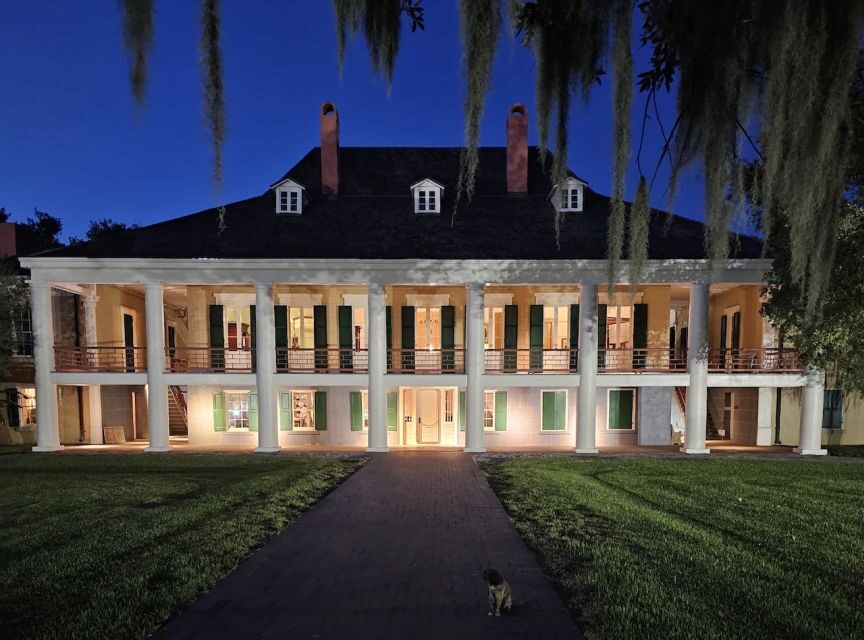
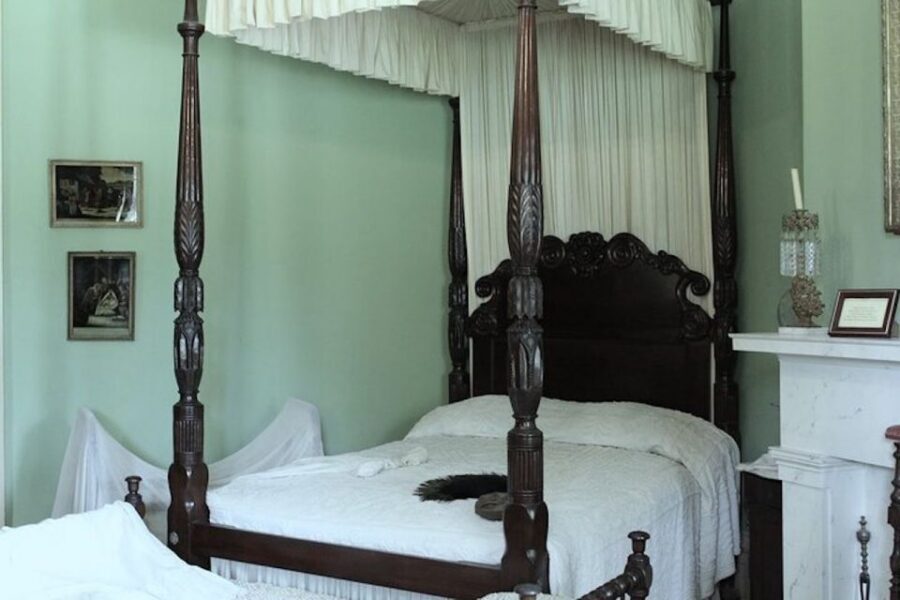
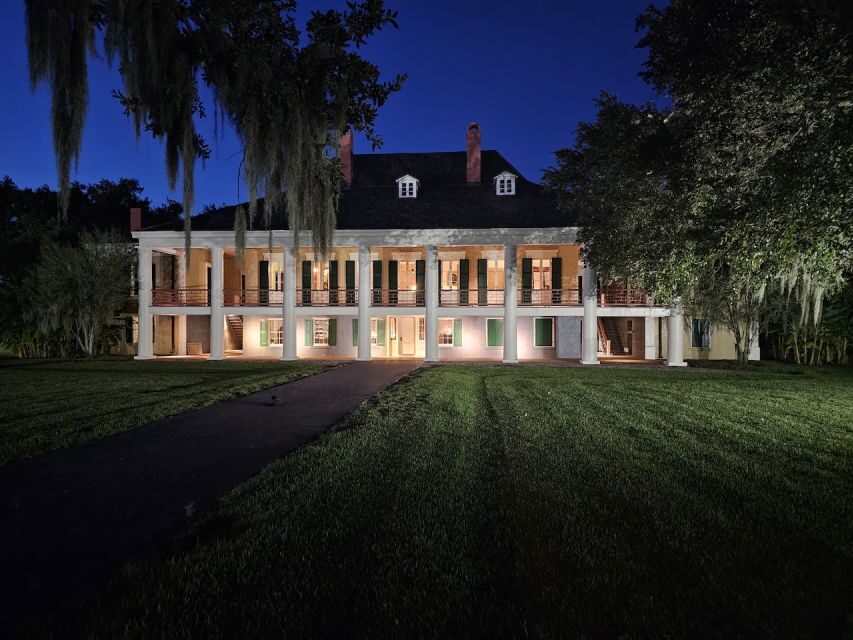
Destrehan Plantation is the oldest documented plantation home in the lower Mississippi Valley, and seeing it after sundown is the point. You get guided time (about 2 hours) inside the historic home and around the grounds with a storyteller leading the way. At night, the same rooms and corridors can feel bigger and quieter, and the experience leans harder into atmosphere—without needing you to guess at what’s going on.
This is also where the tour earns its reputation. The standout detail for me is that you’re not just driving past the property or doing a daylight walk-through. You’re there for the nighttime version of Destrehan—when the stories tend to land faster because your senses are already tuned to the dark.
You’ll also have a 15-minute break before the ride back. That’s a nice pacing tool. You get enough of a breather to reset before heading home, which matters because ghost tours can feel intense even when they’re done respectfully.
The 1811 Slave Revolt Stories and the Trials After
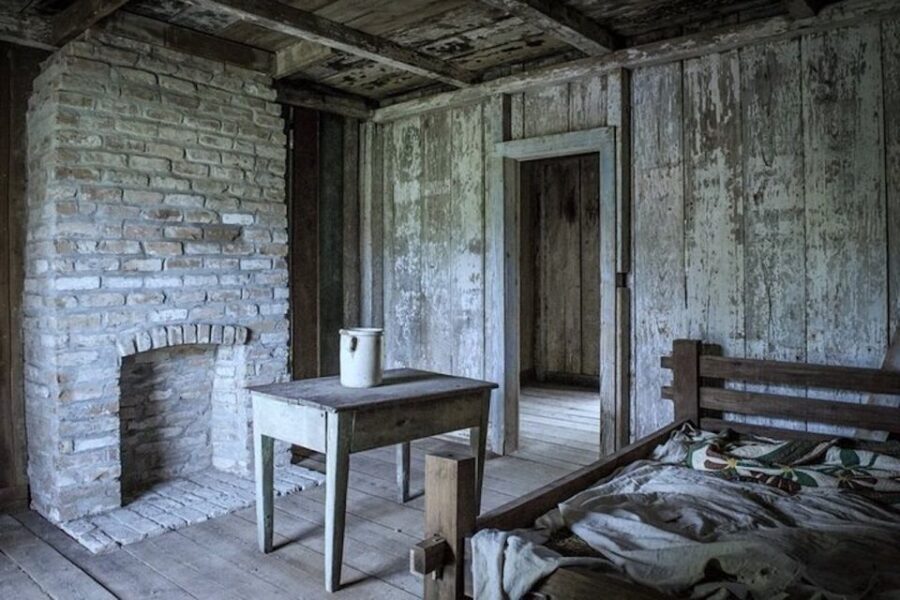
One of the strongest parts of the experience is that the haunting isn’t treated like random folklore. The tour focuses on the 1811 Slave Revolt, described as one of the largest in US history, and it follows with accounts of the trials that took place afterward.
That framing changes how you listen. Instead of thinking of ghost stories as entertainment only, you’re hearing them as a way people remembered fear, justice, and the aftermath of violence. You’re also learning how Louisiana’s history is tangled with power—who controlled it, who resisted it, and what came after.
It’s still presented as a nighttime haunted experience, so you’ll feel the chill. But you’ll also understand why the stories exist. That combination is what makes this tour more than a spooky walk: it connects the emotional weight of the past to the place itself.
The Cultural Gumbo: Enslaved Africans, Acadians, Creoles of Color, and Native Americans
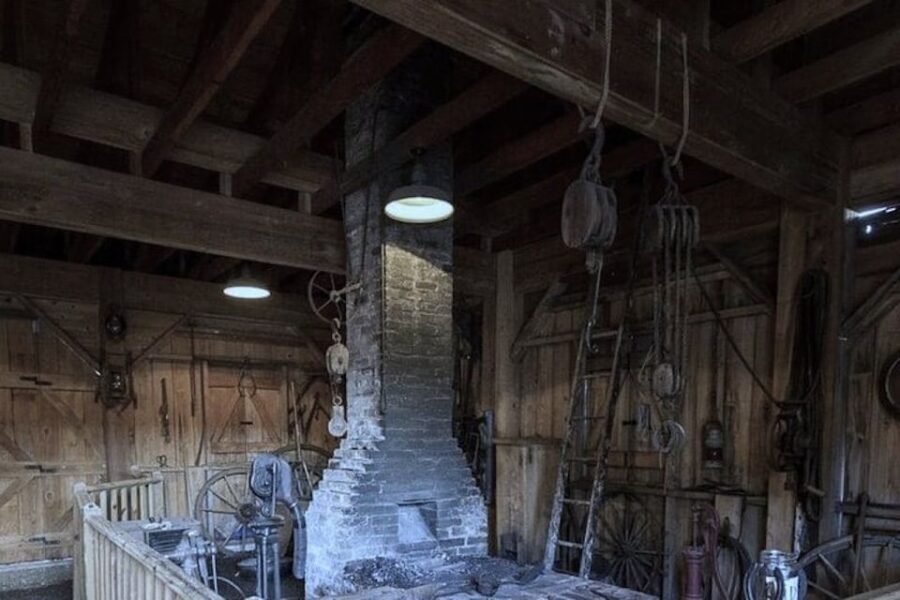
The plantation setting lets the guide talk about Louisiana’s cultural mix as something formed over time, not something that arrived neatly prepackaged. The tour covers a broad set of influences tied to early Louisiana life, including enslaved Africans, free creoles of color, Acadians, and Native Americans.
If you’ve ever heard Louisiana described as a gumbo, this is the kind of explanation that makes the idea feel real. You’re seeing how different communities intersected, how cultures changed through contact, and how language, belief, and daily life were shaped by the people living there.
And because it’s a nighttime storytelling format, the info doesn’t come out like a textbook lecture. You’re being guided through the home and grounds while the stories connect back to the big themes: displacement, survival, adaptation, and cultural mixing. For me, that’s where the tour becomes most useful—you get a story-driven snapshot of how Louisiana culture formed.
Voodoo in South Louisiana, Explained Straight
The tour’s voodoo segment is one of the reasons it attracts people who are curious but unsure. You’ll hear how voodoo came to South Louisiana and how it evolved, with the explanation centered on how African, Haitian, and Catholic spiritual beliefs merged over time.
The key here is tone: the guide positions the spiritual history as something more understandable than mystique alone. You’re guided through the idea that voodoo has roots and structure, and that the way it’s often portrayed can be misleading. Instead of treating it like pure spectacle, the tour gives you a grounded way to think about it.
In practical terms, this matters because a lot of people come in with questions: Is it just a set of scary rituals? Is it tied to Catholicism? Why Haiti? This tour is set up to address those questions directly, using the South Louisiana story as the thread.
If you care about religion, history, or how traditions change when cultures meet, you should take notes in your head. You’ll probably leave with a clearer mental model of how beliefs evolve—and why they stay meaningful to the communities practicing them.






Price and Time: Is $69 Worth It?
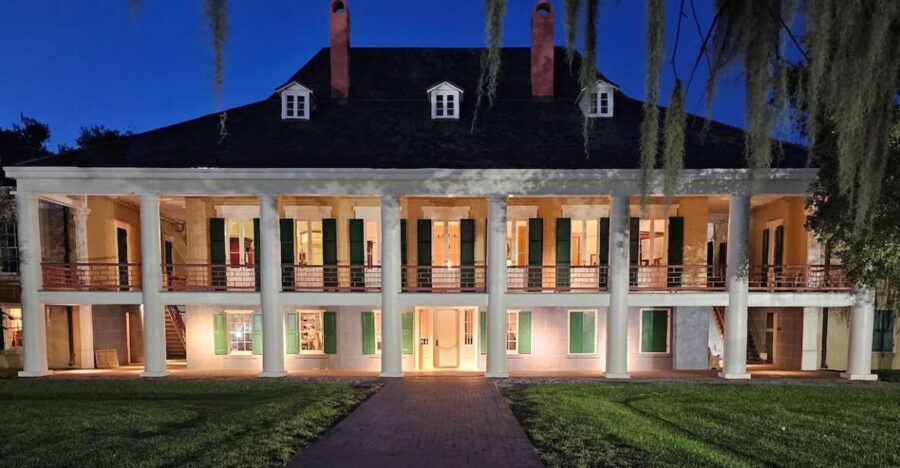
At $69 per person for a 3-hour outing, you’re paying for three things: roundtrip transportation from the French Quarter, entry to Destrehan Plantation, and a guided nighttime storytelling experience. Food and drinks are not included, so you’ll want to eat before you go or plan a post-tour snack.
Is it good value? For the kind of access you’re getting, the pricing makes sense. Nighttime hours at a historic plantation are not the usual “walk in anytime” setup, and you’re not only getting entry—you’re getting guided time focused on the stories the tour promises: the revolt aftermath and the evolution of voodoo.
The time commitment is also a plus. You’re not spending the entire evening in transit or waiting around. You’ve got the drive, the guided tour, a short break, then back to the start point. It’s a workable plan for people who want a memorable night activity without losing control of the rest of their schedule.
Who This Haunted Night Tour Fits Best
This is a good match if you:
- Want a night-focused experience at a major historic site rather than a generic day tour
- Like ghost stories that have specific historical anchors
- Are curious about Louisiana’s cultural mix, including stories beyond the standard plantation narrative
- Want a guided explanation of voodoo rooted in African, Haitian, and Catholic influences
You might want to skip it if:
- You need wheelchair accessibility, because it’s listed as not suitable for wheelchair users
- You prefer light, purely spooky fun. This tour’s atmosphere is tied to serious topics connected to slavery and revolt
- You have trouble with nighttime walking on uneven historic grounds. Comfortable shoes are recommended, and you’ll spend time on the property.
Also, if you’re the kind of person who gets emotionally invested in history, be ready for that. The tour’s best moments are the ones where you feel the gravity of the past.
Practical Tips Before You Go
This one’s simple, but don’t ignore it:
- Wear comfortable shoes. You’ll be moving around the plantation during the guided experience.
- Dress for night conditions. Even without a forecast, the evenings can feel cooler once you’re away from the city lights.
- Plan your food. Since food and drinks aren’t included, handle dinner before you meet at Decatur St.
One more practical thought: you’re riding from New Orleans, so treat the trip like a night outing. Keep your expectations aligned with a timed, guided experience that ends back at Decatur St.
Should You Book the Destrehan Haunted Night Tour?
Book it if you want a nighttime plantation experience with story-led guidance, and especially if you’re interested in the combination of two anchors: what happened after the 1811 Slave Revolt and how voodoo in South Louisiana evolved through African, Haitian, and Catholic influences. The tour’s strongest value is the after-sundown access—this is why it feels different from a daytime visit.
Don’t book if you want wheelchair-friendly access or if you’re looking for a purely light, no-weight ghost event. This one has history in it, and the guide’s approach uses that past to shape the atmosphere.
If that sounds like your kind of night, you’ll likely find the experience both spooky and genuinely informative.
FAQ
How long is the Destrehan Plantation Haunted Night Tour?
It’s about 3 hours total.
What time does the tour last and what’s the schedule like?
The plan includes roundtrip bus time (about 30 minutes each way), a 2-hour guided tour at Destrehan Plantation, and a 15-minute break.
Where do I meet for the tour?
Meet your guide at The Voodoo Tavern & Poboys on Decatur St (1140 Decatur St).
Does the tour include entry to Destrehan Plantation?
Yes. Entry to Destrehan Plantation is included.
What’s the price?
The price is $69 per person.
Is food or drinks included?
No. Food and drinks are not included.
Will I be at the plantation after dark?
Yes. The experience includes exclusive access to visit the plantation after sundown.
Is the tour wheelchair accessible?
No. It is not suitable for wheelchair users.
What should I bring?
Comfortable shoes.
What languages are available?
The tour guide provides the tour in English.