REVIEW · NEW ORLEANS
Ghosts, Gods, & Gangsters of New Orleans
Book on Viator →Operated by Spirit Empire Tours · Bookable on Viator
New Orleans gets dark on purpose. This evening walk mixes ghost lore with true-crime history and the city’s criminal underbelly, all while you’re standing in the places where the stories claim something happened. It’s a fun, spooky way to learn New Orleans without sitting in a museum chair all night.
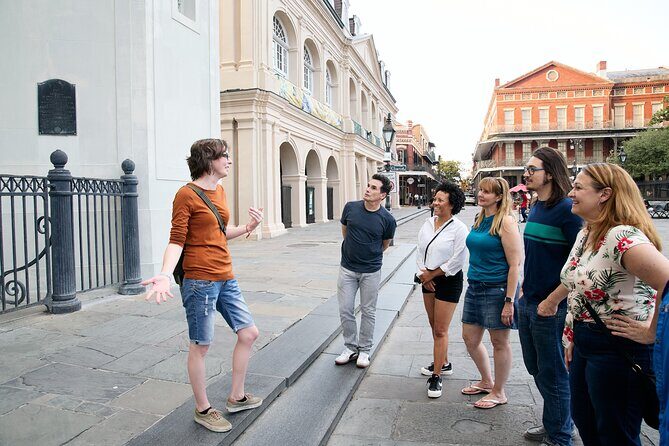
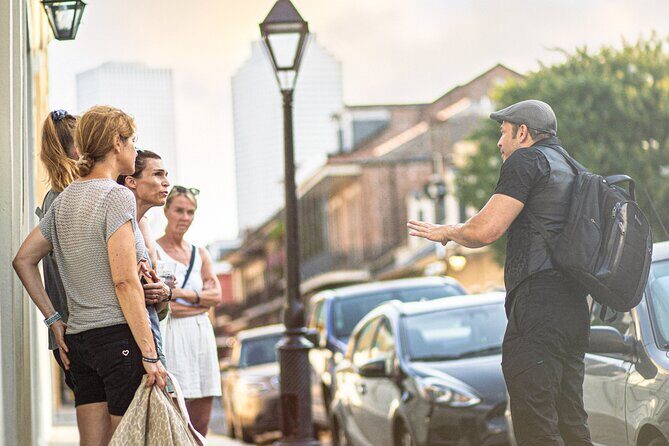
What I like most is the guide’s style. Dr. Edward Simmons (aka Edward) keeps the stories moving with humor and strong delivery, and he tends to keep the tone fun instead of cheesy. I also like the setup: a small group (up to 20) means you get a real conversation pace, not a hurried cattle-line.
One consideration: the tour stays outdoors and runs in the evening, so weather and temperature matter. It’s also adults only (17+), so it’s not a casual family stroll.
In This Review
- Key highlights to watch for
- The 1 hour 45 minute plan: what this tour really feels like
- Price and value: is $34 a good deal for this kind of night walk?
- Where you start on Dutch Alley (and how to prepare)
- Stop 1: Old Ursuline Convent Museum gates and the casket girls legend
- Stop 2: BK Historic House and Gardens, P.T. Beauregard, and a mafia hit
- Stop 3: Lalaurie Mansion and Madame Delphine’s infamous secrets
- Stop 4: French Market, Gallatin Street, and a red light district past
- Stop 5: Jackson Square executions under today’s soft sounds
- Stop 6: New Orleans Pharmacy Museum and plague-era medical rumors
- Stop 7: Omni Royal Orleans and the tragedy behind the polished lobby
- Why Dr. Edward Simmons’ style works (humor, facts, and the right level of spook)
- Who should book this tour—and who might skip it
- Should you book Ghosts, Gods, & Gangsters of New Orleans?
- FAQ
- How long is the Ghosts, Gods, & Gangsters of New Orleans tour?
- How much does the tour cost?
- Where does the tour start?
- Is this tour for adults only?
- What’s the maximum group size?
- What language is the tour offered in?
- Is alcohol provided during the tour?
- What happens if weather is bad or I need to cancel?
Key highlights to watch for
- Dr. Edward Simmons storytelling that stays funny while still sticking to the facts
- Small-group feel (max 20) for a more personal night walk
- No interior building stops; you’ll see famous places from the sidewalk
- A horror-leaning mix of ghosts, gangsters, and plague-era rumors
- French Quarter focus with multiple stops tied to real public events and crime
The 1 hour 45 minute plan: what this tour really feels like
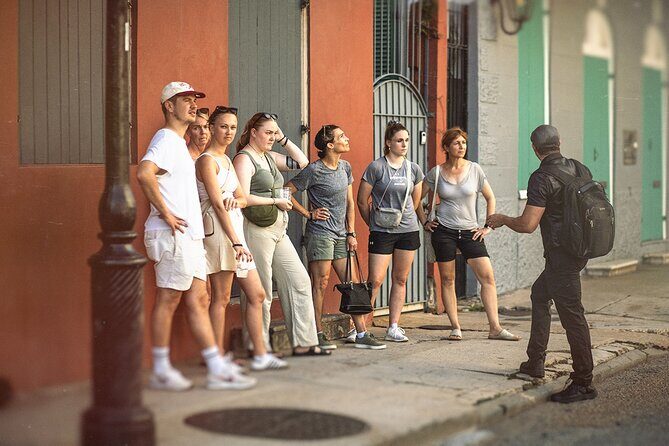
This is a tight nighttime walking route, roughly 1 hour 45 minutes. You’ll make short pauses at each stop (about 10 minutes each), so you’re never stuck too long at one spot.
Because it’s built around quick location-to-location storytelling, you’ll want to show up ready to walk and listen. If you’re the type who likes to look around as you go, this format works well: the guide paints a scene, you take in the architecture, then you move on.
You can also read our reviews of more tours and experiences in New Orleans.

Price and value: is $34 a good deal for this kind of night walk?

At $34 per person, the value comes from three things: time, access, and experience design.
First, the duration is long enough to feel like a real activity (not a 45-minute stunt). Second, you’re paying for a licensed, certified guide who knows how to connect the dots between spooky lore and the city’s darker recorded past. Third, the group size stays small, so your money buys better attention per person.
You’re also getting a mobile ticket and a tour that’s easy to fit into an evening plan. No private vehicle, no extra add-ons required to enjoy most stops—though some sites you pass may have optional paid entry if you want it.
Where you start on Dutch Alley (and how to prepare)
The tour meets at 916 Dutch Aly, New Orleans, LA 70116. It’s near public transportation, which helps if you’re not renting a car.
Plan to arrive 30 minutes early for check-in, because the group leaves at the scheduled time. Since the walking is outdoors and the stops are spread across a nighttime route, you’ll feel it more if you show up late (you don’t want to miss any of the story pacing).
Dress for the weather. One review-style tip you’ll hear again and again: wear warm layers for cooler months, and don’t assume the tour pauses forever when it rains. The best move is to bring whatever lets you stay comfortable for a solid night walk—hat or hood, light rain protection, and shoes you trust.
Stop 1: Old Ursuline Convent Museum gates and the casket girls legend
You start by pausing outside the Old Ursuline Convent Museum gates, a landmark tied to New Orleans’ early founding era. The guide then turns the mood toward the legend of the casket girls—young women said to have traveled with peculiar chests, bringing what the story frames as unholy stowaways.
Here’s what makes this stop stand out (besides the spooky premise): you’re looking at the kind of aged walls and ironwork that naturally invite imagination. The guide also encourages you to listen—your group may be prompted to pay attention to whispers in the wind before you move on.
Possible drawback: this stop is more about atmosphere and lore than action. If you prefer lots of factual detail over legend, you’ll still get both, but this is the point where the story leans hardest into the paranormal question: did these arrivals influence vampire mythology in New Orleans?
Stop 2: BK Historic House and Gardens, P.T. Beauregard, and a mafia hit
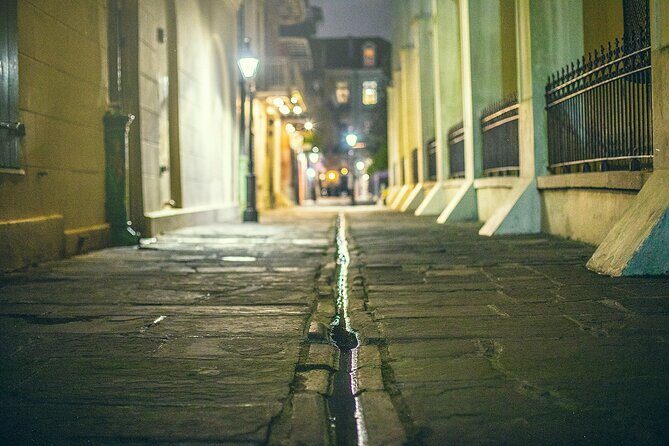
Next you head to the BK Historic House and Gardens, where the setting has layers. The property connects to Civil War general P.T. Beauregard, and it also connects to later cultural life through bestselling author Frances Parkinson Keyes.
Then the guide shifts gears from “grand old house” to “this didn’t always end politely.” This location is described as a site of one of the city’s infamous mafia hits. The story adds the supernatural angle: some believe unsettled spirits linger, replaying a phantom feud.
What you’ll likely enjoy here: you’ll get the contrast between a beautiful, formal building and the violence tied to it. That tension is very New Orleans—pretty streets, ugly past.
A small practical note: the stop is short. You get enough time to hear the story and look around, but not enough to treat it like a museum visit.




Stop 3: Lalaurie Mansion and Madame Delphine’s infamous secrets
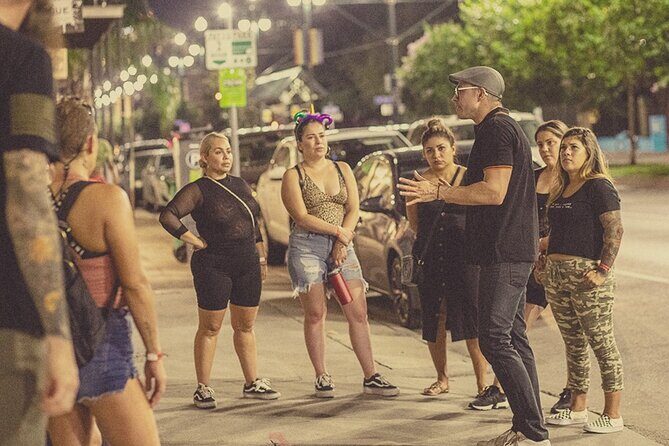
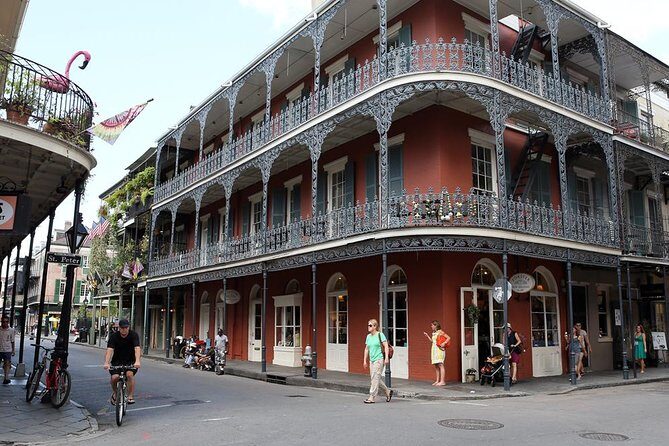
At the Lalaurie Mansion, the guide points out the stately façade and the iron balcony tied to the notorious Madame Delphine Lalaurie. The story focuses on what was exposed after a fateful day—along with claims of experiments and extreme human suffering.
The tour’s framing here matters. You’re not being asked to accept every ghost story as literal fact. Instead, you’re asked to consider why the place continues to disturb people—and why the line between recorded horror, rumor, and imagination can blur around a real address.
Possible drawback: if you’re sensitive to truly disturbing topics, this is the stop that may hit hardest. The best prep is mental: treat it like true-crime history with supernatural seasoning, not like a light ghost attraction.
Stop 4: French Market, Gallatin Street, and a red light district past
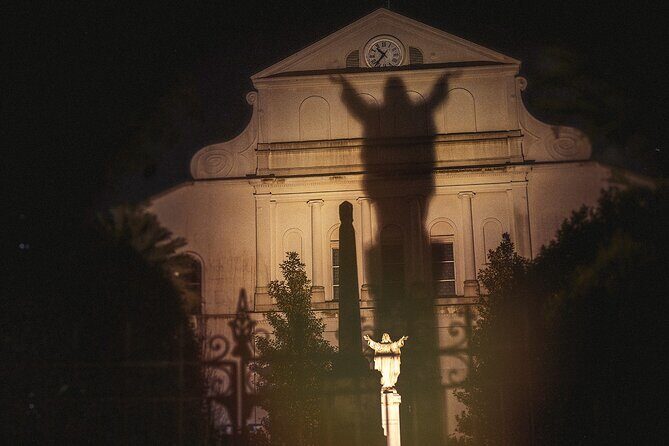
You’ll pause around the French Market area as the guide draws attention to what was once Gallatin Street—described as a late 1800s red light district tied to sailors, sailors on shore leave, and establishments offering illicit pleasures.
The guide tells the story with a sensory style: danger and predation around every corner, siren-like lures into dark dead ends, and gangsters hired by respectable facades that hid a murderous past. It’s dramatic, yes, but it’s also meant to help you see how a neighborhood’s identity can change over time.
Here’s why I think this stop works for first-timers: you’ll be learning a darker side of the Quarter without getting stuck in one “haunted house” idea. It’s New Orleans as a shifting street map—moral geography as much as physical geography.
Stop 5: Jackson Square executions under today’s soft sounds
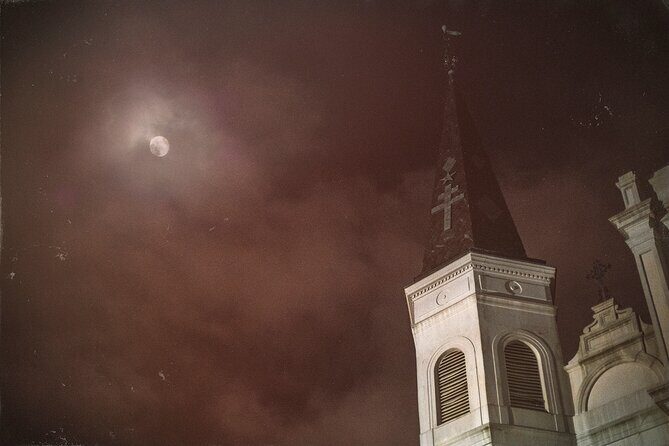
Then you move to Jackson Square, where the guide sets the scene for a time when this green space wasn’t soft at all. Before it became what you see today, it’s described as the site of public executions—hangings and other methods, carried out with armed guards and crowds watching.
This is one of those moments where the guide’s job isn’t to scare you. It’s to make you recognize the reality behind the spectacle: how quickly crowds can treat punishment like entertainment, and how long a location can keep that memory.
Today, the square may feel cheerful with carnival tunes in the air, but the tour pauses to acknowledge the darker use of the space. If you like historical context, this is the stop where you’ll get it most clearly.
Stop 6: New Orleans Pharmacy Museum and plague-era medical rumors
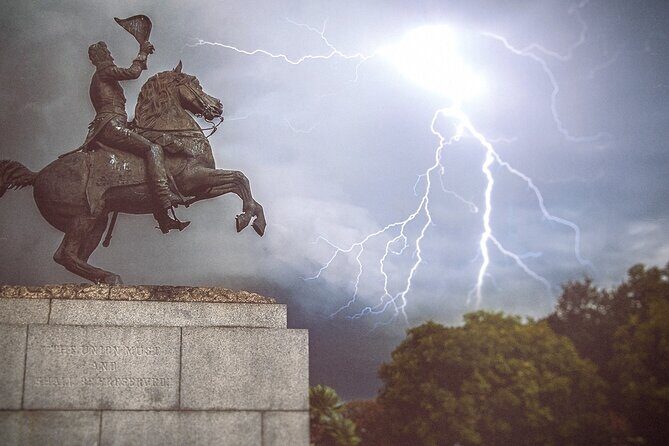
Next comes an unassuming building connected to the New Orleans Pharmacy Museum. The guide shares plague-year tales, including rumors that fringe doctors used the building for lethal human experiments while searching for answers.
Important detail: the stories are described as murky. The accounts you hear are framed as passed down across generations, with facts missing and who did what left unclear. The lingering idea is that even a museum dedicated to medical ingenuity can’t wash away every shadow.
What you’ll likely take from this stop is a lesson in how epidemics generate fear, secrecy, and moral compromise. Even when the supernatural angle is the hook, the real tension here is human: what people do when illness spreads faster than ethics.
Stop 7: Omni Royal Orleans and the tragedy behind the polished lobby
The final stop is outside the Omni Royal Orleans. From the street, it looks refined—polished, hotel-bright, built for vacation comfort. The guide highlights that this façade has a history of misfortune, including mention of fiery disasters and mafia underworld dealings.
The story’s sharpest point here is a reported suicide plunge from the high roof, along with speculation about deeper anguish and what it implies about a “murder” angle. The tour leaves you to draw your own conclusions about how pain can echo in places where people now mingle cheerfully.
Practical note: this stop works best when you’re ready to sit with discomfort for a minute rather than hunt for jump-scares. If you want a lighter finish, you might feel the weight here.
Why Dr. Edward Simmons’ style works (humor, facts, and the right level of spook)
Across the route, what keeps this from feeling like a cheesy haunted walk is the balance of tone. Dr. Edward Simmons keeps the pace lively and funny, and he’s known for staying grounded rather than turning everything into pure myth.
You’ll also feel how the guide handles the group. With a max of 20, the storytelling has breathing room. The guide can amplify voice at key moments, and you’re not just listening to a monologue while staring at the ground to avoid tangling in other people’s feet.
This matters for value. A spooky tour isn’t just “scare + street corners.” It’s also pacing, clarity, and how well the guide connects the story to the actual place.
Who should book this tour—and who might skip it
This tour is a great fit if you want:
- a nighttime walk that mixes ghost lore with true crime
- a guide who can tell stories without going full cartoon
- a route with multiple stops tied to famous addresses in the French Quarter area
It’s probably not your best choice if:
- you want a history lecture with minimal paranormal framing
- you don’t want to hear about severe crimes and human suffering
- you’re bringing anyone under 17 (this is adults only)
Should you book Ghosts, Gods, & Gangsters of New Orleans?
I’d book it if you’re spending a long enough weekend in New Orleans to want one “signature night activity” that’s both entertaining and place-based. For $34, the value is strong because you’re not just buying spooky ambiance—you’re buying a guided chain of stories from convent lore to mafia violence, execution history, and plague-era rumors.
I’d think twice only if you hate outdoor walking or you’re sensitive to dark, disturbing subject matter. If you’re okay with that tradeoff, the night walk format plus small group size plus the guide’s energetic storytelling makes this one of the more satisfying ways to experience New Orleans after dark.
FAQ
How long is the Ghosts, Gods, & Gangsters of New Orleans tour?
It lasts about 1 hour 45 minutes.
How much does the tour cost?
The price is $34.00 per person.
Where does the tour start?
The tour starts at 916 Dutch Aly, New Orleans, LA 70116, USA.
Is this tour for adults only?
Yes. Adults only, 17+.
What’s the maximum group size?
The tour has a maximum of 20 travelers.
What language is the tour offered in?
The tour is offered in English.
Is alcohol provided during the tour?
No. Alcoholic beverages are not provided (even though responsible moderation is permitted).
What happens if weather is bad or I need to cancel?
This experience requires good weather. If it’s canceled due to poor weather, you’ll be offered a different date or a full refund. For cancellations, you can cancel up to 24 hours in advance for a full refund; within 24 hours, refunds are not available.
If you want, tell me your travel dates and whether you prefer more true crime or more paranormal, and I’ll suggest a simple night plan around this tour.