REVIEW · NEW ORLEANS
More Than Mardi Gras: French Quarter Tour (Small Group)
Book on Viator →Operated by Tours by Foot New Orleans · Bookable on Viator
A walk through New Orleans’ French Quarter, minus the chaos. This small-group tour lines up St. Louis Cathedral and the Presbytère so you understand what you’re seeing and why it matters, from colonial Louisiana to Mardi Gras history. I especially like how it explains the Quarter’s religious roots and then connects them to what Louisiana is like today.
I also like the guide-led storytelling pace. In the reviews, folks praised guides such as Andrew for clear, detailed origins of New Orleans and the French Quarter, and Daniel for lots of city history background. One thing to consider: the tour is about 90 minutes, so you’ll cover a lot of ground and can’t expect long stops inside buildings along the way.
In This Review
- Key Points You’ll Actually Notice on This Walk
- French Quarter Without the Guesswork
- Price and Time: Why This $39 Tour Is Built for Value
- Start at Jackson Square, End at the Presbytère
- Stop 1: St. Louis Cathedral and the Colonial Louisiana Anchor
- Pontalba Apartments: The Real Estate Story Behind the Quarter’s Buildings
- The Government Seat That Became the Louisiana State Museum
- Privateers, Pirates, and Why Maritime Power Matters Here
- Ursuline Convent: Colonial Religious Architecture You Can Actually Spot
- Royal Streets and Bourbon Street: Learning the Layout, Hearing the Music
- Bourbon Street 101: Sordid History and a Quick How-To
- The Presbytère Finish: Mardi Gras and Katrina Exhibits, Self-Guided
- What Guides Bring to the Experience (Andrew and Daniel as Examples)
- Practical Tips to Make the Most of a 90-Minute Walk
- Who This Tour Fits Best
- Should You Book More Than Mardi Gras?
- FAQ
- How long is the French Quarter tour?
- How much does it cost?
- Where do you meet for the tour?
- Where does the tour end?
- Is admission included for the Presbytère exhibits?
- What ticket format is used?
- Can I cancel and get a full refund?
Key Points You’ll Actually Notice on This Walk
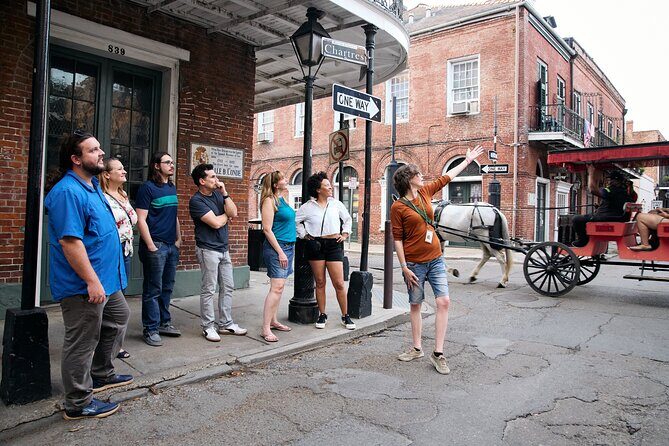
- A guided French Quarter story arc: you go from the oldest cathedral stop to the Mardi Gras/Katrina exhibits at the Presbytère
- Real street context: Royal Streets and Bourbon Street are explained, not just photographed
- Specific local landmarks included: St. Louis Cathedral, Pontalba apartments, the Ursuline Convent, and Presbytère
- A piracy-and-privateering angle: it’s not only romance and music; it’s also the sea-faring economy
- Small group size: up to 27 people, which helps you hear the guide and ask questions
French Quarter Without the Guesswork
The French Quarter can feel like a postcard on repeat. Live music is everywhere, doorways are gorgeous, and Bourbon Street pulls your attention fast. This tour helps you read the neighborhood like a map, with history that ties each block together instead of treating everything as a set of stops.
What I like most is that you’re not stuck in one lane—churches, government space, social life, and even the “how to handle Bourbon Street” talk all show up. You also end with the Presbytère, where the Mardi Gras and Hurricane Katrina exhibits give the story a modern, human finish.
You can also read our reviews of more tours and experiences in New Orleans.



Price and Time: Why This $39 Tour Is Built for Value
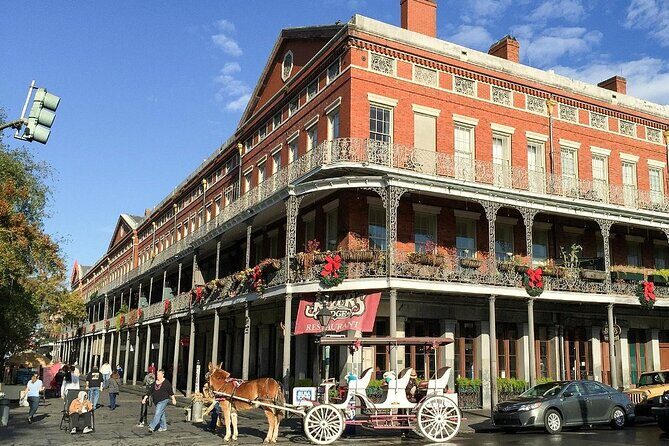
At $39 per person for about 1 hour 30 minutes, this is a good deal if your goal is orientation plus context. You aren’t paying for a long sit-down museum day. You’re paying for a guide to connect the dots quickly while you’re still in walking mode and the streets are right in front of you.
Also, this is a small group up to 27 people. That matters because the French Quarter is loud and busy, and you want to hear explanations without shouting over the street. If you only have a short window in New Orleans, this format is a smart way to “get your bearings” and move on with confidence.
Start at Jackson Square, End at the Presbytère
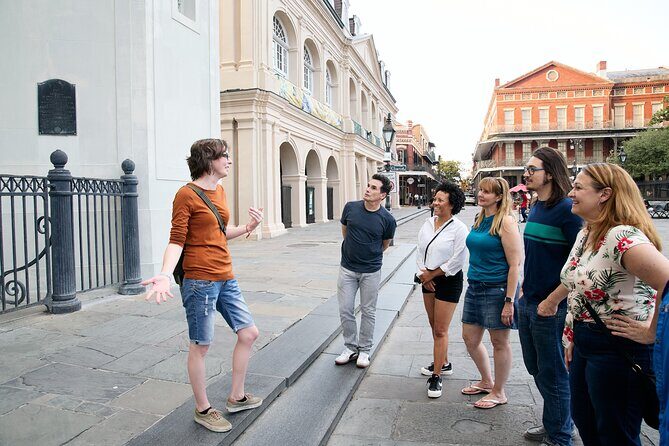
The tour meets at Jackson Square (Jackson Square, New Orleans, LA 70116) and starts at 10:30 am. It ends at the Presbytère (751 Chartres St, New Orleans, LA 70116), where the guide has tickets for you to enter for a self-guided visit to the Mardi Gras and Hurricane Katrina exhibits.
That end point is key. It means the tour isn’t just walking and then sending you off. You get a built-in option to keep learning after the guided portion, at your own pace.
Stop 1: St. Louis Cathedral and the Colonial Louisiana Anchor
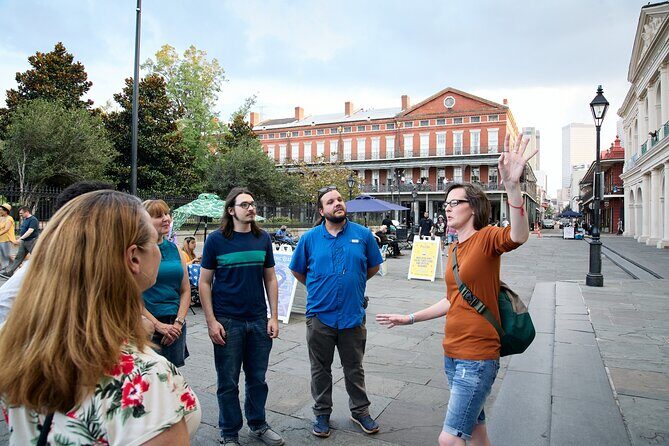
The first major stop is St. Louis Cathedral, described as the oldest continuously in use cathedral in the United States. The guide explains why it’s such an important anchor point for the region, and you’ll hear it framed as a model of colonial Louisiana architecture.
This stop works because it sets a theme early: Louisiana’s story runs through Catholic faith and community life. If you’re the type who likes understanding what you’re looking at before moving on, this is a strong beginning. If you prefer to rush to the nightlife sights, you might be tempted to speed through the visuals—try not to. The cathedral explanation helps you spot meaning behind the pretty scenery.
Pontalba Apartments: The Real Estate Story Behind the Quarter’s Buildings
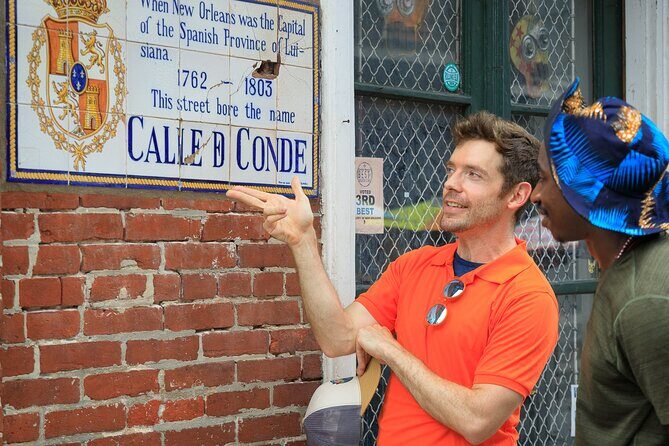
Next comes the story of Michaela Pontalba and the buildings associated with her legacy. These buildings are said to be some of the first apartments in the United States, and the guide highlights her struggle to have them created.
This is the kind of history that makes the neighborhood feel less like a theme park. Instead of only focusing on general “French Quarter vibes,” you learn that real decisions—money, housing, power—shaped what you see on the street now. It also gives you a new lens for architectural details you might otherwise ignore.




The Government Seat That Became the Louisiana State Museum
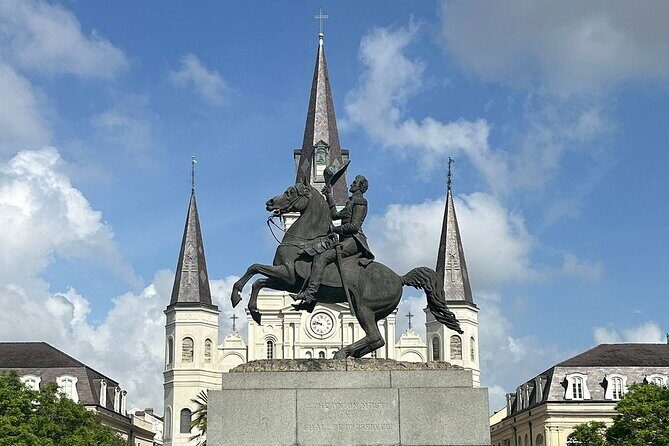
Another stop focuses on a museum that served as a seat of government for the French, Spanish, and Americans. Today, it’s the Louisiana State Museum, and the guide explains what’s worth seeing inside.
This is one of those places where a little guidance saves time. The tour doesn’t ask you to wander blindly later. It also includes a practical angle: you’ll get a sense of the do’s and don’ts for visiting. That’s especially helpful if you’re visiting with limited time and you want to make sure you see the best parts without getting stuck in long detours.
Privateers, Pirates, and Why Maritime Power Matters Here
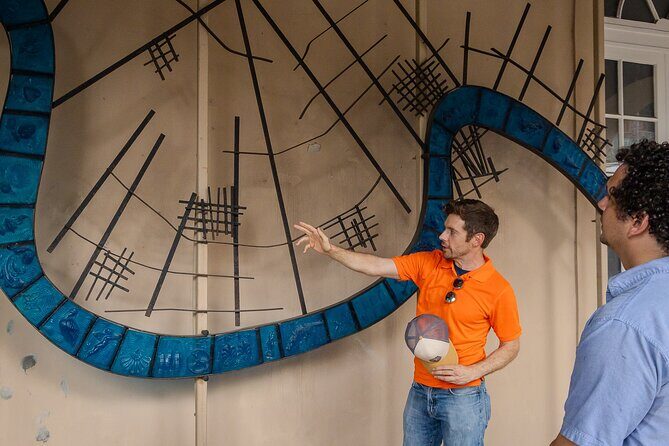
Then the tour shifts to privateers and pirates—specifically the role they played in the creation of New Orleans. This isn’t just about swashbuckling stories. It’s about the economic and strategic pressure that shaped the city’s growth.
What I like about this segment is that it gives your French Quarter stops a broader reason for existing. New Orleans didn’t form in a vacuum. The guide connects the city’s position and its sea-related activity to the way the area developed. If you’ve ever wondered why history here gets so dramatic, this explains the logic underneath the drama.
Ursuline Convent: Colonial Religious Architecture You Can Actually Spot
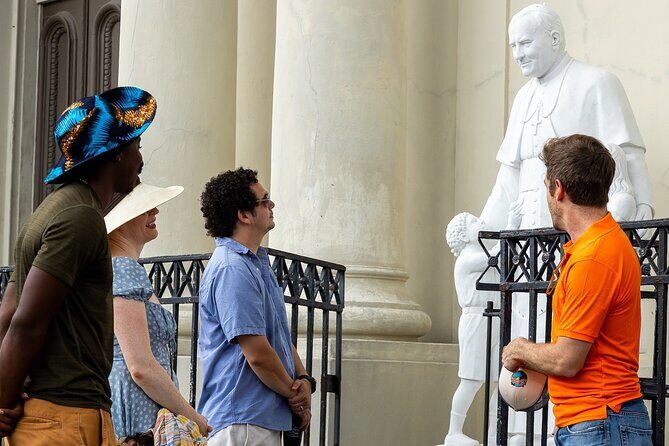
The tour includes a stop at the Ursuline Convent, highlighted as the first religious order to come to New Orleans. The guide points out the convent’s colonial religious architecture, and you’ll see it as more than a pretty building.
This stop is valuable because it keeps the Catholic faith theme going, but in a different style than the cathedral. You’re moving from a major public religious landmark to a more order-focused space. If you take a moment to look at the details your guide mentions, you’ll likely leave with a stronger ability to read Louisiana architecture as a language rather than decoration.
Royal Streets and Bourbon Street: Learning the Layout, Hearing the Music
After the convent and the major landmark stops, you’ll walk down the street with your guide, learning about live music on the route and the unique architecture of the French Quarter. The tour specifically mentions learning about Royal Streets and the contrast between different architecture styles across the area.
This is where the tour becomes less like a lecture and more like street navigation with explanations. I recommend you slow your pace slightly during this part. Yes, you’ll want pictures, but also look at the shape of doorways and facades. A good guide makes you see patterns, not just random pretty buildings.
Bourbon Street 101: Sordid History and a Quick How-To
Bourbon Street is one of the big sights in the United States, and the tour addresses it directly. You’ll hear about Bourbon Street’s sordid history and get a quick how-to for how to handle the street while you’re there.
This is practical. Bourbon Street can be fun, but it can also be confusing, loud, and not always comfortable for every group. The way this segment is handled—history first, then a how-to—helps you keep control of your experience. You’re less likely to feel lost once the lights, music, and crowds hit you.
The Presbytère Finish: Mardi Gras and Katrina Exhibits, Self-Guided
The tour ends at the Presbytère, and this is where your guided portion hands off to a self-guided visit. The guide discusses the importance of the Catholic faith to Louisiana and explains the structure’s earlier role as a home for local priests.
Then you shift into the exhibits. You’ll be set up with tickets for a self-guided look at the Mardi Gras exhibits and the Hurricane Katrina exhibits. That combination matters. Mardi Gras is often treated like pure celebration, but here it connects to the city’s identity and resilience after disaster.
This is a strong ending point because it gives your walking tour a final emotional and cultural note. You’re not only seeing what’s fun and photogenic; you’re seeing how the city rebuilds and remembers.
What Guides Bring to the Experience (Andrew and Daniel as Examples)
The reviews highlight that the guide quality can make the history click. One standout mentioned Andrew as highly knowledgeable about origins of New Orleans and the French Quarter, and another praised Daniel, noting he was a history major and extremely informative.
You shouldn’t assume every guide will match every detail level, but you can take the hint: when you book this, you’re choosing a format built around real narration, not just walking from stop to stop. If you love asking questions mid-walk, a smaller group can be a big advantage.
Practical Tips to Make the Most of a 90-Minute Walk
A 1.5-hour walking tour means smart planning matters. Wear shoes that handle sidewalk turns and watch for uneven pavement. If you’re sensitive to noise, keep in mind that Bourbon Street is part of the itinerary, so expect a louder atmosphere near the end.
Bring a phone for maps and quick photos, but don’t let it distract you during the landmark explanations. The most useful “souvenir” here is context. When you know why St. Louis Cathedral matters or what the Pontalba apartment story represents, the architecture starts to look different—in a good way.
If you’re pairing this with other activities that day, plan a little buffer after the tour so you can enjoy the Presbytère exhibits at a calm pace. The end is self-guided, so you’ll get more from it if you’re not rushing to your next reservation.
Who This Tour Fits Best
This tour is ideal if you want:
- A fast orientation to the French Quarter’s key sites
- History with a clear connection to Catholic faith, architecture, and local identity
- A walking plan that includes St. Louis Cathedral, the Ursuline Convent, and the Presbytère
It may not be the best match if you want only nightlife time or only museum time. This is story-driven walking. Even with the self-guided museum stop at the end, it’s built to move, not linger everywhere.
Should You Book More Than Mardi Gras?
I’d book it if you like understanding what you’re seeing while you walk. The route covers the big “anchor” places—St. Louis Cathedral, key housing history tied to Pontalba, the museum-gov angle, the Ursuline Convent, and then Bourbon Street with a how-to. Then you close with the Presbytère exhibits so the tour lands on Mardi Gras and Katrina in a way that feels more complete than a standard photo-and-party loop.
Skip it if your schedule only allows museum time, or if you already know the French Quarter’s basics and you’re looking for a completely off-the-map experience. But if you want value at $39 and a guided structure that turns the Quarter into a readable story, this one is a solid pick.
FAQ
How long is the French Quarter tour?
It runs for about 1 hour 30 minutes (approx.).
How much does it cost?
The price is $39.00 per person.
Where do you meet for the tour?
The meeting point is Jackson Square in New Orleans.
Where does the tour end?
The tour ends at the Presbytère on Chartres Street.
Is admission included for the Presbytère exhibits?
The guide provides tickets for you to enter the Presbytère for a self-guided visit to the Mardi Gras and Hurricane Katrina exhibits.
What ticket format is used?
This tour uses a mobile ticket.
Can I cancel and get a full refund?
Yes. You can cancel up to 24 hours in advance for a full refund.