REVIEW · NEW ORLEANS
New Orleans: Sightseeing Bus Tour
Book on GetYourGuide →Operated by Tour Orleans · Bookable on GetYourGuide
A New Orleans bus tour can be your shortcut to understanding the city. This 150-minute ride uses a guide to connect major neighborhoods and landmarks, from the French Quarter’s landmarks to the Garden District and St. Charles Avenue. I like that it goes beyond the usual postcard loop and still keeps the day moving at a comfortable pace.
You’ll also get hands-on context where New Orleans’ culture is most visible in public life and in the details—especially around the neighborhoods of Marigny, Tremé, the 9th Ward, and historic cemeteries. One drawback to plan for: this tour isn’t suitable for wheelchair users.
In This Review
- Quick highlights you’ll feel right away
- A smart way to map New Orleans in 2.5 hours
- Bon’s Street Food pickup: a convenient start near Jackson Square
- French Quarter classics plus Frenchmen Street’s music vibe
- Marigny and Tremé: where the tour gets less touristy
- Lower Ninth Ward and the 9th Ward context
- City Park, Lake Pontchartrain, and the beignets break
- Cemeteries as a Creole cultural classroom
- St. Charles Avenue and the Garden District’s big-name streets
- Magazine Street, Warehouse District, and what you’ll do after drop-off
- Price and value: what $47 buys in 150 minutes
- Who should book this tour (and who might not want it)
- Should you book this New Orleans sightseeing bus tour?
- FAQ
- FAQ
- How long is the New Orleans Sightseeing Bus Tour?
- What does it cost?
- Where do I meet the tour?
- Does the tour run in rain?
- Is food included, and do you stop for beignets?
- Is this tour wheelchair accessible?
- Can I reserve and cancel if plans change?
Quick highlights you’ll feel right away
- Frenchmen Street pass-by with live music energy coming from venues
- Stops that go past the French Quarter into Marigny, Tremé, and the Lower Ninth Ward
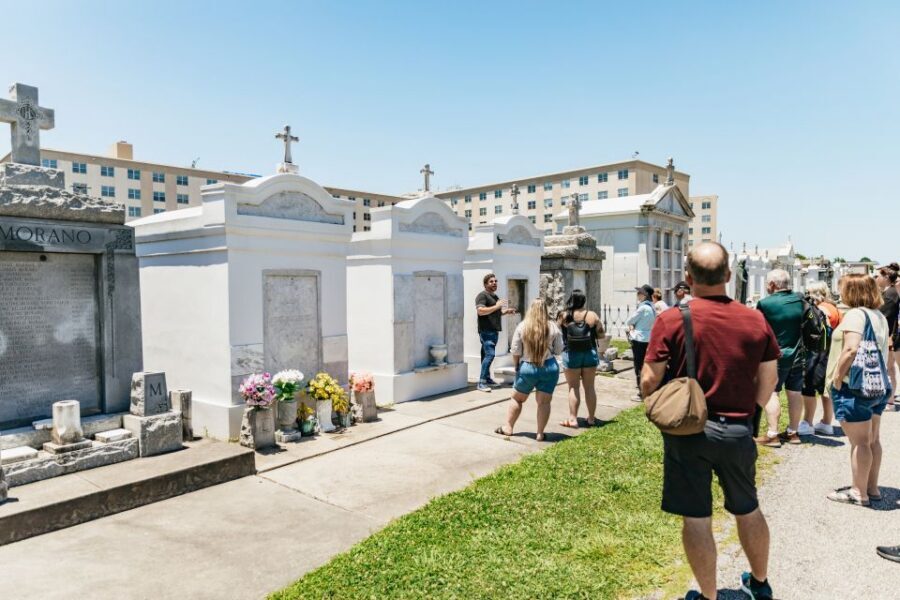
- A guided walk at St. Louis Cemetery #3 tied to Creole cultural context
- A short break at City Park plus time to grab beignets at Cafe du Monde
- Classic photo stops on St. Charles Avenue to spot the oldest streetcar in the world
A smart way to map New Orleans in 2.5 hours
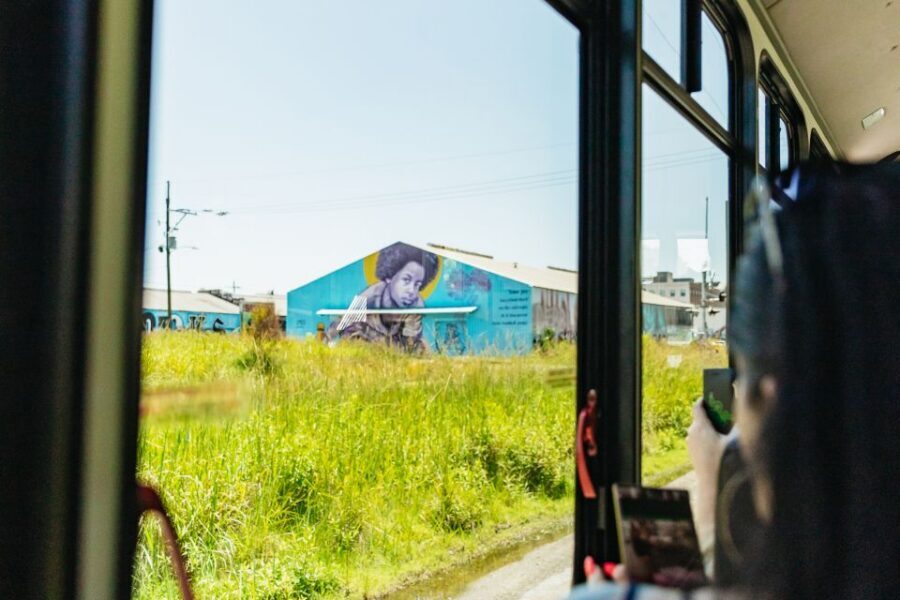
If it’s your first trip to New Orleans or you only have a single day, a guided bus tour is the fastest way to build a real mental map. You get a lot of variety without spending time figuring out where to go next, and the time adds up fast: 150 minutes is enough to hit multiple districts and still make room for a short walk and breaks.
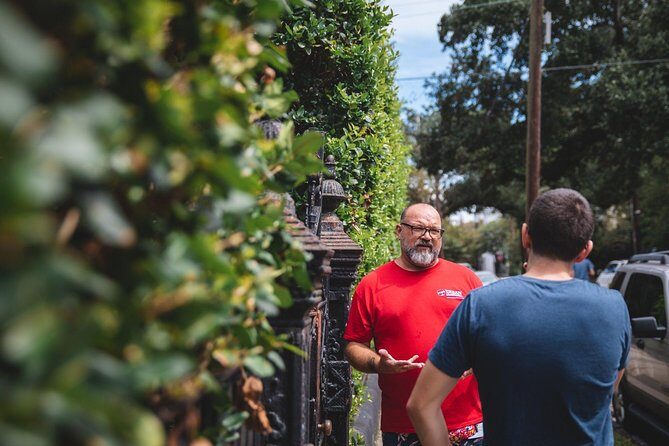
This tour also has a practical edge. Instead of only pointing at famous buildings, the guide connects what you’re seeing to what makes each neighborhood different—especially when you leave the French Quarter and head into areas like Tremé and the Lower Ninth Ward. That kind of orientation can turn the rest of your trip into more than just sightseeing.
And yes, the ride matters here. Many people appreciate the comfort and smooth transport, so you can concentrate on listening and looking instead of white-knuckling your way through traffic.
You can also read our reviews of more tours and experiences in New Orleans.



Bon’s Street Food pickup: a convenient start near Jackson Square

You meet outside Bon’s New Orleans Street Food, close to Jackson Square. That location is useful because it places you at the center of the action early, so you’re not burning time commuting across town before you even start sightseeing.
If weather turns unpleasant, you’re not stuck outside. The tour notes that you can wait in the air-conditioned space at Bon’s in inclement weather or excessive conditions. That’s a small detail that makes a big difference in New Orleans, where one hour can be humid sunshine and the next can be a downpour.
In practical terms, I’d treat this pickup as your warm-up zone. Arrive a few minutes early, use the restroom if you need to, and then settle in so you’re ready to absorb the first round of neighborhood context.
French Quarter classics plus Frenchmen Street’s music vibe
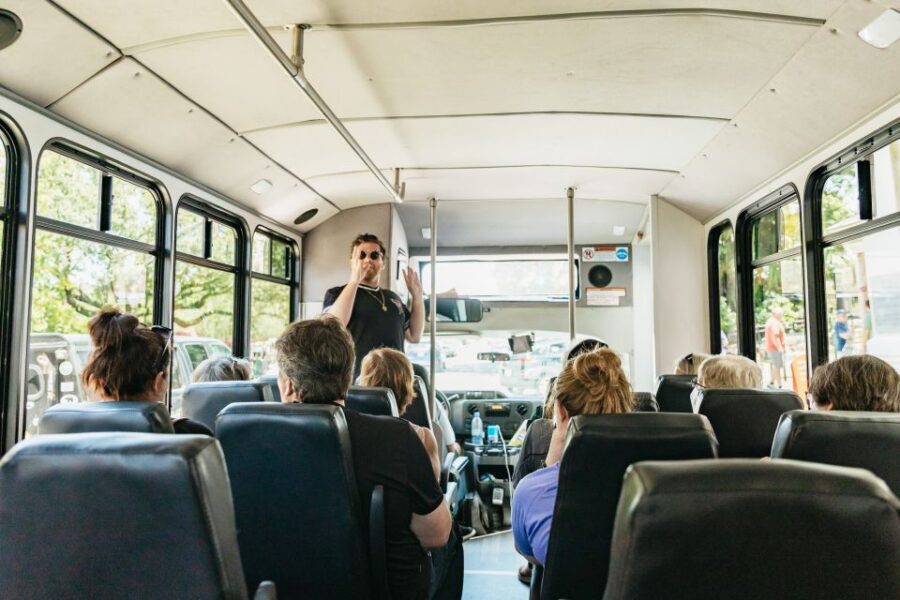
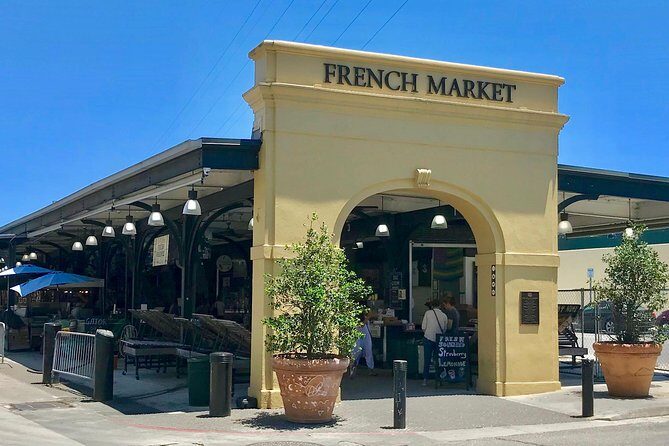
The tour begins by rolling through the French Quarter, with classic pass-bys that help you place the big landmarks quickly. You’ll see the St. Louis Cathedral area (including a pass by it), and you also go by the French Market. These stops are great for first-timers because they anchor the most famous part of town while the guide sets up what changes as you move outward.
Then the tour shifts into that “New Orleans-at-night” feeling via Frenchmen Street. Even though it’s a bus pass-by rather than a long stay, Frenchmen Street is still the point. Live music seems to spill out of venues, and the street gives you an instant sense of how the city creates culture in public.
You’ll also pass by a few other recognizable sights, including the Old US Mint area. Even if you don’t get out and explore every single building, you’ll leave with a stronger sense of where major streets and landmarks sit relative to each other.
Tip: If you care about photos, this is where you’ll want your phone fully charged. The French Quarter streets can make it hard to stop later without losing time.
Marigny and Tremé: where the tour gets less touristy

This is the section where the tour earns its “beyond the French Quarter” promise. You head into the neighborhoods of Faubourg Marigny and Tremé, and the guide uses them to explain why New Orleans feels different block to block.
Marigny gives you that arts-and-community energy that you don’t usually get from the most crowded central streets. Tremé is another layer—an area that helps explain how local culture developed and how people have lived there through changing eras. You’re also shown St. Claude along the way, another key corridor that helps the map click in your head.
One of the most interesting stops here is the Musicians’ Village. This isn’t just a photo-op stop. It’s a tangible reminder that music isn’t only something you buy tickets for—it’s part of neighborhood life and identity. The tour uses it as a bridge between the French Quarter’s sightseeing and the deeper city rhythm.
Why this matters: If you only see the French Quarter on day one, you’ll miss the city’s everyday creative engine. These stops help you understand where that engine runs.
Lower Ninth Ward and the 9th Ward context

You then move toward the Lower Ninth Ward, passing by the Lower Ninth Ward and making your way through streets like St. Claude before you arrive at key points tied to the neighborhood story. This part of the tour is where the tone can shift from “look at this street” to “understand what happened here and why it matters.”
The value is in the guided explanation. A bus tour can’t replace thoughtful, independent exploration, but it can give you context that makes later visits more respectful and meaningful. If you return to any of these areas during your trip, you’ll know what you’re looking at and why it’s important.
Consideration: This is not a casual stroll. You’re learning while moving, so bring patience and listen closely during the drive segments. It’s better to treat this part like a history lesson with streets as the textbook.





City Park, Lake Pontchartrain, and the beignets break
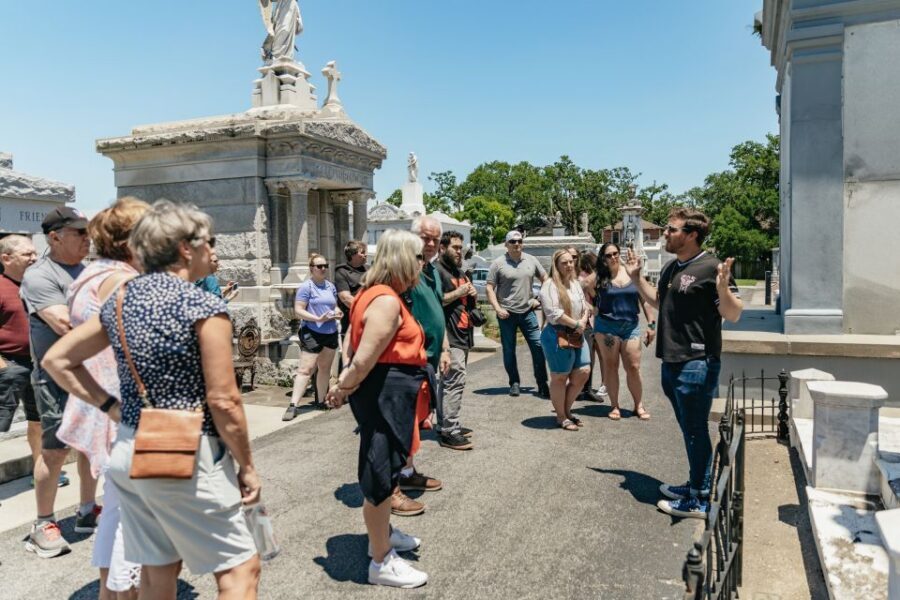
Mid-tour, you get a breather: a short stop at New Orleans City Park plus a break window. The tour notes break time and then Cafe du Monde – City Park with additional free time, including a chance to try beignets.
Beignets here are simple—powdered, sweet, and very New Orleans. Food and drinks aren’t included, so you’ll want to plan to pay for your own treats at the café. But the stop is built into the schedule, which means you won’t have to hunt for it later.
After that, you ride toward Lake Pontchartrain. The goal isn’t a long scenic hike; it’s exposure. You get the sense of how far the city stretches and how the lake fits into New Orleans’ geography.
Practical tip: If you’re sensitive to heat or sun, City Park time is a smart pause. New Orleans can be intense in the daytime, and even a short break can keep your energy up for the next neighborhoods.
Cemeteries as a Creole cultural classroom
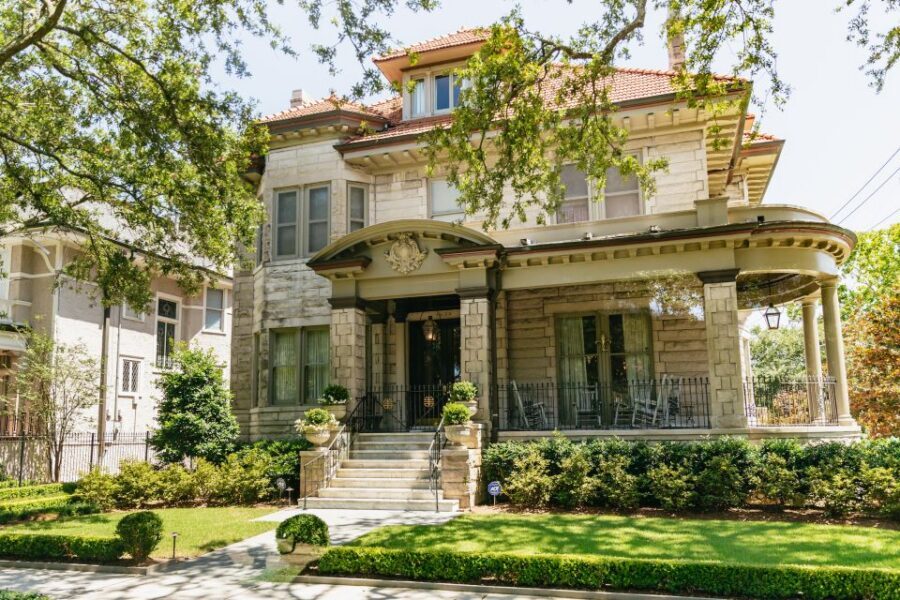
One of the tour’s most distinctive features is using cemeteries as a learning stop. You’ll learn about Creole culture at Saint Roch Cemetery #1 and St. Louis Cemetery #3.
This approach changes how you experience cemeteries in New Orleans. Instead of treating them only as spooky legends or photo backgrounds, the tour frames them as places tied to community memory and cultural practice. At St. Louis Cemetery #3, you’ll get a short guided walk (about 15 minutes), which is long enough to take in the key ideas without rushing.
How to be ready: Dress for respect. This is a place to slow down, look carefully, and listen. Keep your voice normal and be mindful about where people are stepping—especially if you’re trying to photograph.
If you’ve heard cemetery stories before, this tour can help separate myth from meaning. You’ll still get the atmosphere, but with context that makes it easier to understand what you’re seeing.
St. Charles Avenue and the Garden District’s big-name streets
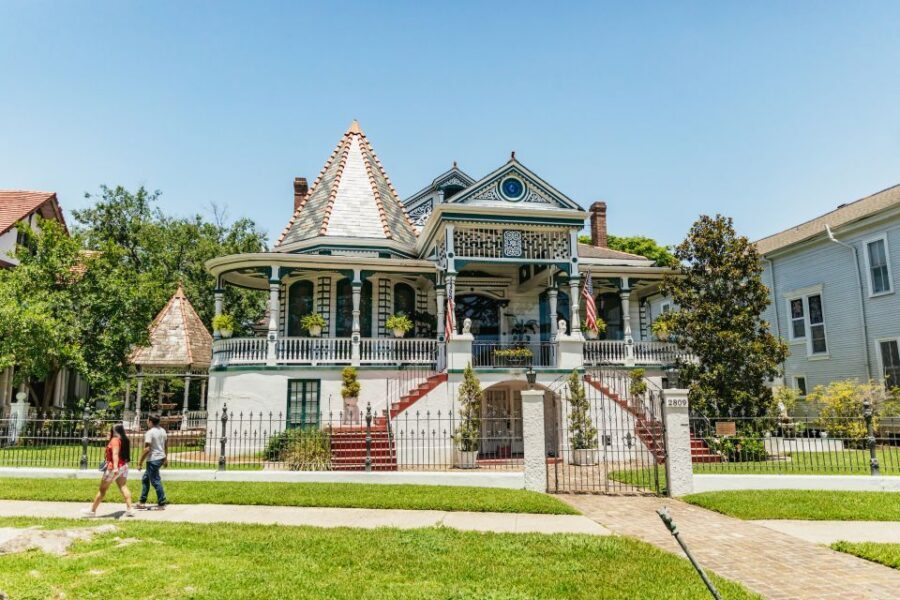
After cemeteries and the lake views, the tour heads back into a more “grand streets” mode. You’ll pass through Uptown/Carrollton and then into the Garden District.
One standout moment: seeing St. Charles Avenue, noted as the place where you can spot the oldest streetcar in the world. That’s one of those New Orleans details that feels technical until you’re actually there—then it’s suddenly part of the city’s identity.
The tour also passes Tulane and Loyola universities, which helps explain why this part of town has a different daily energy. Then it moves through the Garden District, including time to look at some celebrity homes from the bus—again, pass-by views, but with guide context so you know why these houses matter.
You’ll also see Degas House. The key benefit is that the guide can connect what you’re seeing to who lived there and what the buildings represent, even if you don’t step inside.
Magazine Street, Warehouse District, and what you’ll do after drop-off
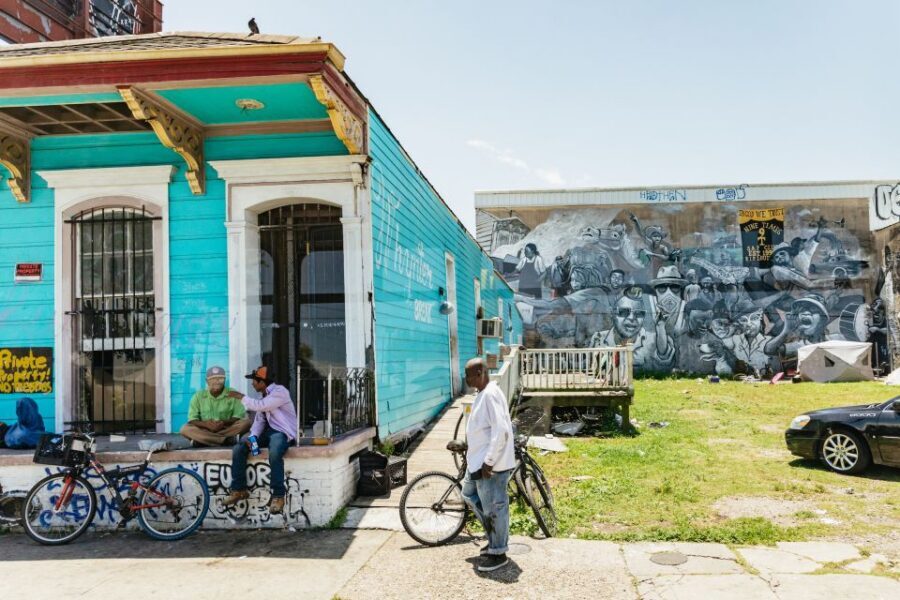
Toward the end, you ride through Magazine Street, arriving near the Warehouse District and Arts District areas. That’s a nice finish because those streets set you up for the next part of your day—shopping, galleries, a drink, or a relaxed dinner nearby.
You’ll also pass by The Buckner Mansion. Mansion pass-bys can feel like “just looking,” but here they work as a visual marker for the architectural shift between parts of town. If you’re the type who loves spotting how neighborhoods change by building style and street layout, you’ll enjoy the pace.
Finally, you get dropped off back at Tour Orleans (the starting point zone). Since you end near major corridors, it’s usually easier to head to dinner or your next activity than if you were dropped somewhere far from the places people actually go at night.
Price and value: what $47 buys in 150 minutes
At $47 per person for 150 minutes, this tour isn’t trying to compete with low-cost walking tours. You’re paying for three things: a guide, luxury bus transport, and an itinerary that hits multiple districts in one loop.
The best value is time. New Orleans has a lot of “neighborhood switching,” and it takes planning to get from one area to another without wasting your day. This tour handles the transit, and the guide handles the connections—especially when you’re crossing from the French Quarter into Marigny, Tremé, and the Ninth Ward.
Food isn’t included. Still, the schedule builds in the chance to try beignets at Cafe du Monde – City Park, which gives you a classic payoff without forcing you to spend money twice trying to find the right café.
In short: if you want orientation plus culture, $47 starts to look reasonable. If you want hours of walking, deep access to buildings, or a fully planned meal, you’ll likely want extra activities on your own.
Who should book this tour (and who might not want it)
This is a strong fit for:
- First-timers who want a guided orientation beyond the French Quarter
- People who want neighborhood context fast, including Tremé and the Lower Ninth Ward
- Visitors who want cemetery history without doing it alone
- Anyone who likes music energy, especially the Frenchmen Street pass-by
It may not be the best match if:
- You want long stops and lots of time out on the street in a single neighborhood
- You’re looking for wheelchair-friendly access (the tour is not suitable for wheelchair users)
If your style is “show me the city with a plan,” this tour lines up well with that approach.
Should you book this New Orleans sightseeing bus tour?
I’d book it if you want to get oriented fast and you care about seeing real neighborhood variety, not just the postcard highlights. The balance of classic landmarks, street-life stops like Frenchmen Street, and cultural context at historic cemeteries makes it useful for building a smarter three-day itinerary.
If you’re only in town for a short time and you’d hate to spend your day jumping between distant spots, the 2.5-hour format is a practical win. Just be ready for a ride-focused experience with limited time out of the bus—and bring a respectful, listen-first mindset for the cemetery portion.
FAQ
FAQ
How long is the New Orleans Sightseeing Bus Tour?
The tour lasts about 150 minutes.
What does it cost?
The price is $47 per person.
Where do I meet the tour?
Meet outside Bon’s New Orleans Street Food near Jackson Square. In bad weather, you can wait inside Bon’s.
Does the tour run in rain?
Yes. The tour takes place rain or shine.
Is food included, and do you stop for beignets?
Food and drinks aren’t included. However, the schedule includes a break at Cafe du Monde in City Park, so you can buy beignets there.
Is this tour wheelchair accessible?
No. It is not suitable for wheelchair users.
Can I reserve and cancel if plans change?
Yes. You can reserve now and pay later, and you can cancel up to 24 hours in advance for a full refund.