REVIEW · NEW ORLEANS
New Orleans: City and Cemetery Bus Tour Garden District Walk
Book on GetYourGuide →Operated by Gray Line New Orleans · Bookable on GetYourGuide
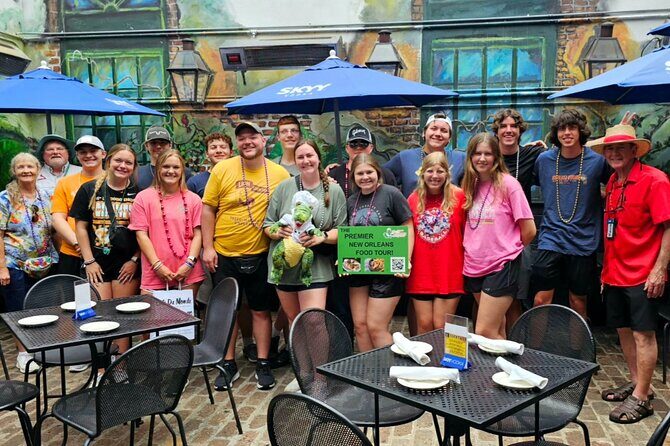
A smart New Orleans intro, with one creepy stop. This 3-hour Gray Line tour strings together French Quarter highlights, a guided visit to St. Louis Cemetery #3, and a relaxed walk through the Garden District, all with an expert guide guiding the why behind the what.
What I like most is how the route gives you quick context for the city’s layout and traditions, and how you get a real cemetery explanation instead of a drive-by photo moment. I also like the City Park timing, where you can pause among ancient oaks and (yes) make room for beignets.
One thing to consider: stop times are short, so if you want to linger for deep cemetery wandering or a long sit-down at Café du Monde, you’ll want to plan extra time on your own.
In This Review
- Key things that make this tour worth your $55
- Starting at the Gray Line Lighthouse: your easy on-ramp to the French Quarter
- French Quarter to Esplanade: getting the city’s layout and the “why” behind it
- St. Louis Cemetery #3: above-ground burials, explained in plain language
- City Park and Café du Monde: ancient oaks plus a quick beignet game plan
- Lake Pontchartrain views: a quick Katrina-informed perspective from the bus
- St. Charles Avenue and the streetcar line: mansions, schools, and parade routes
- The Garden District walk: a living neighborhood that still feels walkable
- Guides and drivers: why this kind of tour works or doesn’t
- Price and value: is $55 fair for a 3-hour French Quarter to cemetery to Garden District day?
- Who should book this tour (and who might feel rushed)?
- Should you book the Gray Line City and Cemetery plus Garden District tour?
- FAQ
- Where do I meet for the tour?
- How long is the tour?
- How much does it cost?
- What stops are included?
- Are beignets included?
- Is the tour wheelchair accessible?
- Is the tour operating on Mardi Gras Day or Thanksgiving Day?
Key things that make this tour worth your $55

- St. Louis Cemetery #3 explained: above-ground burial traditions, not just dates on a wall
- City Park’s ancient live-oak vibe: plenty of photo angles and a classic break
- Streetcar and Mardi Gras parade routes: you’ll see where the action runs
- Big-picture New Orleans in 3 hours: bus coverage helps you cover 25 square miles fast
- Guides who bring stories to life: names like Gail, John Olivard, Jim, Donna, and Bob come up often
Starting at the Gray Line Lighthouse: your easy on-ramp to the French Quarter

You’ll meet at the Gray Line Lighthouse, 400 Toulouse St, tucked behind Jax Brewery. Arrive at least 15 minutes early to swap your voucher for a boarding ticket, because the French Quarter area is busy and moving through it takes longer than you think.
This tour is designed for orientation. Even before you get off the bus, you’re building a mental map: where the historic core sits, how neighborhoods connect, and why some routes matter for parades and street life.
Tip: don’t bank on being early just because you’re early. Add extra buffer time for traffic and foot traffic around the Quarter.
You can also read our reviews of more walking tours in New Orleans



French Quarter to Esplanade: getting the city’s layout and the “why” behind it
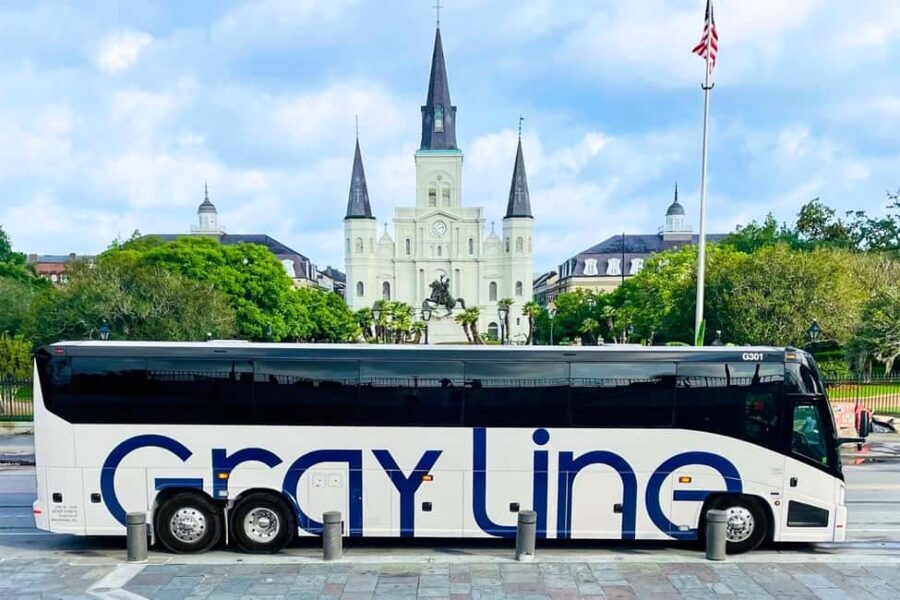
After boarding, the bus rolls out through the French Quarter and up along Esplanade Avenue, tracing the story of how New Orleans expanded over time. This is the part that helps the rest click later—especially if it’s your first day in town.
You’ll cover neighborhoods across multiple centuries without having to navigate buses, cabs, or parking. It’s also a smart way to stay out of the heat and crowds while still feeling like you’re “in” the city.
The tour works best if you pay attention to the guide’s framing, not just the buildings you see out the window. When the cemetery stop comes later, you’ll understand why the guide keeps bringing you back to burial customs and cultural influences.
St. Louis Cemetery #3: above-ground burials, explained in plain language

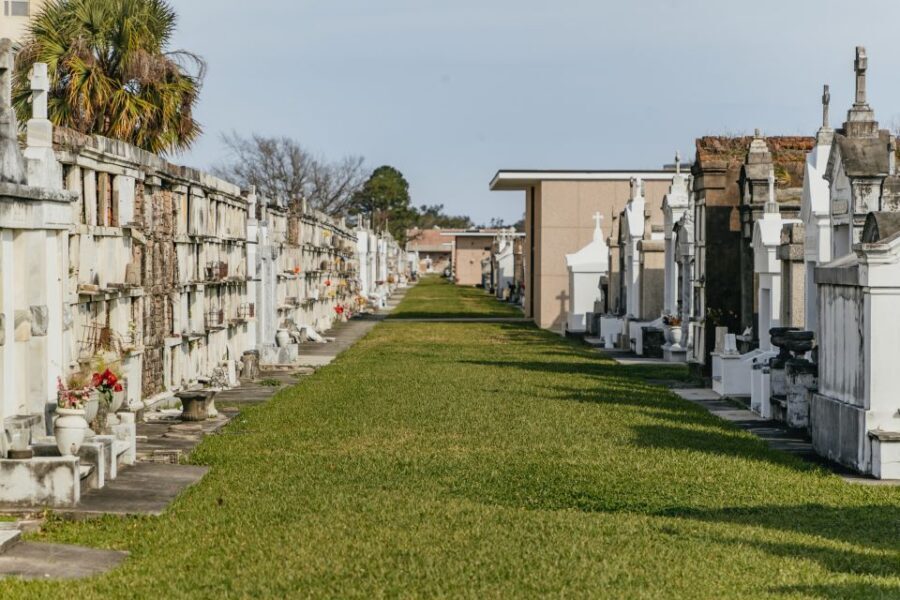
The cemetery stop is the emotional centerpiece: you hop off for a guided visit to St. Louis Cemetery #3 and learn how above-ground burial became the norm here. New Orleans cemetery life is different from what many people expect, and the guide’s job is to translate that difference into something you can actually picture.
This is also where you’ll notice how the city treats space—how families claim locations, how preservation shapes what you see today, and how the cemetery connects to broader New Orleans traditions.
A practical consideration: the time inside is limited. If you’re the type who wants to walk farther in and read every marker, you might wish you had more minutes. Still, this visit gives you the key context so you can explore further later, with better instincts for what you’re looking at.
City Park and Café du Monde: ancient oaks plus a quick beignet game plan

Next comes the transition to greenery: you head toward City Park and the guide sets you up to enjoy the time on foot. This is one of the more delightful parts of the day because it shifts from historic streets to bayous, lagoons, and shaded pathways.
City Park is famous for its centuries-old live oaks—the tour highlights the scale (over 800 years for some of the trees). For photos, you get plenty of chances to step aside, look up, and grab that tall-branches-and-sunlight look that’s hard to fake.
You’ll also have time to grab something classic at Café du Monde. Beignets and café au lait aren’t included, but the tour gives you the window to make it happen without needing to plan your own detour.
One more timing reality: Café du Monde can get overwhelmed. If beignets are a must, go in ready to order and move. The goal here is to enjoy the stop, not to win a slow-crowd pastry marathon.
Lake Pontchartrain views: a quick Katrina-informed perspective from the bus

On the way to the next neighborhoods, the bus travels along the south shore of Lake Pontchartrain. You’ll pass landmarks connected to the storm recovery story, including a post-Katrina pumping station, plus sights like seafood restaurants and a marina.
The tour also puts Lake Pontchartrain in context: even though it’s called a lake, it’s actually one of the largest brackish estuaries in North America. It’s fed by freshwater rivers and connected to the Gulf of Mexico, spanning about 630 square miles.
For some people, this section is less romantic and more informative—and that’s the point. It gives you a sense of how geography affects New Orleans daily life, and why resilience is part of the city’s identity, not just a news headline.
You can also read our reviews of more city tours in New Orleans






St. Charles Avenue and the streetcar line: mansions, schools, and parade routes
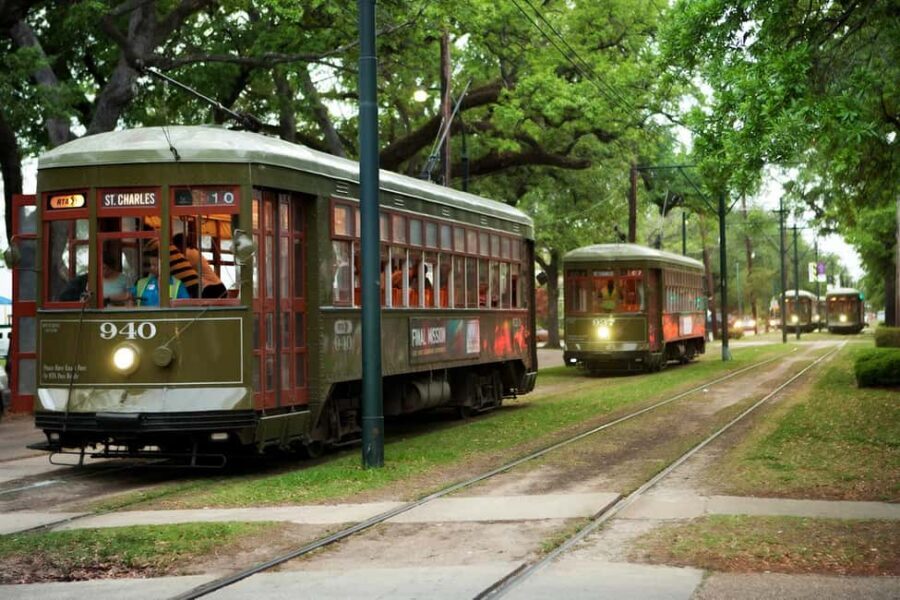
From the lake area you’ll roll toward St. Charles Avenue, one of the city’s most iconic corridors. You’ll pass by Audubon Park and see how the avenue is lined with elegant mansions, churches, and schools—including Loyola University New Orleans and Tulane University.
The guide also ties St. Charles to New Orleans pageantry. This is the area that follows the path of the famous streetcar and the route used for Mardi Gras parades. If you want to understand what people mean when they say the city has a rhythm, this is where that rhythm becomes visible.
Even if you never ride the streetcar during your trip, the tour sets you up to recognize where it runs and why that route keeps showing up in stories and photos.
The Garden District walk: a living neighborhood that still feels walkable

After the bus segments, you’ll finish with a guided stroll through the Garden District—often described as one of the most well-preserved living neighborhoods in the United States. This part is at a walking pace, so you get a chance to slow down and look.
The Garden District is where New Orleans starts to feel more “neighborhood” and less “tourist corridor.” You’re out on streets lined with historic-looking homes and consistent architectural styles, and the guide helps connect what you see to the broader city story.
A quick reality check: the stop is a walk, not a long self-guided wandering session. If you’d rather spend 90 minutes soaking up streets instead of checking in for the group pace, you’ll want to plan a return visit after the tour.
Still, for most first-time visitors, this is a strong way to get that local, everyday atmosphere without turning your day into a map-reading exercise.
Guides and drivers: why this kind of tour works or doesn’t
The tour’s success depends heavily on the guide. In the history of this route, names like Gail, John Olivard, Jim, Donna, Bob, and others show up with consistent praise for energy and storytelling.
That matters because this itinerary could turn into three separate sightseeing checkboxes. Instead, the best guides tie them together: cemetery traditions connect to city design; City Park connects to how people escape heat; St. Charles connects to how parades and daily life share the same streets.
Drivers also play a role. People have commented on drivers like Alton and Tranise being good at the job—helpful when routes are slow and crowded.
Price and value: is $55 fair for a 3-hour French Quarter to cemetery to Garden District day?

At $55 per person for about 3 hours, you’re paying for more than “a bus ride.” You’re getting:
- a live, English-speaking guide
- a guided cemetery visit (not just an outside glance)
- a guided Garden District walk
- bus coverage that takes you across a large area without the hassle of transfers
For first-time visitors, that bundling is the value. You’re seeing multiple icons—French Quarter vibes, St. Louis Cemetery #3, City Park, streetcar/Mardi Gras routes, and the Garden District—without spending your whole day in transit.
If you’re already planning to do a cemetery tour on your own, or you want long time blocks at City Park and in the cemetery, you may find the schedule a little tight. But if you want a smart overview and a guide to steer the meaning, this price sits in a reasonable zone.
Who should book this tour (and who might feel rushed)?
This tour is a great fit if:
- it’s your first day in New Orleans and you want to get oriented fast
- you like guided stories, especially around cultural traditions
- you want to see more than just the French Quarter strip
It may feel rushed if:
- you want lots of independent time in the cemetery or at City Park
- you’re the type who hates group pace and prefers long solo wandering
Should you book the Gray Line City and Cemetery plus Garden District tour?
I’d book it if you want a well-structured intro to New Orleans that mixes big landmarks with a guide who explains what you’re looking at. The combination of St. Louis Cemetery #3 (with actual guidance), City Park’s ancient oaks, and a Garden District walk makes it more useful than a simple sightseeing loop.
Skip it or plan extra time elsewhere if your priority is long stops—because in a 3-hour format, you don’t get the luxury of lingering.
FAQ
Where do I meet for the tour?
Meet at the Gray Line Lighthouse at 400 Toulouse St, New Orleans, LA 70130, behind Jax Brewery. Arrive at least 15 minutes early to exchange your voucher for a boarding ticket.
How long is the tour?
The tour duration is 3 hours. Starting times vary, so check availability when you book.
How much does it cost?
The price is $55 per person.
What stops are included?
You’ll have a 3-stop motorcoach tour with a guided cemetery visit, time to explore City Park (including an option to buy beignets at Café du Monde), and a stroll through the Garden District.
Are beignets included?
No. You get time to explore City Park and can buy beignets at Café du Monde, but food and drinks are not included.
Is the tour wheelchair accessible?
Yes, it’s wheelchair accessible. The supplier provides handicap access for wheelchairs, but not scooters or walkers. Handicap reservations must be made 48 hours in advance to secure availability.
Is the tour operating on Mardi Gras Day or Thanksgiving Day?
No. Tours will not be conducted on Mardi Gras Day and Thanksgiving Day.