REVIEW · NEW ORLEANS
New Orleans French Quarter Architecture Walking Tour
Book on Viator →Operated by NOLA Tours · Bookable on Viator
French Quarter buildings tell their own story. This architecture walking tour turns the streets into a living classroom, from Jackson Square landmarks to St. Louis Cathedral, with local guides who make French and Spanish influences feel personal. I especially like the relaxed pacing that keeps room for questions, and the way the tour connects buildings to the people and climate that shaped them; the one catch is that sound can be an issue on busy corners, so you’ll want a spot where you can hear clearly.
For $40 for about two hours, you’re paying for focus, not just wandering. The group maxes at 14, and you get a mobile ticket and an English-speaking guide who’s licensed and insured—so the experience stays organized even when the Quarter gets chaotic. A good consideration: if you’re craving a very technical, “why this style works” architecture lecture at each stop, you may wish for slightly more time, since some blocks move quickly.
If this is your first visit, I’d treat it like orientation. If you’ve been before, it’s a chance to learn how to look at the French Quarter differently and notice patterns you would otherwise miss.
In This Review
- Key highlights worth planning around
- Entering the French Quarter with Architecture in Mind
- Meeting at 523 St Ann St and What to Bring for a Two-Hour Walk
- Stop-by-Stop: How Each Landmark Builds Your “Look” for the Quarter
- French Quarter kickoff: the why behind what you see
- Jackson Square: Cathedral, Cabildo, Presbytere in one breath
- St. Louis Cathedral: from humble beginnings to the cathedral you see
- Cabildo and Presbytere: why these buildings matter
- Chartres Street: Spanish Era to American Period
- Royal Street: practice identifying building types on a fun strolling street
- What You Actually Learn About French and Spanish Influence
- Group Size, Pacing, and Why the Walk Feels Calm Instead of Chaotic
- Price and Value: Is $40 for a French Quarter Architecture Walk Fair?
- Who Should Book This Tour (and Who Might Want Something Different)
- Should You Book This New Orleans French Quarter Architecture Tour?
- FAQ
- How long is the New Orleans French Quarter Architecture Walking Tour?
- What is the price per person?
- Where do I meet for the tour?
- What group size should I expect?
- Is transportation included?
- What language is the tour offered in?
- What should I bring or wear?
- Can I cancel and get a full refund?
- Are service animals allowed?
Key highlights worth planning around
- Small group limit of 14 for an easy pace and real Q&A time
- Landmark stops including Jackson Square, St. Louis Cathedral, Cabildo, and Presbytere
- French and Spanish architectural influence explained in plain language
- Chartres Street spans Spanish to American periods as you walk
- Royal Street adds practical building-spotting while you pass shops and restaurants
- Local guide storytelling (including examples like Eva, Caroline, Doug, Guy, Angela, and Janet)
Entering the French Quarter with Architecture in Mind
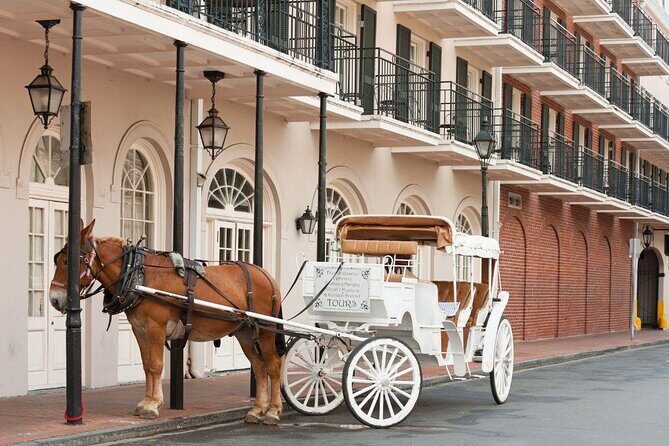
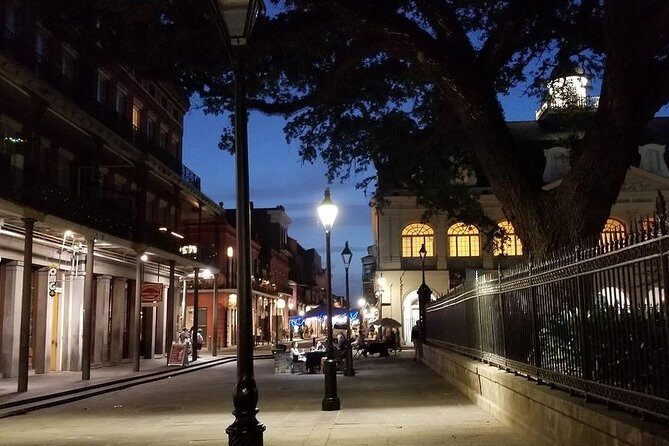
The French Quarter can be visually loud. Balconies, courtyards, ironwork, signs, music, and crowds all compete at once. This tour gives your eyes a job, which is why it works so well as an early visit.
You start at 523 St Ann St and begin with a short New Orleans history primer that sets up what you’re about to see. From there, the walk stays centered on buildings—how they were shaped by time and culture, and how to recognize different eras and styles as you move through the neighborhood. One of the nicest parts is the emphasis on making those connections feel understandable, not like a memorization exercise.
I also like that the tour doesn’t pretend the Quarter is just postcards. The guide experience is framed around how people lived, worked, and built in the local climate and social world—so the architecture doesn’t feel random. And if you like asking questions, this format tends to reward you for speaking up rather than just listening.
A practical note: you’ll want to plan to stay attentive. On tight corners or busier blocks, it can be hard to hear every word. That’s not a dealbreaker, but it’s smart to pick your viewing spot so you’re not turned away from the guide.
You can also read our reviews of more walking tours in New Orleans


Meeting at 523 St Ann St and What to Bring for a Two-Hour Walk
This is a mobile ticket kind of tour, and it’s offered in English. The duration is about two hours, and it runs as a guided stroll that ends back at the meeting point.
Because you’re walking the French Quarter, I’d come prepared like you’re going to be outside for longer than you think. The tour guidance recommends comfortable walking shoes, plus umbrella and sunscreen. That’s simple advice, but New Orleans weather can be sneaky. If it’s sunny, you’ll thank yourself later. If it’s breezy or starts to drizzle, you’ll still be able to keep going.
Service animals are allowed, and the tour notes say most people can participate. It also runs near public transportation, which matters because you don’t want your day to hinge on getting a car parked in the Quarter.
Stop-by-Stop: How Each Landmark Builds Your “Look” for the Quarter
The schedule is tight enough to keep momentum, but not so rushed that you don’t feel oriented. Each stop is short, which is exactly why you should show up ready to pay attention and ask questions when they fit.
French Quarter kickoff: the why behind what you see
The first segment is about introductions—history and context—so the buildings don’t just look old. This is where you begin to connect French and Spanish influence to the city’s built form. It’s also where you may see Ursuline Convent referenced as one of the major landmarks tied to the area’s story.
This opening matters because it changes how you walk for the rest of the tour. Instead of scanning facades for beauty, you start looking for patterns: which period something belongs to, and what cultural influences were shaping construction at the time.
Jackson Square: Cathedral, Cabildo, Presbytere in one breath
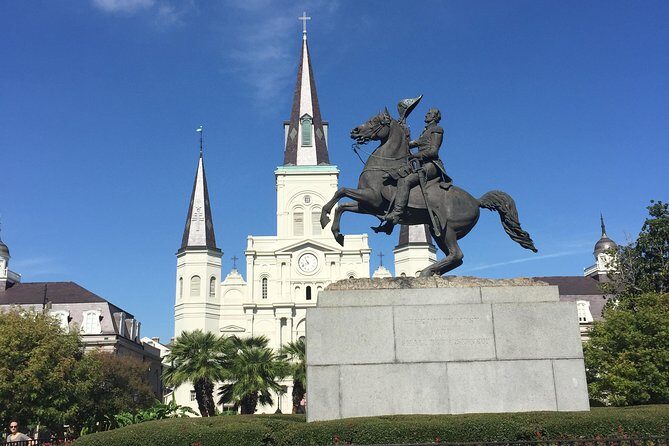
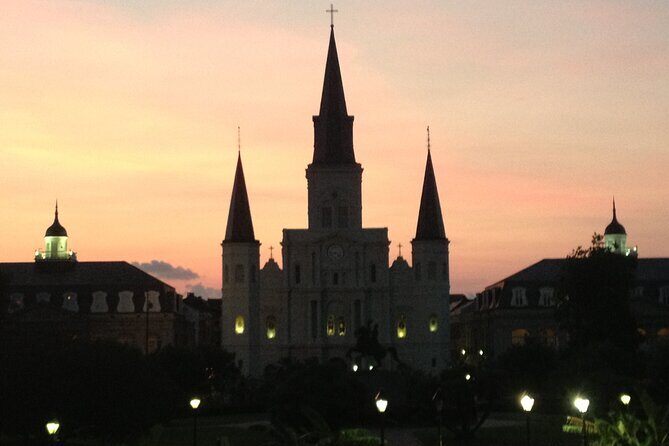
Next comes Jackson Square, where the guide focuses on the buildings that line the park: St. Louis Cathedral, Cabildo, and the Presbytere. You also get history around the Pontalba Buildings, which helps explain why the square looks the way it does and how that setting developed.
What I like here is the “big picture” feel. Jackson Square is famous, but it can still be confusing if you don’t know what you’re looking at. This stop gives you a mental map you can carry into the rest of the Quarter.





St. Louis Cathedral: from humble beginnings to the cathedral you see
At St. Louis Cathedral, the guide tells the story from a wooden parish church to the major cathedral structure you’re seeing today. That single historical arc makes the building feel less like a static landmark and more like a result of changing needs and ambitions.
This stop is short, but it’s a strong foundation. When you later walk by similar churches or older civic buildings, you’re more likely to notice what’s been rebuilt, expanded, or preserved.
Cabildo and Presbytere: why these buildings matter
Then you move to Cabildo, where the guide explains the historical era, significance, and building style. After that, you hit Presbytere to learn about its history and current status.
I appreciate these two stops because they round out the “cathedral-only” story people often remember. You start to see the square as a civic and cultural center, not just a religious site.
Chartres Street: Spanish Era to American Period
After the square, the tour shifts to Chartres Street, with a stretch that includes buildings of historic significance spanning the Spanish Era into the American Period. The result is that your eyes start organizing the Quarter by time, not just by color and ornament.
This is one of the most valuable parts of the tour for repeat visitors. If you’ve spent time in the French Quarter, Chartres can feel like just another street full of shops. Here, it becomes a timeline you can walk.
Royal Street: practice identifying building types on a fun strolling street
The final stop is Royal Street, and it’s both educational and enjoyable. The guide focuses on how to identify different types of buildings while you’re surrounded by shops and restaurants.
This “practice while moving” approach is smart. You’re not stuck with a single interpretation. Instead, you’re learning a method—then you get to use it right away as the streetscape changes.
A bonus from the guide experience: some guides share extra local pointers during the walk. For example, one guide (Guy) highlighted an antique store/gallery on Royal Street, and the story’s value wasn’t just the name—it was the way it taught you what to look for next time you pass a storefront.
What You Actually Learn About French and Spanish Influence
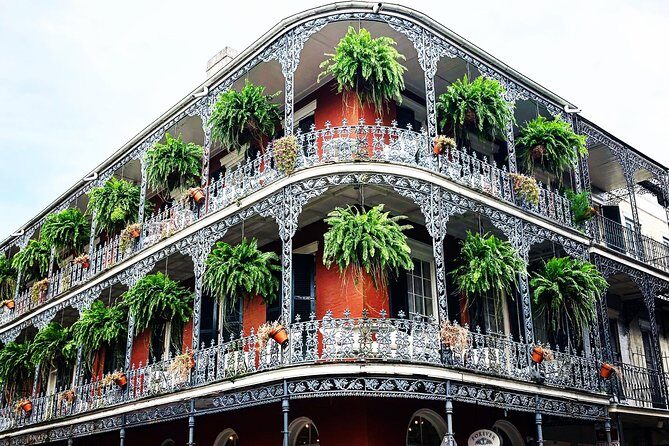
The tour’s core promise is architecture, but it’s not architecture divorced from life. The most praised angle is that the guide ties stylistic influences to broader historical context—social history, climate, and culture—so the buildings make sense as responses to real conditions.
A few guide styles stand out from the experience stories you’ll want to expect:
- Guides like Caroline (Phant) are described as engaging and able to connect architecture to cultural and community stories, including the influence of strong Creole women.
- Eva is singled out for being native to New Orleans and for delivering facts and stories in a fun way.
- Doug is praised for being considerate about weather and keeping the group on the shaded/sunny side when needed.
- Angela is noted for telling the full history behind what you see and for keeping the two-hour walk easy and entertaining, including jokes.
- Janet stands out for a relaxed, peaceful pace and for sharing post-tour notes and reading suggestions.
- Guy is described as bringing a binder with photos and historical information tied directly to the Quarter’s architecture.
You don’t need to memorize names, but you should choose your expectations based on what you prefer. If you like people-driven storytelling, this tour tends to deliver. If you want terms and materials, the guide format is set up to explain those too. And if you’re the type who asks “why?” you’ll likely enjoy the way the tour encourages questions.
One caution, based on the variety of guide approaches: a small number of experiences note that the tour can feel more neighborhood-oriented than a strictly technical deep lecture. The architecture focus is there, but the emphasis can shift depending on your guide’s style and how the group interacts.
Group Size, Pacing, and Why the Walk Feels Calm Instead of Chaotic
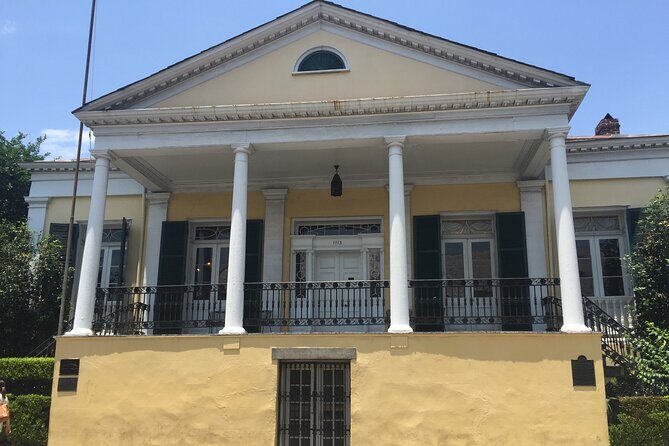
A maximum of 14 travelers is a big deal in the French Quarter. Large groups can turn every stop into a bottleneck. With a small group, you get a calmer rhythm: the guide can pause for questions, and you can actually see what’s being pointed out.
The tour also aims for a relaxed pace. You’ll likely get short bursts of explanation, then time to look and ask. That format fits the French Quarter’s reality—there’s no such thing as a straight, empty walk. You’ll be stepping around foot traffic, looking at buildings close up, and absorbing street-level details that don’t translate well through photos.
Weather management is another hidden advantage. If it’s cold or hot, a good guide tries to keep the group comfortable. Notes from multiple guide experiences mention keeping people on the sunny side of the street or in the shade when possible. That kind of care makes the tour feel smoother, especially when the walk tempo stays steady.
Price and Value: Is $40 for a French Quarter Architecture Walk Fair?
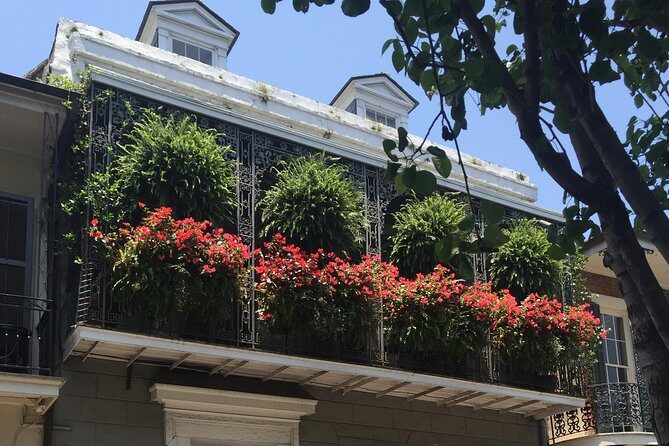
$40 per person for about two hours is the kind of price that makes sense when you value interpretation over sightseeing. You’re not paying for transportation. You’re paying for:
- a licensed, insured local guide
- structured stops at the major landmarks that actually anchor the architectural story
- an organized path through the Quarter so you don’t waste the first hour wandering without context
If you’ve ever toured alone and realized you saw the same streets you would have seen anyway, you know what to watch for: value lives in the “what am I looking at?” part. This tour tries to deliver that by focusing on architecture influences and by teaching you how to recognize building types as you walk.
If you’re on a tight schedule, two hours can feel short. But the stop structure keeps you from getting stuck at one spot for too long. You get a full arc—square to streets, Spanish to American periods—without having to build your own route.
Who Should Book This Tour (and Who Might Want Something Different)
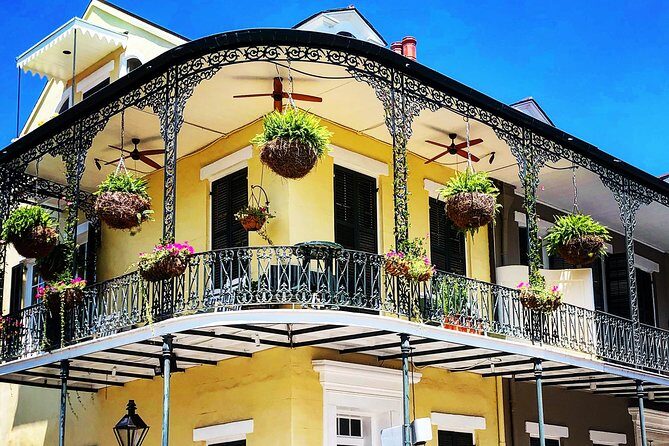
This tour is a great fit if:
- you want a first-time orientation to the French Quarter that’s more than a checklist
- you like learning through stories tied to real buildings
- you want help spotting different architectural types while you walk
- you’d rather ask questions than try to decode the Quarter alone
It may be less ideal if:
- you specifically want a slow, deeply technical lecture where every building detail is unpacked at length
- you hate group conversation or struggle to hear explanations on busy street corners
That said, the small group size helps, and the ability to ask questions is part of the design.
Should You Book This New Orleans French Quarter Architecture Tour?
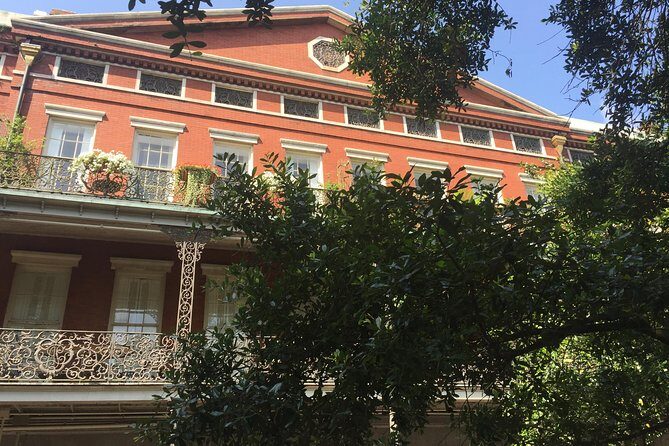
I think it’s worth booking if you’re the type who walks, looks, and asks questions—because the tour is built around giving you a framework for noticing architecture across the Quarter. The small-group limit, the guided focus on major landmarks like St. Louis Cathedral, Cabildo, and Presbytere, and the street-by-street flow from Chartres to Royal Street make it practical.
If you’re deciding last minute, use this quick checklist:
- Bring sunscreen or an umbrella and wear shoes you can keep on for two hours.
- Go early in your trip if you want the strongest “I can see more now” payoff.
- If you care about hearing every word, choose your spot where you’re facing the guide.
If that sounds like your travel style, book it. If you need the slowest possible technical architecture class, you might want to pair it with additional self-guided time afterward.
FAQ
How long is the New Orleans French Quarter Architecture Walking Tour?
It lasts about 2 hours.
What is the price per person?
The price is $40.00 per person.
Where do I meet for the tour?
The meeting point is 523 St Ann St., New Orleans, LA 70116, USA.
What group size should I expect?
The tour has a maximum of 14 travelers.
Is transportation included?
No. Transportation to and from attractions is not included.
What language is the tour offered in?
The tour is offered in English.
What should I bring or wear?
Comfortable walking shoes are recommended, along with an umbrella and sunscreen.
Can I cancel and get a full refund?
Yes. You can cancel up to 24 hours in advance for a full refund. If you cancel less than 24 hours before the start time, the amount paid is not refunded.
Are service animals allowed?
Yes, service animals are allowed.