REVIEW · NEW ORLEANS
New Orleans: Guided Museum and Voodoo Walking Tour
Book on GetYourGuide →Operated by The New Orleans Historic Voodoo Museum · Bookable on GetYourGuide
Voodoo in New Orleans is story and street. This guided Voodoo Museum and walking tour turns myth into context, using real locations like Congo Square and Marie Laveau’s world to help you understand why these beliefs mattered. I love the way the small museum gives you physical exhibits you can look at up close, and I love that Nate and his team keep the walk flexible so you can ask questions instead of sitting through a script. One thing to know: the cemetery portion is not included right now, since limited access and closures have kept it out of the tour.
Expect two hours that feel like a guided conversation with stops that actually belong in New Orleans. The museum visit is your foundation, then the short walk pulls you into public spaces tied to Voodoo practice—where the discussion shifts from artifacts to meaning.
The tour is entertaining, and it’s also designed to be responsible about what it covers. Still, if you want a strictly hands-off, totally hands-free approach to spooky themes, the topic is inherently intense, and the guides will talk about powerful traditions and symbols.
In This Review
- Key things I’d focus on before you go
- Starting at the Historic Voodoo Museum: why this order matters
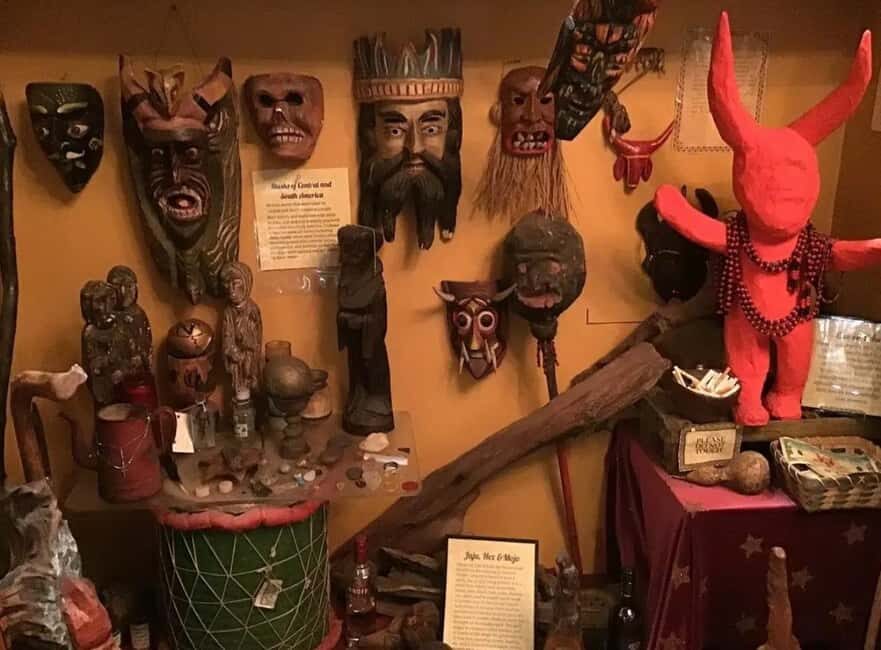
- Inside the museum: exhibits you can actually look at
- The walk to Congo Square: how public space changes the story
- Marie Laveau: the house visit and the tomb replica explained
- The guide experience: built for questions, not forced listening
- What you should watch for: cemetery access and changing realities
- Price and value: is $41 for 2 hours worth it?
- Who this tour fits best
- Should you book this New Orleans Voodoo museum and walking tour?
- FAQ
- How long is the New Orleans Historic Voodoo Museum guided walking tour?
- What does the tour cost?
- What is included in the price?
- Does the tour visit the cemetery?
- Is the tour available in English?
- Is there free cancellation?
- Can I reserve without paying right away?
Key things I’d focus on before you go
- A compact museum visit with museum access instead of just passing by for photos
- Nate’s question-friendly style, with guidelines but no scripted feel
- Congo Square as a real stop, used to explain how rituals and community life connect
- Marie Laveau context at two angles, via her house and a tomb replica in the museum
- A clear expectation that the cemetery is not part of the tour right now
- Entertaining writing influence from Martha Howe-Douglas, known for bringing ghost-story storytelling to the page
Starting at the Historic Voodoo Museum: why this order matters
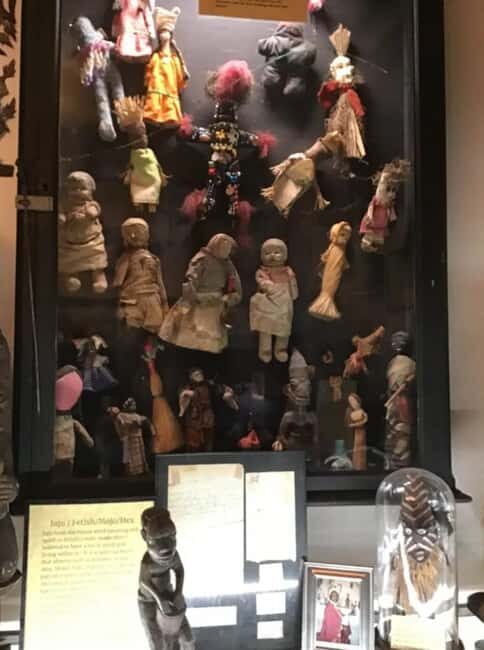
This tour begins inside the Historic Voodoo Museum, and that sequencing is smart. If you start outside at famous sites only, you risk collecting spooky details without context. Here, the museum acts like your briefing room: you learn what Voodoo is, how it’s described, and why New Orleans is an important setting for it.
You’re not in a huge building with miles of walking. It’s small, which is part of the appeal. You can actually pause, ask, and connect what you’re seeing to what you’ll hear next on the streets.
And yes, the topic is serious, but the delivery is meant to keep you engaged. The tour is built with entertainment in mind, written by Martha Howe-Douglas, co-creator of BBCs Ghosts. That doesn’t mean it turns into a gimmick. It means you’ll get stories with structure, not random facts thrown at you.
You can also read our reviews of more walking tours in New Orleans


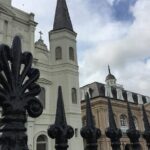
Inside the museum: exhibits you can actually look at
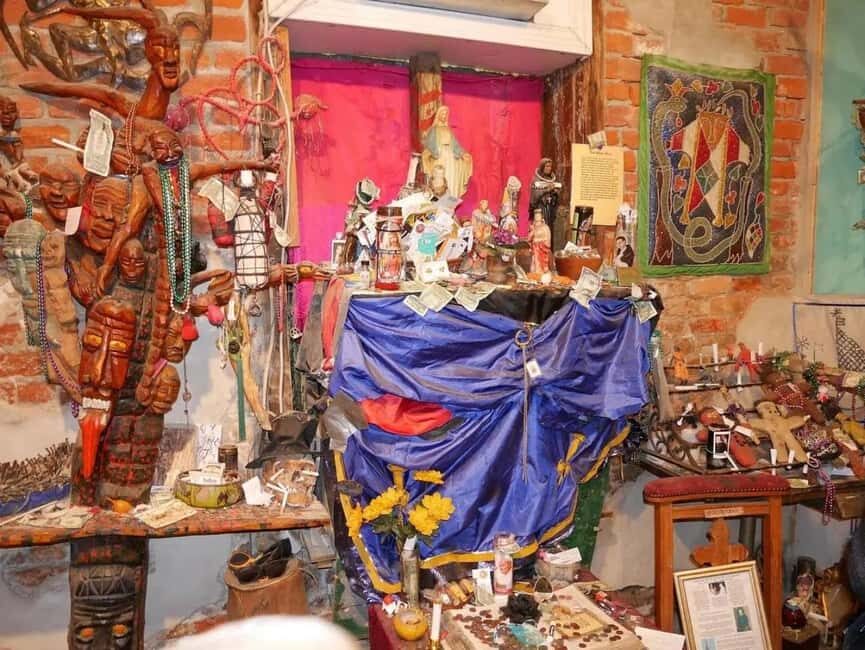
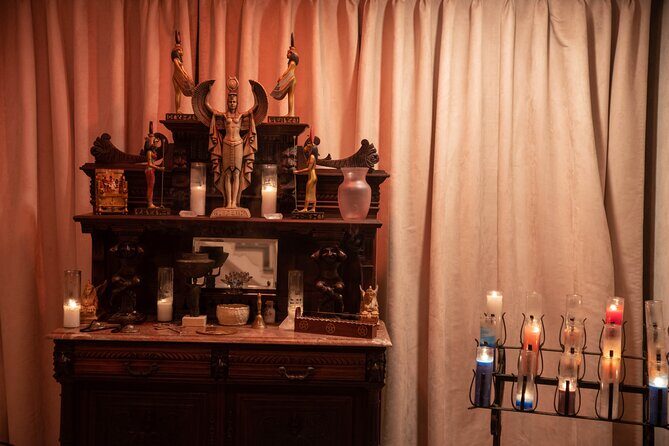
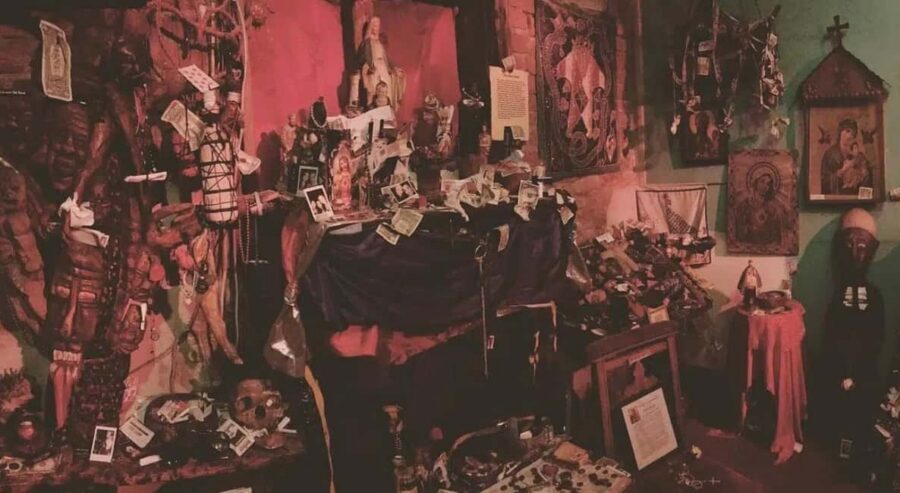
Once you’re inside, you’ll find unique exhibits that explore Voodoo’s influence on New Orleans and on the people who lived here. The value of this stop is the chance to slow down. Instead of relying on hearsay, you get something concrete: objects, symbols, and explanations that help you decode what you’re about to see outside.
This is also where the tone gets set. You’ll hear how Voodoo ties into identity, community, and belief systems that shaped daily life. That matters because New Orleans has plenty of tourism built on costumes and stereotypes. A museum visit gives you a framework that makes the street stops feel less like a show and more like a history lesson told by a guide who expects your questions.
Practical tip: bring your curiosity with you. The tour is guided and interactive, with guidelines, but it isn’t written like a tight lecture. If you’re wondering about a symbol, a term, or why certain practices became linked to specific spaces, this is the time to ask.
The walk to Congo Square: how public space changes the story
After the museum, you take a short walk to Congo Square. This stop is important because it’s not just a location on a map. It’s a place where public gathering and community rhythm matter.
Here, you’ll investigate Voodoo rituals of the past and present. That wording is key. The guide doesn’t treat Voodoo as frozen in time. Instead, you’ll get a sense of how practice, community life, and belief can shift while still staying connected to roots.
Why I think this stop is worth your time: Congo Square helps you understand the difference between learning facts and understanding meaning. If the museum gives you symbols, Congo Square helps you see how belief can be tied to gathering, music, and public celebration. It’s easier to grasp why people would connect ritual to community when you’re standing near a site built for gathering.
Good to know: the tour focuses on investigation through discussion. If you’re hoping for a dramatized re-enactment or something staged, you might be disappointed. If you’re okay with walking, listening, and asking questions, you’ll likely enjoy it.
Marie Laveau: the house visit and the tomb replica explained
Marie Laveau is one of those names that shows up everywhere in New Orleans marketing. The tricky part is that you can end up with a character from folklore instead of a real historical figure and cultural symbol. This tour helps you keep it grounded.
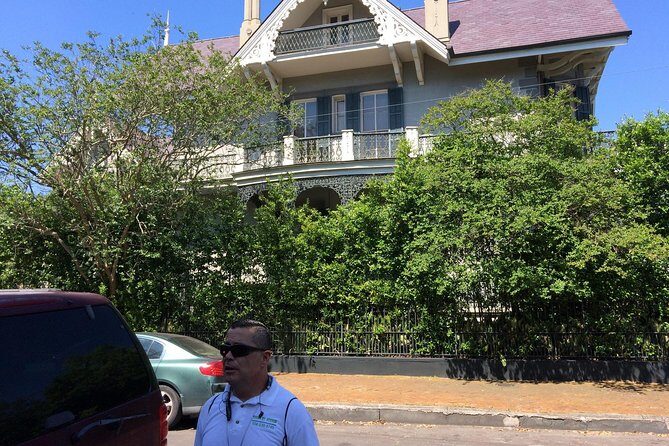
You’ll visit Marie Laveau’s house, and the guide will discuss her as an important and powerful Voodoo priestess. That word choice—powerful—matters. The discussion is not just about personality. It’s about influence, belief, and what it meant to lead within a tradition.
One clever detail: the museum includes a replica of Marie Laveau’s tomb, and that replica supports the conversation. Even though you’re not going to the cemetery as part of this tour, you still get a symbol to study and talk about. That’s a big help if you want the tour to feel complete without making promises about access to limited areas.
What to do while you’re there: listen for the difference between legend and context. The guide’s job is to connect what people repeat with what the sites and symbols can teach. If you ask why certain stories spread, or what the tomb replica is meant to represent, the tour is designed to answer you.
The guide experience: built for questions, not forced listening
The biggest strength of this tour is how it’s run. Nate and his team are passionate about New Orleans’ Voodoo history and culture, and that passion shows up in the tone: curious, responsive, and ready to explain. The walk has guidelines, but it’s not scripted, so you aren’t trapped in a one-size-fits-all script.
For me, that makes a difference. You’ll get better out of it if you can steer the conversation slightly toward what interests you—whether that’s ritual practice, symbolism, or how people in New Orleans have used belief systems to make sense of life.
There’s also a helpful balance here. The tour wants to be entertaining, but it’s built around explanation and context. That helps you avoid the two extremes: turning it into a joke, or turning it into a lecture you can’t follow.
You can also read our reviews of more guided tours in New Orleans





What you should watch for: cemetery access and changing realities
Here’s the one clear limitation built into the experience. The cemetery was closed early in the pandemic, and it has only recently reopened with limited access. As a result, the cemetery is still not included in this tour.
That affects expectations in a practical way. If you’re specifically looking for a cemetery stop for Marie Laveau, you should plan to do that separately or accept that this tour will cover the tomb symbol through the museum replica instead.
It also means the route is more predictable and stays focused on access points that are currently workable. For many visitors, that’s a plus: you get the key story beats without the uncertainty of whether a closed site will open in time.
Price and value: is $41 for 2 hours worth it?
At $41 per person for a 2-hour tour, this sits in a fair mid-range zone for a guided experience in New Orleans. The value isn’t just the time. It’s what’s included and what it saves you.
You get:
- A guide
- Access to the museum
Then you spend that time at multiple meaningful sites: the museum, Congo Square, and Marie Laveau’s house, plus context around the tomb replica. For the price, you’re paying for interpretation—someone helps you connect what you see to what it might mean, instead of you wandering with only a phone.
If you’re the type of traveler who likes to take guided tours for context, this is a strong use of time. If you prefer self-guided wandering with minimal group structure, you might feel the two hours is too short to justify paying for a guide.
Still, the Q&A format is a value multiplier. If you ask good questions, you’ll get more out of the tour than someone passively collecting photos.
Sustainability note: the experience highlights sustainability through the UK’s first electric tour boat. The data doesn’t say you personally ride that boat on this New Orleans route, but it does suggest the operator is thinking about lower-impact travel. It’s worth noting as part of their broader approach.
Who this tour fits best
This experience is a good match if you:
- Want Voodoo in New Orleans with context, not just eerie stories
- Like guided Q&A and would rather talk than just hear facts
- Plan to cover multiple sites in a short window and want a clear structure
You might skip it (or at least temper expectations) if you:
- Only want light entertainment and no serious discussion of belief and symbols
- Expect cemetery access as part of the standard itinerary
- Want a strictly scripted tour with zero interaction
Should you book this New Orleans Voodoo museum and walking tour?
I’d book it if your goal is to understand Voodoo as a living part of New Orleans culture, using the museum and key locations like Congo Square and Marie Laveau’s house. The guide-led Q&A approach is the real draw, and the museum start helps you process everything you’ll hear afterward.
Book with a mindset that this is education plus story, not a staged spectacle. Also, go in knowing the cemetery is not part of the tour right now, so you’ll leave with tomb symbolism through the museum replica instead of a cemetery visit.
FAQ
How long is the New Orleans Historic Voodoo Museum guided walking tour?
The tour lasts 2 hours.
What does the tour cost?
It costs $41 per person.
What is included in the price?
The price includes a guide and access to the museum.
Does the tour visit the cemetery?
No. The cemetery is not included due to limited access after reopening.
Is the tour available in English?
Yes, the tour is conducted in English.
Is there free cancellation?
Yes. You can cancel up to 24 hours in advance for a full refund.
Can I reserve without paying right away?
Yes. There is a reserve now & pay later option, so you can book your spot and pay nothing today.