REVIEW · NEW ORLEANS
New Orleans Jazz Walking Tour
Book on Viator →Operated by Tours By NOLA - New Orleans Local Artists · Bookable on Viator
Names you hear in jazz come alive fast. This walk ties together Louis Armstrong Park, the Jazz Museum, Congo Square, and a finish on Frenchmen Street with live music. Along the way, you’ll get the names and stories that explain how the sound took root.
I especially love two things. First, I like that the tour points you to specific places tied to the people who shaped early jazz, from Louis Armstrong to Jelly Roll Morton and Charles Buddy Bolden. Second, I love that you’re not just hearing facts—you’re getting music to make the eras click, plus a little Lagniappe (something extra).
One consideration: you do a solid chunk of standing and walking for about 2 hours, so if that’s hard on your body, plan accordingly.
In This Review
- Key highlights you’ll actually use
- Louis Armstrong Park: the opening chapter of New Orleans jazz
- New Orleans Jazz Museum (plus the St. Pierre Hotel Armstrong link)
- Congo Square and Treme: Sunday gatherings on sacred ground
- Frenchmen Street after context: live music with names in your head
- What you pay $35 gets you: free admissions, two hours, and a local guide
- Guides like Harris Parson and Robin make it stick
- Walking comfort tips: standing, weather, and getting your bearings
- Is this the right jazz tour for your group?
- Should you book this Jazz Walking Tour?
- FAQ
- Where does the tour start and end?
- How long is the New Orleans Jazz Walking Tour?
- How much does the tour cost?
- What’s included in the price?
- Is there live jazz music during the tour?
- What language is the tour offered in?
- Do I need to buy tickets for the stops?
- Is there a physical requirement?
- Can I book if I’m traveling alone?
- What if the weather is bad?
Key highlights you’ll actually use
- Louis Armstrong Park monuments plus stories of early pioneers like Louis Armstrong, Jelly Roll Morton, and Charles Buddy Bolden
- New Orleans Jazz Museum stop connected to Armstrong’s stay at the St. Pierre Hotel
- Congo Square and nearby Treme framed as sacred Sunday gathering ground tied to jazz’s beginnings
- Frenchmen Street live music to cap it off, with venues like Snug Harbor, Maison, and the Spotted Cat nearby
- Small group size (max 28) with a local, licensed guide and a mobile ticket
- Lagniappe included for that last little nudge of NOLA generosity
Louis Armstrong Park: the opening chapter of New Orleans jazz
This tour starts at Louis Armstrong Park, and that’s smart. It sets the tone right away: you’re not studying jazz from a distance. You’re standing in a New Orleans setting where the stories feel grounded—monuments, parkside energy, and the names you’ve heard for years.
What I like here is how the guide frames jazz as something made by people with real lives, not just a sound. Expect stops tied to the early pioneers and early social spaces where dancing and music mattered. The tour highlights multiple major figures, including Louis Armstrong, Jelly Roll Morton, Charles Buddy Bolden, and others. That gives you a map in your head for what you’ll hear later—when the guide starts connecting genres and eras, it feels less random.
If you’re a first-timer, starting here helps you get it. If you’re a return visitor, it helps you spot what you might have missed before. Either way, you walk out with names you can place.
You can also read our reviews of more walking tours in New Orleans


New Orleans Jazz Museum (plus the St. Pierre Hotel Armstrong link)
From the park, you head to the New Orleans Jazz Museum area—specifically the museum connection tied to the St. Pierre Hotel, where Louis Armstrong stayed during performances in New Orleans. This stop is great because it turns the big legend into a tangible location.
You’ll also see how the museum piece fits into the bigger narrative: not just “here’s jazz,” but “here’s jazz in a city that lived it.” The tour keeps this stop around a set time window, and admission is listed as free, which makes this feel like good value rather than a pay-to-enter side quest.
One practical note: museums are a bit “pause and read” even with a guide. If you prefer moving nonstop, you’ll still be okay, but treat this as your moment to slow down, let the stories stick, and match what you’ve learned to what you see.
Congo Square and Treme: Sunday gatherings on sacred ground
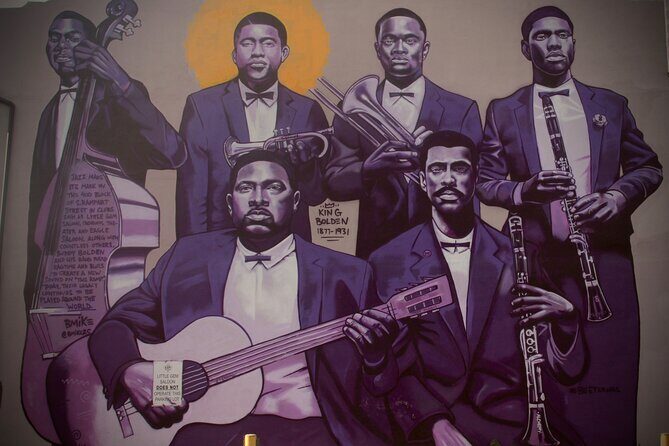
Congo Square is the kind of stop that changes the way you hear the music. The tour treats this place as sacred grounds, where jazz’s origins are believed to be connected to early gatherings. Even if you don’t go deep into the debate side of the story, you’ll understand the point: music didn’t appear in a vacuum. It came from community.
This segment also ties in the nearby Treme area, described as the oldest African American neighborhood in the country. That matters because it gives you context for how culture traveled through neighborhoods, not just through recordings and posters. Your guide uses this moment to connect the sound to social life—drums, dancing, and gathering.
Time here is shorter than the first two stops, so don’t expect a long sit-down lecture. Instead, think of it as a focused “roots” moment before you move to the place where you’ll hear the music in action.
Frenchmen Street after context: live music with names in your head
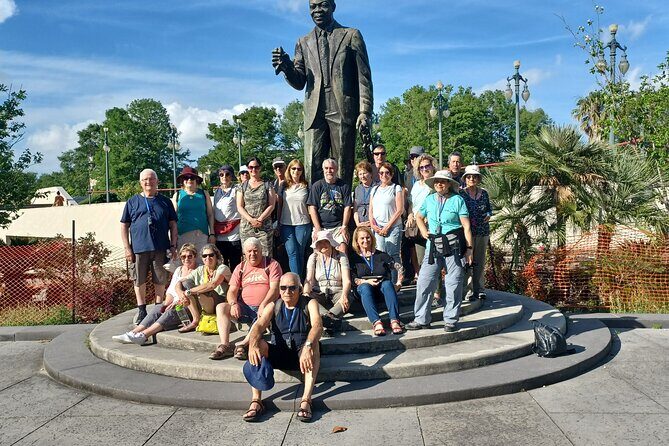
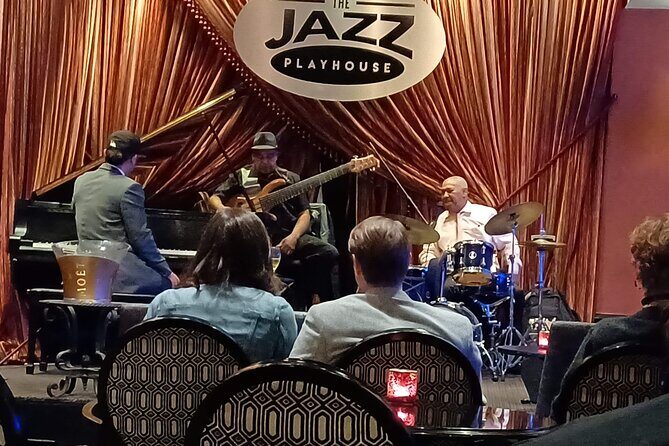
Frenchmen Street is where New Orleans stops being a lesson and becomes a soundtrack. The tour ends here, and you’re there specifically to listen to live jazz music after learning the backstory.
This is also where you’ll feel the difference between “hearing jazz” and understanding it. Once you’ve been through Armstrong Park, the museum connection, and Congo Square, you’ll notice more than usual. You’ll catch references your brain can now hold onto: pioneer names, early genre influences, and the reasons people played in the first place—community, celebration, identity.
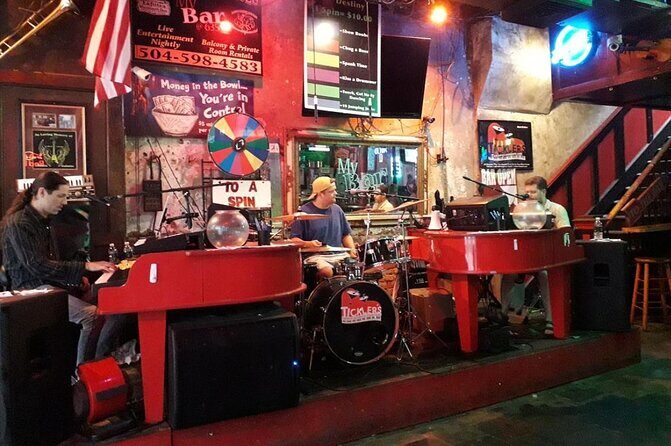
It’s also practical. Frenchmen Street is known for multiple venues close together, and the tour notes options such as the Snug Harbor, the Maison, and the Spotted Cat. You don’t have to figure everything out on your own before you go. You get a guided landing.
If you’re traveling with kids or teens, the vibe on Frenchmen Street can still be family-friendly, but the tour content itself is more adult-leaning in storytelling style. So aim for a good fit rather than assuming every family will love the same kind of history talk.
What you pay $35 gets you: free admissions, two hours, and a local guide
At $35 per person for about two hours, this tour is priced like a “smart splurge,” not a budget gamble. You’re paying for a licensed guide, a tight walking route, and four themed stops that include free admission listed for each location.
Here’s the real value question: are you just getting a route, or context that makes the city easier to enjoy? This tour leans hard into context. You’re learning who the legends were, where they fit into New Orleans life, and why the city became a jazz engine. When the guide uses music to connect eras, you end up with something more useful than a list of names—you get a mental storyline.
Also, the tour uses a mobile ticket. That’s one less paper thing to lose, which matters when you’re juggling New Orleans street chaos and changing plans.
One small downside to keep in mind: snacks and meals are not included. Plan your timing so you’re not hunting for food right after you finish at Frenchmen Street—unless you want the fun of wandering for dinner.




Guides like Harris Parson and Robin make it stick
The guide is the make-or-break factor on a walking tour, and this one has strong signals. Harris Parson and Robin come up in feedback with the same theme: passion plus storytelling that’s not dry.
A lot of the praise centers on how guides bring the eras to life. One guide approach highlighted is using music while discussing specific songs or moments, which turns “reading about jazz” into “hearing jazz in your head.” That’s a big deal if you learn better through sound than through facts alone.
Guides also tend to answer questions in real time, including questions about the city and music culture, and they often point out architectural and cultural details beyond the core jazz narrative. That means the walk can feel like a guided conversation, not a lecture with marching instructions.
If you want a tour where the guide has real local roots, this is built that way: it’s run by Tours By NOLA with local artists and guides described as native of NOLA and licensed. That typically shows in how easily they connect the story to what you can see outside your shoes.
Walking comfort tips: standing, weather, and getting your bearings

This tour requires moderate physical fitness. You should be able to stand for a long period, and you’ll be walking between stops at a relaxed-but-steady pace. That sounds simple, but it’s the kind of thing that can ruin a tour if you ignore it.
My practical advice:
- Wear comfortable shoes you trust on uneven sidewalks.
- Bring water and plan a bathroom break before you start.
- If you’re visiting in hot or stormy weather, keep expectations flexible. This experience requires good weather, and if it’s canceled due to poor conditions, you’ll be offered a different date or a full refund.
Timing matters too. It’s a short two-hour window, so if you arrive late, you’ll likely miss part of the narrative chain. Get to the start point (701 N Rampart St) with a few extra minutes so you’re not scrambling.
Is this the right jazz tour for your group?
This works best for you if you want jazz history that’s tied to real streets and real places. It’s also a strong pick if you’re the kind of traveler who likes learning names and context—where jazz fits into the city’s culture and community spaces.
It’s not ideal if:
- Standing still for long periods is an issue for you.
- You want a purely club-hopping nightlife tour. This one is history-first, with live music as the payoff.
- You’re traveling with very young kids who may struggle with the story-heavy format. One family comment pointed out it may not be super engaging for younger children.
It does suit couples, families (with age-appropriate expectations), and friends who want a guided framework for enjoying New Orleans music. And because the group size is capped at 28, it should stay reasonably manageable.
Should you book this Jazz Walking Tour?
Yes—if jazz is on your must-do list, and you want the city’s music story delivered in a way that helps you understand what you hear later. Starting at Louis Armstrong Park, then moving through the Jazz Museum connection and Congo Square, sets up a clear “why” before Frenchmen Street gives you the “listen.”
Before you book, be honest about two things: your comfort with standing/walking and your interest in music history told through specific New Orleans landmarks. If those fit, this tour is one of the cleaner value plays in the jazz category—especially at $35 for two hours, free admissions, and a finish on a street where the music is actually happening.
FAQ
Where does the tour start and end?
It starts at Louis Armstrong Park, 701 N Rampart St, New Orleans, LA 70116. It ends on Frenchmen Street, Frenchmen St, New Orleans, LA.
How long is the New Orleans Jazz Walking Tour?
The tour runs for about 2 hours.
How much does the tour cost?
The price is $35.00 per person.
What’s included in the price?
Included are a guided tour, a cultural ambassador/Native of NOLA licensed tour guide, and Lagniappe (something extra). Admission tickets are listed as free for the stops.
Is there live jazz music during the tour?
Yes. The tour includes listening to live jazz music on Frenchmen Street near venues such as the Snug Harbor, the Maison, and the Spotted Cat.
What language is the tour offered in?
The tour is offered in English.
Do I need to buy tickets for the stops?
Admission is listed as free for each stop on the route.
Is there a physical requirement?
Yes. You should have a moderate physical fitness level and be able to stand for a long period of time.
Can I book if I’m traveling alone?
The tour requires a minimum of 2 guests. It does not operate with 1 guest unless it’s a private tour (call for details).
What if the weather is bad?
This experience requires good weather. If it’s canceled due to poor weather, you’ll be offered a different date or a full refund.