REVIEW · NEW ORLEANS
New Orleans Music Tour
Book on Viator →Operated by Historic New Orleans Tours · Bookable on Viator
Music is the map here.
I love how the route links landmarks to the people who shaped New Orleans sound. I also love the stories around legendary musicians and the places tied to them, from the Barbarin Family Musicians Tomb to Congo Square. One drawback to plan for: this is mostly a guided walk and history talk, so if you’re hunting for constant live music on the street, expectations need adjusting.
You’ll do it in about 2 hours, with a small cap of 15 people, so it doesn’t feel like you’re shouting over a busload. The tour also uses a mobile ticket, and every stop listed has free admission tickets, which helps the value. It starts at 806 N Rampart St at 2:00 pm, and the walk brings you back to the same spot.
In This Review
- Key highlights worth your time
- A two-hour walk that connects the dots between places and songs
- Price and logistics: $25 that feels fair if you want orientation
- Meet at 806 N Rampart St and plan for a focused afternoon
- Stop 1: St. Louis Cemetery No. 1 and the Musicians Tomb story
- Stop 2: Storyville District and the era when jazz found its stage
- Stop 3: Louis Armstrong Park, Basin Street Station, and Congo Square roots
- Stop 4: Congo Square landmarks and the J&M Studios New Orleans Sound
- Bounce music origins and what you should look for outside the tour
- The guide makes the difference more than you’d think
- How to handle the one common disappointment: not nonstop live music
- Best fit: who this tour helps most
- Should you book? My practical take
- FAQ
- How long is the New Orleans Music Tour?
- What does it cost?
- Where does the tour start?
- What time does the tour begin?
- What language is the tour offered in?
- Is hotel pickup included?
- Is food or drinks included?
- How many people are in a group?
- Are admission tickets included for the stops?
- What is the cancellation policy?
- Do I need to book far in advance?
Key highlights worth your time
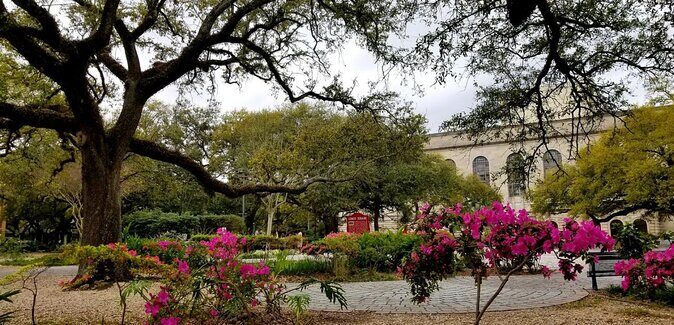
- Cemetery-to-jazz route: St. Louis Cemetery No. 1 leads straight into Storyville and then on to Congo Square.
- Storyville’s music legends: you’ll connect the red-light district era to names tied to jazz’s early days.
- Congo Square context: the tour frames it as a wellspring of New Orleans music and includes Congo Square landmarks.
- J&M Studios inside a “sound factory”: you’ll learn how the New Orleans Sound got shaped by major performers.
- Bounce music origins + street musicians: you’ll get the thread from roots to the music you still hear today.
A two-hour walk that connects the dots between places and songs
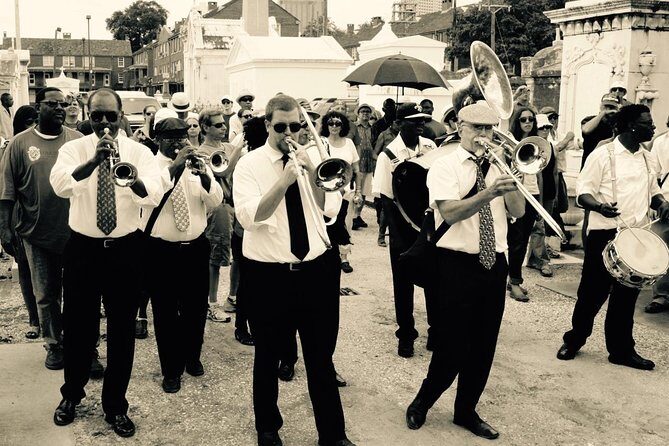
New Orleans does music differently. It’s not just something you listen to. It’s something you walk through, step into, and see written into the city’s corners.
This tour is built like a straight line through eras: cemetery to Storyville to Congo Square, then into the building tied to J&M Studios and the New Orleans Sound. Even if you only know a few big names, you’ll start spotting the patterns—how culture, religion, politics, and neighborhood life shaped what became jazz, bounce, and the street-level music that keeps moving.
You can also read our reviews of more tours and experiences in New Orleans.


Price and logistics: $25 that feels fair if you want orientation
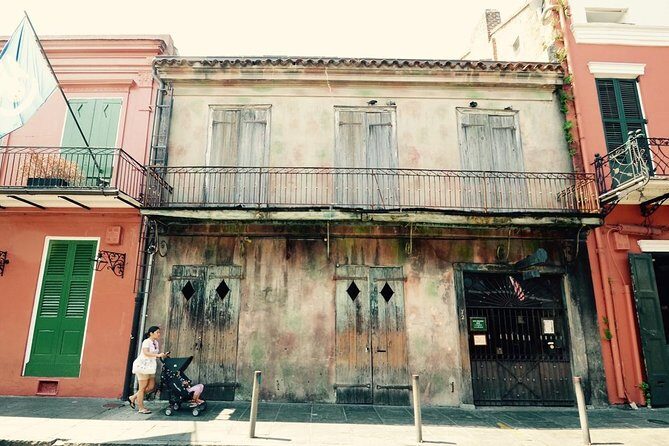
At $25 per person for roughly 2 hours, this is priced in the sweet spot for a first-pass city orientation that actually teaches you something. The biggest value boost is that the stops are listed with free admission tickets, so you’re not paying extra just to get inside the key pieces of the story.
A few practical notes matter here. With a maximum of 15 people, the tour is intimate enough for real interaction, but it’s still a walking tour, not a sit-down lecture. Also, hotel pickup and drop-off aren’t included, so you’ll want to be able to make your own way to the meeting point and back.
Meet at 806 N Rampart St and plan for a focused afternoon
The tour meets at 806 N Rampart St, New Orleans, LA 70116, and it starts at 2:00 pm. It ends back at the same meeting point, which makes it easier to plug into your day afterward—grab food nearby, head to another neighborhood, or slow down for the evening.
Because it’s scheduled for the afternoon, you should dress for New Orleans weather. Reviews mention cold, damp, windy days, and at least one person flagged summer heat and how it can affect comfort. Bring a light layer for wind if you’re going in cooler months, and consider hydration and shade strategies for hotter days.
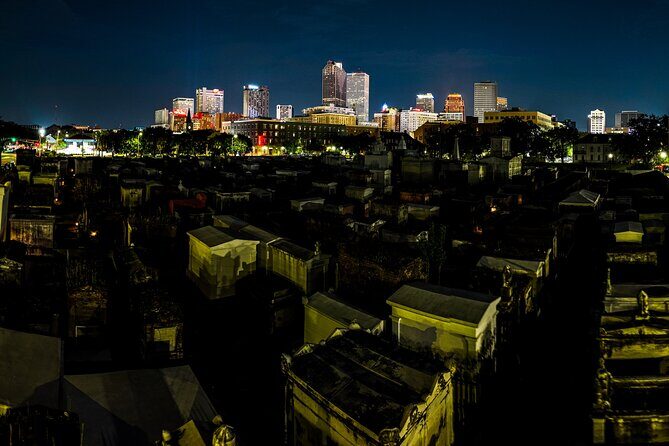
Stop 1: St. Louis Cemetery No. 1 and the Musicians Tomb story
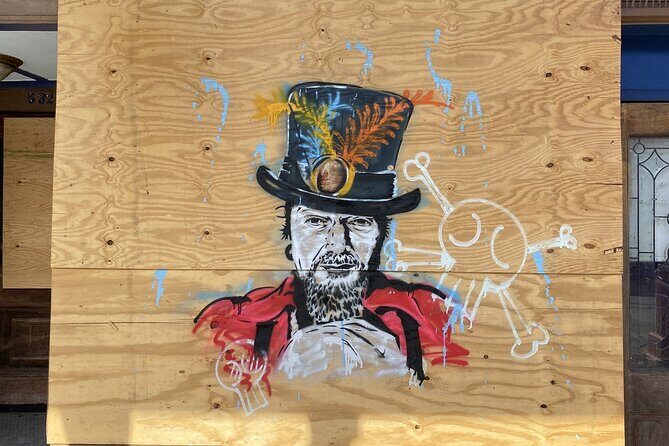
This is the opening scene, and it sets the tone: music isn’t just nightlife here. It’s legacy, memory, and community respect.
You’ll stroll through the Tango Belt area and then reach the New Orleans Musicians Tomb inside St. Louis Cemetery No. 1. The cemetery plot was donated by the Barbarin Family for free burial to musicians, which turns a cemetery visit into something more meaningful than a quick photo stop. The tour also shares a specific starting point for that tradition: the first burial listed there is Lloyd Washington of the Ink Spots on October 23, 2004.
What I like about this first stop for your experience: it gives you a reason to pay attention. Instead of jumping straight to famous bands, you start with the idea that New Orleans music has people behind it—sometimes honored even in death, sometimes protected by family, sometimes recorded by history.
Possible drawback: if you expected jazz performances to start immediately, this opening is quiet and reflective. It’s a smart way to begin, but it won’t satisfy someone who wants the soundtrack right away.
Stop 2: Storyville District and the era when jazz found its stage
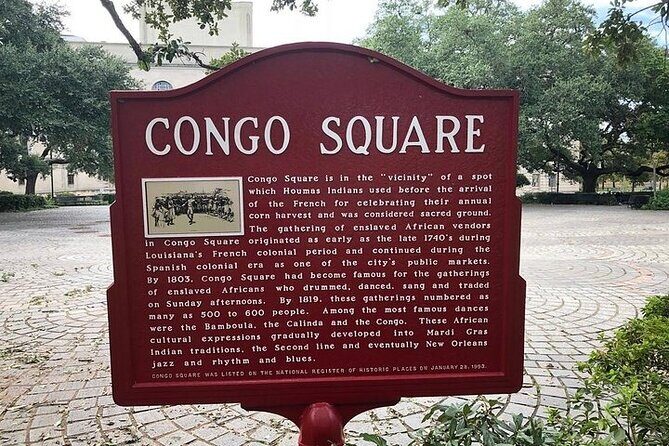
From the cemetery you move into the Storyville District, the turn-of-the-century red light district that became a launching pad for musical talent. The tour connects the physical remnants of Storyville to the big names that played in that orbit during the time jazz was taking shape.
You’ll hear about Frank Early’s My Place Saloon, where Pretty Baby was written. Then the tour ties that environment to famous early jazz figures—King Oliver, Buddy Bolden, Jelly Roll Morton, and Sidney Bechet, among others.
This stop matters because it explains jazz’s early “ecosystem.” Music didn’t grow in a vacuum. It needed venues, audiences, and places where musicians could test ideas night after night. In Storyville, the tour frames the district as a crucial context for that development, not just a sensational footnote.
One caution: this stop is described with a shorter time window. If you like to linger and read every plaque, you’ll probably want to do your own follow-up walk afterward to slow down.




Stop 3: Louis Armstrong Park, Basin Street Station, and Congo Square roots
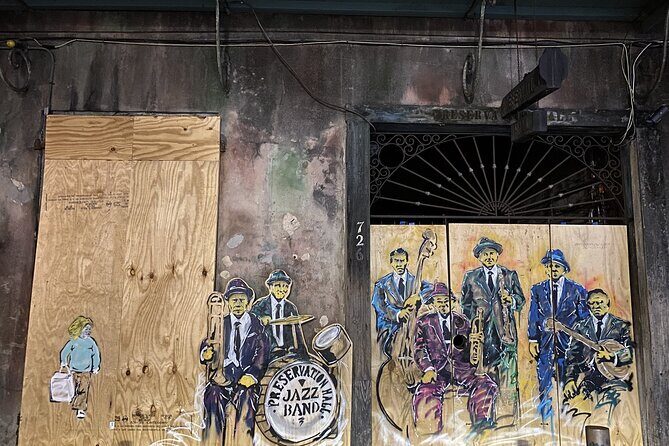
Next you move toward Louis Armstrong Park, with a check-out stop at the Basin Street Station area before arriving at the park’s major piece: Congo Square.
Here’s the key idea the tour hands you: Congo Square is treated as a source point for New Orleans music. It’s also explained as a historic site of African slave gatherings, and it’s called the only place in North America where pure West African religious ritual and musical traditions were performed. That’s heavy context, and it changes how you hear the music that comes later.
You also get a sense of why the tour pairs these locations. Basin Street and Congo Square represent a bridge—tradition and performance, community ritual and public entertainment. It’s not just “old stories.” It’s a chain of cultural transmission.
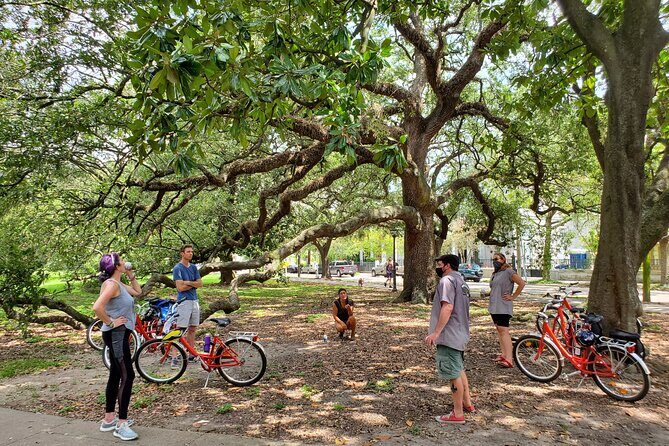
Practical tip for your comfort: parks mean walking surfaces, wind, and exposure. If you’re going on a cold or rainy day, wear something you can move in and bring a layer that blocks wind.
Stop 4: Congo Square landmarks and the J&M Studios New Orleans Sound
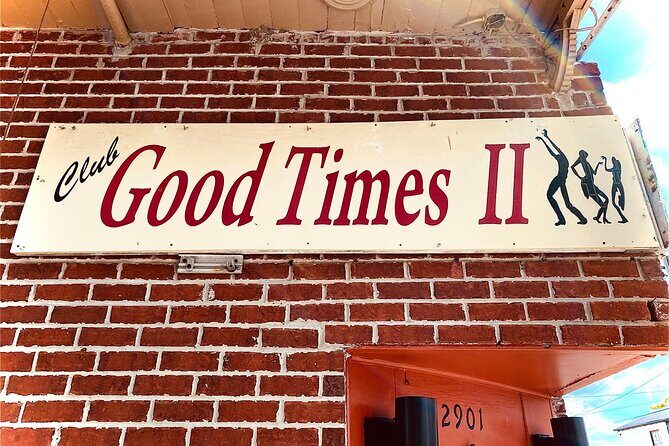
This is where the tour expands from origins into sound-making. Congo Square is presented as the wellspring of New Orleans music, and you’ll hear about specific landmarks tied to music events there, including the first New Orleans Jazz and Heritage Festival in 1970 and the Municipal Auditorium.
Then the tour shifts indoors to the building associated with J&M Studios. This part is a big deal if you care about how a city’s signature sound gets manufactured—repeatable, recorded, polished, and spread.
The tour explains that J&M Studios created what people call the New Orleans Sound, connected to artists such as Professor Longhair, Dave Bartholomew, Fats Domino, Guitar Slim, Shirley & Lee, Lloyd Price, Ernie K-Doe, Allen Toussaint, and Clarence Frogman Henry. You’ll also hear about major visitors who came through, including Little Richard, Ray Charles, and Jerry Lee Lewis.
If you’re the type who likes to understand music with your ears and your brain, this stop is your payoff. You’re not only told names. You learn why New Orleans sounded like New Orleans—how the city’s musical ingredients got mixed, recorded, and turned into something recognizable.
Bounce music origins and what you should look for outside the tour

After the J&M Studios segment, you’ll learn about the origins of New Orleans Bounce Music. This gives you a modern thread so the history doesn’t feel like it ends in the early 1900s.
The tour also points you toward the street musicians carrying that tradition forward. Even if you don’t catch a full performance during the walk, you’ll be trained to notice what’s happening out in the open—rhythm, call-and-response, and how performance style changes neighborhood to neighborhood.
The guide makes the difference more than you’d think
Most value in a tour like this comes down to the person talking. The tour runs with local guides, and the best experiences you’ll have are the ones where the guide turns facts into a story you can visualize.
One guide name that shows up a lot is David, praised for being engaging, energetic, and funny while still staying on top of music history. Another name mentioned is Cindy, with at least one experience noting how the guide’s energy can shift with conditions like heat.
What I’d take from that for your expectations: you’re paying for a human guide who can connect the dots. If your guide is in fine form, this feels like a great afternoon. If conditions are rough and the pace changes, the tour may feel less structured than you hoped.
How to handle the one common disappointment: not nonstop live music
A few people go into this tour wanting to hear lots of live playing during stops. If that’s you, adjust your plan.
The tour format is primarily a walking explanation of music origins through key sites. You might see or hear street musicians at points, but the experience is not presented as a full concert. So if your heart is set on live jazz the whole way through, use this as a history orientation, then pair it with a separate music venue afterward.
Best fit: who this tour helps most
This tour works especially well if you want:
- A fast first understanding of how New Orleans music developed across different neighborhoods.
- A guided way to connect big names to the actual places you’ll walk past later.
- Something that goes beyond listening and adds context—how culture, religion, and social life shaped sound.
It also tends to suit different groups. The tour is described as possible for most travelers, and it has been enjoyed by couples, families, and friends. If you’re traveling with kids, the shorter segments at each site can be a plus as long as you’re okay with lots of talking and walking.
Should you book? My practical take
If you’re spending limited time in New Orleans, I think this is an easy yes. For $25, you’re getting a structured route through major music origin points, plus context that makes later shows feel more meaningful. And because the tour is capped at 15 people, it’s not a chaotic sprint through the city.
I’d only skip or rethink if you strongly want a concert-style experience with frequent live performances, or if you dislike walking outdoors for a couple hours. Otherwise, this is a smart way to get your bearings fast while learning why New Orleans music sounds the way it does.
FAQ
How long is the New Orleans Music Tour?
It’s about 2 hours long (approx.).
What does it cost?
The price is $25.00 per person.
Where does the tour start?
The meeting point is 806 N Rampart St, New Orleans, LA 70116, USA.
What time does the tour begin?
The start time is 2:00 pm.
What language is the tour offered in?
The tour is offered in English.
Is hotel pickup included?
No. Hotel pickup and drop-off are not included.
Is food or drinks included?
No. Food and drinks are not included.
How many people are in a group?
The tour has a maximum of 15 travelers.
Are admission tickets included for the stops?
Each stop listed shows Admission Ticket Free, so you won’t be paying admission for those site entries as part of the tour.
What is the cancellation policy?
There is free cancellation. You can cancel up to 24 hours in advance for a full refund, and cancellations within 24 hours of the start time are not refunded.
Do I need to book far in advance?
The tour is often booked about 27 days in advance on average, so booking earlier can help if you want a specific date.