REVIEW · NEW ORLEANS
Dark History Tour In New Orleans
Book on Viator →Operated by Jonathan Weiss Tours · Bookable on Viator
New Orleans gets darker tonight. This Dark History Tour is a focused walk through the French Quarter, where you’ll hear true stories tied to landmarks people pass every day without really seeing. Expect a history lesson with bite, but still told in a way that treats the past like it mattered to real humans.
I love how the guides bring the stories across with compassionate clarity instead of cheap theatrics. The main drawback to consider is that the tone is firmly dark-history and opinionated, so if you want light, casual sightseeing only, this might feel like too much.
In This Review
- Key things to know before you go
- Meeting at Pirate’s Alley: timing, route, and what “2 hours” really feels like
- St. Louis Cathedral: oldest-in-the-U.S. framing with more than postcards
- Lafitte’s Blacksmith Shop: the mid-tour pause that’s more than a drink stop
- Madame John’s Legacy: one of the only French buildings in the Quarter
- City Hall of the Spanish and Americans to the Civil War: power systems, not just dates
- Jackson Square: the designed beauty plus a hard-edged story
- Why the guide experience matters (and what to expect from the storytelling)
- Price and value: $30 for a 2-hour French Quarter story loop
- Who this tour is best for
- Should you book this Dark History Tour in New Orleans?
- FAQ
- What is the duration of the Dark History Tour in New Orleans?
- How much does the tour cost?
- What time does the tour start?
- Where do I meet for the tour?
- Where does the tour end?
- Is the tour offered in English?
- How many people are on the tour?
- Is there free admission at the stops?
- What is the cancellation policy if weather is bad?
Key things to know before you go
- True-story approach: you’ll hear human-scale history tied to the places you recognize
- Licensed-in-the-real-world guides: some guides were licensed before Hurricane Katrina
- Short, efficient stops: plan for quick looks and attentive listening, not lingering
- Free stop-ins: each listed stop has free admission noted for your time there
- Small-group feel (when it happens): the tour caps at 28, and the best moments come when you can ask questions
Meeting at Pirate’s Alley: timing, route, and what “2 hours” really feels like

The tour starts at 5:00 pm and runs about 2 hours. You meet at Pirate’s Alley Cafe, 622 Pirates Alley, then you finish near 1035 Chartres St (at the corner of Ursulines and Chartres). It’s set up like a proper walking tour, so you’ll want comfortable shoes and a light plan for staying focused for the whole stretch.
A cap of 28 travelers keeps it manageable. In a good moment, you’ll feel like the guide can actually work the group rather than just talk at a crowd. And because the tour includes mobile tickets and is in English, you won’t be hunting around for paperwork or translation headcounts.
One practical tip: the tour moves quickly between stops. That’s not a flaw; it’s the format. So if you tend to zone out during transitions, you’ll want to reset your attention as the group gathers again. Think of each stop as a mini scene, not a long museum visit.
Also note the simple stuff: it’s designed so most travelers can participate, service animals are allowed, and it’s near public transportation. And since it depends on good weather, it’s worth having a quick rain plan in your day bag.
You can also read our reviews of more historical tours in New Orleans


St. Louis Cathedral: oldest-in-the-U.S. framing with more than postcards

Your first stop is St. Louis Cathedral. It’s listed as the oldest cathedral of the United States, and that matters because it sets the tone for the whole evening: you’re not just looking at buildings. You’re walking through layers of time in one tight area.
This stop is scheduled for about 8 minutes, with free admission noted. That’s perfect for a first look when you might not know where to stand or what to notice. In a short window, the guide typically gives you the kind of framework that helps you see the cathedral as part of the city’s social story, not just as a photo-op.
What to do in those minutes: don’t rush the photos. Give yourself ten seconds to scan the space, then listen for how the guide connects this place to the human events of New Orleans. If you like history that has a pulse, this is where the tour starts to earn its name.
Lafitte’s Blacksmith Shop: the mid-tour pause that’s more than a drink stop
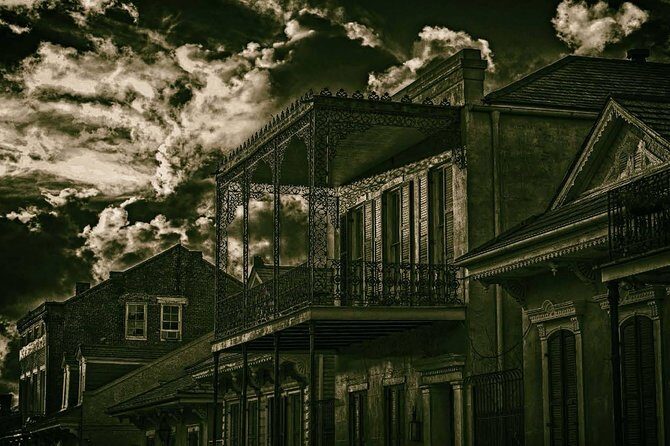
Next you’ll hit Lafitte’s Blacksmith Shop Bar for about 10 minutes. It’s a smart pacing move. You get a break, and you also get a “pause point” in the story rhythm.
The listing calls it the oldest tavern in the city, and that’s the kind of detail that can turn a quick stop into something memorable. You don’t need to turn this into a long bar crawl. The value here is that you’re sitting within a place people associate with New Orleans lore, then hearing what that kind of space meant for daily life and survival.
If you’re the type who appreciates a little humor without losing the seriousness, this stop often works well. It’s a short break where you can reset your ears for the next darker scenes.
Madame John’s Legacy: one of the only French buildings in the Quarter
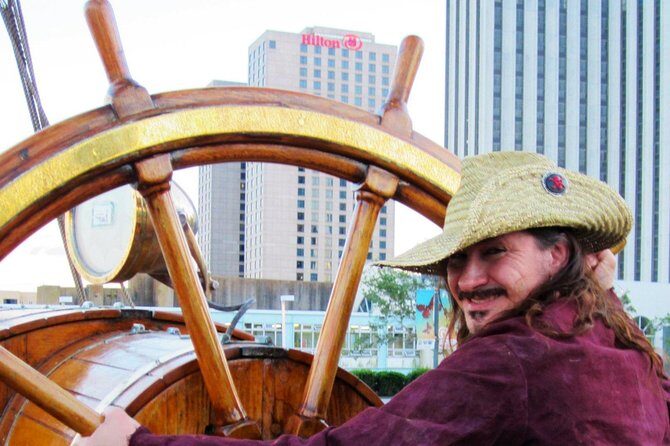
After the tavern stop, the tour heads to Madame John’s Legacy. This is scheduled for about 10 minutes, with free admission noted. The standout claim here is that it’s one of the only French buildings in the Quarter, and also the only residence of the French period.
Why you’ll like this stop: architecture acts like a time machine. Even without knowing the first thing about French colonial styles, you can usually sense the difference when a building has survived when everything around it changed. And because this is a dark-history tour, the guide likely uses the building to anchor stories about the people who lived in and around it.
What to watch for: take a moment to notice any visual clues that set it apart from the surrounding Quarter buildings. Then let the guide connect it to the city’s bigger story. This is the kind of stop that rewards attentive listening because the building itself can’t do all the talking.
City Hall of the Spanish and Americans to the Civil War: power systems, not just dates
One of the tour stops is City Hall of the Spanish and Americans til the Civil War. The exact time on the schedule isn’t specified in the data you have, but it’s clearly part of the core loop around the Quarter’s major civic anchors.
This type of stop is valuable because dark history isn’t only about crimes and hardship. It’s also about institutions. How laws were shaped, how power was practiced, and how ordinary people were affected by big political shifts.
If you like the kind of history that answers the question Why did the city do this? this stop is likely where the tour gives you that missing context. The key is that you’ll have to keep moving—so don’t expect to absorb everything like a textbook. Instead, treat it like you’re getting the skeleton of the story, then getting meat at the next scenic stop.






Jackson Square: the designed beauty plus a hard-edged story
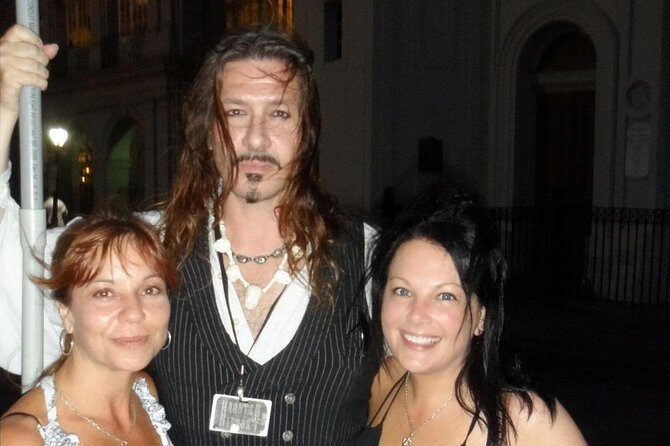
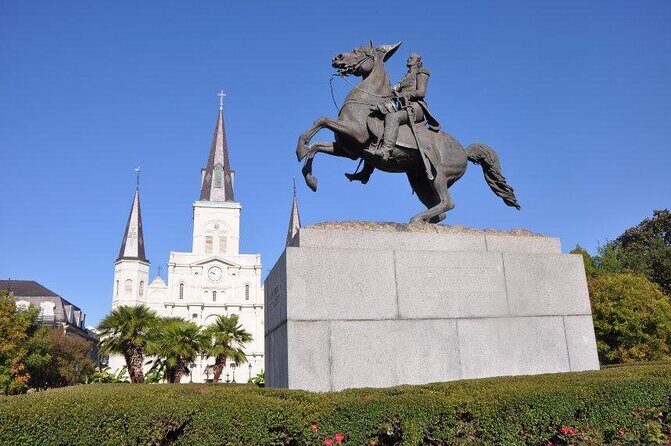
The finale stop is Jackson Square, with about 8 minutes and free admission noted. The tour description highlights it as a lovely square designed by a woman—and also “a place of absolute horror.”
That combination is why this tour works. Jackson Square is one of those places that can look soft and charming from across the path. But the guide’s framing pushes you to see how the same public spaces can hold brutal meaning depending on who controlled them and what people endured around them.
If you’re hoping the tour ends with a last big “aha,” this is the spot. You’ll likely walk away with a different mental picture of the Quarter. Not because the architecture changed, but because you now understand the human consequences tied to it.
Why the guide experience matters (and what to expect from the storytelling)
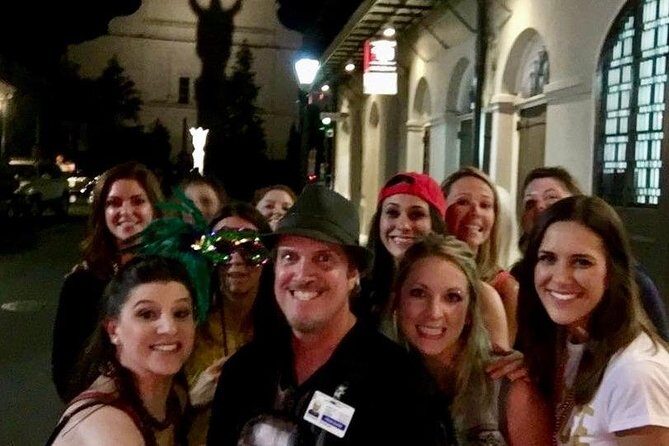
This tour’s highlights emphasize long-time guides who were licensed before Hurricane Katrina. That’s not a random detail. It suggests the guide has been working in the city’s storytelling ecosystem through real change, not only performing generic “tour voice” history.
The reviews you provided also show what the best guides do:
- They keep the tone compassionate and humanizing, so the subject matter doesn’t turn into sensational shock.
- They make the history feel alive, with enthusiasm that doesn’t rely on theatrical gimmicks.
- They answer questions in a way that helps you connect the dots between stops.
You should also know where things can go wrong for some people, based on the feedback you shared. One negative note complains about a guide being rude or condescending. Another says the guide could be long-winded and ramble off target. That doesn’t mean every tour is like that, but it does mean you should set expectations.
My practical advice: if you want a tight, move-fast, strictly factual style, ask yourself whether you like discussion while walking. If you prefer a more conversational style, you’ll probably do well here. And if you’re with a group, be ready to follow the guide’s movement cues and avoid blocking the path. A tour can’t flow if people treat the sidewalk like a parking lot.
Price and value: $30 for a 2-hour French Quarter story loop
At $30 per person for about 2 hours, this is priced like a serious walking tour, not a free city lecture. The best part of the value equation is that the listed stops show free admission (at St. Louis Cathedral, Lafitte’s Blacksmith Shop, and Madame John’s Legacy). So you’re not stacking your budget with ticket fees on top of the tour.
For me, the value comes down to this: you’re paying for someone to connect landmarks to a harder, less sanitized version of New Orleans. If you’ve done the standard French Quarter sweep before, this is the kind of add-on that can refresh your perspective fast.
If you’re traveling with limited time, the timing helps. A 5:00 pm start gives you enough daylight early in the day and still lets you finish with the evening set up. You also avoid the common problem of “dark history” tours that end up mostly on the same few corners. Here, you get a defined circuit that hits major anchors.
Who this tour is best for
You’ll get the most out of the Dark History Tour if you:
- like story-driven walking tours where the guide sets context
- want the French Quarter without only the glossy version
- appreciate guides who can explain why a place matters
It may be less ideal if you:
- want history only in a light, entertainment-first package
- get uncomfortable with blunt commentary
- prefer very short answers and minimal back-and-forth
It’s also a good match if you’re traveling with a history-minded friend or teen who’s tired of hearing the same myths. One review specifically praises the way the tour treats people with care and mentions themes like suffrage and determination, which tells me the guide often connects struggle and resilience to the places you see.
Should you book this Dark History Tour in New Orleans?
If you want a meaningful French Quarter experience and you’re open to the darker side of the city, I’d book it. The price is fair for a two-hour guided story walk, and the free stop-ins make it easy to justify. Most importantly, the guiding style you shared points to a compassionate approach that avoids turning history into cheap drama.
Just go in with the right mindset. This isn’t a casual stroll for shallow sightseeing. It’s a structured walk with short stops, serious topics, and a guide who’s willing to take a clear stance.
If that sounds like your kind of New Orleans, you’ll likely leave with a different map in your head—and a better understanding of why those streets still feel alive.
FAQ
What is the duration of the Dark History Tour in New Orleans?
The tour is about 2 hours.
How much does the tour cost?
It costs $30.00 per person.
What time does the tour start?
The start time is 5:00 pm.
Where do I meet for the tour?
You meet at Pirate’s Alley Cafe, 622 Pirates Alley, New Orleans, LA 70116, USA.
Where does the tour end?
It ends at 1035 Chartres St, New Orleans, LA 70116, USA (corner of Ursulines and Chartres St).
Is the tour offered in English?
Yes, it’s offered in English.
How many people are on the tour?
The tour has a maximum of 28 travelers.
Is there free admission at the stops?
The listed stops show free admission, including St. Louis Cathedral, Lafitte’s Blacksmith Shop Bar, and Madame John’s Legacy.
What is the cancellation policy if weather is bad?
Free cancellation is available up to 24 hours in advance. The tour requires good weather, and if it’s canceled due to poor weather you’ll be offered a different date or a full refund.