REVIEW · NEW ORLEANS
New Orleans Pestilence, Pandemic and Plague Tour
Book on Viator →Operated by Unique NOLA · Bookable on Viator
Plague stories, but not in a scary way. This New Orleans Pestilence, Pandemic and Plague Tour uses real locations—plus a tight, guided route—to turn disease history into something you can actually picture in the streets.
Two things I especially like: you never have to worry about directions, and the guide-led pacing makes it easy to keep up (and stay comfortable) along the way. Guides such as Mikko and Dalvin bring a blend of New Orleans know-how and outbreak-era detail that keeps the walk focused on what matters.
One thing to keep in mind: the Pharmacy Museum stop requires its own admission ticket and is only about 20 minutes, so if the museum hours don’t line up with your day, you may get less from that first segment than you hoped.
In This Review
- Key Takeaways Before You Go
- Why a Pestilence Tour Fits New Orleans So Well
- Getting Your Bearings: Start on Toulouse, Finish on Bourbon
- Stop 1: New Orleans Pharmacy Museum and How Medicine Tried to Make Sense of Outbreaks
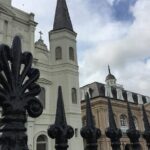
- Stop 2: Jackson Square, Where the French Quarter’s Center Holds Disease Echoes
- Stop 3: French Quarter Walking Route, Including the Details You Usually Miss
- Guides, Pacing, and the Small-Group Advantage
- Price and Value: Is $37 Worth It?
- Practical Tips for a Comfortable, Learn-First Walk
- Who This Tour Is Best For (and Who Might Skip It)
- Should You Book This New Orleans Pestilence, Pandemic and Plague Tour?
- FAQ
- How much does the New Orleans Pestilence, Pandemic and Plague Tour cost?
- How long is the tour?
- When does the tour start, and where does it meet?
- Where does the tour end?
- Is admission included for the New Orleans Pharmacy Museum?
- What language is the tour offered in, and how big is the group?
- Are service animals allowed, and how physically demanding is it?
- What is the cancellation policy?
Key Takeaways Before You Go
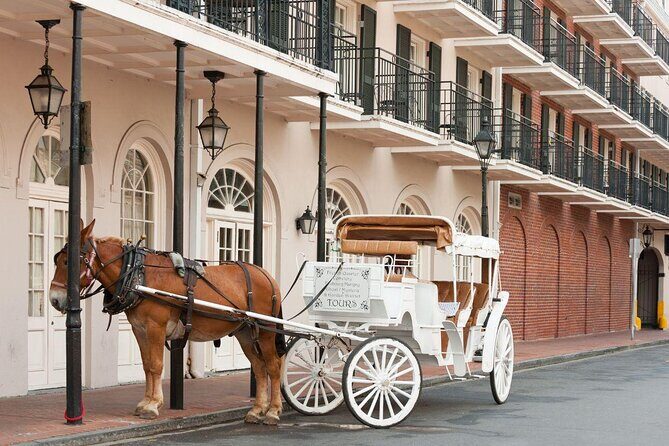
- A guided 2-hour walk with clear routing, starting at 815 Toulouse St and finishing near Bourbon and Dumaine
- Three well-timed stops: 20 minutes at the Pharmacy Museum, 20 at Jackson Square, then 1 hour 20 through the French Quarter
- Most of the route is free to enter, but the Pharmacy Museum admission isn’t included
- Professional guides with strong storytelling (you may hear plenty of humor, too, like Mikko’s wit)
- Small-group feel with a maximum of 56 travelers
Why a Pestilence Tour Fits New Orleans So Well
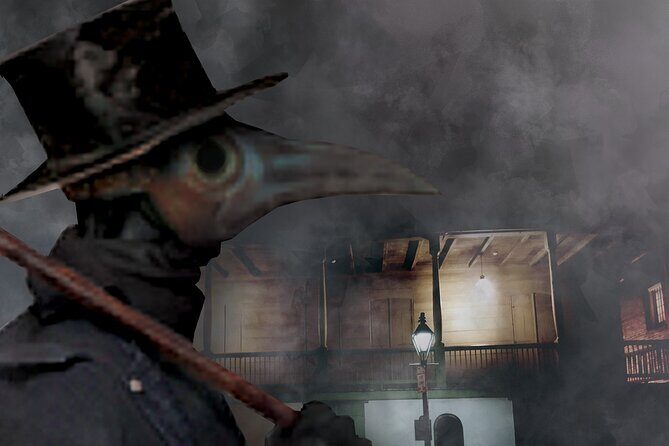
New Orleans has a knack for making history feel like it’s still running in the background. This tour leans into the city’s past confrontations with pandemics, plagues, and public health—then ties that to the places you already recognize.
What I like about this approach is that it doesn’t treat disease as a distant chapter in a textbook. Instead, it frames the topic around choices people made in real neighborhoods: where they gathered, how they handled waste and sanitation, and what communities did when illness reshaped daily life. You’ll walk away with a new way to read the city, not just a list of facts.
And yes, the tone stays more educational than gross. Even when the subject gets heavy, the goal is clarity—so you can understand why these outbreaks mattered, and how they shaped New Orleans culture and built environment over time.
You can also read our reviews of more tours and experiences in New Orleans.

Getting Your Bearings: Start on Toulouse, Finish on Bourbon
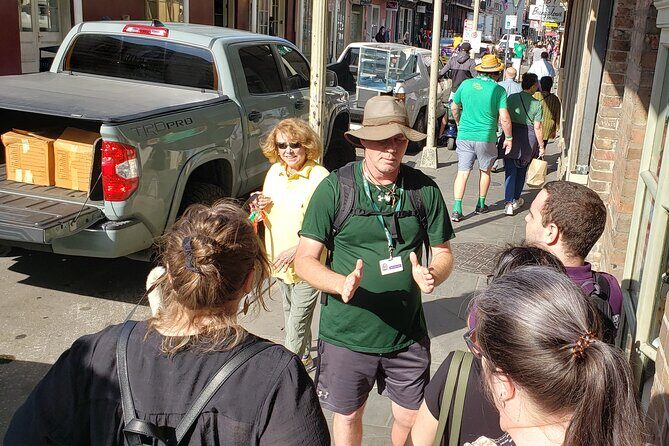
The tour runs about 2 hours (approx.), and it starts at 1:00 pm. Your meeting point is 815 Toulouse St, and it ends at Bourbon Street & Dumaine Street.
That matters more than it sounds. With a guided route, you’re not trying to “map out” where you should go next while you’re learning a complex topic. The tour is designed so the guide handles directions, which keeps your attention on the stories and the on-street clues.
There’s also a practical timing advantage. The early stops are short—each about 20 minutes—so you don’t get stuck standing too long in one place. Then the French Quarter segment stretches to 1 hour 20 minutes, giving you enough time to absorb the connections between disease history and the neighborhood’s layout.
One more planning detail: this experience is often booked about 42 days in advance on average. If your travel dates are fixed (especially around busy seasons), it’s smart to lock it in early so you’re not gambling on availability.
Stop 1: New Orleans Pharmacy Museum and How Medicine Tried to Make Sense of Outbreaks
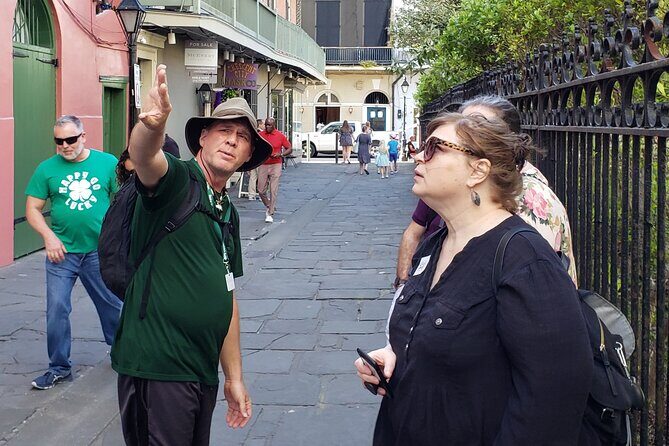
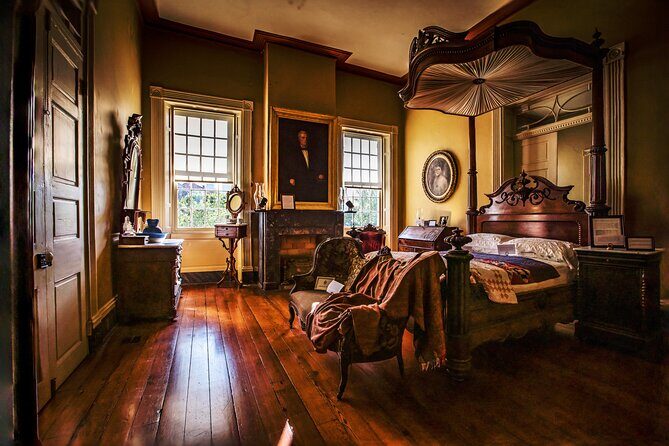
The first stop is the New Orleans Pharmacy Museum, and it’s scheduled for about 20 minutes. Importantly, admission isn’t included, so you’ll want to plan for that cost separately.
This segment is where the tour sets the tone: strange ways people approached sickness, how “medical” thinking evolved, and what the pharmacy world contributed to public health—even when tools and understanding were limited by the era. You’re not just hearing about pandemics. You’re getting context for how people tried to respond to them with the knowledge they had.
Because this is a museum stop, the content you can see may depend on the day. One consideration: if the museum is inaccessible when you arrive, you’ll likely still keep moving on the walking portion of the tour. Either way, you’ll come away with a clearer sense of the city’s medical history framework before you hit the street locations in the French Quarter.
Stop 2: Jackson Square, Where the French Quarter’s Center Holds Disease Echoes
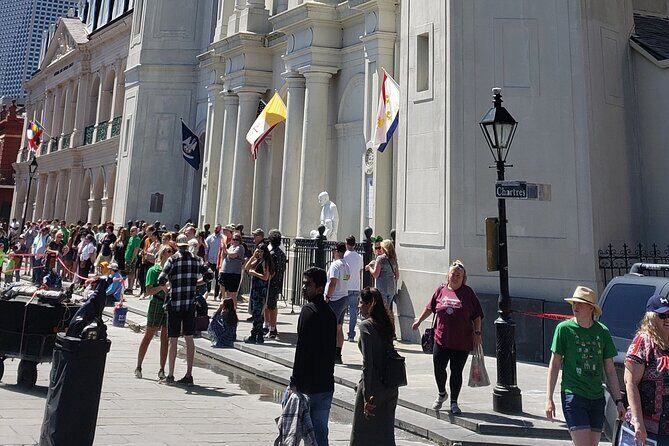
Next up is Jackson Square, also about 20 minutes. This stop is free, which makes it a nice low-friction entry into the broader theme of the tour.
Jackson Square is the center of the French Quarter energy, and that’s exactly why it works for this topic. The tour connects the square’s famous public life to the realities of past outbreaks—how disease outbreaks affected gatherings, movement through shared spaces, and the way communities thought about risk.
Even if you’ve walked through Jackson Square a dozen times, this is the kind of framing that can change how you read what you see. You start noticing how “normal life” and public health reality overlap in the same city blocks.
Stop 3: French Quarter Walking Route, Including the Details You Usually Miss
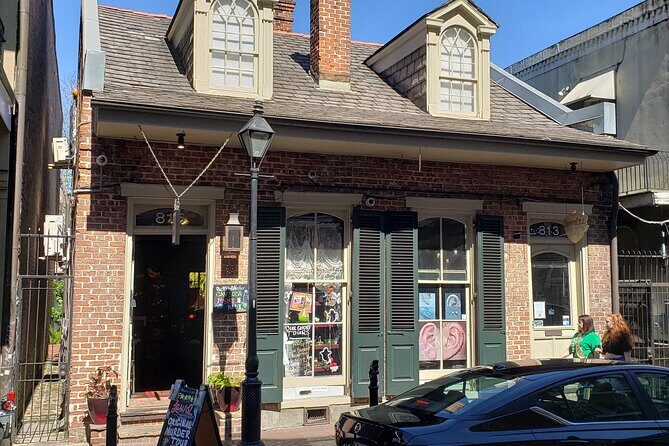
The final stretch is the French Quarter portion, scheduled for 1 hour 20 minutes and listed as free. This is where the tour does most of its storytelling work across multiple locations tied to historic and more recent pandemics and plagues.
A key reason this stop is valuable: you’re seeing the city as a sequence, not as isolated photos. The guide connects the dots so the neighborhood reads like evidence. Instead of just naming disease events, the tour ties them to the street-level world—where people lived, how they moved, and what systems existed to deal with danger.
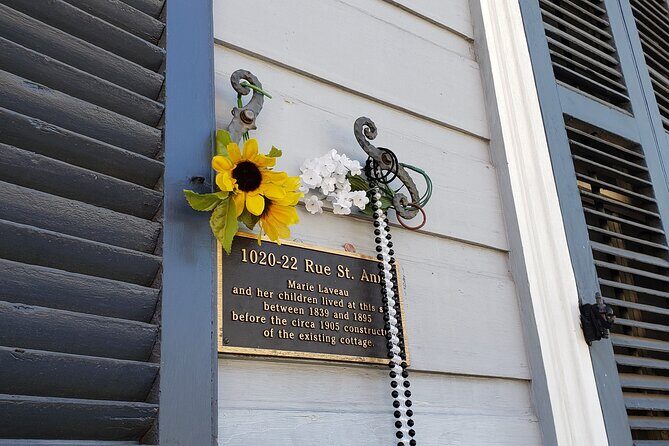
From the guide style, you can also expect a lot of “street-level” detail. For example, one standout moment highlighted in past tours is a close look at an in-ground garbage or waste-related setup. It’s the kind of thing you’d normally walk past without thinking—until a story gives it meaning.
This portion also tends to feel more conversational. Guides such as Dane and Anderson are noted for making the topic approachable and for knowing how New Orleans culture and public health history intersect. So if you like questions, this is a good format for them—short answers, quick pivots, and clear next steps.




Guides, Pacing, and the Small-Group Advantage
The experience includes a professional guide, and with a maximum group size of 56 travelers, it should feel manageable. It won’t be a tiny private tour, but you also won’t be swallowed by a huge crowd.
Pacing is a big part of why people rate this so highly. In warmer months, the walk can be humid and unforgiving, so guides who watch timing and comfort really help. One review noted the guide paid attention to shade vs sun and made sure there were chances to hydrate and rest. That’s practical, and it keeps you learning instead of just sweating.
You’ll also notice the guides vary a bit in personality—Mikko is praised for humor and sharp wit, while Dalvin and Dane are praised for energetic teaching and for bringing in both city history and modern health impacts. The best part is that the tour stays on mission. It doesn’t turn into a random French Quarter highlight reel. Every stop ties back to pestilence and public health.
That said, there is one worth noting: if you end up too far from the speaker in a busy stretch, audio can be tough. Keep your spot where you can hear well, and don’t let the topic pull you into drifting too far back or sideways.
Price and Value: Is $37 Worth It?
The price is $37.00 per person, for about 2 hours with a professional guide. For New Orleans, that’s in the “small-group tour that adds real meaning” range, not the cheap-and-generic level.
Where the value shows up:
- You get a guided route that handles directions, so you spend your attention on learning instead of figuring out logistics.
- You hit multiple meaningful locations in a short time: Pharmacy Museum, Jackson Square, then the French Quarter walking segment.
- Most entrances are free (Jackson Square and French Quarter), so your main added cost is the Pharmacy Museum admission.
If you’re the type who likes history but gets bored when it’s all plaques and dates, this format helps. It’s built around cause-and-effect: what happened during outbreaks, how people reacted, and how those reactions left traces in a city that still feels alive.
And with the ratings—4.9 and 96% recommended—this isn’t just a gimmick topic. People clearly come away feeling educated, not overwhelmed.
Practical Tips for a Comfortable, Learn-First Walk
You should have a moderate physical fitness level. The tour is mostly walking, and it takes place in the French Quarter area, where you’ll be on uneven sidewalks and around street corners.
Here’s how to make it easier on yourself:
- Wear comfortable shoes. Even when the walk is “only” two hours, you’re on your feet through a dense neighborhood.
- Bring a light layer if it’s mild outside, and in hot months be ready for humidity.
- If you care about hearing every detail, pick a position where you can stay close to the guide during each stop.
The tour is offered in English, and it’s designed for a mobile-ticket setup, so you’ll want your phone handy at check-in time.
Also, the tour allows service animals, and it’s noted as near public transportation, which helps if you don’t want to rely entirely on rideshares.
Who This Tour Is Best For (and Who Might Skip It)
This is a strong pick if you:
- Like New Orleans history, especially the parts most people don’t think about
- Want disease history explained in a way that connects to daily life and city design
- Enjoy guided storytelling with humor and real local context
It’s also a good match for “history nerd” types—people who like origins, systems, and how responses to outbreaks shaped communities.
If you don’t like the topic of illness at all, or you prefer light sightseeing only, this may feel too focused on a grim theme. Even so, the tour is positioned as educational rather than sensational.
And if you’re sensitive to noise or struggle with hearing in crowded areas, choose your spot carefully and don’t be afraid to move slightly as the group stops.
Should You Book This New Orleans Pestilence, Pandemic and Plague Tour?
If you want a New Orleans experience that goes beyond postcard culture, I’d book it. This tour takes on a tough theme and turns it into a street-level learning walk across three major anchor points: Pharmacy Museum, Jackson Square, and the French Quarter.
The strongest reason to say yes is the combination of guidance + pacing + place-based storytelling. People rate it highly because the route feels organized and the explanations land. And the cost—$37 for a guided 2-hour walk with mostly free stops—makes it easy to justify.
One last practical nudge: since the Pharmacy Museum admission isn’t included, double-check you’re comfortable adding that ticket if you want the full first-stop experience. If you do, you’re set up for a tour that’s genuinely worth your time in New Orleans.
FAQ
How much does the New Orleans Pestilence, Pandemic and Plague Tour cost?
It costs $37.00 per person.
How long is the tour?
The tour runs for approximately 2 hours.
When does the tour start, and where does it meet?
The tour starts at 1:00 pm. You meet at 815 Toulouse St, New Orleans, LA 70112, USA.
Where does the tour end?
The tour ends at Bourbon Street & Dumaine Street (Bourbon St & Dumaine St), New Orleans, LA 70116, USA.
Is admission included for the New Orleans Pharmacy Museum?
No. Admission for the New Orleans Pharmacy Museum is not included.
What language is the tour offered in, and how big is the group?
The tour is offered in English, and it has a maximum of 56 travelers.
Are service animals allowed, and how physically demanding is it?
Service animals are allowed. The tour notes a moderate physical fitness level is recommended.
What is the cancellation policy?
You can cancel for free up to 24 hours in advance for a full refund.
If you tell me your travel month (and whether you want more history or more spooky storytelling), I can help you decide if the French Quarter pacing fits your style.