REVIEW · NEW ORLEANS
New Orleans Plantation Tour with Transportation
Book on Viator →Operated by "La Vie" New Orleans Private Tours · Bookable on Viator
Live oaks and hard history share the same road. This private 3.5-hour plantation outing from New Orleans pairs private hotel transportation with two major plantation complexes, plus a classic River Road photo stop at Oak Alley.
I especially like how the day balances beauty with context. You get a Creole-focused look at everyday life at Laura Plantation, and then you walk through Evergreen’s complex of buildings, including slave cabins laid out in double rows.
One thing to plan for: the subject matter is serious. You’ll be hearing about enslavement and the American slave trade, and the walking around historic grounds means comfortable shoes matter.
In This Review
- Key highlights worth showing up for
- How the River Road route makes sense in 3.5 hours
- Oak Alley: the 1839 manor and that quarter-mile live-oak approach
- Laura Plantation: Creole heritage through archives, buildings, and gardens
- The folklore connection: Br’er Rabbit and Alcée Fortier
- What to keep an eye on while you walk
- Evergreen Plantation: 37 registered buildings and the double row of cabins
- Live oaks you can measure, not just admire
- The sugar work traces: kettle, kitchen, and a narrow gauge railroad
- The house itself: ventilation, rooms, and old cypress floors
- What you’ll learn: Creole life alongside the American slave trade
- Why this balance is valuable for your trip
- Transportation, timing, and price: does $297.50 feel fair?
- Who should book this tour (and who might want to choose differently)
- Practical notes before you go
- Should you book this New Orleans plantation tour?
- FAQ
- What is the duration of the New Orleans Plantation Tour with Transportation?
- What time does the tour start?
- Is hotel pickup included?
- Is this a private tour?
- What language is the tour offered in?
- Is there a mobile ticket?
- Does the tour include admission to Laura Plantation?
- Is service animal access allowed?
- Is it refundable if I cancel?
Key highlights worth showing up for
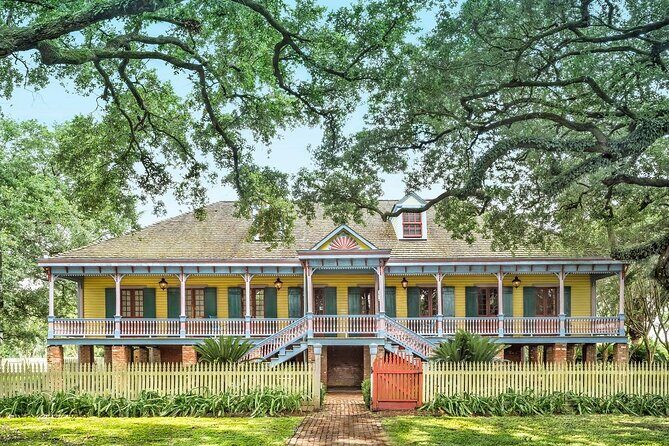
- Oak Alley’s live-oak avenue: 28 giant trees along a quarter-mile approach to the 1839 manor called Bon Séjour
- Laura Plantation’s document-based storytelling: tours built on 5,000 pages from French National Archives about free and enslaved families
- Seven generations of Creole residents: guided interpretation of family stories across time
- Ties to Br’er Rabbit folklore: West African stories linked to folklorist Alcée Fortier, recorded in the 1870s
- Evergreen’s intact plantation complex: 37 National Register buildings, including 22 slave cabins in their original double row layout
- Live Oak Society details you can see on site: 16 registered live oaks, with one tree’s girth measured at 23 feet
How the River Road route makes sense in 3.5 hours
This is the kind of plantation tour that works well when you don’t want to drive. You’re picked up within New Orleans city limits, and you’re brought out and back with a private transportation setup, which makes the experience feel calmer and more focused.
The format is also practical: one morning start at 9:00 am, then a tight schedule that prioritizes the big sites. Instead of rushing between dozens of stops, you get time on the grounds where you can actually see buildings, gardens, and the spaces used for daily work.
If you’re the sort of traveler who likes facts, you’ll probably appreciate the way the day is structured around specific places. Oak Alley sets the visual tone, Laura gives you a Creole lens, and Evergreen shows the larger plantation machinery in built form.
You can also read our reviews of more tours and experiences in New Orleans.



Oak Alley: the 1839 manor and that quarter-mile live-oak approach
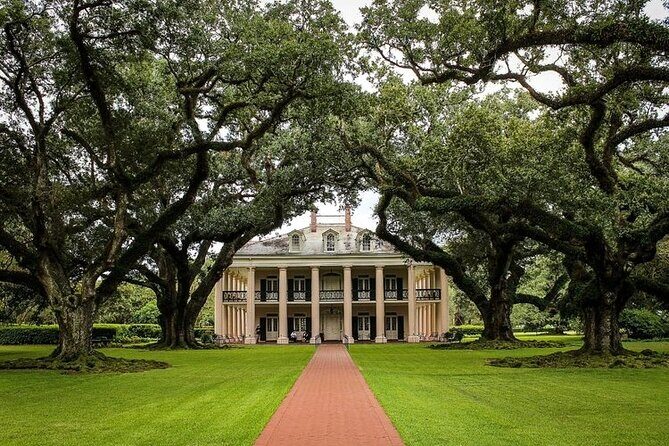
Your first taste of the River Road is the stop often associated with the name Oak Alley. The manor is called the Grand Dame of River Road, and the home was built in 1839 and originally named Bon Séjour.
Here’s the detail that makes this stop more than a quick photo: the approach is lined with a quarter-mile avenue of 28 giant, live oak trees. It was so recognizable that steamboat passengers gave it the Oak Alley nickname, and that kind of historical “seeing it from the water” connection is a nice way to anchor the rest of your day.
Even if you don’t spend hours here, I like that the stop gives you something visual before you get into deeper interpretation. Stand under the canopy for a moment, and you’ll start to understand why plantation homes were designed to impress—and why they often included the separate structures that supported forced labor.
Laura Plantation: Creole heritage through archives, buildings, and gardens
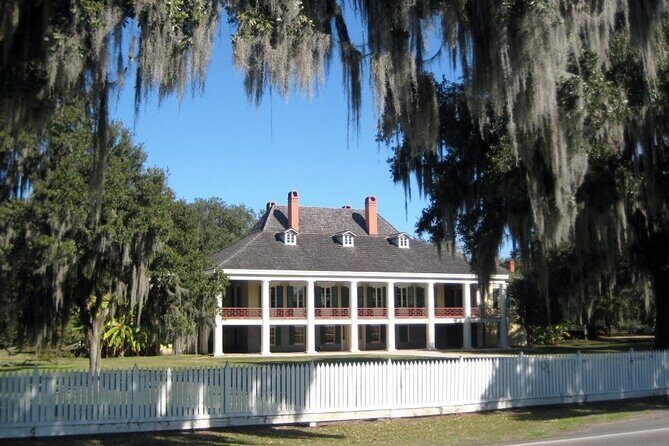
Laura Plantation is the first place on the schedule where the tour turns strongly interpretive. You’ll spend about 70 minutes on a guided tour, and that time includes admission.
What makes Laura different is the way the story is built. The tour is based on 5,000 pages of documents from the French National Archives that relate to the free and enslaved families who lived there. Then, the guide uses those sources to connect to real-life accounts across seven generations of Creole inhabitants.
On the grounds, you don’t just look at a single building and move on. Laura Plantation includes 11 structures listed on the National Register of Historic Places, including a newly restored Manor House, formal and kitchen gardens, a Banana-Land grove, plus authentic Creole cottages and slave cabins. For me, that mix matters because it lets you shift your eyes between “home” spaces and the working spaces that made the estate function.
The folklore connection: Br’er Rabbit and Alcée Fortier
Laura Plantation is also known for a specific thread of storytelling tied to West Africa. The home’s former slaves shared stories that were later connected to folklorist Alcée Fortier, and those stories were recorded at the slave cabins in the 1870s. They later gained wider popularity in English as Tales of Br’er Rabbit.
This part of the visit can be a powerful reminder that forced displacement didn’t erase cultural memory. You’re seeing how oral traditions survived, traveled, and got recorded—then reshaped for new audiences later.
You might not always expect a plantation tour to talk about folklore, but Laura does it in a way that feels connected to people, not just dates.
What to keep an eye on while you walk
Laura’s grounds invite you to notice contrasts: the manicured garden spaces versus the cottages and cabins, the manor’s restored status versus the working structures. When you’re listening to the guide, I’d suggest you also glance at how the site is organized spatially.
The kitchen gardens and formal gardens help you picture daily life and foodways. Banana-Land grove adds another tangible element, because it gives you something beyond the architecture—an idea of what was grown and where.





Evergreen Plantation: 37 registered buildings and the double row of cabins
Evergreen Plantation is where the physical scale becomes hard to ignore. This plantation complex has 37 buildings on the National Register of Historic Places, including 22 slave cabins in their original double row configuration.
That “double row” layout is key. It’s one thing to learn about slavery in theory, but it’s another to stand where the built environment shows how the system was arranged to support labor and control.
Live oaks you can measure, not just admire
Evergreen also leans heavily into its live oaks, and it offers specific, concrete details. According to the Live Oak Society of Louisiana, the property has 16 registered live oak trees, with some named after family members.
The largest is listed with a girth of 23 feet, and officials estimate the trees are about 300 years old. You can also spot how the trees shape the working yard: four huge live oaks shade the St. Joseph home’s backyard well.
I like that this stop doesn’t treat nature as decoration only. The trees are part of how water, shade, and daily routines fit into the plantation’s layout.
The sugar work traces: kettle, kitchen, and a narrow gauge railroad
Evergreen gives you multiple cues that point to how sugar production shaped the grounds. In addition to the cabins, you’ll see details like an iron syrup kettle listed as 10 feet in width and a detached kitchen.
There are also remnants of a narrow gauge railroad that carried sugar cane from the fields. Even if you only see pieces of it, that trace helps you connect the plantation’s fields to its processing areas instead of thinking of sugar as an abstract label.
The house itself: ventilation, rooms, and old cypress floors
If you pause in the St. Joseph home area, you’ll get more architectural context. Double-wide French doors are described as providing cross-ventilation for the home’s 16 rooms, and cypress plank floorboards are described as shining from decades of waxing.
This is another place where I think balance matters. You’re seeing the comfort choices of the house while standing near the reminders of labor. The contrast can feel uncomfortable, but it’s also why this kind of tour earns its time.
What you’ll learn: Creole life alongside the American slave trade
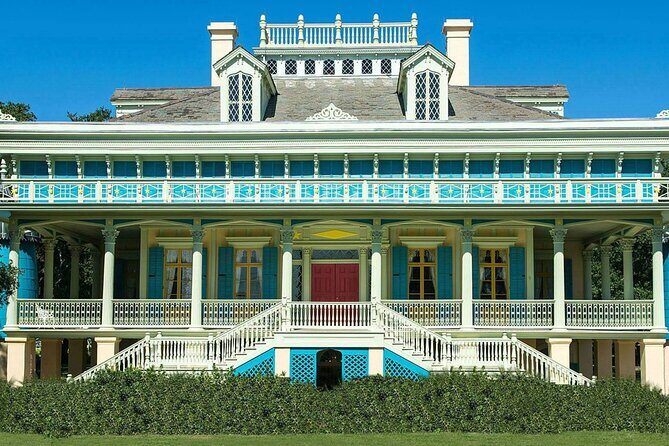
The day’s themes connect in a clear way: Creole heritage and plantation life on one hand, and the dark reality of enslavement and the American slave trade on the other. The highlight list signals it directly—expect education about the impact of the slave trade, plus walks through historic homes, cottages, gardens, and slave cabins.
I also like the way the tour’s tone comes through in guide choices. The experience has strong praise for guides such as Benjamin, described as friendly and helpful with solid historical knowledge, and also for storytelling from Pam, who’s noted as entertaining. When you hear a guide bring both human stories and clear facts, the sites start to feel less like “stuff you saw” and more like a coherent lesson.
Why this balance is valuable for your trip
Plantation tours can swing toward either aesthetic nostalgia or heavy-handed lecture. This format tries to hold both: it lets you observe architecture and grounds, then it anchors those visuals with accounts that include enslaved people’s lives and experiences.
That balance helps you avoid two common traps. First, you don’t just admire grand homes without context. Second, you don’t treat slavery as a separate topic that floats above the buildings you’re actually seeing.
Transportation, timing, and price: does $297.50 feel fair?
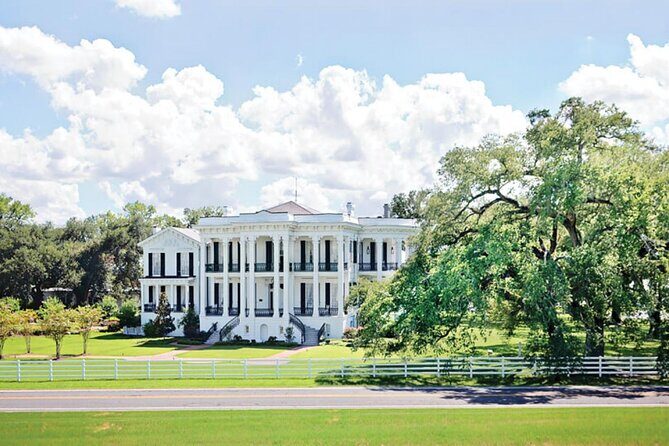
At $297.50 per person, this isn’t a budget excursion. Still, the price can look more reasonable when you break down what’s included.
You’re paying for private transportation from New Orleans hotels within city limits. You’re also getting a guided visit at Laura Plantation where the admission ticket is included as part of the 70-minute tour. Add in the time spent at Oak Alley and then on the Evergreen complex, and you’re basically buying a managed day rather than piecing together driving, parking, tickets, and guide interpretation yourself.
The duration matters too. At about 3 hours 30 minutes, you get a concentrated hit of major sites without losing your whole day to driving. It’s a good match for travelers who want plantations but also want to spend the rest of the time in New Orleans itself.
One more practical note: the tour is commonly booked about 62 days in advance on average. If you have a specific date in mind, I’d treat that as a sign to book early so you’re not staring at limited availability.
Who should book this tour (and who might want to choose differently)
This works best if you want a guided, organized history outing with no car stress. I’d especially recommend it if you like genealogy-style stories and place-based facts—Laura Plantation is built around documented family history and specific structures.
It’s also a strong fit if you’re comfortable with heavy topics. The tour explicitly includes discussion of slavery and the impact of the American slave trade, and the walking includes slave cabins at both the Laura and Evergreen sites.
If you’re someone who wants a purely scenic, light afternoon, this probably won’t be that. Even on a “beautiful grounds” day, the interpretation is serious, and the grounds themselves include reminders that can be emotionally heavy.
Practical notes before you go
Wear comfortable walking shoes. Between the historic paths and time in multiple settings, you’ll likely do more steps than you expect from a 3.5-hour tour.
Bring a small water bottle and keep a layer handy. River Road sites can feel hot and breezy, and the live-oak shade can swing between cool pockets and direct sun depending on where the group is moving.
Since this is in English, plan to follow the guide’s pace. If you’re traveling with anyone who prefers quieter sightseeing, you might consider bringing noise-canceling earplugs, but the tour is designed to be a talk-and-walk history experience.
Should you book this New Orleans plantation tour?
I think it’s a smart choice if you want two major plantation stops with real interpretation, plus a classic River Road opener at Oak Alley. You get a strong Creole lens at Laura Plantation, then a larger plantation complex at Evergreen where the slave cabins and plantation workings are clearly part of what you’ll see.
Book it if your trip schedule is tight and you’d rather let someone else handle transportation and timing. Skip it only if you’re specifically avoiding slavery-related content or if you want a relaxed, purely scenic outing.
If you’re drawn to the details—live oaks with measured girth, archival documents connecting to family stories, and a grounds layout that you can walk—this tour is built for that kind of interest.
FAQ
What is the duration of the New Orleans Plantation Tour with Transportation?
The tour lasts about 3 hours 30 minutes.
What time does the tour start?
The start time is 9:00 am.
Is hotel pickup included?
Yes. The tour offers pickup within New Orleans city limits.
Is this a private tour?
Yes. Only your group participates.
What language is the tour offered in?
The tour is offered in English.
Is there a mobile ticket?
Yes. Mobile ticket is included.
Does the tour include admission to Laura Plantation?
Yes. Laura Plantation’s tour is about 70 minutes and includes the admission ticket.
Is service animal access allowed?
Yes. Service animals are allowed.
Is it refundable if I cancel?
No. This experience is non-refundable and cannot be changed for any reason.