REVIEW · NEW ORLEANS
Walking the Tremé: A Self-guided Audio Tour of New Orleans
Book on Viator →Operated by VoiceMap Audio Tours · Bookable on Viator
Tremé tells its story on your own steps. This self-guided GPS audio tour helps you move block by block and starts the narration when you reach the right spot, so you’re not just hearing facts—you’re standing inside the scene. I especially loved the stop at the Backstreet Cultural Museum with its Mardi Gras Indian costumes and second line umbrellas, and the way the Mahalia Jackson and Louis Armstrong segments connect church, music, and neighborhood identity. One thing to watch: a couple of parts ask you to cross a highway that isn’t pedestrian-friendly, so slow down and use the safest crossing you can find.
At $9.99 per person for about an hour, the value is strong, especially because you get lifetime access and offline audio plus maps and geodata. You’re basically paying for a guided walking plan you can repeat later, not a one-time ticket.
The route stays in Treme, starting at 801 N Rampart St and ending at Saint Augustine Catholic Church on Governor Nicholls St. Bring your smartphone (it’s not included), and plan on steady walking with comfortable shoes—this is a neighborhood stroll, not a sit-down tour.
In This Review
- Key highlights worth your attention
- How the Walking the Tremé GPS audio tour works (VoiceMap style)
- Price and value: is $9.99 for an hour a good deal?
- Where the route starts and how the walk feels in Treme
- Stop by stop: what you’ll hear and what to look for
- Stop 1 at Saint Augustine: the War of the Pews story
- Backstreet Cultural Museum: Mardi Gras Indian costumes and second line umbrellas
- New Orleans African American Museum grounds and Tremé Villa Meilleur
- Mahalia Jackson Theater: gospel fame rooted in New Orleans
- Louis Armstrong Park: Satchmo’s early life in and around Treme
- Timing, comfort, and safety in the neighborhood
- When the app misbehaves: the one drawback you should plan for
- The narration’s angle: what you’ll get and what you might want more of
- Who this self-guided Tremé tour is best for
- Should you book Walking the Tremé?
- FAQ
- How long is the Walking the Tremé audio tour?
- How much does the tour cost?
- What language is the tour in?
- Do I need an internet connection during the walk?
- Do I need to bring a smartphone?
- Where does the tour start and end?
- Does the tour take place in Treme?
- Is the tour near public transportation?
- Are service animals allowed?
- What’s the cancellation policy?
Key highlights worth your attention
- GPS-triggered narration that matches what you’re looking at as you walk
- Backstreet Cultural Museum visuals: Mardi Gras Indian costumes, second line umbrellas, and photos
- New Orleans African American Museum grounds with Tremé Villa Meilleur’s original kitchen dependencies and varied home styles
- Mahalia Jackson Theater stop tying gospel fame back to New Orleans roots
- Louis Armstrong Park context for Satchmo’s early life just outside Treme
How the Walking the Tremé GPS audio tour works (VoiceMap style)
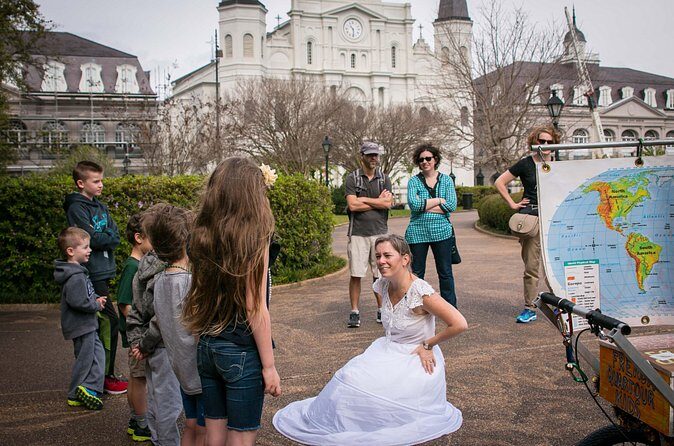
This is a self-guided walking tour powered by the VoiceMap app. You download the tour through the app, follow the on-screen directions to the start point, and then let the audio guide you as your location syncs with each stop.
What I like about this setup is how practical it feels in a city where you can easily lose time. Instead of juggling maps plus a guide plus your curiosity, you get directions to each key moment and audio that’s meant to kick in when you’re standing near it.
That GPS “start when you’re there” feature matters more than you’d think. One review noted that the system could detect where the listener was standing and start the story for that exact spot, which is exactly what you want when you’re trying to connect the words to the street in front of you.
Two practical notes for you:
- You’ll need a smartphone to run the app. It’s not included with the tour.
- Offline access is included (audio, maps, and geodata), which helps when New Orleans reception gets moody.
You can also read our reviews of more walking tours in New Orleans



Price and value: is $9.99 for an hour a good deal?
At $9.99 per person, you’re paying for a lot more than “some audio.” You get lifetime access to the Walking the Tremé tour, plus VoiceMap application access and offline materials. That means if you come back to New Orleans later, or you want to revisit Treme with a fresh mindset, the tour is already in your library.
For one of the best bargains in New Orleans sightseeing, the value here is simple: you’re getting guided interpretation of specific places instead of wandering with only general knowledge. And because it’s self-guided, you’re not stuck with the pace of a group.
Just be realistic about what’s not covered. Admission fees for any stops that charge are not included as part of this tour, and food/drinks and transportation are also on you.
Where the route starts and how the walk feels in Treme
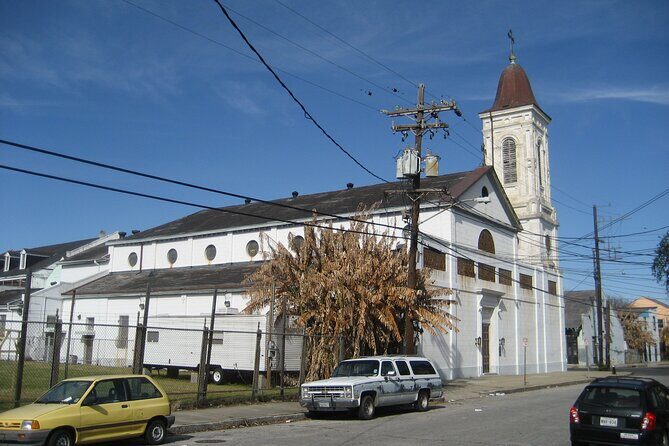
The tour starts at 801 N Rampart St (Treme) and ends at Saint Augustine Catholic Church, 1210 Governor Nicholls St. The overall experience is listed as about 1 hour, though in walking tours like this, your speed and curiosity can add a few minutes here and there.
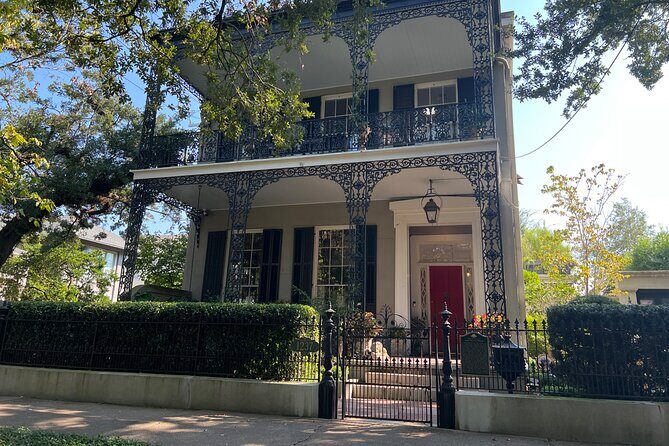
Because it’s centered entirely in Treme, you’re not doing a big drive-and-zoom itinerary. You’re meant to feel the neighborhood as you go—church blocks, museum grounds, and the cultural landmarks that shape the area’s identity.
The meeting points are also useful because you can plan your day around a clear start and end:
- Start near Rampart, then walk inward toward the church on Governor Nicholls.
- Finish with Saint Augustine Catholic Church, which gives you a “bookend” moment for the themes the audio is talking about.
One more small practical win: the tour is marked as near public transportation. So if you’re mixing it with other plans, it’s easier to stitch into your day without long detours.
Stop by stop: what you’ll hear and what to look for
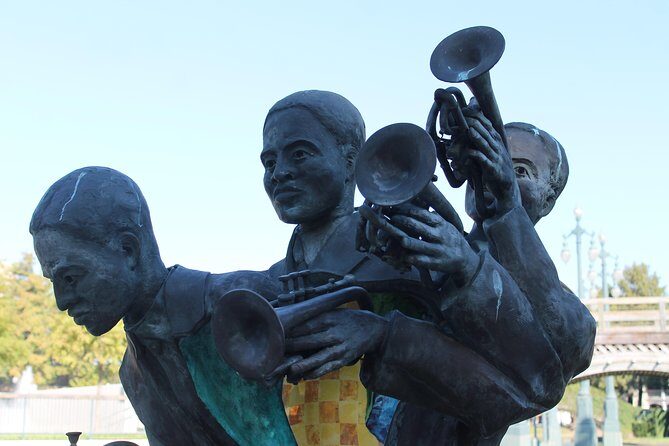
Stop 1 at Saint Augustine: the War of the Pews story

The first storyline on this route takes you back to the 1840s and the War of the Pews. The audio explains that in 1842, Creoles of color began purchasing pews inside Saint Augustine’s Church for their families’ Sunday worship. Then the news spread, and white people started a campaign of their own to buy family pews.
This isn’t just a trivia moment. It’s a strong way to understand how space and dignity played out in everyday life—how worship, family belonging, and social power got tangled in something as ordinary as a seat in church.
When you’re at this stop, look beyond the wow-factor and focus on the idea the tour is teaching. The words are designed to make you notice what “belonging” meant in public places—especially places where families returned every week.
You can also read our reviews of more guided tours in New Orleans






Backstreet Cultural Museum: Mardi Gras Indian costumes and second line umbrellas

Next, you get one of the tour’s most visually rewarding segments: the Backstreet Cultural Museum. The narration points you toward the museum’s collection of Mardi Gras Indian costumes, second line umbrellas, and photographs that document the culture as it has appeared on backstreets.
This stop works because costumes and umbrellas aren’t just decoration. They’re a language—how creativity, community identity, and performance show up in public. Even if you don’t spend a long time inside exhibits, the tour encourages you to look carefully and treat what you see as part of a living tradition.
Practical tip: if you want to go beyond what’s visible from outside the museum setting and into exhibits, check whether admission is required. Admission fees aren’t included in the tour price, so plan a little extra if you want deeper access.
New Orleans African American Museum grounds and Tremé Villa Meilleur

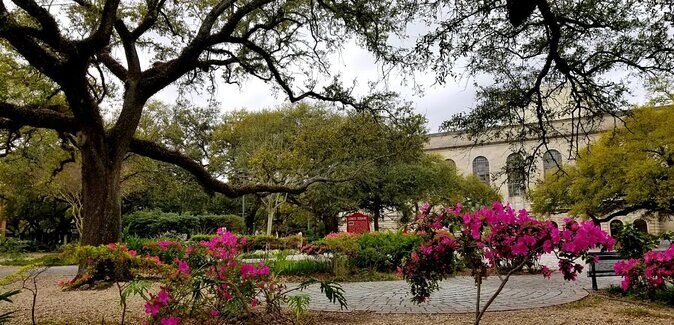
From there, the tour moves to the tree-shaded grounds of the New Orleans African American Museum. Here, the audio brings attention to Tremé Villa Meilleur’s original kitchen dependencies and homes that reflect a range of local building styles.
What I like about this stop is that it’s not only about big-name milestones. It’s about place—how everyday life was shaped by buildings, yards, kitchens, and the way homes were constructed.
If you’re the type who walks slowly and reads plaques, this section is likely to reward you. If you’re rushing, you might miss the point, because the tour is nudging you to see the neighborhood’s everyday architecture as a kind of historical record.
Mahalia Jackson Theater: gospel fame rooted in New Orleans

Then comes Mahalia Jackson. The audio explains that after she cut the highest-selling gospel song in history, she took her place on the international stage—but she never forgot her New Orleans roots.
This is a smart change of pace in the tour because it connects neighborhood identity to global influence. You’re reminded that the city didn’t just produce local performers; it produced artists whose voices traveled far—while staying tied to home.
When you arrive at this stop, take a minute to look at the theater setting and let the story connect. The point isn’t to treat Mahalia Jackson as a museum exhibit. The point is to understand how her New Orleans background helped shape the way she sang and carried gospel music forward.
Louis Armstrong Park: Satchmo’s early life in and around Treme
The final major cultural anchor is Louis Armstrong Park. The narration focuses on Armstrong’s nickname Satchmo and also Pops, and it places his birth in 1901 just outside Treme.
The story also frames his upbringing among churchgoers, hustlers, pimps, and musicians. That mix is important. It tells you Armstrong’s talent didn’t grow in isolation—it grew in a neighborhood where music and survival skills were both part of the daily rhythm.
This stop works well for listeners who like to connect music to geography. If you’ve heard Armstrong’s recordings for years, walking through this area with the audio’s context can make the story feel more grounded and human.
Timing, comfort, and safety in the neighborhood
This tour is set up for about one hour, so you don’t need to spend half a day zigzagging through New Orleans. Still, it’s a walk, and Treme can involve uneven sidewalks and tight crossings.
The biggest safety note is tied to the tour design itself. There are two sections that request you to cross a highway that isn’t made for pedestrian crossing. That means you should treat those moments like a careful street-crossing challenge, not a routine stop.
Here’s how to make that easier:
- Don’t rush the audio. Pause when you need to.
- If a crossing feels sketchy, wait for the safest gap in traffic and don’t force a move just because the narration says you’re at the right spot.
Also, bring a charged smartphone. Offline audio helps, but a low battery can still end your tour early.
When the app misbehaves: the one drawback you should plan for
Self-guided tech is usually smooth, but it’s still tech. One review described a situation where the tour wouldn’t start at the beginning location, freezing on the download page even with full service. That’s the kind of issue that can ruin your mood fast.
My advice is simple:
- Start the download before you set out, if you can.
- If you’re already at the start point and it freezes, take a breath and give it a few tries, then contact support if needed.
VoiceMap’s support contact shows up in the provider response in one of the experiences shared: [email protected]. If something really locks up, that’s the fastest path to help.
The narration’s angle: what you’ll get and what you might want more of
This audio tour clearly tries to connect major figures and cultural landmarks to the neighborhood’s identity. You get stories focused on church life, Mardi Gras Indian culture, museum grounds, and music legends—Mahalia Jackson and Louis Armstrong in particular.
Still, there’s a caution worth mentioning. One critique said the tour can feel softened or limited in perspective, and that it doesn’t fully wrestle with how the neighborhood relates to the park setting that visitors experience (including the idea of being physically gated out). That doesn’t make the tour wrong—it just means your expectations matter.
If you want a narration that focuses on hardship and power imbalance in a sharper, more confrontational way, you might feel the audio stays gentler than you’d like. In that case, I’d pair this with another perspective source before or after your walk so you get both the cultural spotlight and the tougher context.
Who this self-guided Tremé tour is best for
This tour is a great match if you:
- Like walking but hate waiting around for a group
- Want GPS-triggered audio instead of reading everything from plaques
- Care about music, church culture, and neighborhood identity
- Want a budget-friendly way to get real interpretation of Treme’s key sites
It may not be the best match if you:
- Get easily frustrated with phone apps and GPS
- Prefer tours that come with a live guide who can answer questions
- Are looking for nonstop street-level political debate rather than cultural storytelling
Should you book Walking the Tremé?
Yes, if you want a low-cost, high-meaning walk through Treme with audio that connects specific places to deeper themes—family worship at Saint Augustine, Mardi Gras Indian artistry at Backstreet Cultural Museum, museum grounds tied to Tremé Villa Meilleur, and the Armstrong and Mahalia Jackson links to New Orleans music.
Book it with two expectations set correctly:
- You’re doing a self-guided audio walk, so bring a charged smartphone and take care at the highway crossing sections.
- The narration is strong for cultural and personal context, but if you want the sharpest critical edge on every theme, you may want to supplement your learning with other sources.
If that sounds like your style, this is an easy “yes.” For $9.99, you’re buying a guided route you can replay—and a way to see Treme with your brain switched on.
FAQ
How long is the Walking the Tremé audio tour?
It’s listed as about 1 hour (approx.).
How much does the tour cost?
The price is $9.99 per person.
What language is the tour in?
The tour is offered in English.
Do I need an internet connection during the walk?
Offline access is included, including audio, maps, and geodata.
Do I need to bring a smartphone?
Yes. A smartphone is not included.
Where does the tour start and end?
It starts at 801 N Rampart St, New Orleans, LA 70116, USA, and ends at Saint Augustine Catholic Church, 1210 Governor Nicholls St, New Orleans, LA 70116, USA.
Does the tour take place in Treme?
Yes. The tour takes place in Treme.
Is the tour near public transportation?
The tour is listed as near public transportation.
Are service animals allowed?
Yes, service animals are allowed.
What’s the cancellation policy?
Free cancellation is available. You can cancel up to 24 hours in advance for a full refund, and within 24 hours there is no refund.