REVIEW · NEW ORLEANS
Night Cemetery Insiders Bus Tour in New Orleans
Book on Viator →Operated by NOLA GhostRiders · Bookable on Viator
New Orleans buries stories, not bodies. This night cemetery tour turns a dark block into a living history lesson, with a guide who actually knows how to tell it. You sit back on the bus, then step out to see how locals honor the dead in ways that Catholic cemeteries don’t always look like.
I like two things most. First, the focus on Masonic tombs gives you a side of New Orleans you’ll miss if you only chase the famous Catholic rows. Second, the tour connects burial customs to real events, including Hurricane Katrina, instead of treating cemeteries like spooky backdrops.
One possible drawback: if you’re mainly hunting for jump-scare ghost stories, you may be disappointed by how much time the guide can spend on the groups behind the monuments. I also suggest planning for uneven ground once you’re inside the cemeteries.
In This Review
- Key things to know before you go
- Entering the right mood: a night cemetery bus tour in New Orleans
- From Voodoo Tavern to the cemeteries: how the timing and route feel
- Masonic Temple Cemetery #2: square and compass symbolism in the dark
- The Katrina connection at Charity Hospital Cemetery and the Odd Fellows Rest
- What you’ll learn: burial traditions, myths, and the Katrina aftermath
- The pace and your feet: what to wear and how much walking to expect
- Price and value: is $30 worth it for a two-hour night tour?
- Guide style really changes the experience
- When this tour is the best fit
- Should you book this Night Cemetery Insiders Bus Tour?
Key things to know before you go
- Bus ride + guided stops: You get transportation and narration, not a self-guided wander.
- Masonic design details: Expect symbolism like the square-and-compass layout echoed in the grounds.
- Katrina memorial time: The tour’s second cemetery portion includes paying respects connected to Katrina.
- Smaller group size: Max 32 people keeps it easier to hear your guide at night.
- Guide style can swing the vibe: Some guides lean heavy on Freemasons; others bring more ghost-style storytelling.
Entering the right mood: a night cemetery bus tour in New Orleans
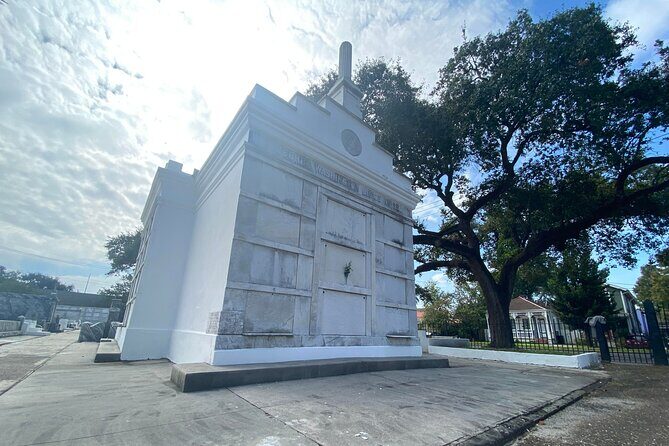
A night tour in New Orleans works because cemeteries here aren’t quiet “out-of-the-way” places. They’re built landmarks, full of architecture, family decisions, and cultural rules about remembrance. When you visit after dark, the spacing, shadows, and tight lanes stop feeling like just “pretty stone” and start feeling like a system—almost like a neighborhood you’re walking through, with its own way of talking.
I also like that this tour uses a bus as the connector. You’re not stuck doing long taxi hops between sites, and you don’t lose your momentum to getting lost. Instead, you arrive, step in, listen, and then move on.
Finally, the price makes sense for what you’re getting: a guided tour format with transportation, plus admission covered for at least the first cemetery stop. At $30 per person for about two hours, it’s a solid use of an evening, especially if you’re short on time.
You can also read our reviews of more evening experiences in New Orleans


From Voodoo Tavern to the cemeteries: how the timing and route feel
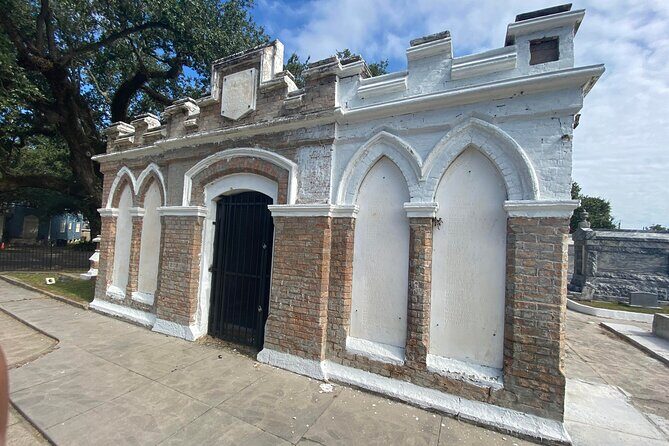
The tour starts at Voodoo Tavern and PoBoys, 1140 Decatur St. It ends back at the same meeting point, so you don’t have to solve the “where do we regroup” puzzle after the last graveyard moment.
Plan to arrive about 30 minutes early. That buffer matters because it’s in the middle of the French Quarter area, where foot traffic and late-night distractions are real. Parking nearby is limited, so walking or using public transit is the easier path.
You’ll likely feel the rhythm as two main segments. The first cemetery stop is timed around 40 minutes and includes the admission ticket. After that, you’re back on the bus and then out again for the second cemetery portion, which is where the Katrina connection comes in.
Group size caps at 32, which helps. You’re not elbow-to-elbow fighting for line-of-sight around monuments, and the guide can still shape the story instead of just reciting names.
Masonic Temple Cemetery #2: square and compass symbolism in the dark
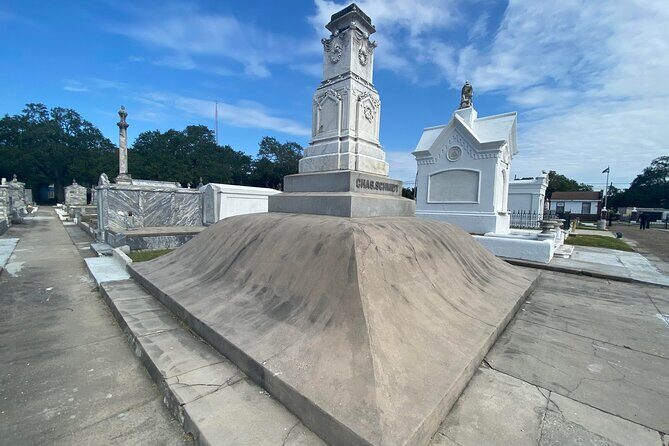
The first stop is Masonic Temple Cemetery #2 (with a guided, about-40-minute entry). This cemetery matters because it feels different from the Catholic cemeteries that dominate most first-time New Orleans lists. Instead of the familiar style, you get a space shaped by the Masons’ world.
Here’s what’s special about this cemetery layout. It sits across two oddly shaped city blocks, forming a triangular plan, with Conti Street bisecting it. The internal walkways keep that angular feel, and the overall geometry echoes the Masonic emblem of the square and compass. If you like symbolism you can actually see—not just read about—this is a great stop.
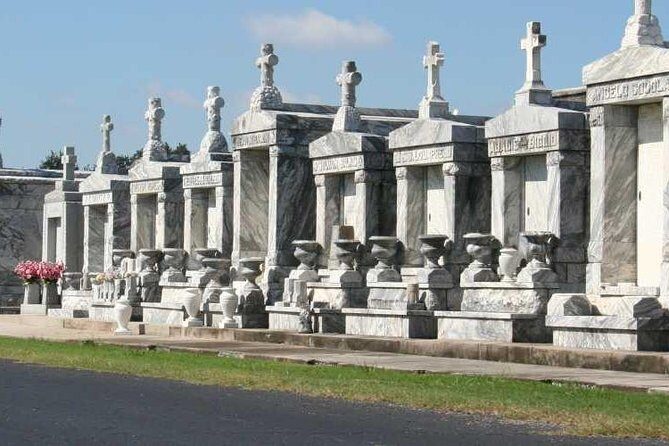
You’ll also notice how the tombs are arranged. The monuments sit compactly in rows parallel to Bienville Street, and there’s a wider paved promenade running through the center. That central walkway matters at night because it helps you move between sections without constantly squeezing around tomb corners or stopping where photos get awkward.
Another detail I’d never skip: the cemetery’s boundaries. Cast-iron picket fences enclose distinct areas, and oak allées line the northern and western edges. Those oak lines and fence shapes create a kind of framing effect, so even a quick glance down a row can feel staged.
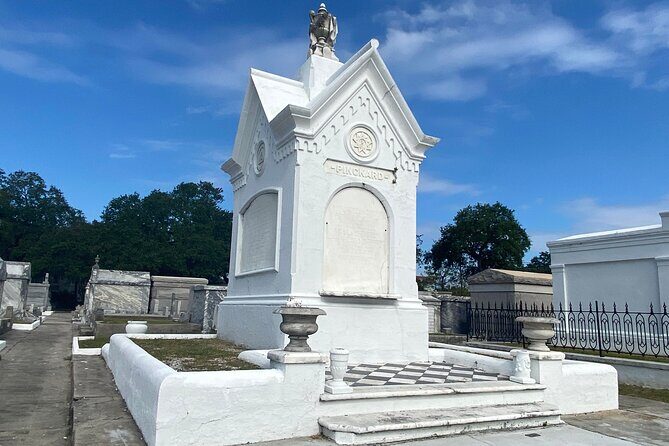
Why this stop is worth your time: it gives you a window into how Masonic communities pooled resources to buy large group tombs. That communal approach explains why some tombs look more elaborate and crowded than you’d expect from a typical family plot.
The Katrina connection at Charity Hospital Cemetery and the Odd Fellows Rest
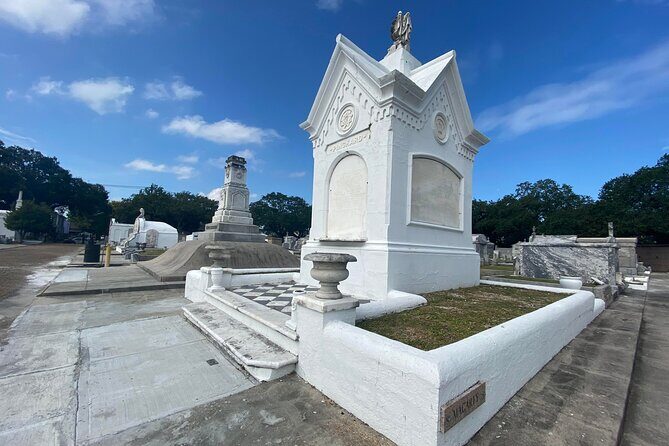
The second cemetery portion ties burial practices to major historical events, especially Hurricane Katrina. The tour’s FAQ also points to a stop at the Katrina Memorial at Charity Hospital Cemetery, plus a visit to the Odd Fellows Rest—for members of a little-known society.
Charity Hospital’s cemetery portion is also described as connected to the aftermath of a yellow fever outbreak. That connection is important because it keeps the story grounded: cemeteries aren’t just about death, they’re about public health disasters and how communities rebuild their memory afterward.
At the Hurricane Katrina memorial area, you’ll have time to pay respects. This is the moment where the tour shifts from “history puzzle” to something more emotional. I like that the tour doesn’t treat Katrina as a distant headline. Instead, it links the storm’s impact to the physical reality of graves and monuments.
And then there’s the Odd Fellows Rest. Even without getting too “myth mode,” it adds texture to your understanding. New Orleans burial spaces hold more than one group’s traditions, and this is a clear example of how many identities lived side by side here.
One practical note: since you’ll be walking inside cemeteries with uneven ground, wear shoes you trust. If your feet start hurting, the storytelling won’t land the same way.
What you’ll learn: burial traditions, myths, and the Katrina aftermath
This is not just a sightseeing loop. The storytelling is a core part of the experience—especially the way your guide connects the monuments to customs, rumors, and real events.
In the Masonic cemetery, the narration tends to focus on how the group shaped tomb-building and placement. The more a guide enjoys the Masonic angle, the more you’ll understand why those square-and-compass shapes aren’t decorative extras. They’re signals of identity.
In the Charity Hospital cemetery portion, you’ll hear about the lasting effects of Katrina and how those effects show up in the memorial spaces. You may also hear about myths and superstitions—one standout account mentions myths, superstitions, and ghost pictures as part of the guide’s presentation.
That matters because New Orleans cemeteries invite two kinds of attention at once. You can look like a tourist, scanning names and dates. Or you can look like a local, listening for the cultural logic behind the stone.
I’d call this a good choice if you like your spooky with context. You get the eerie atmosphere, but it’s tied to why people built what they built.






The pace and your feet: what to wear and how much walking to expect
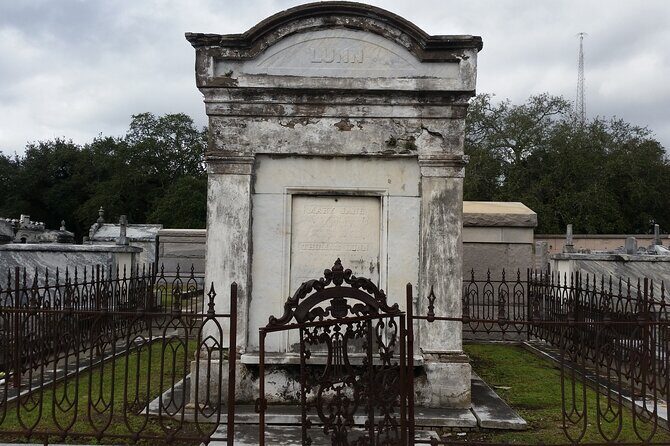
This tour has a fair amount of walking, but it’s described as mostly on flat surfaces. Still, “mostly flat” is not the same as “easy.” Cemetery ground can shift underfoot, and paths can be uneven depending on where you’re routed and how many stops your group has time for.
So go simple:
- Comfortable shoes are non-negotiable.
- Layer clothing helps because night temperatures can swing.
- Bring a hat or sunglasses if you’re coming straight from late-day heat and still need eye protection in the dark.
Family friendly? The tour is described as appropriate for ages 6 and above, but it includes morbid tales that can be scary for younger kids. If you’re bringing children, consider your kid’s comfort with darker stories and keep expectations flexible.
Wheelchair access isn’t listed as available because of uneven ground inside the cemeteries. If mobility is a concern, plan on sitting out the parts where you can’t safely walk.
Price and value: is $30 worth it for a two-hour night tour?
At $30 per person for about two hours, the value comes from the combination:
- bus transportation between stops,
- a live guide (not audio-only),
- and admission included for the first cemetery stop.
A lot of New Orleans “night” options cost more once you factor in separate admissions or repeated ride-share trips. Here, the format is designed to keep you moving efficiently in the evening.
Also, max 32 travelers is a quiet win. You get a group size that’s large enough to feel sociable, but small enough that the guide can still shape what you notice.
Is it cheap? Not exactly. But it’s a fair price for a guided evening in places you wouldn’t always choose to visit on your own—especially if you like cemeteries that have more than one cultural layer.
Guide style really changes the experience
The biggest swing factor isn’t the cemeteries. It’s the guide’s storytelling balance.
One guide named Kendall gets high praise for being entertaining and caring about New Orleans. His narration is described as especially strong around Katrina, myths, superstitions, and even ghost-photo style presentations. Another account highlights Trish as knowledgeable and fun, and mentions animated delivery plus a sense that the tour works well at night.
Henry is also described positively, with interesting information and a fun guide presence. The same kind of feedback usually comes with a tweak request: add more ghost stories if that’s what you want most.
Then there’s the other side: a guide called Bob the undertaker is mentioned in a low-rating review for spending a long stretch on Masons and related groups, and that person’s group felt the tour didn’t deliver enough cemetery time for the expectations. The lesson is simple: this tour can lean “Freemason deep explanations,” depending on the guide.
My advice: if you love context about why these tombs look the way they do, you’ll probably be happy. If you mainly want maximum spooky content, be ready for variations in what your guide prioritizes.
When this tour is the best fit
This night cemetery bus tour is a great match if you:
- want a guided New Orleans cemetery experience with practical transportation,
- like learning the cultural “why” behind tomb design and group monuments,
- are interested in Katrina’s memorial impact, not just general trivia,
- enjoy a night atmosphere where details show up differently.
It’s also a smart “evening use of time” option if you’re flying in late or have only a couple hours after dinner. One review even points out a late-night Thursday tour (around 11pm) as fun and useful for making the most of an evening.
Where it might not fit as well: if you’re counting on two cemeteries with lots of spooky beats in every single departure, remember guide style can shift the emphasis, and time is finite.
Should you book this Night Cemetery Insiders Bus Tour?
I’d book it if you want a guided evening that mixes Masonic cemetery design with a Katrina-centered memorial stop, in a format that saves you time and stress. The $30 price feels fair when you consider bus transport, live narration, and included admission at the first stop.
If you’re the type who needs lots of ghost stories on demand, do a quick self-check. This tour can be spooky, but it’s also built around burial traditions and group history. You’ll get the best experience when you’re open to both stone detail and the stories that explain it.
And if you’re going with family, keep the age guidance in mind: it’s suitable from age 6, but the tales can feel heavy. Plan your footwear, bring layers, and show up ready to listen.