REVIEW · NEW ORLEANS
Oak Alley Plantation and New Orleans City and Cemetery Tour
Book on Viator →Operated by Louisiana Tour company · Bookable on Viator
One day, two worlds of New Orleans. I like the photo-power of Oak Alley with its 28 oak trees, and I love the clear lesson at St. Louis Cemetery No. 3 on above-ground, reusable tombs. The only real catch is time: it’s an 8.5-hour day with a lot of seat time, and schedules can stretch when traffic or street closures slow things down.
For $125, you’re paying for hotel pickup/drop-off plus admission at both the plantation and the cemetery. Food and drinks aren’t included, but you do get a free hour at Oak Alley grounds to use what’s there (including a restaurant and gift shop). This is a great fit if you want major New Orleans highlights without having to coordinate multiple outings.
In This Review
- Quick highlights before you go
- The timing that matters: 8.5 hours, pickup windows, and seat time
- Oak Alley Plantation: 28 oak trees, a Greek Revival house, and a guided walk
- New Orleans highlights by road: Jackson Square to the Cabildo
- St. Louis Cemetery No. 3: above-ground tombs and the reason behind the tradition
- St. Charles Avenue and the Garden District: old homes and specific names
- City Park and Dueling Oaks: scenic stops plus an old-home corridor
- Creoles, Katrina, and what the guide’s narration gives you
- Value check: what you get for $125 (and what you still need to budget)
- Logistics that can make or break your experience
- Who should book this Oak Alley + New Orleans city and cemetery tour?
- Should you book it? My practical take
- FAQ
- What time does pickup start?
- Where do I need to be for the pickup?
- How long is the Oak Alley Plantation portion?
- Is admission included for St. Louis Cemetery No. 3 and Oak Alley?
- Is lunch included?
- Are service animals allowed?
Quick highlights before you go
- Oak Alley’s 28 oak trees create a straight-up, movie-quality approach to the Greek Revival house
- St. Louis Cemetery No. 3 explains why locals bury the dead above ground in reusable tombs
- A full city loop covers Jackson Square, St. Louis Cathedral, the Cabildo, and a long stretch of French Quarter landmarks
- Garden District + St. Charles Avenue drive-by views include Ann Rice’s home and Governor Claiborne’s Daughters
- City Park area views include the route toward Dueling Oaks plus old homes along Esplanade Avenue
- Air-conditioned mini-bus keeps you comfortable while the guide narrates Creole life and Katrina-affected areas
The timing that matters: 8.5 hours, pickup windows, and seat time

This is an 8 hours 30 minutes kind of day, starting with hotel pickup that begins at 8:15 AM. Pickup runs in a 30-minute window (you could be picked up anywhere from about 8:15 to 8:45), so don’t plan to “see what happens” later. If you’re not out front when the pickup window starts, the bus can leave without you.
You’ll spend a lot of the day on a comfortable air-conditioned mini-bus with a licensed city guide narrating as you move. The good news: the guide points out where things are so you can decide what to revisit later. The less-fun news: between traffic, street restrictions, and other groups on the road, the day can run long.
There’s also a short built-in break—about 20 minutes for restroom/snack use partway through. If you’re prone to getting hungry fast, plan ahead since lunch isn’t included.
You can also read our reviews of more city tours in New Orleans



Oak Alley Plantation: 28 oak trees, a Greek Revival house, and a guided walk
Oak Alley is the star attraction, and it starts the second you see the oak-lined river road approach. You’ll experience that signature look: 28 evenly spaced huge oak trees running from the road to the plantation house. It’s a slow visual build, and it’s why people come even if they’re not deep into plantation history.
The house dates to 1837 and is in Greek Revival style. Expect a guided house tour led by guides in period-style clothing, with the focus on the plantation’s story and how daily life worked. There’s also walking involved, but the good detail here is that the main house is close to the rest of the useful areas—about one block between the house and the restaurant/souvenir area. Benches are set along the path under the oaks, which helps if you need to pause.
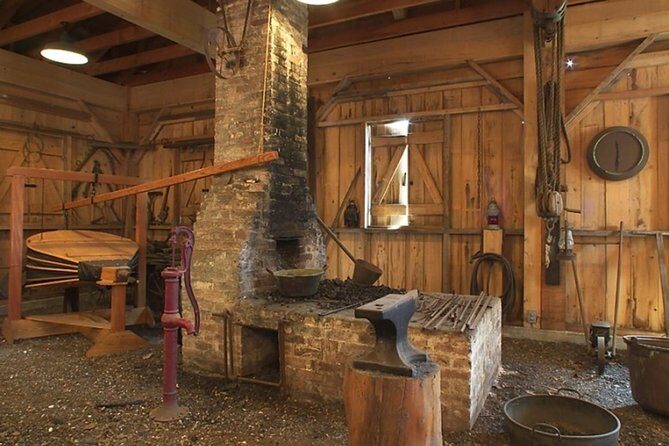
After the house portion, you get about a free hour to spend how you want. That’s where the experience can pay off for you personally: if you want photos, you can do that. If you want time to browse, the grounds have an on-site blacksmith shop, plus a restaurant and souvenir shop.
One review also mentioned enjoying the gift shop and even catching a moment where someone makes pralines, which is the kind of small on-site touch that turns a stop into a memory.
New Orleans highlights by road: Jackson Square to the Cabildo
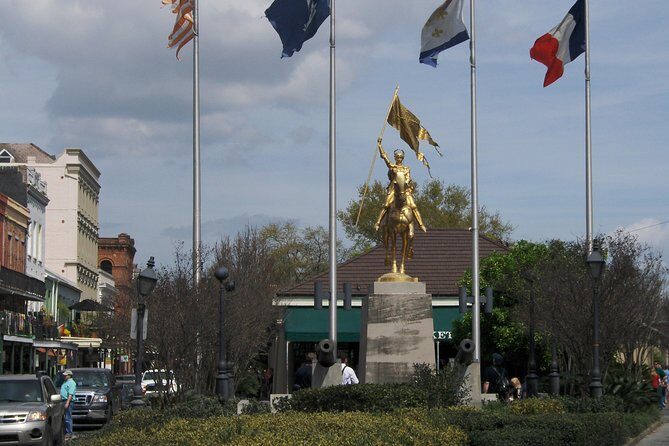
Once you’re back in the mini-bus groove, the city portion gives you a high-impact orientation. You’ll get an overview of Creole history and culture, plus a look at parts of the city affected by Katrina’s flood waters. It’s not a “sit in one museum” experience. It’s a “learn the layout and the big story while you move” kind of tour.
Key landmarks along the route include Jackson Square, which is tied to where the Louisiana Purchase was made. You’ll also pass St. Louis Cathedral, described as the oldest cathedral in North America. Even if you’ve seen photos, seeing it from the street adds scale—this is where New Orleans feels like a real living city, not just a postcard.
You’ll pass the Cabildo, the Spanish colonial city hall, which helps connect New Orleans to a wider map of empires and rule. Another stop area includes an outdoor market stretching about six blocks—a good signpost if you want to come back and walk it later at your own pace.
During this phase, your guide also gives an overview of the French Quarter, pointing out areas to explore. That’s important: a driving tour can’t replace walking the neighborhood, but it can help you decide where walking is worth your time.
St. Louis Cemetery No. 3: above-ground tombs and the reason behind the tradition

The cemetery visit is short—about 30 minutes—but it’s one of the best structured parts of the day. St. Louis Cemetery No. 3 includes an admission ticket and a guided explanation of New Orleans’ unique above-ground burial tradition.
Here’s the core takeaway: in New Orleans, people bury the dead above ground in re-usable tombs. The guide explains that this wasn’t really a preference for display—it was necessity, shaped by local conditions. That explanation changes how you read the cemetery. You stop seeing it as just “weird and spooky old rocks,” and you start seeing it as practical adaptation.
If cemeteries are your thing, you’ll likely want more time than you get. If you’re not a cemetery person, that’s still okay—the guide keeps it focused and the time limit helps you avoid the “why am I standing here so long” feeling.
St. Charles Avenue and the Garden District: old homes and specific names

Next comes the American side of New Orleans, where the mood shifts toward elegant streets and large homes. You’ll drive slowly down St. Charles Avenue and see what the Garden District looks like from the road.
Some of the house names mentioned along the way make the views feel more personal. You’ll pass Ann Rice’s home and the Governor Claiborne’s Daughters home (circa 1840). There’s also the Elms Mansion and other architecture that shows how styles changed over time.
This part is best for you if you like two things: (1) seeing real neighborhoods up close and (2) learning how architecture reflects wealth, power, and changing taste. It’s also a nice break from the more solemn parts of the day, since the vibe becomes lighter and more scenic.
The downside? You’re viewing from the bus. If you want to step onto sidewalks and explore block by block, this won’t replace a self-guided walk through the Garden District.






City Park and Dueling Oaks: scenic stops plus an old-home corridor

As you head toward City Park and the route described toward Dueling Oaks, you’ll also see 100-year-old homes along Esplanade Avenue. That detail matters because it adds a “how the city grew” lens while you’re moving through a different part of town.
This is one of those segments that feels like a travel cheat code: you get views that would take time to plan separately. And because the guide is narrating, you’re not just looking at homes—you’re learning what to pay attention to.
This is also the area where your day connects back to the cemetery lesson and the short guided stops. If you want to stretch your legs beyond the brief breaks, your best bet is to use the time at Oak Alley’s grounds, since that’s where you get your longest open window.
Creoles, Katrina, and what the guide’s narration gives you
A big reason this tour works for many first-timers is that the narration ties landmarks to story. You get an overview of Creole history and culture, plus references to areas affected by Katrina’s flood waters.
Why that matters: you can’t fully understand New Orleans by only touring buildings. The city has a layered identity—different groups, different languages, different rules, and a lot of resilience after disasters. A driving tour is one way to get those connections fast, without losing half your day to “getting there” and “waiting in lines.”
That said, this kind of guided narration can swing based on the day and the guide’s style. One traveler described the city portion as rushed and mentioned an interaction around tipping that felt uncomfortable. I can’t predict how your guide will be, but I can tell you how to avoid surprises: keep the day pleasant, be respectful, and have a small amount set aside for gratuities.
Value check: what you get for $125 (and what you still need to budget)

At $125 per person, the value is strongest when you count what’s included. The tour includes hotel pickup and drop-off, and it includes admission tickets for both major parts: Oak Alley and St. Louis Cemetery No. 3.
What’s not included is everything food-and-drink related—so you’ll want to budget for your meals. The good part is that Oak Alley’s grounds include a restaurant, and you’ll have that free hour to use the on-site options.
If you’re traveling with kids or you’re short on time, the included admissions plus transportation usually beats piecing things together. If you’re the type who likes to spend extra time lingering in every building, you may feel the schedule pressure. More than one review hinted that the day can feel time-tight in the city portion, and some people wanted longer time at the plantation grounds.
Logistics that can make or break your experience

This day is built around coordination: pickup timing, mini-bus seating, and a shared route with other tour groups. That’s why a couple of practical points matter.
First: make pickup easy. Be out front during the pickup window start, not just “near the lobby.” The bus is identified as Alert Transportation, so watch for that label.
Second: be prepared for a “group day” pace. The tour notes that you may stay aboard for the duration, but real-world days can include vehicle changes. Some reports mentioned switching to different buses for the city portion depending on how groups were routed that day. It’s not ideal, but it’s manageable if you go in expecting the flow to be handled for you, not perfectly for you.
Finally: walking at the plantation is part of the deal. There’s walking required for the Oak Alley house tour, and while the distances are short between key areas, you still want to wear comfortable shoes.
Who should book this Oak Alley + New Orleans city and cemetery tour?
Book this if you want:
- A first-timer-friendly way to see major New Orleans landmarks
- A day that mixes sightseeing with a focused cemetery lesson
- A guided structure that saves planning time while you learn what matters
It may not be the best match if you want:
- A slow, museum-style plantation visit where you can wander every building freely
- Maximum flexibility in the cemetery time (it’s about 30 minutes)
- A day with minimal bus time (this is very much a driving-and-narration format)
Should you book it? My practical take
If you’re in New Orleans for a short stay and you want Oak Alley plus the key city sights in one go, this is a smart way to spend the day. The included admissions and hotel pickup/drop-off make it feel like a complete package, not just a ride to two attractions.
My main caution is pacing. You will be moving a lot, and you don’t get long, unstructured time at every stop. If that sounds like your nightmare, consider booking pieces separately. If that sounds like what you want—major sights, clear stories, and a day that’s handled for you—then this is an easy yes.
FAQ
What time does pickup start?
Pickup starts at 8:15 AM, and you’ll be scheduled in a pickup window that can run from about 8:15 AM to 8:45 AM.
Where do I need to be for the pickup?
You must be out front of your location at the beginning of the pickup window. If you’re not there, the bus may be forced to leave.
How long is the Oak Alley Plantation portion?
The Oak Alley stop is listed as 2 hours, with the house tour included and a free hour to use how you choose on the grounds.
Is admission included for St. Louis Cemetery No. 3 and Oak Alley?
Yes. Admission tickets are included for St. Louis Cemetery No. 3 and Oak Alley Plantation.
Is lunch included?
No. Food and drinks are not included.
Are service animals allowed?
Yes. Service animals are permitted, while emotional support animals are not permitted.