REVIEW · NEW ORLEANS
Small Group Local’s Guide to the French Quarter Tour
Book on Viator →Operated by Unique NOLA · Bookable on Viator
Street stories in the French Quarter start here. This 2-hour walking tour gives you a local view of New Orleans’ most famous blocks, without turning it into a lecture. You’ll hop between key landmarks like Jackson Square and the St. Louis Cathedral, with guide stories that connect the dots between what you see and what came before.
Two things I really like: it’s a tight route that hits the Quarter’s big-name sights in one go, and the small group size (max 15) keeps it feeling human, not like you’re herding cats. I also like that the tour is built around walking, so you absorb the vibe block by block instead of just snapping photos from a distance.
One consideration: the exact pacing and which side streets feel included can vary by departure, so if you’re on a tight schedule, ask your guide how closely the route matches the listed stops and confirm where you’ll end.
In This Review
- Key things I’d circle before you go
- Why this 2-hour French Quarter walk makes sense
- Meeting at 815 Toulouse St and timing your best experience
- Jackson Square: the Quarter’s anchor point for stories
- Bourbon Street isn’t just party time
- The French Quarter stretch: seeing what you miss
- Royal Street: where history keeps showing up
- Passing the Pharmacy Museum: the medical history detour
- St. Louis Cathedral: faith tied to the American story
- Cabildo: rebuilding after a fire
- What your guide brings to the walk (and why it matters)
- Foot-friendly routing, sidewalks, and avoiding schedule headaches
- Value check: is $37 worth it?
- Who this French Quarter tour fits best
- Should you book this Small Group Local French Quarter tour?
- FAQ
- How long is the French Quarter tour?
- How much does it cost?
- Where does the tour start?
- Is the tour offered in English?
- Do we need admission tickets for the stops?
- What is the cancellation policy?
Key things I’d circle before you go
- Small group, big orientation value: max 15 travelers, so you can actually ask questions while you walk.
- Major landmarks, ordered well for first-timers: Jackson Square, Bourbon Street, Royal Street, then Cathedral and Cabildo.
- Bonus stop for the medical history angle: you pass the Pharmacy Museum and get the stories, not just the signs.
- Designed for easy on-foot exploring: short stops, frequent “look closer” moments.
- English tour with mobile ticket: simple entry, and you get a confirmation at booking.
- Popular enough to sell out: booked about 27 days in advance on average, so don’t wait forever.
Why this 2-hour French Quarter walk makes sense
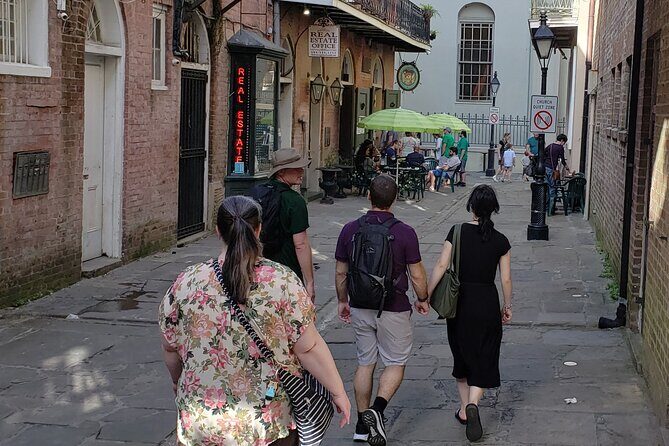
New Orleans can hit you all at once. Bright signs, loud streets, and a thousand photo angles. This tour is built for your first day or your first time in the Quarter, when you need structure more than souvenirs.
You pay $37 per person for roughly 2 hours on foot, with an experienced local guide leading the way. The pacing uses short stops—think quick look-and-learn moments—so you cover a lot without getting stuck in one place too long.
And the group size matters. With a maximum of 15 people, you’re more likely to get direct answers and personal interaction instead of waiting for the whole herd to move.
You can also read our reviews of more guided tours in New Orleans



Meeting at 815 Toulouse St and timing your best experience
The tour starts at 815 Toulouse St, New Orleans, and it’s meant to end back at the meeting point. That said, a practical move is to double-check with your guide at the start if you have another plan right afterward, because one past group reported timing and ending location that didn’t match their expectations.
Duration is listed at about 2 hours. In the real world, French Quarter walking depends on sidewalk flow, delivery trucks, and how much the group asks questions. If you can, choose a slightly earlier departure. One group noted that a morning tour felt cooler and the sidewalks were less crowded before the Quarter fully wakes up.
You’ll use a mobile ticket, and confirmation is received at booking. The tour is offered in English, and service animals are allowed.
Jackson Square: the Quarter’s anchor point for stories
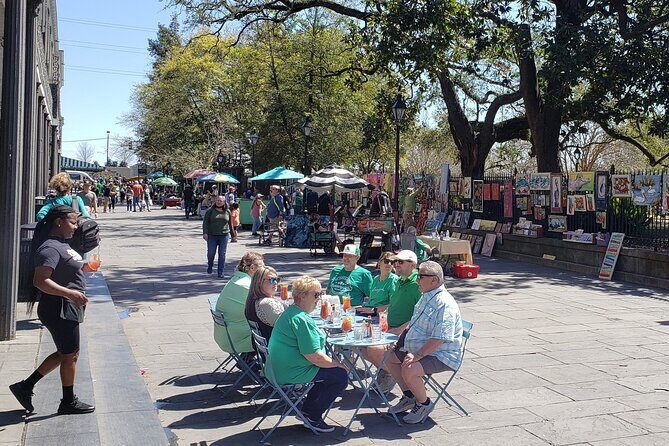
Jackson Square is your first stop. It’s described as the historic heart of French Quarter history, and that’s the smart way to start: you get context before the streets get noisy.
You’ll spend about 20 minutes there, with no paid admission required for the stop. The guide’s job here is to help you look past the obvious postcard views and notice how the square fits into the larger story of the neighborhood.
If you’re the type who loves architecture and street layout, this is where the tour can click. You’re training your eyes for what comes next, especially once Bourbon Street and Royal Street start throwing names and details at you.
Bourbon Street isn’t just party time
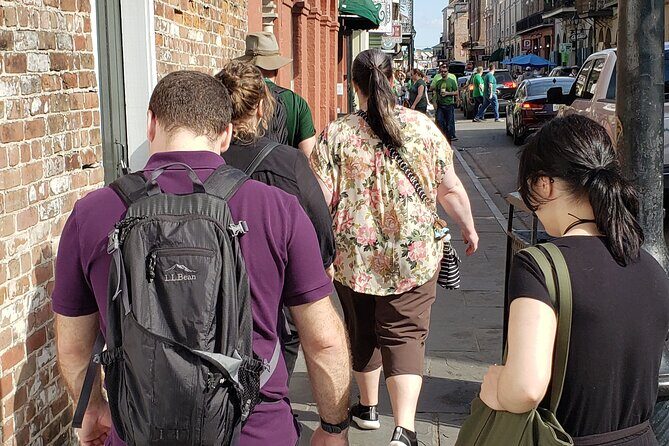
Next up is Bourbon Street, with another 20-minute stop. The tour frames it as more than the party strip, with deep historic roots in New Orleans and in America.
This is a good checkpoint because Bourbon Street is where most people only see one layer. A guided walk helps you slow down and interpret what you’re looking at, even if you’re not there for nightlife.
No admission fee is listed here either, so you’re not juggling extra costs while still keeping the flow. If the street is packed, your guide can help you spot the meaningful stuff without turning it into an endurance march.
The French Quarter stretch: seeing what you miss
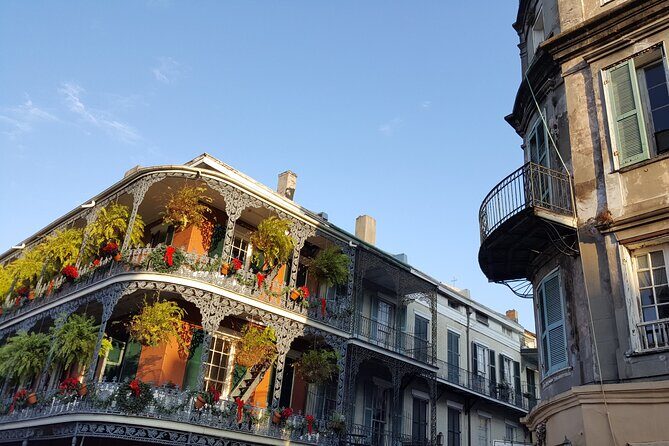
Then you move into a French Quarter segment for about 30 minutes. This part is described as covering the entire French Quarter, with a promise to show you a side that’s different from the surface-level view.
In practice, this means you’re not just doing a loop around the obvious stops. You’re likely getting context for how the neighborhood functions as a lived-in area, not just a theme set.
This is also a section where the guide’s storytelling skills really matter. The best tours here don’t dump dates at you. They connect small visual clues—street corners, building shapes, and public spaces—to the bigger themes your guide is weaving through the walk.






Royal Street: where history keeps showing up
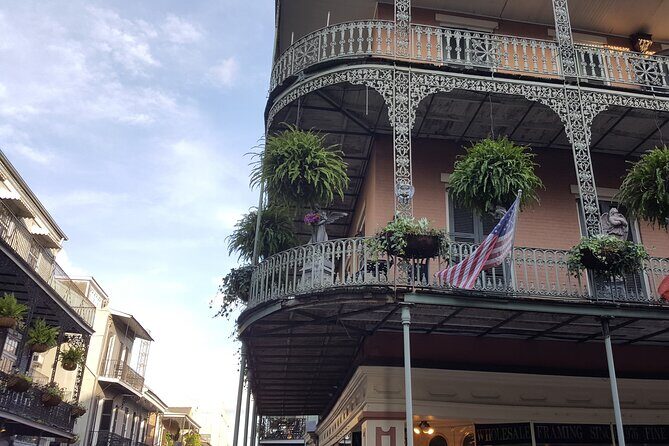
Royal Street is next, with 20 minutes and free admission for the stop. The tour notes that Royal Street may not feel off the beaten path, but its history—past and present—can be something new to you.
This is one of those streets where you’ll probably think you already know it, even if you’ve only walked through once. A guide can make the street feel less repetitive by pointing out what to watch for, and how today’s scene relates to what came before.
If you’re traveling with kids or teens, this stop can be a turning point. One group specifically mentioned that a guide made the history interesting for teenagers, and Royal Street is the kind of place where that approach works well.
Passing the Pharmacy Museum: the medical history detour
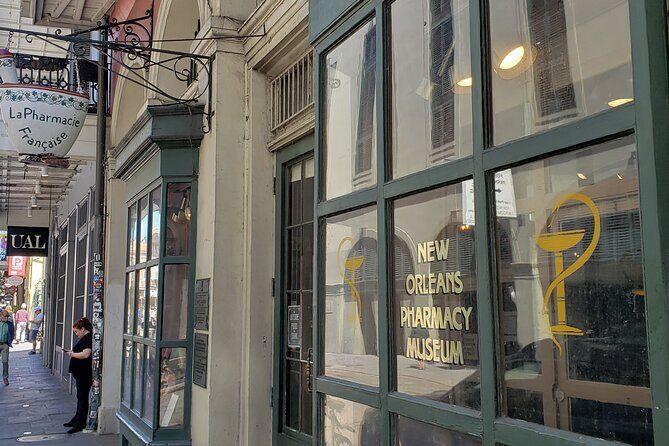
Between the larger landmark stops, you’ll pass by the Pharmacy Museum and learn some wild stuff about medical history in New Orleans. It’s one of the tour’s favorite parts, even though it isn’t listed as a ticketed admission stop.
This is the kind of extra flavor that makes the tour feel local. You’re not just running through the same sights everyone posts about. You get a side topic—medicine—that adds surprise and makes the Quarter feel deeper.
It’s also a smart time to ask questions. If you’re curious how a city’s past shows up in everyday buildings, this is where you can steer the conversation.
St. Louis Cathedral: faith tied to the American story
Stop 5 is St. Louis Cathedral, with about 10 minutes and free admission listed. The tour describes deep religious ties into New Orleans and American history, with the guide touching on how religion played a part in the region’s history.
Ten minutes is short, so the value here is focus. You’re not being asked to read every plaque in peace. Instead, you’re getting the “why this matters” framing, so you understand what you’re looking at and why it’s still relevant in the Quarter.
If you’re sensitive to places of worship, you’ll appreciate that this stop is brief and structured. You can take a moment for yourself without feeling pulled into a long schedule.
Cabildo: rebuilding after a fire
The final main stop is Cabildo, also about 10 minutes with free admission listed. Here’s the key detail: the building was completely destroyed by fire in the 18th century, and your guide goes into detail on the rebuilding of New Orleans.
That fire-and-rebuild theme gives the walk a strong close. It shifts the tour from famous streets into civic endurance—how a city survives shocks and comes back with new chapters.
It’s also a good reminder that the Quarter isn’t frozen in time. Even the places that look historic are part of a story that includes loss, rebuilding, and change.
What your guide brings to the walk (and why it matters)
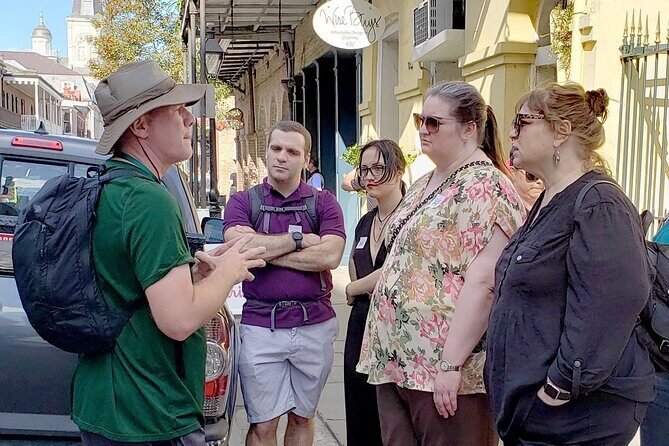
The tour is led by an experienced local guide who walks you through the French Quarter. The guide isn’t just pointing. They’re telling stories that make the neighborhood make sense.
The reviews give you a sense of the guide styles you might see. Names that have led tours include Anderson, Brian, Brion, Dane, and Melissa. Across those different guides, the themes that show up again and again are strong storytelling, humor, and safety.
One group highlighted a guide named Anderson making sure everyone was safe and got through the tour smoothly. Another praised Dane for answering questions and interacting with every person in the group, even when the group included teenagers. Several noted guides using humor to keep the mood light, including during a noisy morning with delivery trucks.
If you’re the kind of traveler who likes to ask questions while walking, this is exactly the format that works. When your guide can respond in the moment—rather than at a bus stop—you get a better connection to what you’re seeing.
Foot-friendly routing, sidewalks, and avoiding schedule headaches
This tour is designed for walking, and that’s the point. French Quarter streets move fast, and the best way to understand them is on foot. Still, walking can mess with your timing if you have tight plans.
Here’s what to do to stay in control:
- Arrive a few minutes early so you’re not stressed about the start at 815 Toulouse St.
- If your day is booked, ask your guide at the start how strictly they’ll follow the listed order and whether the stops are all guaranteed.
- Pack water. Even on a shorter tour, the sun and crowd energy add up.
Also note a mismatch that showed up in one past experience: a guest expected an hour and a half and felt the walk ran longer, and they reported the tour ending a mile from where they began. The official description says the tour ends back at the meeting point, so treat that discrepancy as a reason to confirm your exact end plan at the start.
Value check: is $37 worth it?
At $37 per person for about 2 hours, you’re paying for a guided orientation plus a guided story thread across the main streets. The stops themselves are listed as ticket-free for admission, which matters: you’re not paying extra to access the landmarks.
It’s also good value because you cover multiple top sights in a single outing. If you try to DIY this route, you’ll likely spend time figuring out what matters and why. Paying for a guide buys you interpretation—and in a city like New Orleans, interpretation is often the difference between looking and truly seeing.
The small group limit (max 15) is another value lever. A larger group can turn a story tour into a shuffle. A smaller one usually keeps attention where it should be.
One more value angle: this tour is booked about 27 days in advance on average. That’s not a guarantee of sellout, but it’s a signal of demand. If your trip dates are firm, reserve early so you don’t end up with an accidental gap in your planning.
Who this French Quarter tour fits best
This is a strong fit if you:
- Want a first-time orientation to French Quarter highlights.
- Like local stories tied to what you’re seeing in real time.
- Prefer walking tours where you can ask questions.
- Travel with teens and want history made readable and not boring.
It’s also a good choice if you like variety. The route covers civic and religious sites (Cathedral and Cabildo), a major street (Bourbon), and a side detour into medical history (Pharmacy Museum).
If you dislike walking, or you want a slow, deep museum-style pace, this might feel too fast. The tour is short-stop format. It’s designed to get you oriented, not to treat every site like an all-day visit.
Should you book this Small Group Local French Quarter tour?
Book it if you want a compact, story-driven orientation that hits major sights and adds a few surprises—especially the medical-history angle from the Pharmacy Museum. The biggest payoff is the way you connect buildings, streets, and themes through a local guide who can keep the walk moving and the mood friendly.
Hold off or ask extra questions before you commit if your schedule is razor tight, because a past experience reported timing and ending location not matching expectations. If you do book, confirm the route flow and your exact end point at the start, then relax and let the stories do the heavy lifting.
FAQ
How long is the French Quarter tour?
The tour lasts about 2 hours.
How much does it cost?
It costs $37.00 per person.
Where does the tour start?
It starts at 815 Toulouse St, New Orleans, LA 70112, USA, and it ends back at the meeting point.
Is the tour offered in English?
Yes, it is offered in English.
Do we need admission tickets for the stops?
Admission is listed as free for the named stops, including Jackson Square, Bourbon Street, the French Quarter, Royal Street, St. Louis Cathedral, and Cabildo.
What is the cancellation policy?
You can cancel for a full refund up to 24 hours in advance of the experience start time, and free cancellation is available.