REVIEW · NEW ORLEANS
New Orleans Historic Cemetery Walking Tour
Book on Viator →Operated by Witches Brew Tours · Bookable on Viator
Death has a roadmap in New Orleans. On this small-group 2-hour walk, you trace three historic cemeteries and the Katrina Memorial through burial traditions, guided by a professional storyteller.
I like the way this tour focuses on meaning, not shock value. You’ll get solid context for burial rituals and local customs, and it’s good value for the time—$23.99 gets you guided storytelling across multiple major stops.
One thing to plan for: the ground can be rough. Expect uneven pavement and some grass, and you’ll want moderate walking stamina in hot or humid weather.
In This Review
- Key highlights to look forward to
- A storyteller-led walk through New Orleans final resting places
- Price and time: what $23.99 buys you
- Where you start (and why it affects your day)
- What you’ll learn about burial rituals and local customs
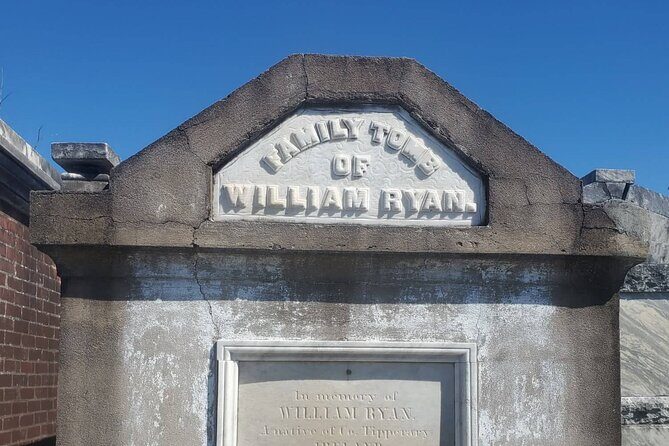
- Stop 1: St. Patrick Cemetery #2 and the Irish connection
- Stop 2: Mid-City cemeteries near City Park
- Stop 3: the Hurricane Katrina Memorial at Charity Hospital Cemetery
- Group size, pacing, and why it feels personal
- Comfort tips that make a big difference
- Weather rules and timing: when the tour can run
- Guide quality: the real reason people recommend it
- Value for different types of visitors
- Should you book this tour?
- FAQ
- How much does the New Orleans Historic Cemetery Walking Tour cost?
- How long is the tour?
- Where does the tour start?
- Where does the tour end?
- What stops are included?
- What’s included in the ticket price?
- Are drinks included?
- Is the tour offered in English?
- Is the tour suitable for people with mobility issues?
- Is the tour run at night?
Key highlights to look forward to
- Three major cemetery stops in one efficient route, plus a Katrina Memorial visit
- Professional storyteller guidance with time for questions and a paced group experience
- St. Patrick Cemetery #2 with a focused look at burial and community traditions
- Mid-City (near City Park) cemeteries that broaden the story beyond one neighborhood
- Hurricane Katrina Memorial at Charity Hospital Cemetery, connecting the city’s losses across eras
- Max 10 travelers, so the walk doesn’t feel like a cattle-car experience
A storyteller-led walk through New Orleans final resting places
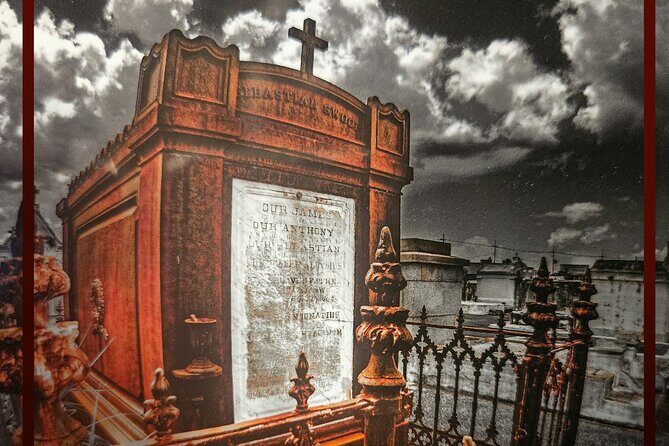
Cemeteries in New Orleans aren’t the same as what you might picture from home. Many are above ground, tied to local water conditions and long-standing customs. This tour keeps that reality front and center and uses a storyteller to connect the physical spaces to the people and events behind them.
The format also matters. You’re not stuck in a classroom voice the entire time. You’ll hear the stories, see what they look like up close, and then you move on as the meaning shifts from one cemetery to the next.
And yes, it’s often described as fun in the best way. The best guides on this route have a talent for making details click—so the walk feels like you’re learning how New Orleans thinks about life, loss, faith, and memory.
You can also read our reviews of more walking tours in New Orleans



Price and time: what $23.99 buys you

At $23.99 per person, this is priced for a classic, high-value walking experience. You’re paying for three things: expert storytelling, access to multiple significant sites in one go, and the convenience of a tight route that’s designed for walking.
Two hours sounds short until you’re standing in a cemetery and realizing how much there is to notice. You’re not just looking at tombs—you’re learning the “why” behind the layout and practices, plus the New Orleans layers that explain who ended up here and why their memorials look the way they do.
It also helps that the group limit is 10 travelers. That size usually makes it easier to ask questions and stay engaged, especially if you’re the type who likes to stop and read before moving on.
Where you start (and why it affects your day)

The tour starts at G’s Pizza, 4840 Bienville St. Plan to arrive early because check-in begins 30 minutes prior, and the tour departs on time. Late arrivals aren’t accepted, which is worth respecting—you’re dealing with scheduled entry windows and liability rules.
Also, keep the ending point in mind. The tour ends near Charity Hospital Cemetery on Canal Street, so it’s easy to continue your day in that area. If you’re planning dinner or catching a bus or streetcar afterward, you’ll likely find it convenient.
If finding the start location is your stress point, give yourself a little buffer. One common theme you should take seriously: the meeting point can be a bit tricky to locate when you’re new to the streets.
What you’ll learn about burial rituals and local customs
This isn’t a generic “cemeteries are spooky” script. The tour explains how burial rituals and memorial traditions connect to New Orleans life. You’ll hear about the logic behind the structures you see—especially the way above-ground tombs fit the city’s conditions.
The storyteller also links memorial styles to community identity. As the walk progresses, it becomes clear that these places are not only about religion or mortality. They’re also records of immigration, neighborhood history, and how families wanted loved ones remembered.
One of the most repeated takeaways from guides on this route is the “how does this all fit?” effect. People quickly realize that the burial process here is shaped by practical realities, and that those realities shaped the look of the cemeteries you’re walking through.
Stop 1: St. Patrick Cemetery #2 and the Irish connection
Your first stop is St. Patrick Cemetery #2, with about 30 minutes here. This is the kind of cemetery that rewards careful attention, because the details matter—and the guide’s job is to help you read them.
You’ll get a focused look at cemetery and burial culture, including what different tomb styles suggest about community ties and belief systems. One guide associated with this route, William, is praised for bringing attention to the history of the Irish in New Orleans, which adds an extra layer beyond architecture alone.
A small heads-up: since you’re just starting the walk, you’ll want to use this stop to get your bearings. When you understand the basics of what you’re seeing here, the later cemeteries click faster.
You can also read our reviews of more historical tours in New Orleans






Stop 2: Mid-City cemeteries near City Park
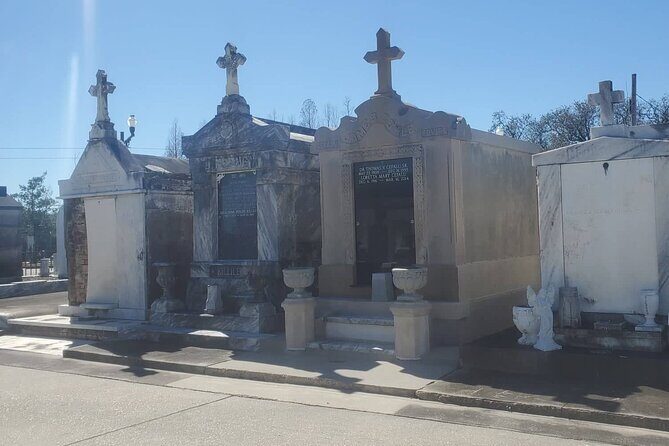
Next comes Mid-City, where you explore cemeteries near City Park for about 1 hour. This stretch is valuable because it broadens the story. You’re not stuck in one neighborhood’s tone or one cemetery’s particular narrative.
In the best versions of this experience, the guide connects what you see to New Orleans patterns: who ended up where, how families commemorated people, and how the city’s changing events left physical traces behind.
This portion of the tour often feels like the “work time” of the walk: longer than the first stop, but still paced so you can listen, look, and ask questions. Some guides on this route are noted for being patient—taking their time and not rushing you through the spaces.
If you’re someone who likes to ask, this is a good moment to do it. You’ll be in a stretch long enough that your questions don’t feel like they interrupt the schedule; they become part of the flow.
Stop 3: the Hurricane Katrina Memorial at Charity Hospital Cemetery
The last stop is the Hurricane Katrina Memorial at Charity Hospital Cemetery, about 20 minutes. This part of the tour changes the emotional temperature. It’s where New Orleans’ modern losses meet the older cemetery tradition.
The memorial’s story centers on people lost not only to Katrina, but also to Yellow Fever and other hurricanes and events. The guide’s job is to keep the connection clear: cemeteries here hold layers of tragedy across time, and memory is part of the city’s survival.
Even if you’ve heard some Katrina stories before, you’ll likely leave with a different understanding of how the city publicly remembers loss. The memorial visit acts like a bridge between the burial customs you learned earlier and the events that shaped recent generations.
Group size, pacing, and why it feels personal
With a maximum of 10 travelers, the tour often feels manageable. You’re not pushed into a single-file line the entire time. The better guides also keep an eye on timing, so the walk stays on track while still allowing questions.
Pacing is a real quality marker here. Several guides are noted for taking time, answering questions directly, and keeping the group engaged without turning it into a lecture marathon. There’s also mention of having moments to explore inside and then regroup, which helps if you like reading tomb details at your own speed.
That balance—structure plus breathing room—is part of why this tour earns such strong results. It’s not just what you see. It’s how you get there, with a guide who controls the tempo.
Comfort tips that make a big difference
This is an outdoor walk on historic cemetery terrain. You should plan as if you’ll be on uneven pavement and some grass. Wear shoes that have traction and have already survived a long day.
Heat is a factor you can’t ignore in New Orleans. A practical tip from the experience is to come prepared: use sunscreen, consider a hat, and be ready with an umbrella. Even when conditions seem fine in the morning, weather changes fast in the city.
Also, bring water. Drinks are not included, and you’re allowed to bring your own. If you take medication, keep it accessible, because you’ll want it during the walk rather than waiting until you’re done.
Weather rules and timing: when the tour can run
This tour requires good weather. That doesn’t mean it cancels every time clouds appear. The key cancellations are tied to serious conditions, like flooding, tropical storms, hurricanes, fires, or cloud-to-ground lightning within the French Quarter.
Rain by itself isn’t the usual deal-breaker. Still, if there’s heavy weather on the horizon, you’ll want to check the day’s updates so you’re not guessing.
Timing is also built around cemetery hours. These cemeteries are controlled by the Catholic Archdiocese and close at 4pm, so there are no night tours after that time. If you’re trying to fit this into a packed itinerary, book an earlier part of your day.
Guide quality: the real reason people recommend it
The guide is the product on this tour, and it shows. You’ll see names repeatedly associated with standout days, including Chris, Spooky Rob, William, Robert, and Taylor. Even when the personalities differ, the common thread is storytelling that keeps people engaged.
One guide style you’ll likely notice: strong structure. People describe the tour as well organized and informative, with clear transitions between stops. Another style: encouragement for questions. Guides like William and Taylor are praised for being attentive and not rushing, which helps you get more out of each cemetery.
And small, thoughtful touches matter. One guide, Taylor, is mentioned for offering an umbrella to help someone stay out of the sun. That kind of care turns a long walk into a smoother one.
A final reason to pay attention: you’ll get practical local recommendations too. Taylor is specifically noted for sharing good food ideas around the area, which is handy when you’re hungry after a two-hour walk.
Value for different types of visitors
This tour is a great fit if you want a New Orleans experience that feels real and specific. It’s not just a scenic stroll. You’ll want to learn why these cemeteries look the way they do and how the city’s events shape what’s remembered.
You’ll probably enjoy it if you’re:
- Interested in history that connects to everyday life, faith, and community identity
- The type who likes to read details up close rather than just take photos
- Comfortable walking for about two hours on uneven ground
It may be less ideal if you need very smooth surfaces or long rests. The terrain in historic New Orleans is challenging, and the tour asks for moderate physical fitness. You can still book, but you should do it with honesty about your mobility and comfort.
Should you book this tour?
I’d book if you want a high-value, guided way to understand New Orleans cemeteries beyond the headline stories. For $23.99, you get multiple major sites, a professional storyteller, and a walk that stays short enough to fit into a busy day without feeling rushed.
Skip it or rethink it if you’re not comfortable with uneven ground, long sun exposure, or you need a night-time option. Also, if you’re expecting a long, personal, one-tomb biography at every stop, you might find the format more focused on culture and patterns than individual grave deep research.
If you want a thoughtful route that moves from traditional burial practice to modern memory—without turning the day into a long slog—this one is worth your time. Plan your shoes, bring sun protection, and you’ll leave with a very New Orleans way of seeing the city’s past.
FAQ
How much does the New Orleans Historic Cemetery Walking Tour cost?
The price is $23.99 per person.
How long is the tour?
The tour runs for about 2 hours.
Where does the tour start?
You start at G’s Pizza, 4840 Bienville St, New Orleans, LA 70119.
Where does the tour end?
The tour ends near the Hurricane Katrina Memorial area at Charity Hospital Cemetery on Canal Street.
What stops are included?
You visit St. Patrick Cemetery #2, cemeteries in Mid-City near City Park, and the Hurricane Katrina Memorial at Charity Hospital Cemetery.
What’s included in the ticket price?
The ticket includes a guided walking tour with a master storyteller.
Are drinks included?
No. Drinks are not included, but you may bring your own.
Is the tour offered in English?
Yes, it’s offered in English.
Is the tour suitable for people with mobility issues?
The tour calls for moderate physical fitness. The terrain in historic New Orleans can be challenging, with uneven pavement and some grass, so it’s best to book accordingly.
Is the tour run at night?
No. These cemeteries close at 4pm, so tours do not run after that time.