REVIEW · NEW ORLEANS
New Orleans Music Heritage Tour
Book on Viator →Operated by New Orleans Music & Heritage Tour · Bookable on Viator
You hear New Orleans before you even leave. This walking tour follows the sounds that shaped the city, led by local record man Keith and powered by Bluetooth audio so you catch short clips as you pass the places behind blues, jazz, gospel, and more. It is a fun, story-driven route through the French Quarter and neighboring neighborhoods, with a finish that often comes with real street music.
What I like most is how the walk turns landmarks into songs, not just photo stops. I also love the stop at Preservation Hall, which connects the history to the way New Orleans still plays today. One possible drawback: it is a lot of steps in hot, humid weather, and it can feel adult-leaning, so bring comfy shoes and skip it if you want a stroller-friendly pace.
In This Review
- Quick highlights you should know
- A 2-hour walk that maps sounds across New Orleans
- Starting at Louisiana Music Factory on Frenchmen Street
- The French Quarter segment: brass bands, rock ’n’ roll, and Bourbon Street legends
- Preservation Hall and the sound of people showing up to listen
- Louis Armstrong Park, Congo Square, and the Treme influence
- Louis Armstrong Park finish vibes: buskers behind St. Louis Cathedral
- Price and where your $30 actually goes
- Footsteps, timing, and what to bring for comfort
- Who this tour fits best
- Should you book it?
- FAQ
- How long is the New Orleans Music Heritage Tour?
- Where do I meet the guide?
- Where does the tour end?
- How much does it cost?
- What is included with the tour?
- Is the tour offered in English?
- Is there a limit on group size?
- Can I cancel for a refund, and what if the weather is bad?
- FAQ
- Are service animals allowed on this tour?
- How many days in advance is it commonly booked?
- Do children need to be accompanied by an adult?
- Do I need to buy admission tickets for the stops?
- Is the tour near public transportation?
- Will I receive a mobile ticket?
Quick highlights you should know
- Frenchmen Street start: Meet Keith at Louisiana Music Factory, right on the most music-heavy stretch of town.
- Bluetooth audio along the route: You hear music clips tied to the artists and locations as you walk.
- Treme and French Quarter coverage: You cover Marigny, French Quarter, and Treme, linking street-level scenes to big-name artists.
- Historic stops with no admissions: Most stops are free to enter, so you mainly pay for the guide.
- Small group feel: Maximum of 28 people, so it does not feel like a cattle-train overview.
A 2-hour walk that maps sounds across New Orleans
This is the kind of tour that helps you understand why New Orleans music sounds the way it does. You get a guided walk that connects neighborhoods, venues, studios, and the people who shaped them. The best part is the rhythm: you are moving street to street, then stopping just long enough to hear a clip and get the story behind it.
For me, the value comes from what $30 buys beyond a normal stroll. You are paying for a local with real record-industry time, plus audio that turns a corner into context. You also get a clear sense of time depth. The route is designed to span decades and even centuries, so you hear the “before” and the “later,” not just famous names.
You can also read our reviews of more historical tours in New Orleans


Starting at Louisiana Music Factory on Frenchmen Street
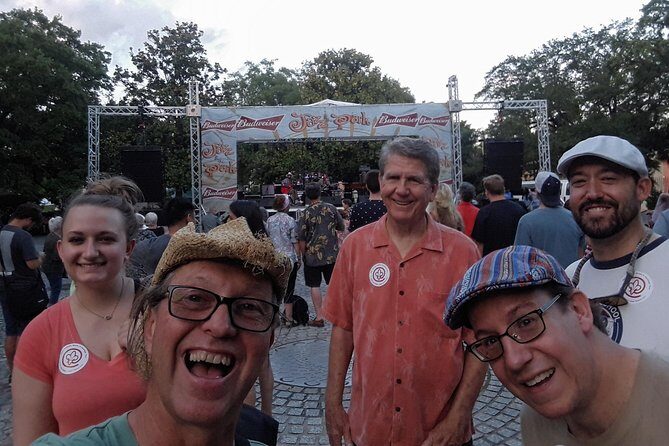
Your tour kicks off at Louisiana Music Factory, 421 Frenchmen St. This matters more than it sounds. Frenchmen Street is where you can practically trip over live music in the evening, and starting there puts you in the right mindset immediately.
Keith meets you here and sets the theme fast: New Orleans music is not one genre locked in a box. As you walk, you connect blues, jazz, gospel, and rock ’n’ roll to the neighborhoods that nurtured them. On top of the stories, there is Bluetooth audio support, so the tour can play short selections connected to the locations you are seeing.
One more practical detail: the start location is also a record store. That means if something hooks you while you are listening, you are already in the right place to keep the music going afterward.
The French Quarter segment: brass bands, rock ’n’ roll, and Bourbon Street legends
After you cross toward the French Quarter, the tour spends real time on how music life moved through specific corners. You do not just pass buildings. You learn why certain streets and institutions mattered, and you hear clips that match what you are looking at.
A few of the stops are built around artists and music roles that people often forget are local first. You visit the boyhood home of Danny Parker, then hear the story tied to the brass band scene and the people who worked to keep it alive. You also move through Place de Armes and other key Quarter landmarks that shaped how jazz spread through the city.
Then come the studio and rock ’n’ roll links. You check out Preservation Jazz Hall and J&M Studios, described as a home for rock ’n’ roll. These stops work well if you like the “music business” side, not just the stage side. It is a reminder that a city’s sound is built both by performers and by the rooms where people recorded them.
And yes, Bourbon Street gets its moment too. You get a walk-and-listen pass that includes the idea of cats like Louis Prima, Al Hirt, and Pete Fountain filling the night with jazz. Even if you find Bourbon Street loud or hectic on your own, the tour makes it legible: why it used to be more of the music center than the party punchline.
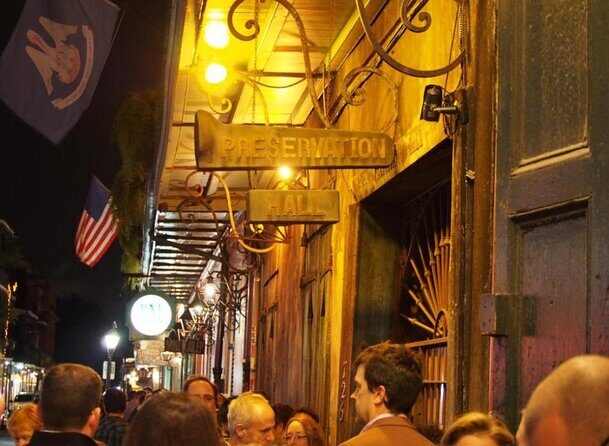
Preservation Hall and the sound of people showing up to listen
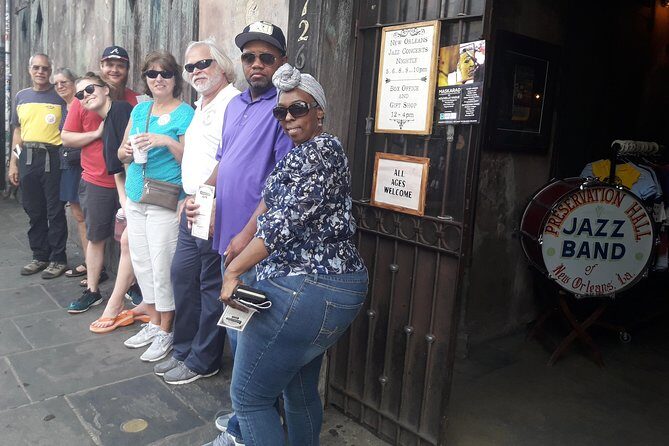
Preservation Hall is the stop that tends to make the tour feel grounded. You spend a short moment there and can visit the gift shop and take a photo. It is not a long detour, but it lands with meaning because the tour is already teaching you how the city’s musical traditions survive.
This stop works especially well if you like seeing how traditions live beyond the headlines. New Orleans music is not just a museum topic. You can feel that during the tour, because the guide is constantly linking past scenes to what you can still hear today.
If you are the type who wants to see one place that represents the whole vibe, this is it. You get a clean hit of identity without spending your whole afternoon inside.
Louis Armstrong Park, Congo Square, and the Treme influence
The route then shifts to Louis Armstrong Park and brings in the Treme story. In the Treme, you hear about early African-American community influence and how that shaped New Orleans music culture. This part matters because it gives you more than surface-level name recognition. It explains why the sound developed the way it did, with real cultural roots.
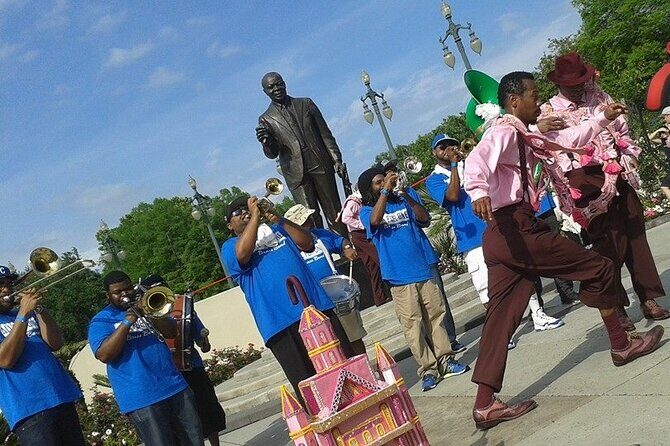
You also see the Louis Armstrong statue, which helps anchor the story in a physical landmark. From there, you connect back to Congo Square. Even though the time at each spot is brief, the tour keeps tying it to music heritage, not just tourist geography.
Congo Square is one of those places where a quick stop can still make you feel like you learned something deeper than what a photo offers. The tour’s advantage is that it frames what the square symbolizes in the music story, so it does not feel like a stop you rush through.





Louis Armstrong Park finish vibes: buskers behind St. Louis Cathedral
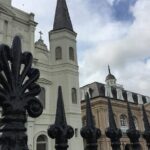
The tour ends at 712 Royal St, near St. Louis Cathedral. This is smart planning, because the finish area often has buskers playing right behind it. Even if you have your phone out for photos, you get one last reminder that the city’s music is not only a tour feature. You can hear it off the tour route.
It also means you can transition easily into your own evening plans. Want a drink? Want to keep walking? You are not stuck at some far-off edge of town. You are dropped right where New Orleans often sounds best.
Price and where your $30 actually goes
At $30 per person for about two hours, this is a bargain if you care about music context. Most of what you get is not a paid admission. The experience is mainly the guide, the guided walk, and the audio support that links clips to real sites.
The most important value factor is the guide’s background. Keith comes with more than 20 years in the record business, and that shows in how he tells stories. He does not speak like a textbook. He speaks like someone who has lived around music and people who make it.
Also, the group size cap of 28 keeps things from feeling too big. That matters in a walking tour, because it is harder to hear and ask questions when the group is huge. Here, you have a better chance of getting personal back-and-forth during stops.
For a practical check, compare this with what you would pay for a similar guided experience that does not include audio clips tied to locations. Here, your money buys a richer “listen while you walk” format.
Footsteps, timing, and what to bring for comfort
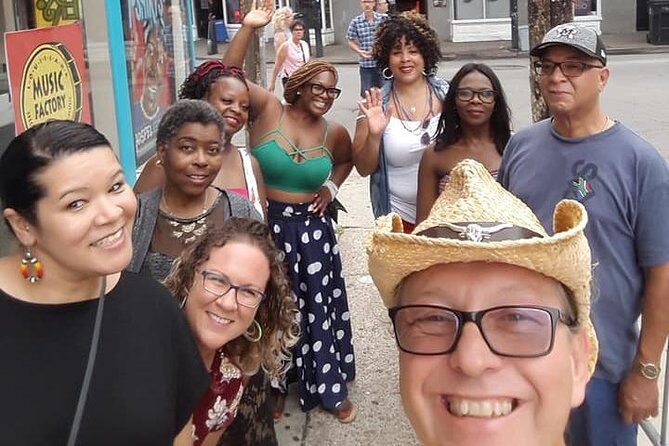
This is a walking tour, and it is not a slow parade. Plan for a couple of hours moving through the French Quarter area and nearby neighborhoods. If you are bringing a group member who hates walking, this is where you should rethink expectations.
Because the tour runs outdoors, good weather matters. If weather turns, you may be offered another date or a full refund, so it is smart to keep your schedule flexible on your first day in town.
What I would bring:
- Comfortable shoes with grip for curbs and uneven pavement
- Water, since New Orleans heat can hit hard even when the day looks mild
- A light layer if you get one of those humid evening breezes
One more day-of tip: this is a human-led experience. If something changes, you want time to pivot to a Plan B. In the past, refunds have been authorized when a guide missed a scheduled tour, so the operator does act when things go wrong. Still, you should keep an eye on your confirmation details and plan accordingly.
Who this tour fits best
This is a great choice for anyone who loves jazz, blues, or New Orleans music culture and wants real context fast. It is also a strong first-night option if you want to get oriented and understand what you are hearing while you explore on your own later.
It can also be a better pick for adults than for younger kids. The walk includes a lively, uncensored style, and the pace involves a good amount of time on your feet, so families with little ones may find it harder than expected. If you have teenagers or older kids who genuinely like music stories, it can work well.
If you hate guided tours that feel like lectures, you will probably like this one more. The best comments point to a guide who uses humor and personal stories, not just dates and facts. It can feel more like performance art mixed with a neighborhood walk.
Should you book it?
If you love music and you want your New Orleans first day to sound like something, book it. At $30, the audio clips plus a local record-industry guide make it a practical way to turn the French Quarter into a living playlist.
Skip it only if you want minimal walking or you are looking for a quiet, family-only outing. Otherwise, this is one of those tours that gives you something you can replay in your head when you hear the city music later that night.
FAQ
How long is the New Orleans Music Heritage Tour?
The tour runs for about 2 hours.
Where do I meet the guide?
Meet at Louisiana Music Factory, 421 Frenchmen St, New Orleans, LA 70116.
Where does the tour end?
The tour ends at 712 Royal St, New Orleans, LA 70116, with street musicians often playing nearby behind St. Louis Cathedral.
How much does it cost?
It costs $30.00 per person.
What is included with the tour?
You get a 2-hour musical walking tour with an experienced guide, plus Bluetooth speaker capability for music accompaniment along the way.
Is the tour offered in English?
Yes, the tour is offered in English.
Is there a limit on group size?
Yes. The maximum group size is 28 travelers.
Can I cancel for a refund, and what if the weather is bad?
You can cancel up to 24 hours in advance for a full refund. The experience requires good weather, and if it is canceled due to poor weather, you will be offered a different date or a full refund.
FAQ
Are service animals allowed on this tour?
Yes, service animals are allowed.
How many days in advance is it commonly booked?
On average, it is booked 28 days in advance.
Do children need to be accompanied by an adult?
Yes, children must be accompanied by an adult.
Do I need to buy admission tickets for the stops?
The stops listed on the tour are marked as admission ticket free.
Is the tour near public transportation?
Yes, it is near public transportation.
Will I receive a mobile ticket?
Yes, the tour uses a mobile ticket.