REVIEW · NEW ORLEANS
The Original ‘Creole and Crescent’ Bike Tour
Book on Viator →Operated by FreeWheelin Bike Tours · Bookable on Viator
Two wheels make New Orleans feel personal. This is the Creole and Crescent route, led by a real New Orleans team, with stops that move you from the French Quarter out toward Bayou St. John and deep into Treme, finishing at Congo Square. It’s short, active, and story-driven, and the route is built to show you the city’s different faces in just a couple of hours.
I especially love the local guide storytelling—the guides are lively, funny, and safety-minded. In past rides, people called out guides like Teddy and Laura for being friendly and for keeping the group moving smoothly while sharing details you don’t usually get from a quick walk-by. I also like that the tour gives you a real neighborhood mix, not just the postcard version of the Quarter.
One thing to consider: it’s not a sit-and-sightsee tour. You need moderate fitness and you must be comfortable riding a bike, and the ride is weather-dependent. Also, at 2 to 3 hours, you may wish it ran a bit longer once you get into the rhythm.
In This Review
- Key Highlights You’ll Feel Right Away
- Entering the Creole and Crescent Loop
- Price and Time: What $55 Buys in Real Sightseeing Hours
- Meeting at 317 Burgundy St: Start Fast, Ride Safer
- French Quarter to Esplanade Avenue: Creole Mansions and a Famous Monument
- A Quick Breather on Frenchmen Street
- City Park Under Live Oaks: The Duel-and-Tragedy Stop
- Bayou St. John: Live Oak Streets and the Water Side of Town
- Treme: Going Deeper Than the Popular Shows
- Cemetery Stop: St. Louis Cemetery No. 3, Brief and Photo-Friendly
- Congo Square and the Jazz-Roots Finale
- Who Should Book This Bike Tour (and Who Might Not)
- Should You Book the Creole and Crescent Bike Tour?
- FAQ
- How long is the Creole and Crescent bike tour?
- Where do I meet for the tour?
- What’s included in the $55 price?
- What type of bike is used?
- How big is the group?
- Do I need to be able to ride a bike?
- Is it a weather-dependent activity?
Key Highlights You’ll Feel Right Away
- A tight 2 to 3 hour loop that still gets you out of the French Quarter and into Treme
- Small group size (max 12), which makes it easier to hear the guide and keep a calm pace
- Creole-focused route along Esplanade Avenue, including Gayerre Place and its Peace, the Genius of History monument
- Included gear that makes the tour easier: helmet, handlebar bag, bell, bottled water, and ponchos if it rains
- A route that ends where jazz begins: Congo Square and the nearby Louis Armstrong Park area
Entering the Creole and Crescent Loop
This tour is built like a guided ride with chapters. You start in the French Quarter, then you transition into the long, stately stretch along Esplanade Avenue. After that, you swing through city park, cross over to the bayou side, and roll into Treme before ending back near where the city’s creative roots took shape.
The big value here is pacing. You get enough time outdoors to feel like you are actually moving through neighborhoods, not just bouncing between landmarks. And because it’s guided, you’re not left guessing what you’re looking at or why it matters.
Also, there’s an electric bike version and a pedal bike version. If you care about keeping it fully human-powered, pick pedal. If you want less effort, electric is an option. Either way, you’re following the same core route.
You can also read our reviews of more cycling tours in New Orleans

Price and Time: What $55 Buys in Real Sightseeing Hours
The price is $55 per person, and the tour runs about 2 to 3 hours. That length matters because it’s long enough to see multiple areas and hear a full set of stories, but short enough that it fits easily into a busy day in New Orleans.
Compared to spending half a day doing separate rides, walks, and transit, this is a simple bundle: bike, safety basics, and a guided route that connects the dots between Creole-era places, the park, the bayou-adjacent streets, and jazz history.
If you like tours with lots of stops and frequent photo breaks, you might find the schedule brisk. One review-style complaint people sometimes have is that the ride felt like it could be longer. The good news: this is a focused route, not a drive-by tour, so even at 2 to 3 hours, you come away with a strong sense of the city’s geography.
Meeting at 317 Burgundy St: Start Fast, Ride Safer
You meet at FreeWheelin’ Bike Tours & Rentals, 317 Burgundy St, in the French Quarter. The tour ends back at the same meeting point, so there’s no complicated end-of-tour scramble.
They keep things practical with included gear. You get a helmet, bottled water, and a handlebar bag so you can stash your essentials without holding them the whole time. There’s also a bell, which helps when you’re sharing the road with pedestrians. If rain shows up, you’re also given complementary ponchos—a small detail that can turn a soggy day into a doable ride.
The tour is capped at 12 travelers, and that size tends to help the guide manage the group and keep your attention on what you’re seeing. Fewer riders also means you’re less likely to get stuck behind slower cyclists for long stretches.
French Quarter to Esplanade Avenue: Creole Mansions and a Famous Monument
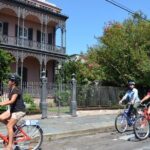
The first meaningful segment is the ride down to Esplanade Avenue, described as the Avenue of the Creoles and also known as Millionaires Row. This is where the tour’s “Creole” focus starts to feel concrete.
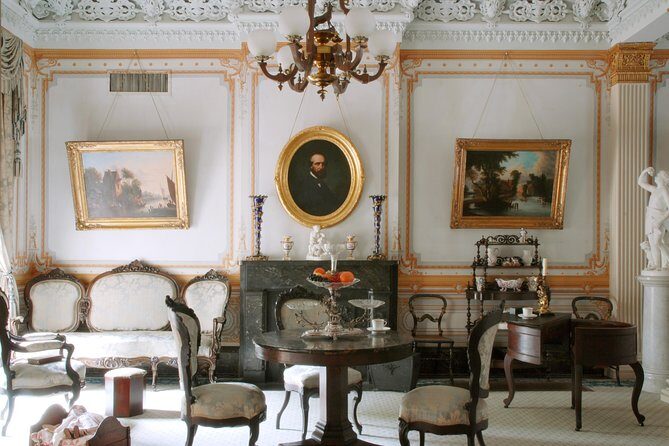
You cover a 4+ mile stretch toward city park, and along the way you’ll spot the kind of older mansions and big-set homes that helped define Creole-era wealth and power in New Orleans. It’s not just visual; the guide connects those buildings to the people and the social influence behind them.
A key stop here is Gayerre Place, where you see the monument Peace, the Genius of History. The value of this kind of stop is that you get a short, pointed explanation right in the context of the street and architecture—not later, not from memory.
If you’re the type who likes to understand a neighborhood quickly, this part is where the tour gives you the most immediate payoff.
A Quick Breather on Frenchmen Street
You also roll through Frenchmen Street. This is the side of New Orleans where locals head for live music energy, especially compared to the heavy tourist pull of Bourbon Street.
The stop is brief, but it works as a mental reset. After the more formal feel of Esplanade and its big homes, Frenchmen Street reminds you that New Orleans culture isn’t only in monuments—it’s also in sound, bars, and streets where music is part of daily life.





City Park Under Live Oaks: The Duel-and-Tragedy Stop
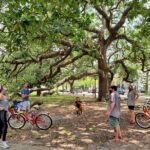
Next comes City Park, including time in a live oak tree grove. If you’ve ever walked among live oaks in New Orleans, you already know the effect: cooler air, shade, and a kind of quiet that feels different from the street noise.
Here, you stop to hear stories connected to duels and tragedies that took place in the park. Even without going deep into every detail, this stop changes the mood of the ride. You’re no longer only looking at buildings or monuments; you’re learning how the city’s drama played out in outdoor spaces too.
After leaving the park, you cross via Magnolia Bridge, then head toward Treme. That bridge crossing is the kind of moment that makes a bike tour feel like you’re traveling through the city itself, not just moving between stops.
Bayou St. John: Live Oak Streets and the Water Side of Town
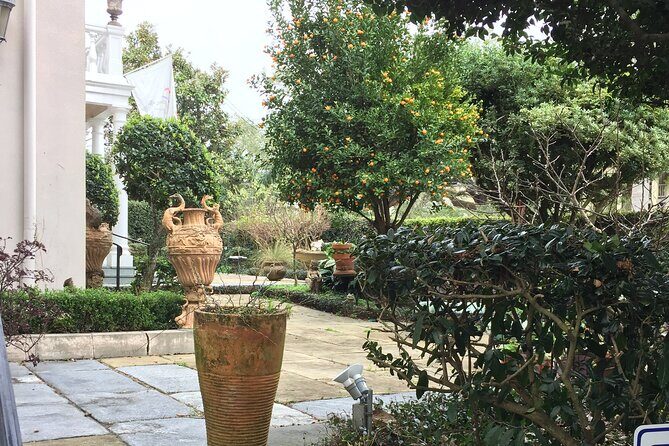
The route continues along the bayou area on the Bayou St. John side. This isn’t just a scenic detour. It’s a different New Orleans texture: slower pace, water-adjacent atmosphere, and streets lined with trees that look almost like they belong to another decade.
You ride along Ursuline Avenue, where you can take in the live oak tree-lined setting while hearing another history-focused segment. The practical value of this stop is that you get a visual contrast to the French Quarter. One feels dense and performative; the other feels more residential and grounded.
If you like photography, this segment usually makes the strongest “I can’t believe I’m here” images, because the streets and trees are so distinct.
Treme: Going Deeper Than the Popular Shows
This is the neighborhood most people want to see, but not everyone gets there on typical short tours. Here, the tour takes riders deep into Treme, not just skimming the edges.
It’s also the part where the tour becomes more personal. Because the guide team is local and has connections, you may get greetings from people along the route—smiles, waves, and the kind of warm recognition that makes Treme feel like a real living neighborhood, not a theme.
The ride also reaches Armstrong Park and Congo Square. The guide frames these places as more than names on a map. You’re learning how the city’s creative history is rooted here, not “imported” from somewhere else.
Cemetery Stop: St. Louis Cemetery No. 3, Brief and Photo-Friendly
You stop at St. Louis Cemetery No. 3. This is different from a full cemetery tour. The setup is more like: a short story, a quick orientation on the burial process, then time for a photo and a short stroll among the tombs.
That approach is useful if you want the atmosphere without getting stuck in a long, slow-moving formal tour inside. Just remember: you’re on a bike tour, so the time is brief by design.
If you prefer a slower, more detailed cemetery experience, you might still want to plan a separate visit later. But as part of a loop tour, this stop fits the ride well.
Congo Square and the Jazz-Roots Finale
The final “big” stop is Congo Square. This is presented as the birthplace of jazz music and the origins of Jazz Fest. Whether you’re a jazz fan or you just want to understand New Orleans culture at its source, this is the place where everything starts to connect.
The ride then includes a quick return segment through Louis Armstrong Park. It’s a peaceful way to close the tour: ponds, fountains, and tree-lined paths that cool down your senses after the more emotionally charged stops.
Then you finish back at the meeting point, with everything you brought with you already in the handlebar bag.
Who Should Book This Bike Tour (and Who Might Not)
This is ideal for people who want a guided route and a strong sense of place within a limited time window. It’s especially good if you’re:
- Curious about the city beyond the French Quarter
- Comfortable riding a bike and want an easy-to-follow route
- Traveling with family or mixed ages, because the group pace is organized and the experience has made room for different riders in the past
From the info provided, it’s important that you have moderate physical fitness and you can ride a bike. It’s not recommended for anyone who cannot ride a bike.
Also, the tour runs on good weather. If it looks rainy or stormy, plan to dress smart and wear shoes you feel confident in on streets.
Should You Book the Creole and Crescent Bike Tour?
If you want one activity that connects the French Quarter to Treme and ends at Congo Square without wasting time on transit, book it. The value is in the mix: included gear, a small group, a real local guide, and a route that actually changes neighborhoods rather than looping around the same handful of streets.
Choose this tour if you like stories, you want to see the city’s geography, and you want a fun way to get outside without planning a whole day.
Skip it if you hate biking, you aren’t confident on a bike in busy areas, or you want a long, stop-by-stop museum-style experience. This ride is about motion plus meaning, not lingering.
FAQ
How long is the Creole and Crescent bike tour?
It runs about 2 to 3 hours.
Where do I meet for the tour?
You meet at FreeWheelin’ Bike Tours & Rentals at 317 Burgundy St, New Orleans, LA 70112.
What’s included in the $55 price?
The tour includes use of a bicycle, bottled water, a helmet, a handlebar bag, a bell, and complimentary ponchos for rainy weather.
What type of bike is used?
The tour is offered in both pedal and electric versions. The main difference between the two is the type of bike you ride.
How big is the group?
There’s a maximum of 12 travelers.
Do I need to be able to ride a bike?
Yes. The tour is not recommended for individuals who cannot ride a bike, and it calls for moderate physical fitness.
Is it a weather-dependent activity?
Yes. It requires good weather. If it’s canceled due to poor weather, you’ll be offered a different date or a full refund.