REVIEW · NEW ORLEANS
New Orleans City Bike Tour
Book on Viator →Operated by Paved Paradise Bike Tours New Orleans · Bookable on Viator
Pedal through New Orleans in one smooth sweep. This 3.5-hour city bike tour turns the city’s biggest sights into an easy, rolling route, with stops that mix architecture, music history, and that classic New Orleans street energy. It also helps you get your bearings quickly, so you can plan dinner and entertainment after the ride.
I especially like the owner-operated, local-guided feel of the tour. When you hear stories tied to the places you’re seeing, New Orleans stops feeling like a list and starts feeling like a map. My other big plus is the pace: you bike at a comfortable speed and the terrain is flat enough that most people with moderate fitness can handle it.
One consideration: the meeting spot can be hard to find if you’re arriving while distracted by GPS. Plan extra time and double-check the directions you receive, because you do not want to start this tour late.
In This Review
- Key points to know before you ride
- Why this New Orleans bike route works so well
- Meeting at 1735 Washington Ave: logistics that matter
- French Quarter flow: French Quarter streets, St. Louis Cathedral, and Jackson Square
- Lafitte’s Blacksmith Shop and Congo Square: pirate stories meet jazz origins
- The levee ride: the Mississippi that shaped New Orleans
- Garden District pace and Lafayette Cemetery No. 1: elegance and burial traditions
- What you actually get for $60: bikes, guide, and smart time-saving
- Guides, pacing, and the small-group advantage
- Should you book the New Orleans City Bike Tour?
- FAQ
- FAQ
- How long is the New Orleans City Bike Tour?
- What does it cost?
- What time does the tour start, and where does it meet?
- Is the tour in English?
- What’s included with the tour price?
- Are there admission fees for the stops?
- What should I know about biking difficulty and fitness?
- Is there a limit to group size?
- What happens if it rains?
- Do I need to tip the guide?
Key points to know before you ride
- A flat, comfortable pace that beats walking for covering more ground
- French Quarter to Garden District in one loop, with quick stops for photos and breaks
- Music-focused storytelling, including Congo Square and where to catch bands that night
- Mississippi River levee views, with ships and river activity as you ride
- All-weather handling, with ponchos and the tour operating rain or shine
- Small groups (up to 10) for a more personal guide experience
Why this New Orleans bike route works so well
The schedule is built for momentum. You’re out for about 3 hours 30 minutes, and it feels like the sweet spot between a quick highlight loop and a long day where you’re tired before you finish. You cover a lot without feeling rushed, because the stops are timed and frequent enough to reset your eyes and camera.
This is also a good choice if you’re the type who wants to understand neighborhoods fast. New Orleans can feel confusing at first, especially once you realize the city is more about vibe and blocks than it is about one central monument. By rolling through areas like the French Quarter, the Garden District, and the cemetery grounds with a guide talking the whole time, you start linking streets to stories.
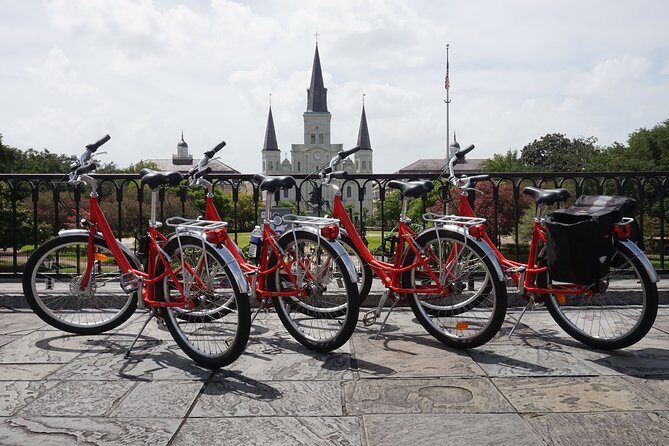
And yes, I’m a fan of the practical setup. You get a helmet, bottled water, and a poncho if the weather turns, which means you’re not scrambling for basics mid-tour.
You can also read our reviews of more cycling tours in New Orleans



Meeting at 1735 Washington Ave: logistics that matter
The tour starts and ends back at 1735 Washington Ave, New Orleans, LA 70113, with a 9:30 am start time. It’s near public transportation, which helps if you’re not sure how you’ll get there yet. You also get a mobile ticket, so you can keep things simple right up until you show up.
Here’s the one thing I’d treat seriously: location visibility. One common snag is that the signage on arrival can be easy to miss, especially if you’re driving past quickly or expecting a bigger storefront. So I suggest you arrive early, scan carefully once you’re in the area, and follow the arrival instructions you’re given with your booking.
Also note that this is a small-group tour (maximum 10 travelers). That’s good for the experience, but it also means the tour timing matters. If you’re late, the group may be moving without you.
French Quarter flow: French Quarter streets, St. Louis Cathedral, and Jackson Square
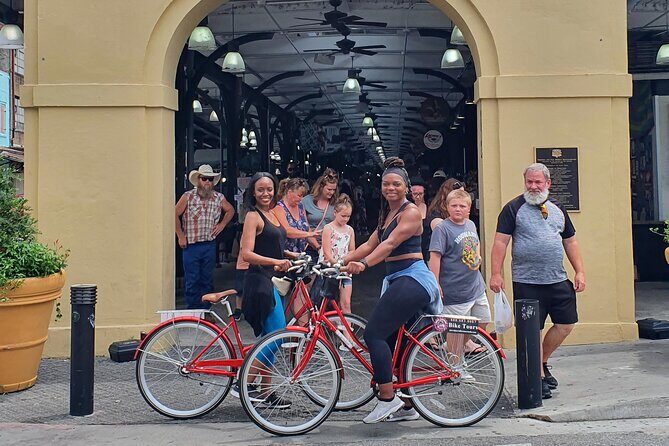
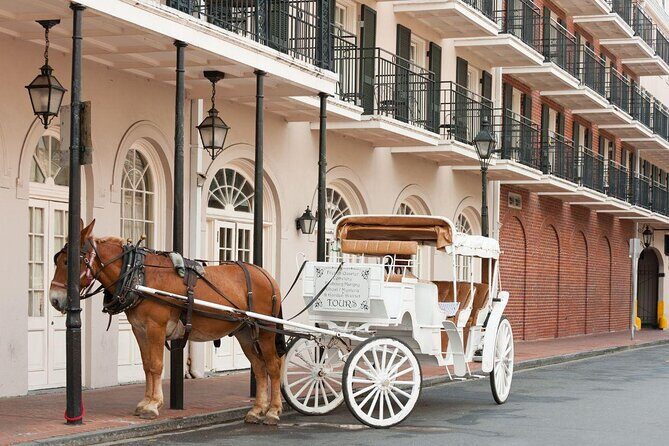
You start in the French Quarter, the oldest neighborhoods vibe in the city. This is the part where New Orleans looks like postcards, but it’s more fun when someone ties what you’re seeing to why it exists. You’ll bike through classic scenes: old architecture, lively street music, and the kind of colorful history people remember because it’s specific.
Your first major stop gives you about 1 hour 30 minutes to soak it in. That’s plenty of time to look up, not just forward—balconies, courtyards, and the way buildings face the street. The tradeoff is that the French Quarter is visually busy, so you’ll want to let the guide set the rhythm. If you try to do everything at once, it’s easy to miss the story bits that make the whole thing click.
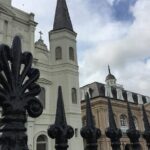
You’ll also get a quick look at the St. Louis Cathedral, the oldest Catholic church in America. The stop is short (around 5 minutes), but it’s timed to help you admire the scale and design without turning it into a long sit-down.
Then comes Jackson Square with about 15 minutes. Expect local art and street performers right in the middle of the action. This is a great moment to take photos and reset your legs without feeling like you’re standing still for too long. You’ll likely also cruise by balconies and galleries while live music carries along the street, which is one of the easiest ways to understand why this neighborhood is so famous.
Lafitte’s Blacksmith Shop and Congo Square: pirate stories meet jazz origins
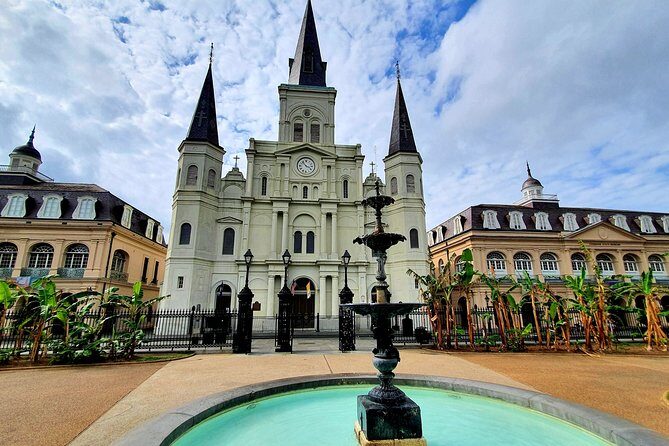
Next you roll past Lafitte’s Blacksmith Shop Bar, one of the oldest bars in the US. The stop is brief (about 5 minutes), but the payoff is the story thread. Your guide connects the place to pirate Jean Lafitte and explains how it became part of the city’s murky, legendary past. It’s the kind of stop that’s short on time and long on atmosphere.
Then you head to Congo Square, where the tour frames it as the site where jazz was born. You’ll spend about 10 minutes here, but the guide connects the dots between music, culture, and the musicians who helped shape what became the Big Easy’s signature sound. This is also where you get the Mardi Gras context, since the area is treated as a hub for traditions both then and now.
A neat piece of the route is what comes right after the Congo Square stop: you pedal through the music district, and your guide points out where the best live bands are playing that night. That part is especially useful if you’re trying to choose shows without wandering around blindly after the tour.
If you like music history, this segment is the heart of the experience. If you don’t, it can still work because the guide brings the stories to life in a way that’s tied to actual streets you can revisit later.
The levee ride: the Mississippi that shaped New Orleans
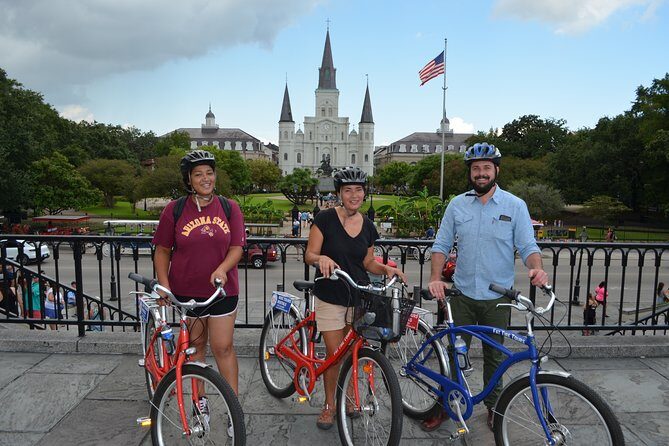
One of the most memorable sections is the shift from neighborhood streets to the Mississippi River. You’ll see why the city was founded where it is by riding atop the levee and watching the river activity: huge commercial vessels and old-style steam boats passing by.
This segment does two things at once. First, it gives you a break from crowds and alleyways. Second, it explains the city’s geography in a way you can feel. New Orleans isn’t only about buildings; it’s about water, trade, and the river’s constant presence.
Practical note: when you’re on a bike, your brain is always scanning for what’s next. So treat this like a mental reset. Stop taking photos only for the camera and start taking them for context—try to memorize what direction the water sits in as you ride, because it helps you later when you’re planning where to go.
You can also read our reviews of more city tours in New Orleans





Garden District pace and Lafayette Cemetery No. 1: elegance and burial traditions
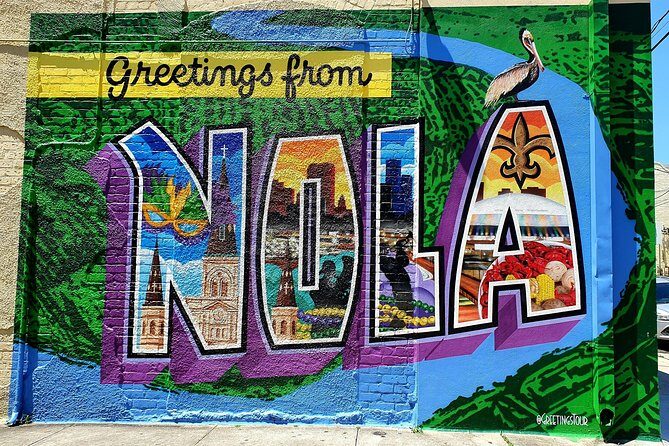
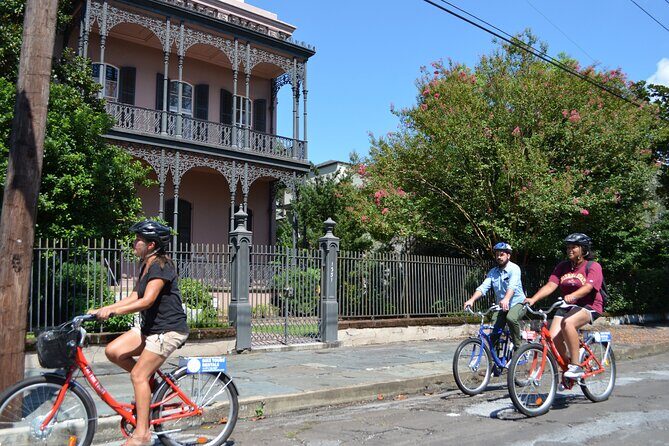
After the river views, you move into the Garden District for about 1 hour. This is where you’ll see the grand, beautiful homes and learn about the people tied to them. The guide points out architecture details and tells stories behind the neighborhood’s development, including references to celebrity homes. It’s a different New Orleans mood than the French Quarter—quieter, more spacious, and focused on design.
The tradeoff is that this is still a bike tour, not a slow walking museum. You’ll get time to appreciate the look and hear the stories, but you’ll also need to be ready to hop off, look, and then move again.
Then you end with Lafayette Cemetery No. 1, with about 5 minutes at the cemetery gates. The guide shares what makes the burial traditions unique and highlights famous people who chose this final resting place. This is the kind of stop where a short dose can still make an impact, because the visuals are strong and the symbolism matters.
If you prefer longer cemetery time, you may want to plan a separate follow-up later. But as part of a 3.5-hour loop, it’s a good way to add meaning without dragging your day out.
What you actually get for $60: bikes, guide, and smart time-saving
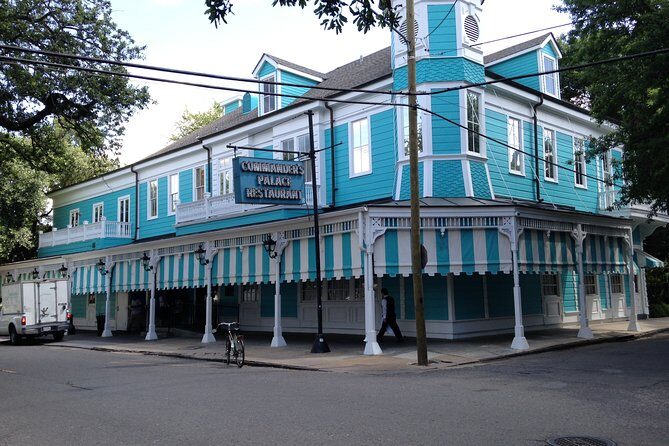
At $60 per person, this tour is trying to do something specific: give you a fast introduction that reduces guesswork. You’re paying for more than scenery. You’re paying for context, plus a guide to point out where to go next.
Here’s what’s included:
- Bicycle use
- Helmet
- Bottled water
- Poncho if it rains
- Local guide
What’s not included is gratuity, so plan for that if you want to reward good service. Since this is owner-operated and small-group, gratuity is often part of the culture.
Is it a bargain? It can be, if you use it as your first-day foundation. People who do this early tend to save time later, because the tour helps you decide what neighborhoods fit your plans for food, shopping, and music. If you only have limited time in town, that value multiplier matters.
One more practical reality: New Orleans streets can be rough. Even with a comfortable route, you might encounter potholes and cobblestone in places. The biking itself is easy for most, but it’s worth knowing so you don’t get surprised when you’re rolling over uneven pavement.
Guides, pacing, and the small-group advantage
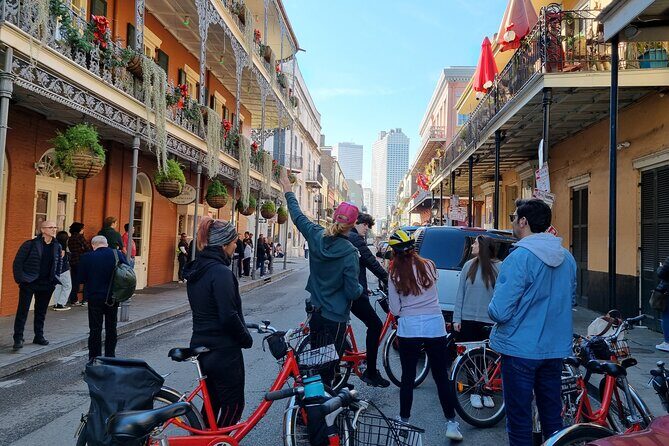
This is where the tour feels personal. It’s owner-operated, and the small cap of 10 travelers means you can ask questions and get answers in the flow of the ride. That also helps with safety, since a guide can keep an eye on spacing and where people are looking.
You’ll see the tour’s personality in how guides tell stories. For example, names that come up include Mavis, Justin, Brian, Tania, Sarah, and Corinna—and the recurring theme is that they mix history with practical guidance, from architecture and lore to suggestions on where to eat or what to check out next.
Pacing is another strength. You’ll get time to walk around for photos at key stops, but you’re not stuck doing long waits. There are also moments where live music from the street keeps things moving, which is one of those New Orleans bonuses that you can’t really replicate on your own schedule.
And if rain shows up, it’s not a total reset. The tour operates rain or shine, and if weather becomes unsafe, they work to reschedule or refund. On at least one rain-heavy day, the guide still offered an alternate verbal tour while ponchos went on—so the experience adapts instead of simply ending.
Should you book the New Orleans City Bike Tour?
If you want a first-day orientation that covers the big neighborhoods and doesn’t drain your feet, I’d book it. The flat, comfortable biking plus timed stops make it a good fit for couples, solo travelers, and families with moderate physical fitness.
I’d also choose it if you care about music and culture, since the route ties the city to Congo Square jazz origins and then keeps pushing you toward live performances that night. And if you’re the type who plans dinner and shows based on neighborhood energy, the guide’s pointers can help you avoid aimless wandering.
Skip it only if you strongly prefer long, unscheduled time at each site. This tour is designed for movement and breadth, not deep time. Also, if you’re anxious about finding the meeting spot, arrive early and double-check the directions you’re given.
FAQ
FAQ
How long is the New Orleans City Bike Tour?
It runs for about 3 hours 30 minutes.
What does it cost?
The price is $60.00 per person.
What time does the tour start, and where does it meet?
It starts at 9:30 am and meets at 1735 Washington Ave, New Orleans, LA 70113.
Is the tour in English?
Yes, it’s offered in English.
What’s included with the tour price?
You get use of a bicycle, a helmet, bottled water, a poncho if it’s raining, and a local guide.
Are there admission fees for the stops?
The provided stop information lists admission ticket free for the included stops.
What should I know about biking difficulty and fitness?
You should have a moderate physical fitness level, and the terrain is described as flat and comfortable for riding.
Is there a limit to group size?
Yes. The maximum group size is 10 travelers.
What happens if it rains?
The tour operates rain or shine. In dangerous weather, you’ll be rescheduled or refunded.
Do I need to tip the guide?
Gratuity is not included in the price.