REVIEW · NEW ORLEANS
60-minute Tremé Walking Tour & Photo Experience
Book on Viator →Bookable on Viator
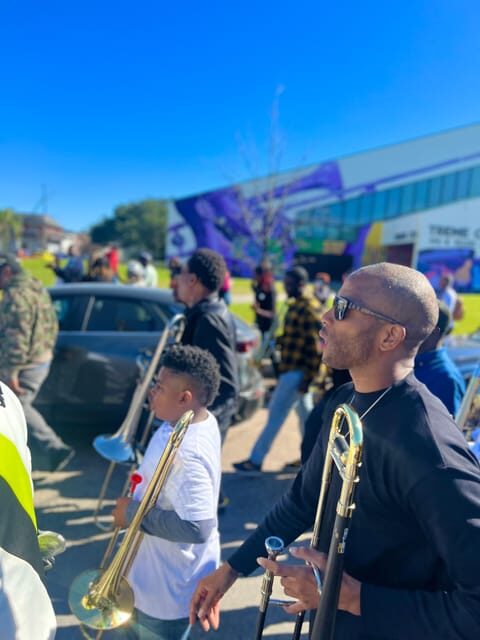
Tremé tells New Orleans the straight way. This 60-minute private walking tour keeps you off the usual postcard route and turns the neighborhood into a story you can actually see, with personal attention from a local guide and photo assistance built in. I also like that it connects the city’s big, well-known chapters (Storyville, Mardi Gras) to places most people skip—like the old Storyville edge at Backatown Coffee Parlour and the post-Katrina hospital site.
One thing to plan for: not every stop has admission included. Backatown Coffee Parlour and the Storyville District are listed as tickets not included, while the Mardi Gras Museum of Costumes and Culture is included, and the medical center stop is free.
In This Review
- Key highlights you’ll feel in real time
- Why Tremé is the New Orleans most people skip
- Backatown Coffee Parlour: where morning coffee meets Storyville
- Storyville District: understanding the red-light district beyond the headline
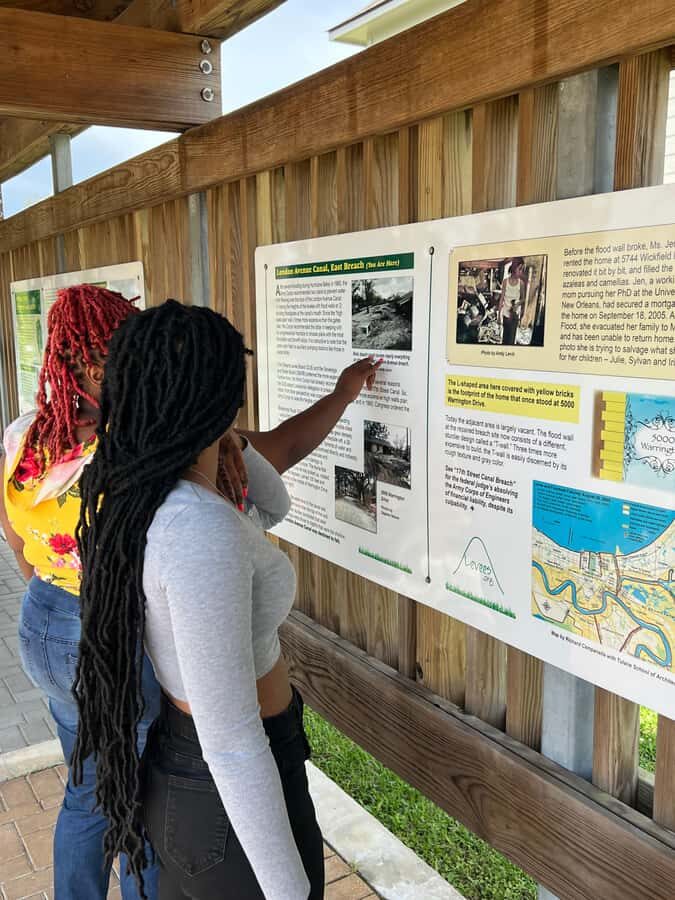
- Charity Hospital and the Katrina-era shift you can still read in the streets
- Tremé and the I-10 highway: a neighborhood’s life above and under pressure
- Mardi Gras Museum stop: costumes and culture beyond the loud parts
- The guide and photo help: how the experience stays personal
- Price and value: how $15 holds up for 60 to 90 minutes
- Timing, weather, and what to wear for a photo-forward walk
- Who this tour suits best (and who should look elsewhere)
- Should you book this Tremé walking tour and photo experience?
- FAQ
- How long is the Tremé walking tour?
- How much does the tour cost?
- Is this tour private?
- What language is the tour offered in?
- Where does the tour start and end?
- Are tickets included for all stops?
- Does the tour help with photos?
- What’s the weather requirement?
- Is the meeting point near public transportation?
Key highlights you’ll feel in real time
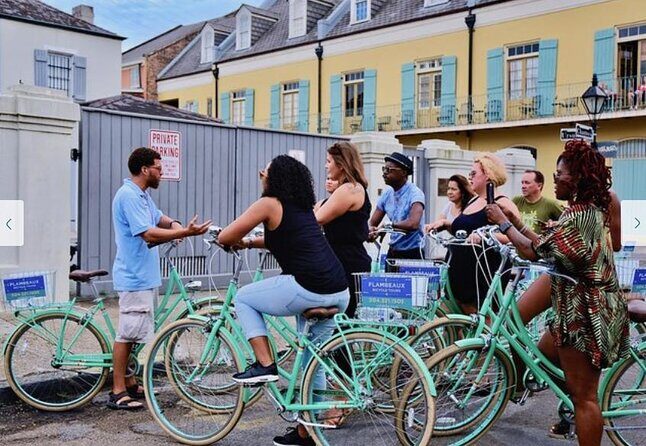
- Private guide, small pacing: 1 hour to 1.5 hours, just your group
- Photo help, not just sightseeing: you get coaching so your shots look intentional
- Backatown at the old Storyville site: coffee + context at a historically layered address
- Storyville and its city ordinance background: the red-light district story explained clearly
- Charity Hospital/Katrina aftermath context: you’ll see how the medical system shifted
- Tremé and the I-10 impact: the elevated highway as a living part of the neighborhood’s story
Why Tremé is the New Orleans most people skip
Tremé sits right next to the famous stuff, but it doesn’t play by the same rules. This tour is built for people who want more than names on a map—you get short, focused walks that connect to real places and real decisions.
In practice, that means your guide doesn’t just point out sights. You get context you can use: how neighborhoods change, which institutions mattered, and why certain scars and landmarks still shape everyday life.
You can also read our reviews of more walking tours in New Orleans


Backatown Coffee Parlour: where morning coffee meets Storyville
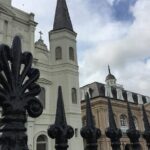
Your first stop is Backatown Coffee Parlour, placed at the very site of old Storyville. That combo matters: you’re not walking through a museum-like version of the past—you’re starting the walk where the neighborhood still functions as a community meeting space.
What’s great here is the tone. The stop is framed around conversations and ideas, with an emphasis on how different kinds of people have gathered in New Orleans for generations. If you’re a photo person, this is also a useful warm-up: coffee spots give you contrast—people, faces, signage, and texture—without needing perfect lighting or long distances.
Quick practical note: admission here is listed as not included, so you’ll want to expect that you may pay for what you order.
Storyville District: understanding the red-light district beyond the headline
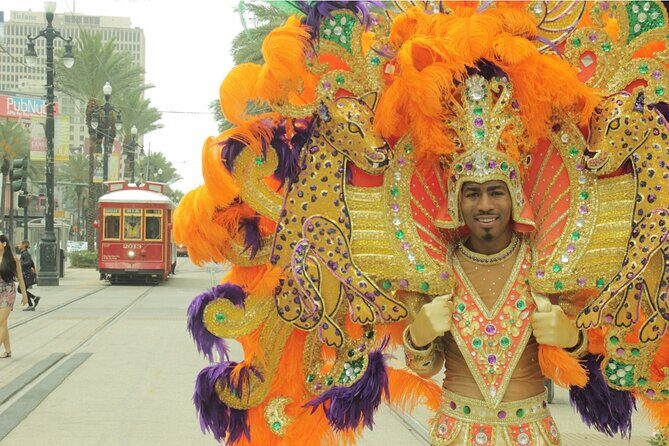
Next up is the Storyville District, the city’s red-light district from 1897 to 1917. The tour’s angle is grounded in how it was actually created and managed—by municipal ordinance—so you understand it as a regulated system, not just a lurid rumor.
You’ll also hear the name Sidney Story, an alderman associated with the guidelines and legislation that shaped how prostitution was controlled in the city. That detail helps you connect the story to civic power and lawmaking—how New Orleans officials treated morality, labor, and money as things they could regulate.
Time here is tight—about 10 minutes—so treat this as a “set the frame” stop. The goal isn’t to master every chapter. It’s to leave with the main mechanics so the rest of the walk makes sense.
Charity Hospital and the Katrina-era shift you can still read in the streets
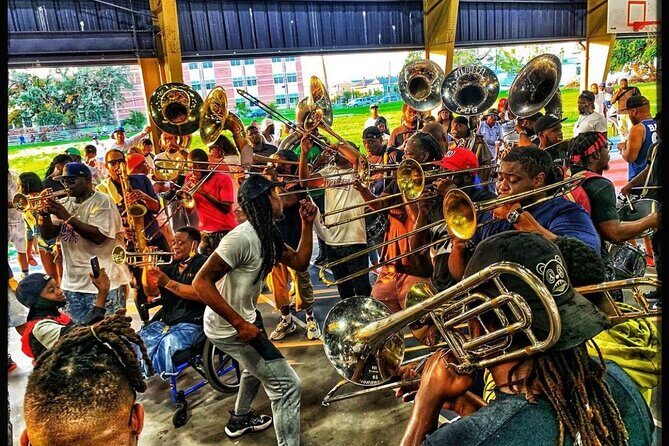
One of the most meaningful stops is the Medical Center of Louisiana at New Orleans East Campus, with Charity Hospital as the key reference point. The story centers on what happened after Hurricane Katrina—specifically that then-Governor Kathleen Blanco said Charity Hospital would not reopen as a functioning hospital.
Then comes the important follow-through: the Louisiana State University System (which owns the building) said it had no plans to reopen Charity Hospital in its original location. Instead, the building was incorporated into the city’s new medical center in a different area, with the new hospital named University Medical Center New Orleans, completed in August 2015.
Why this stop works on a walking tour: it shows how a disaster changes infrastructure and how institutions get rebuilt elsewhere. It’s not just tragedy; it’s how a city reorganizes itself afterward.
Good news: this stop lists admission as free. So you can spend your money on the experiences that actually require tickets, like the museum later.
Tremé and the I-10 highway: a neighborhood’s life above and under pressure
The tour then turns to Tremé itself, including the long-running impact of an elevated stretch of Interstate 10 that runs above North Claiborne Avenue. In the neighborhood narrative, it’s often treated like a villain because it altered daily life—taking homes, businesses, and a strand of oak trees when it was built more than half a century ago.
The tour also frames the idea of change: generations have imagined removal or closure of traffic, and today the infrastructure bill includes federal funding intended to help neighborhoods like Tremé.
This is the kind of stop where your guide’s storytelling matters. You’re not just looking at concrete. You’re learning why it matters, how it shaped the neighborhood, and why fixing the damage is part history and part policy.
Time is also about 10 minutes, so take it as a guided “spot and understand” moment. If you want deeper photos, this is a place to slow down and ask for framing help on the sidewalk, not from across the street.




Mardi Gras Museum stop: costumes and culture beyond the loud parts
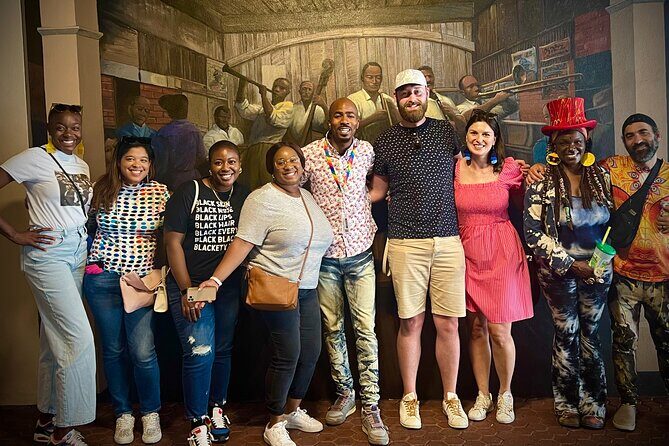
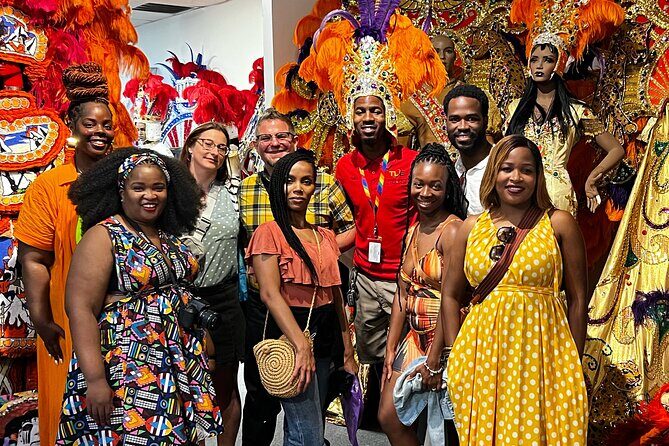
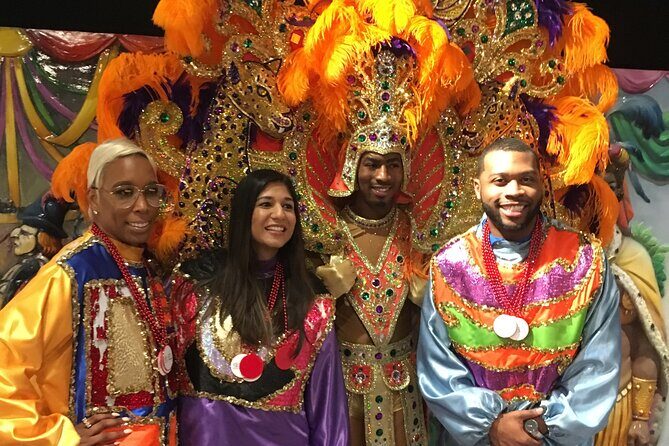
Before you end, you visit the Mardi Gras Museum of Costumes and Culture. This is where the walk connects to the creativity of Mardi Gras without forcing you to relive one specific parade day.
The museum is described as a contemporary celebration of grassroots traditions—pageantry, fun, and creativity shaped locally. That matters if you’re trying to avoid the tourist version of Mardi Gras that focuses only on beads and big spectacle.
Admission here is included, and that’s a real value boost. Plan on about 20 minutes. It’s enough time to get your bearings and pick out costume details for photos, but not so long that you feel stuck.
One scheduling reality: the provided opening hours list specific times for Tuesdays. If your visit window is narrow, check the museum hours for your date when you book so the stop actually lands when you expect.
The guide and photo help: how the experience stays personal
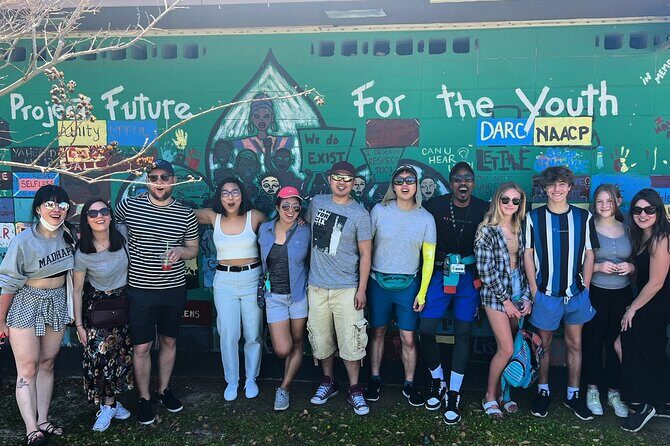
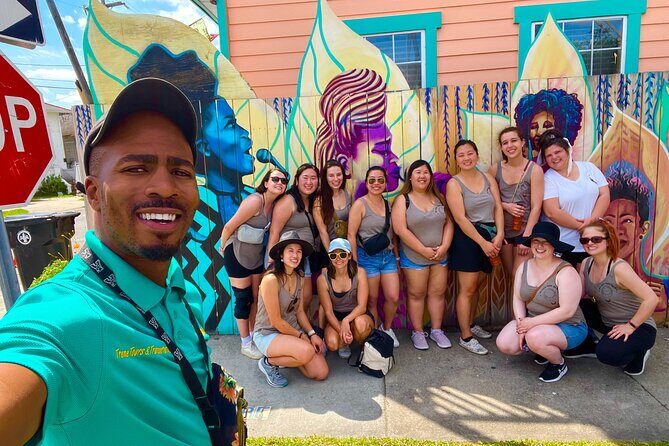
This is a private tour, meaning only your group participates. That changes the feel fast. Instead of following someone else’s pace, you can ask questions, get repositioned for better light, and take photos without the usual scramble.
The experience also explicitly includes assistance with taking great photos. That can mean help choosing angles, timing shots around street activity, or getting you to adjust your stance so faces and details read clearly. Even if you’re using a phone, having a guide watch what you’re shooting can level up results.
In past runs, the tour has been led by Hollis, who’s described as sharing New Orleans history from an African American perspective and offering helpful recommendations beyond the walk. If you get a guide like that, you’ll likely get more than facts—you’ll get a sense of how to look at the city.
Also, there’s mention of audio from different documentaries and stopping to discover local food spots. Those elements can add texture, especially if you’re the type who learns better through story + atmosphere, not just text.
Price and value: how $15 holds up for 60 to 90 minutes
At $15 per person, this is priced like a thoughtful neighborhood walk, not a high-priced production. For your money, you’re getting:
- a private group experience
- a local guide’s storytelling
- photo assistance
- multiple historic neighborhood stops
- museum admission included (at the Mardi Gras Museum)
The one “value adjustment” is admissions. Backatown Coffee Parlour and the Storyville District list admission tickets not included. That doesn’t make the tour bad—it just means you’re paying for some parts separately, while the museum stop is covered.
If you’re the type who likes history but hates spending half a day in formal museums, this is a strong fit. You trade long museum time for targeted, walkable context.
Timing, weather, and what to wear for a photo-forward walk
This experience requires good weather. When weather turns, the tour can be canceled due to poor conditions, with a different date or a full refund offered in that case. So if your schedule is flexible, you’re in a better spot.
For your comfort and photos, dress like you’ll be outside and moving. The route includes short street segments between different kinds of places—coffee stop, district area, medical-institution setting, a neighborhood corridor, and the museum—so shoes with grip matter.
For photos: use the first stop to test your settings and learn how your phone handles darker interiors vs bright street light. Then lean on your guide for the moments that matter: building details, street scenes, and portrait-style shots where faces show emotion, not just background.
Who this tour suits best (and who should look elsewhere)
This tour is a great match if you want:
- a private pace instead of a crowd
- a Tremé-focused route that goes past surface-level sightseeing
- help building better photos on the street
- clear context about Storyville, Charity Hospital, and the I-10 impact
It might be less ideal if you want a long, slow, deep museum-style visit at every stop. The timing is tight—most walking stops are around 10 minutes—so you’re expected to leave with the big picture and your own follow-up questions.
Should you book this Tremé walking tour and photo experience?
If your goal is to see New Orleans as a living neighborhood, not just a photo lineup, I think it’s an easy yes. The price is reasonable, the route stays focused, and the included museum ticket is a meaningful value perk.
Book it when you can align with good weather and a museum time window that works for you. And if you care about your photos, bring that mindset from minute one—this tour is designed to help you make the camera part of the story, not an afterthought.
FAQ
How long is the Tremé walking tour?
The duration is about 1 hour to 1 hour 30 minutes.
How much does the tour cost?
It costs $15.00 per person.
Is this tour private?
Yes. It’s a private tour/activity, and only your group will participate.
What language is the tour offered in?
The tour is offered in English.
Where does the tour start and end?
It starts at 301 Basin St #1, New Orleans, LA 70112, USA and ends at 1010 Conti St, New Orleans, LA 70112, USA.
Are tickets included for all stops?
No. Backatown Coffee Parlour lists admission ticket not included, the Storyville District lists admission ticket not included, the Medical Center of Louisiana stop is free, and the Mardi Gras Museum of Costumes and Culture includes admission.
Does the tour help with photos?
Yes. The experience includes assistance with taking great photos.
What’s the weather requirement?
This experience requires good weather. If it’s canceled due to poor weather, you’ll be offered a different date or a full refund.
Is the meeting point near public transportation?
Yes, it’s listed as near public transportation.