New Orleans, but with manners and marble. On this 2-hour guided walk through the Garden District, I love the Italianate-to-Gothic architecture you can spot block by block, and I like the small-group pace that leaves time for questions. You’ll see stops tied to famous names and odd stories, but note that the Lafayette Cemetery part may be limited to a gate discussion when access is closed for maintenance.
You start at the southwest corner of Prytania St. and Washington Ave. (next to the white wall). From there, you’ll move house to house—Italianate, Gothic Revival, Greek Revival—then end with a cemetery explanation and above-ground tomb context that helps the whole neighborhood click into place.
It’s a live, English-speaking walk with no hotel pickup and no food or drinks included. Plan on comfortable shoes and quiet respect: smoking is out, flash photos are out, and the tour rules are strict about snacks and drinks.
In This Review
- Key Things to Know Before You Go
- Why a Garden District Walk Still Feels Personal in 2 Hours
- Starting at Colonel Short’s Villa: Italianate Details You Can Spot Fast
- Briggs-Staub House and Toby’s Corner: Styles With Real Contrast
- Commander’s Palace Stop: A Restaurant With Local Roots
- Manning House and Famous New Orleans First Names
- Brevard-Mahat-Rice House: Anne Rice’s House as a Writing Location
- Rosegate Gardens and Payne-Strachan House: Beauty and the Strange Stuff
- Lafayette Cemetery: What You’ll Actually See When It’s Closed
- The $49 Price: What You’re Paying For in Real Terms
- How to Make This Walk Enjoyable (Not Exhausting)
- Who Should Book This Garden District Walk
- Should You Book This Garden District Tour or DIY It?
- FAQ
- How long is the Hidden History of New Orleans Garden District tour?
- What is the price per person?
- Where do I meet the tour?
- Is the tour food or drinks included?
- What are some of the main stops on the walk?
- Is Lafayette Cemetery actually visited inside the grounds?
- What language is the tour guide?
- Is the tour suitable for children?
- Are there rules about photography, smoking, and what I bring?
- Is it wheelchair accessible?
Key Things to Know Before You Go
- Colonel Short’s Villa opens the walk with standout Italianate flair and a story you’ll actually remember.
- Briggs-Staub House is the Garden District’s only true Gothic Revival example, and your guide will point out what makes it unusual.
- Commander’s Palace Restaurant is a major stop tied to local tradition since 1893, not just a pretty storefront.
- Anne Rice’s connection shows up at the Brevard-Mahat-Rice House, where she lived for years and set her Witching Hour trilogy.
- Rosegate gardens connect architecture and horticulture, including a reference to early chain-link fence design.
- Lafayette Cemetery is often discussed at the gate, with above-ground tombs explained when the grounds are closed to groups.
Why a Garden District Walk Still Feels Personal in 2 Hours
The Garden District can look like a postcard—until you learn what you’re actually seeing. This tour is built around the idea that streets teach you how New Orleans wealth, culture, and taste evolved: house styles, property histories, and the way famous residents shaped the neighborhood.
The best part for me is the pacing. Because it runs like a smaller guided group, you don’t get shoved along. You can ask questions and get clear explanations at each stop, which makes the architecture more than eye candy.
The one practical trade-off is time. It’s only two hours, so you’re walking a lot with focused stops—no long museum-style breaks. And because Lafayette Cemetery access can be restricted, the cemetery experience may be shorter than you expect.
You can also read our reviews of more historical tours in New Orleans



Starting at Colonel Short’s Villa: Italianate Details You Can Spot Fast
Most Garden District tours start with something pretty. This one starts with something specific: Colonel Short’s Villa, a masterpiece of Italianate architecture.
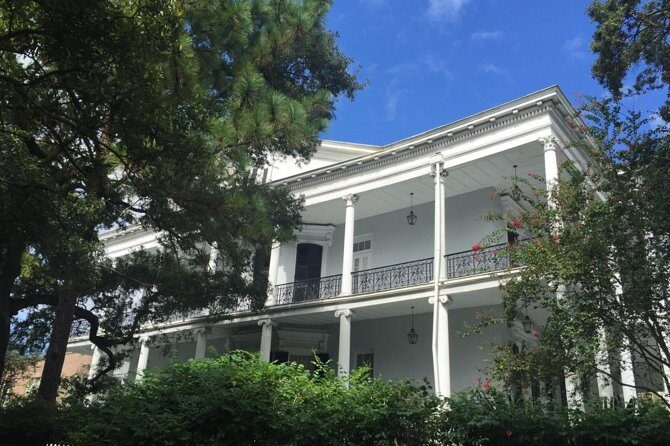
Italianate design has tells you can clock quickly—things like tall, dramatic forms, ornamental detailing, and an overall “old-world” elegance that feels distinct from simpler American styles. Your guide’s job here is to slow you down just enough to notice the patterns, then connect them to the people who lived in the home and the era that produced it.
Why that matters for you: if you learn what Italianate looks like at the very beginning, every later house comparison becomes easier. You’ll stop seeing random mansions and start seeing design choices made by real people at particular points in time.
Also, this is a good kickoff stop because it sets a tone. From the first minutes, it’s clear this isn’t just a history lecture; it’s a walking guide that shows you how to read the neighborhood.
Briggs-Staub House and Toby’s Corner: Styles With Real Contrast
After Colonel Short’s Villa, the tour moves into another design world with the Briggs-Staub House. This is the one you’ll hear described as the only true example of Gothic Revival architecture in the Garden District.
Gothic Revival isn’t subtle. The style leans toward pointed shapes and an almost storybook drama, but here it’s tied to why someone chose that look in this particular neighborhood. Your guide will point out the features that make the house feel different from the surrounding streets, and why that difference sticks out even when the whole area looks “cohesive.”
Then you swing to Toby’s Corner, described as the oldest house in the Garden District, with Greek Revival architecture. Greek Revival feels calmer and more formal—think classic shapes and an emphasis on symmetry and proportion. Seeing it after Gothic Revival helps you understand something important: this neighborhood isn’t one single era. It’s layers.
That contrast is what makes the walk useful. You don’t just hear names; you learn how eras and tastes show up in brick and stone.
Commander’s Palace Stop: A Restaurant With Local Roots
Next comes a stop at Commander’s Palace Restaurant, an iconic Garden District institution known for award-winning cuisine and operating since 1893.
Even if you’re not planning a full meal, this kind of stop matters. It anchors the neighborhood in everyday life. Houses represent status and style, but restaurants represent community rhythms—who gathered here, how traditions formed, and how the area stayed culturally important even as the city changed.
One important note: food and drinks aren’t included in the tour. So treat the restaurant visit as a cultural pause and photo opportunity, not a built-in lunch.
If you do plan to eat afterward (and this is a great spot to do it), you’ll be more confident ordering because you’ve already connected the restaurant to the neighborhood’s long timeline.
Manning House and Famous New Orleans First Names
The tour heads toward the Manning House, once home to former New Orleans Saints quarterback Archie Manning. It also ties to the childhood home of Peyton, Eli, and Cooper Manning.
This stop gives the Garden District a modern pop-culture thread without turning the walk into a celebrity spotlight. What you’ll get from the guide is the sense that fame didn’t replace neighborhood identity—it added another chapter.
Why this is valuable for you: New Orleans can feel like one big party from a distance, especially if you’re only hitting the obvious classics. Stops like this remind you that the city also creates quiet legacies, where status is stored in architecture and family history just as much as in headline moments.
And the house style details you saw earlier still matter here. The tour doesn’t let you forget that this is fundamentally a place with long-running design choices.






Brevard-Mahat-Rice House: Anne Rice’s House as a Writing Location
One of the most interesting stops is the Brevard-Mahat-Rice House. The tour frames it as a strong example of antebellum South opulence, and it also comes with one of the clearest literary connections on the route.
Anne Rice renovated the home and used it as her primary residence for many years. The tour also notes that she set her Witching Hour trilogy inside.
For you, this is where the walk becomes more than architecture. It becomes a sense of place. You’re not just looking at a house; you’re connecting that house to a creative world that grew out of it.
Practical tip: if you’re a reader of Rice’s New Orleans work, this is a stop where it helps to have fresh familiarity with her setting. Even if you don’t, the guide’s stories will help you understand why the house mattered enough to become part of a fictional universe.
Rosegate Gardens and Payne-Strachan House: Beauty and the Strange Stuff
Rosegate is next, described as an enchanting, serene escape and a glimpse into the city’s horticultural heritage. You’ll hear it described as being surrounded by one of the first chain-link fence designs in the world.
This is an unusual angle for a Garden District walk, and I like that. You’re not only staring at façades. You’re seeing how people shaped private outdoor space and how even the fences around it can become a historical clue.
Then the tour points to the Payne-Strachan House, where Jefferson Davis—the first and only President of the short-lived Confederate States of America—died.
That stop will feel heavier than the Rice stories and lighter moments. But it’s still part of the neighborhood’s meaning. The Garden District isn’t only romance and movie-set charm; it also holds reminders of the people and systems tied to the past.
The value for you is balance. Seeing both the beautiful and the complicated makes the neighborhood feel real, not sanitized.
Lafayette Cemetery: What You’ll Actually See When It’s Closed
The tour wraps with Lafayette Cemetery. The focus is on the unique above-ground tombs and the stories attached to them.
But here’s the key practical consideration: the cemetery is currently closed to groups for maintenance, so you may be discussing it from the gate rather than walking into the grounds. The tour information calls this out, and it’s a big reason to plan your expectations.
Even with limited access, a gate discussion can still help you understand how above-ground burial works in New Orleans. It also helps you connect what you’ve seen across the walk: the neighborhood’s emphasis on permanence. These homes and these tombs both show a mindset—marking identity and memory in enduring structures.
If you’re set on a longer cemetery visit, you can still plan that as a separate stop on your own schedule. This tour should be treated as the orientation and context part.
The $49 Price: What You’re Paying For in Real Terms
$49 for a two-hour guided walking tour is the kind of price that often separates a real guide from a rushed stroll. Here, your money goes to a structured route with specific stops—Colonel Short’s Villa, Briggs-Staub House, Commander’s Palace, the Manning House, Brevard-Mahat-Rice House, Rosegate, Payne-Strachan House, and a cemetery gate discussion when needed.
What you’re not getting is also clear: food and drinks aren’t included, and there’s no hotel pickup. That means you’ll need to handle your own getting there and your own refreshments outside the tour.
So the value question is simple: do you want someone to explain the architecture and the resident stories while you walk? If yes, this is a fair deal for the density of named stops you’ll hit in only two hours. If you’d rather roam slowly with a map app and pick your own pace, then you might find you only use a few of the stops.
How to Make This Walk Enjoyable (Not Exhausting)
This is walking-first. Wear comfortable shoes because the route moves house to house and you’ll likely be on sidewalks for most of the two hours.
Also watch your photo habits. Flash photography isn’t allowed, and the tour rules say no smoking. In practice, that means you’ll get better results by keeping your camera ready but keeping the lights off and staying aware of the guide’s timing.
Finally, if weather is rough—heavy rain, extreme heat—dress accordingly. You’ll be out on the route, and the tour doesn’t include any indoor “escape” breaks between the stops.
Who Should Book This Garden District Walk
This tour fits best if you:
- Care about architecture styles and want help spotting the differences
- Like tours where the guide can answer questions without rushing you along
- Want a Garden District experience that includes both famous names and odd, human stories
- Prefer a short, focused window instead of half-day or full-day tours
It may be less ideal if you:
- Need a fully wheelchair-friendly route (there’s conflicting information here—wheelchair accessible is listed, but it’s also marked not suitable for wheelchair users and people with mobility impairments)
- Are traveling with kids under 8 (the tour is not suitable for them)
- Want an in-depth cemetery walk inside the grounds (access can be limited for maintenance)
Should You Book This Garden District Tour or DIY It?
If you want the Garden District to feel like a place with context, book it. The tour’s strength is the way it connects architecture style to named homes and resident stories, then ends with cemetery orientation.
DIY can work if you’re the type who enjoys scanning façades and researching later. But with only two hours, you’d be working harder than you need to. A guide saves time and turns the walk into a clearer experience.
If you have mobility concerns or you’re hoping for full cemetery access, ask before you commit—especially since the cemetery may only be discussed at the gate when it’s closed to groups.
Overall, I think this is a solid $49 buy for anyone who wants a smart, story-driven Garden District hit without the long, tiring schedule of bigger outings.
FAQ
How long is the Hidden History of New Orleans Garden District tour?
It lasts about 2 hours.
What is the price per person?
The price is listed as $49 per person.
Where do I meet the tour?
Meet at the southwest corner of Prytania St. and Washington Ave. (next to the white wall).
Is the tour food or drinks included?
No. Food and drinks are not included.
What are some of the main stops on the walk?
The tour includes Colonel Short’s Villa, Briggs-Staub House, Commander’s Palace Restaurant, and a route that includes Toby’s Corner, the Manning House, the Brevard-Mahat-Rice House (Anne Rice’s home), Rosegate, and the Payne-Strachan House. It also includes discussion about Lafayette Cemetery.
Is Lafayette Cemetery actually visited inside the grounds?
The information says the cemetery is currently closed to groups for maintenance, but it will be discussed at the gate.
What language is the tour guide?
The tour guide provides the tour in English.
Is the tour suitable for children?
No. It is not suitable for children under 8 years old.
Are there rules about photography, smoking, and what I bring?
Smoking is not allowed. Flash photography is not allowed. Food in the vehicle and drinks are listed as not allowed.
Is it wheelchair accessible?
The activity is marked as wheelchair accessible, but it also states it is not suitable for wheelchair users and people with mobility impairments. You should check before booking.