REVIEW · NEW ORLEANS
Jewish History Tour of New Orleans
Book on Viator →Operated by NOLA Tours · Bookable on Viator
New Orleans has a habit of hiding big stories in plain sight. This Jewish History Tour of New Orleans threads together landmark stops like the Agam Holocaust Memorial and Jewish-owned buildings, with excellent guidance from locals such as Janet and Suzanne. I especially like how it stays focused on walkable streets and specific places, and how it turns famous names into something you can actually picture as you move through the French Quarter. One drawback: you are walking most of the time, so it’s not the pick if you want lots of indoor breaks.
The good news is the pacing stays reasonable and the group stays small (max 14), so you get time to ask questions. Still, since there’s no air-conditioned vehicle, plan for warm or humid weather and wear shoes made for uneven sidewalks.
In This Review
- Key things I’d notice on this Jewish History Tour
- Woldenberg Riverfront Park: Holocaust Memorial and Malcolm Woldenburg
- Jackson Square’s uncomfortable beginning: colony, inquisition threats, and early days
- Madame John’s Legacy: a Jewish philanthropist’s landmark in plain sight
- Royal Street to Pirates Alley: Jewish pirates and street-level storytelling
- Preservation Hall in the foreground: how music was saved
- Judah Benjamin at Omni Royal Orleans: politics, slavery, and Civil War-era context
- Price, pacing, and logistics that actually matter
- Guide style: local, insured, and built for questions
- Best for whom (and when it might not fit)
- Should you book this Jewish History Tour of New Orleans?
- FAQ
- How long is the Jewish History Tour of New Orleans?
- What does the tour cost?
- Where does the tour start and end?
- Is the tour offered in English?
- What’s included in the ticket price?
- Do I need to worry about weather or cancellation?
Key things I’d notice on this Jewish History Tour
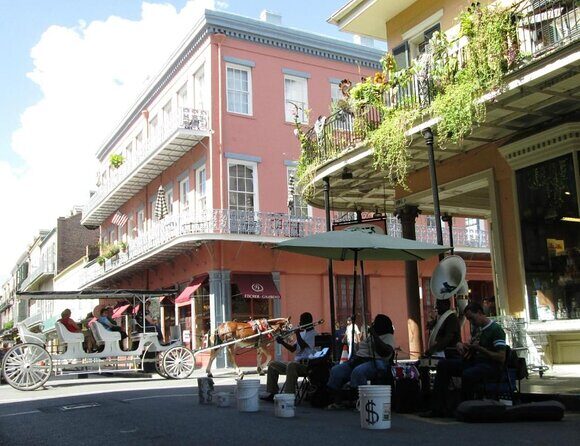
- Agam Holocaust Memorial at Woldenberg Riverfront Park: a powerful moment tied to the river setting and New Orleans’ public memory
- French Quarter walk that stays tight: practical route from Canal Street area to the St. Louis Cathedral area
- Madame John’s Legacy: a historic building connected to a Jewish philanthropist
- Royal Street to Pirates Alley: the guide ties street-level legends to Jewish connections, including pirates
- Preservation Hall front stop: you learn how music was safeguarded by Jewish preservationists
- Judah Benjamin + Civil War context: the finale adds serious political history, including slavery in the state before the Civil War
Woldenberg Riverfront Park: Holocaust Memorial and Malcolm Woldenburg
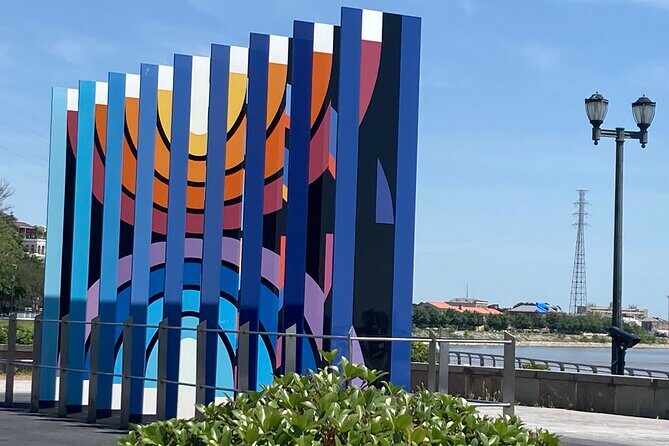
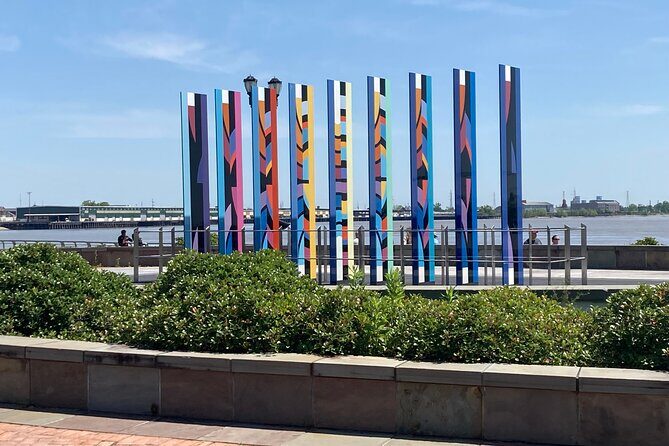
The tour starts near Canal Street and quickly sets a serious tone with a walk along the riverfront at Woldenberg Riverfront Park. This is where you’ll see the Holocaust Memorial, including the Agam artwork that people often miss if they only rush through New Orleans sights. The river backdrop matters. It’s not just a standalone monument—it’s part of a public space where you can take your time and let the symbolism land.
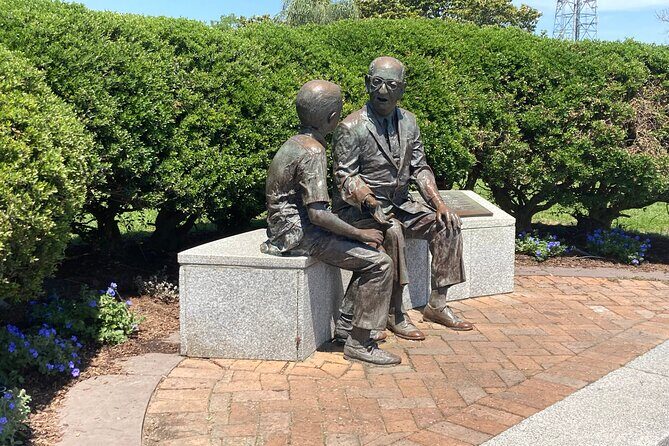
You’ll also hear about the statue of Malcolm Woldenburg, which grounds the memorial moment in local civic identity. I like this opening because it gives you a frame for everything that follows: Jewish life in New Orleans isn’t only about one chapter. It’s about arrivals, contributions, preservation, and also the ways history leaves reminders behind in the open.
Practical note: since this is an outdoor stretch early in the walk, it’s a good time to check your comfort—water, sun protection, and shoes all matter more here than you might expect.
You can also read our reviews of more historical tours in New Orleans


Jackson Square’s uncomfortable beginning: colony, inquisition threats, and early days
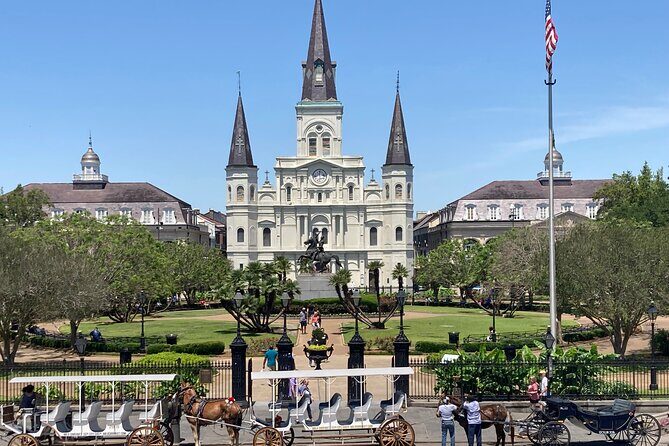
From there, the tour moves into the area around Jackson Square. The guide uses this central location as a quick orientation to New Orleans’ early days, including the idea of colonial power and the pressure of inquisition threats.
This stop works because Jackson Square is one of those places you think you already know. Yet the tour angle shifts the focus from pretty photo ops to how authority and religion shaped what life looked like for different groups. If you care about how European politics echoed through colonial ports, this is where you start connecting the dots.
You won’t get a long lecture—just enough context to make later stops feel less random. It’s also a helpful reset: after the heavy riverfront memorial, this is the bridge back into the city’s layered social story.
Madame John’s Legacy: a Jewish philanthropist’s landmark in plain sight
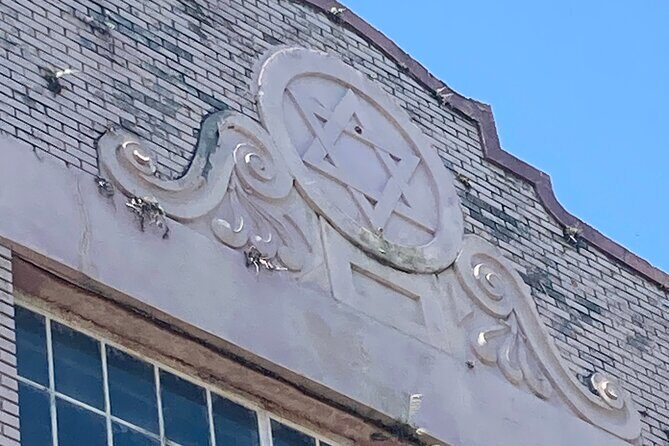
Next comes one of those buildings you’d probably walk right past without a guide pointing it out. The tour stop at Madame John’s Legacy focuses on an old structure and how it connects to a Jewish philanthropist.
What I like about this part is that it doesn’t feel like museum history. You’re looking at a real building still standing in the street grid of the French Quarter. The guide helps you understand why ownership, patronage, and community support mattered—especially in a city where wealth and influence often showed up in architecture and institutions.
This stop is also a reminder that Jewish presence in New Orleans wasn’t only about churches, synagogues, and formal records. It was also about people funding, building, and supporting city life in visible ways.
If you’re the kind of traveler who enjoys “how did this person fit into the city” questions, this is a strong mid-tour moment.
Royal Street to Pirates Alley: Jewish pirates and street-level storytelling
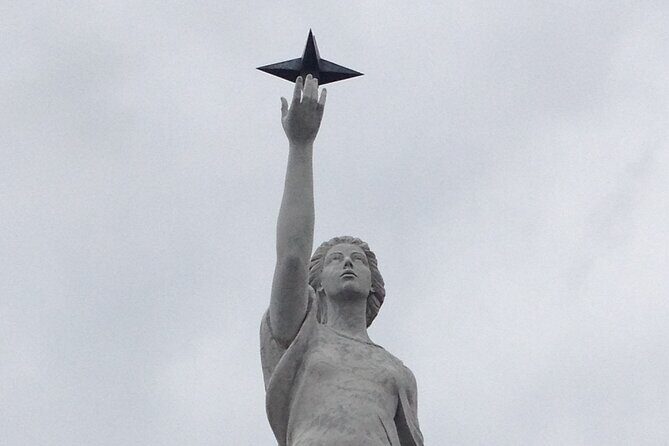
Then the tour shifts to one of the most fun sections: Royal Street, running from the Dumaine area toward Pirates Alley. Here, the guide leans into New Orleans’ pirate lore and specifically points out that some of the stories include Jewish connections.
This is not the usual “pirates!” fluff. The guide ties legends to how New Orleans functioned as a port city—movement of goods, migration of people, and the kind of networks that grew around trade. Once you hear the Jewish angle in the pirate stories, you’ll start seeing how easily overlooked communities can become part of the big-city mythology.
One thing to watch: Royal Street is lively. You’ll want to keep an eye on the group and the flow of foot traffic. The good part is the tour stays close to the sidewalk culture you came for, so you aren’t stuck in car-free dead ends.
If you want a walking tour that’s both educational and genuinely entertaining, this is the section that earns it.
Preservation Hall in the foreground: how music was saved
The tour ends up near Preservation Hall, and it’s set up as a story about how music was saved by Jewish preservationists. Even if you’re not a total jazz-history fanatic, this stop hits because it explains preservation in human terms.
Preservation Hall can look like a straightforward stop for music lovers. But the tour reframes it. Instead of only asking what you can hear, it asks who worked to protect the art, keep traditions alive, and make sure the city’s musical identity survived changing times.
The placement matters too: the tour’s “in front of the storied Jazz Hall” approach makes it feel like you’re standing at the doorway of a living culture, not staring at a plaque. You’ll leave understanding that preservation is often action—funding, organizing, and showing up—more than it is nostalgia.





Judah Benjamin at Omni Royal Orleans: politics, slavery, and Civil War-era context
The final conversation happens around Omni Royal Orleans, and it goes heavier than most “walking history” stops. You’ll hear about Judah Benjamin, a U.S. Senator and cabinet member of the Confederate government, and then about slavery in the state before the Civil War.
This is a big moment and not a light one. It’s also why this tour can feel more honest than the simple feel-good versions of local history. The story is complicated. Jewish history in America includes people who made different choices in different eras, and the guide handles that tension by connecting names to systems—especially slavery’s role in the region.
I like that the tour doesn’t only highlight success stories or only focus on cultural contributions. It treats Jewish history as part of the full American timeline, including the ugly parts.
If you prefer history that’s emotionally balanced—proud and uncomfortable at the same time—this stop will land.
Price, pacing, and logistics that actually matter
This experience costs $40.00 per person and runs about two hours. For a guided walk with multiple major stops, small group size (up to 14), and a licensed, insured local guide, that price typically feels fair—especially because you’re paying for interpretation, not just walking from one photo spot to another.
Also, the structure makes sense: it’s mostly on foot and stays within a practical radius, so you’re not wasting time in transit. The tour doesn’t include an air-conditioned vehicle, so you’ll get the weather you get. On a hot day, that’s a real consideration. On a mild day, it’s a great way to see the French Quarter at human speed.
The pacing is built around short segments—quick orientation stops plus a few longer, story-heavy moments. That format is perfect for travelers who like facts without getting trapped in a single long lecture.
Guide style: local, insured, and built for questions
One of the strongest parts of the tour experience is the guide. You’re with a licensed, insured, local guide who brings extensive knowledge of the area. Based on the names that come up—Janet and Suzanne—the guides seem comfortable balancing local storytelling with specific details about Jewish figures and sites.
The small group matters here. With a maximum of 14 travelers, you’re more likely to get answers to follow-up questions instead of hearing everything “in theory” from the back of a big group.
The tour language is English, and you’ll have a mobile ticket, which keeps the start simple.
Best for whom (and when it might not fit)
This tour is a good match if you:
- want Jewish history in New Orleans without needing to plan a scavenger hunt
- enjoy walking through the French Quarter and learning how stories attach to buildings and street corners
- like learning about culture and the harder political chapters
It may be less ideal if you:
- need lots of indoor time or frequent breaks
- dislike walking for most of a two-hour outing
- are traveling in very hot conditions without a plan for heat
Should you book this Jewish History Tour of New Orleans?
If your goal is to see New Orleans through a different lens—one that includes memorials, community contributions, cultural preservation, and complicated political context—this is an easy yes.
The value comes from the way it ties together major landmarks into a single story you can understand while you’re actually standing in the streets. And with a high satisfaction record (rating 4.9 from 32 bookings) and a small-group limit, you’re unlikely to feel lost in a crowd.
If you’re in the French Quarter anyway and want something more meaningful than another list of stops, book it. Just bring comfortable shoes and plan for weather, because this tour is built around walking—on purpose.
FAQ
How long is the Jewish History Tour of New Orleans?
It lasts about 2 hours.
What does the tour cost?
The price is $40.00 per person.
Where does the tour start and end?
It starts at PJ’s Coffee, 333 Canal St, New Orleans, LA 70130 and ends at St. Louis Cathedral, 615 Pere Antoine Alley, New Orleans, LA 70116.
Is the tour offered in English?
Yes, the tour is offered in English.
What’s included in the ticket price?
The tour includes a licensed, insured, local guide with extensive knowledge of the area.
Do I need to worry about weather or cancellation?
This experience requires good weather. If it’s canceled due to poor weather, you’ll be offered a different date or a full refund. You can cancel for a full refund up to 24 hours before the experience starts.