REVIEW · NEW ORLEANS
New Orleans Esplanade Ridge: A Self-Guided Audio Tour
Book on Viator →Operated by VoiceMap Audio Tours · Bookable on Viator
One street and a phone can tell a whole neighborhood story. This self-guided audio tour turns Esplanade Ridge into a walk you can control, with stops tied to the Faubourg St. John area and the city’s Creole Garden District roots. If you like history you can actually picture, this format helps—pause when you want, move when you’re ready, and keep going at your pace.
I especially like the way the tour puts real people in the spotlight, starting with the Museum of the Free People of Color and its 1708 beginnings. Second, I like that the narration keeps you oriented while you stroll through the Garden District’s historic homes, shops, and green spaces.
One possible drawback: you’ll need your own smartphone (it’s app-based), and there’s no person out there to answer questions if you get stuck.
In This Review
- Key highlights at a glance
- Esplanade Ridge: the self-guided format that fits real sightseeing
- Where the tour starts and ends (and why it matters)
- Stop 1: Museum of the Free People of Color and a story that starts in 1708
- A practical note at this stop
- Stop 2: Garden District mansions built by newcomers (1832–1900)
- How to get the most out of this stop
- Stop 3: St. Louis Cemetery #3, the Angel Cemetery, and the land’s first purpose
- A respectful way to experience this stop
- How the audio tour works: VoiceMap, offline audio, and pace control
- What you must bring
- Price and value: $9.99 for three serious neighborhood stops
- Who should book this Esplanade Ridge audio walk
- Should you book? My take
- FAQ
- FAQ
- How much does the New Orleans Esplanade Ridge audio tour cost?
- About how long is the tour?
- Is this a guided tour with a person?
- Can I use the tour offline?
- What language is the tour offered in?
- Where does the tour start and end?
- Is the tour refundable if I cancel?
Key highlights at a glance

- Faubourg St. John stories on your schedule across a walk that’s planned for about 1 hour 15 minutes
- Museum of the Free People of Color context from early Spanish rule through a major 1864 petition to Abraham Lincoln
- Creole Garden District origins explained while you’re actually looking at the neighborhood
- St. Louis Cemetery #3 connections to a leper colony and a yellow fever burial crisis
- Offline-ready audio and maps via the VoiceMap app, plus lifetime access to the tour
Esplanade Ridge: the self-guided format that fits real sightseeing
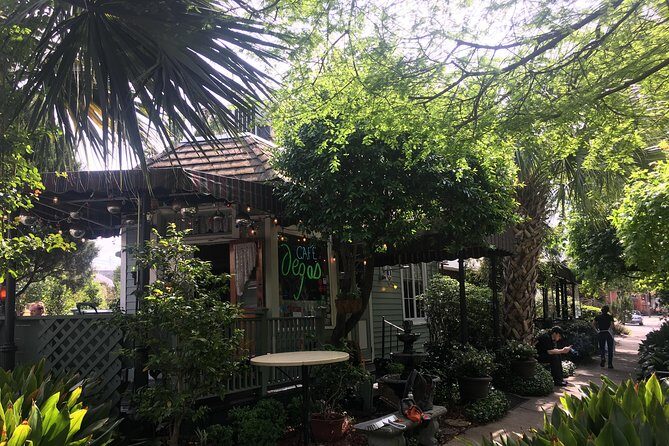
New Orleans is a city where you can’t really rush. This tour matches that mood by letting you set the tempo. Instead of being tethered to a group, you can stop to stare at ironwork, look closely at old facades, or simply stand for a moment under the trees if you want a breather.
The route itself is built around major local touchpoints—Museum of the Free People of Color, the Garden District area, and St. Louis Cemetery #3 (also known as the Angel Cemetery). The payoff is that you’re not just hearing facts. You’re hearing how these places connect, and you see them in order.
Also, the pacing feels smart for a first-timer and for a repeat visitor. One review called it a great walk under the oaks, and that’s exactly the kind of experience the “go when you want” setup supports.
You can also read our reviews of more guided tours in New Orleans



Where the tour starts and ends (and why it matters)

You begin at 2023 Esplanade Ave, New Orleans, LA 70116 and finish at 3202 Grand Rte Saint John St, New Orleans, LA 70119. Knowing that up front helps you plan your day: you’re not doing a round-trip loop. You’ll likely want the rest of your afternoon organized around ending in the St. John corridor area.
The tour is set for about 1 hour 15 minutes, which is a sweet spot. It’s long enough to feel like you learned something, but short enough that you can still mix in a coffee break or a longer look at one stop you care about most.
The activity is listed as available every day, all day (12:00 AM–11:59 PM), which is useful when your schedule changes. Just keep in mind that individual sites may have their own operating hours—this audio experience itself is what runs on your timeline.
Stop 1: Museum of the Free People of Color and a story that starts in 1708
The first major stop is the Museum of the Free People of Color. This is where the tone shifts from neighborhood scenery into lived history. The museum preserves about three hundred years of history and culture of free people of color in New Orleans, and the narrative begins in 1708.
What I find most compelling here is how the audio frames specific eras. You hear about the Spanish rule period from 1763 to 1800, including a detail that can be easy to miss in casual sightseeing: during that time, slaves were sometimes allowed to purchase their freedom. That one point alone changes how you think about the city’s timeline. It’s not just “before and after.” It’s complicated, and the museum helps make that visible.
Then comes one of the tour’s most emotional anchors: a floor-to-ceiling petition dated January 5, 1864, signed by 1,000 free men of color who were New Orleans property owners, addressed to President Abraham Lincoln. When you hear that number and the date, you understand how political pressure and personal stakes were tied together in real time.
A practical note at this stop
The tour doesn’t include museum admission. If you want to go inside and experience the exhibits, plan for an extra ticket/entry cost and whatever time you need for the space to hit you. The audio can still help you appreciate what you’re seeing on the sidewalk, but the museum content is the core of this chapter.
Stop 2: Garden District mansions built by newcomers (1832–1900)
Next, you move into the Garden District area—historic mansions, streets with character, and that “slow down and notice” feeling that New Orleans does so well. The tour explains that the Garden District was developed between 1832 and 1900, originally by wealthy newcomers building impressive homes.
This is where the audio works like a field guide. You’re not just walking past pretty buildings; you’re hearing how and why they appeared when they did. The narration also helps you connect the Garden District’s story to the larger idea of a Creole Garden District—how culture, community, and place-making shaped the neighborhood you’re seeing.
What I like about this middle section is that it doesn’t pretend the neighborhood is frozen in time. The Garden District today is described as having a mix of homes, antique shops, bars, cafes, gardens, parks, and restaurants. That mix is part of what makes the area feel alive while still rooted in the past.
You can also read our reviews of more tours and experiences in New Orleans






How to get the most out of this stop
I recommend you treat the Garden District like a place to linger, not just pass through. Because the tour is phone-based, you can pause the audio and do the thing you should always do in old neighborhoods: pick one house, one doorway, one window detail, and let your eyes do the work.
One review emphasized that this kind of self-pacing can beat following a bigger group, because you miss fewer details. That’s exactly the advantage you’ll feel here.
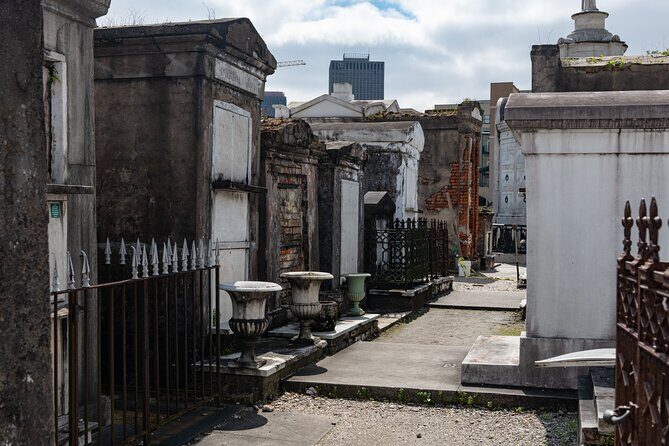
Stop 3: St. Louis Cemetery #3, the Angel Cemetery, and the land’s first purpose
The final storytelling stop is St. Louis Cemetery #3, also called The Angel Cemetery. This cemetery comes with heavy context, and the audio doesn’t treat it like spooky sightseeing. It explains the land’s earlier use before it became a Catholic burial ground.
Here’s the key chain of history the tour shares:
- The cemetery is on land that once held a leper colony. Louisiana hosted communities for people affected by leprosy, and this site began as a burial ground for those who died of the disease in New Orleans.
- Later, a devastating yellow fever epidemic in 1854 left the city needing about 8,000 burial plots.
- Priests at St. Louis Cathedral purchased the land to create another Catholic cemetery.
That progression—from one community’s suffering to another moment of crisis—makes the cemetery feel like an archive you walk through. Even if you’ve heard cemetery stories in New Orleans before, this explanation gives you a more complete sense of why the site exists at all.
A respectful way to experience this stop
Cemeteries in New Orleans are not just attractions. They’re places of memory. If you’re sensitive to heavy topics, you’ll want to give yourself a moment here rather than blasting through the audio. The self-guided format helps you do that.
How the audio tour works: VoiceMap, offline audio, and pace control
This experience runs through the VoiceMap application. You get lifetime access to the tour, and you can download offline audio, maps, and geodata. That matters in New Orleans because cell service isn’t always consistent block to block.
Offline use is one of the best “hidden” benefits of a self-guided tour. You’re not just saving data—you’re protecting your momentum. If your signal drops, your tour can still carry on, and you won’t spend the walk trying to reload.
You also get a format that supports quick control:
- You can move at your speed.
- You can stop and take in a building, then restart when you’re ready.
- You don’t need to line up with a group, which is useful if you prefer to browse slowly.
One review described it as perfect for walkers, cyclists, or even motorists. The practical meaning for you: the tour doesn’t require constant physical “team movement” the way some guided group tours do. If you’re traveling as a small group or solo, the self-guided system makes it easier to stay together without rushing.
What you must bring
The tour does not include a smartphone. If you don’t already have one with enough battery, this is where you’ll feel it. Bring your charger or power bank if you can.
Also, service animals are allowed, and the tour is described as near public transportation. That’s helpful if you’re combining it with other parts of your day.
Price and value: $9.99 for three serious neighborhood stops
At $9.99 per person, this is priced like a budget-friendly add-on—except you’re getting something more than a soundtrack. You’re getting structured context for three distinct sites, including a museum stop tied to early New Orleans history and a cemetery stop tied to disease and epidemics.
That value is strongest if you like learning while you walk. You’re not paying for an hour with a guide standing in one spot. You’re paying for an on-demand explanation you can pause and replay. One review even pointed out that the tour can be stopped so you can dwell on beauty before moving on. That control is where the value tends to show.
The other part of the equation is entry cost. The audio tour itself doesn’t include tickets or entrance fees to museums or other stops. So your total spend depends on whether you step into the museum and how much extra time you give yourself.
Still, even if you do only the outdoor parts, the audio is designed to help you understand what you’re looking at.
Who should book this Esplanade Ridge audio walk
This is a good match if you:
- Want a self-guided way to explore the Faubourg St. John / Esplanade Ridge area
- Prefer to set your own pace and pause for details
- Like history that connects neighborhood streets to people, laws, epidemics, and politics
- Want an offline-capable plan so your day doesn’t fall apart when signal drops
It may be less ideal if you:
- Really want a human guide to answer questions in real time
- Don’t like phone-based tours
- Aren’t comfortable with heavier subject matter like the leper colony origins and the 1854 yellow fever burial crisis (the tour frames it respectfully, but the topics are heavy)
Finally, note one important practical point: the experience is non-refundable and can’t be changed once booked. If your schedule is uncertain, that’s something to weigh before you commit.
Should you book? My take
I’d book this if you want to understand New Orleans beyond the postcard. The best part isn’t any single stop—it’s the way the audio ties them into a single walkable storyline, from free people of color in the city’s early years, to how the Garden District formed, to the cemetery’s origins in disease and crisis.
If you’re the type who likes pausing often—eyes on ironwork, ears on context—this is a strong use of time for the money. And because it’s built for offline playback with lifetime access, you can revisit it later when you return to New Orleans and want to catch details you missed the first time.
FAQ
FAQ
How much does the New Orleans Esplanade Ridge audio tour cost?
It costs $9.99 per person.
About how long is the tour?
The tour is approximately 1 hour 15 minutes.
Is this a guided tour with a person?
No. It’s a self-guided audio tour run through the VoiceMap application.
Can I use the tour offline?
Yes. You can download offline audio, maps, and geodata, which helps if your phone signal is weak.
What language is the tour offered in?
The audio tour is offered in English.
Where does the tour start and end?
It starts at 2023 Esplanade Ave, New Orleans, LA 70116 and ends at 3202 Grand Rte Saint John St, New Orleans, LA 70119.
Is the tour refundable if I cancel?
No. The experience is non-refundable and cannot be changed for any reason.