REVIEW · NEW ORLEANS
New Orleans French Quarter and More Carriage Ride
Book on Viator →Operated by Royal Carriages · Bookable on Viator
A mule-and-carriage ride in New Orleans feels like time travel. This 1-hour small-group tour takes you through the French Quarter and Marigny with a covered ride and live commentary about the people, architecture, and legends that shaped the city. You’ll see landmarks like St. Louis Cathedral, the French Market area, and the Napoleon House story tied to the Spanish Cabildo.
I like that the group stays limited to eight people, so the guide can actually keep the narration personal and practical. One thing to consider: if you sit farther back, the sound can be harder to catch, and a couple of past riders noted comfort wasn’t perfect after a while.
In This Review
- Key things to know before your carriage ride
- Meeting at 700 Decatur St: your easy start
- The covered mule carriage: comfort wins, with one smart seating tip
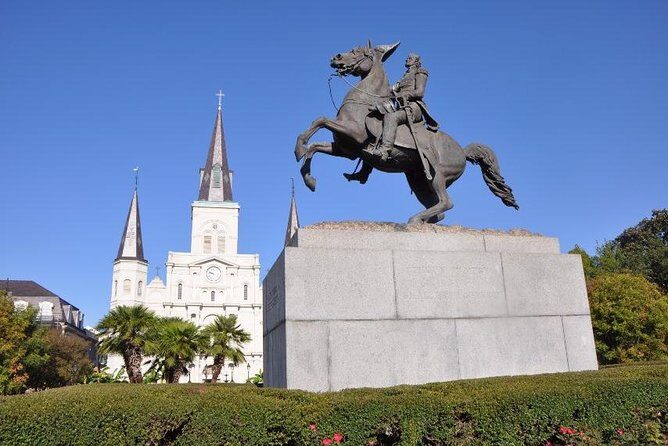
- French Quarter highlights: St. Louis Cathedral, French Market, and more
- The legends and big events that shape the Quarter
- Marigny angle: seeing beyond the main strip
- Guide tips that actually help: food, jazz, museums
- Price and value: is $65 worth one hour?
- Who should book this carriage tour (and who might skip it)
- Should you book? My call
- FAQ
- How long is the New Orleans French Quarter and Marigny carriage ride?
- What is the price per person?
- How big is the group?
- Where do we meet the guide?
- Is the tour offered in English?
- Is the carriage ride covered?
- What major landmarks can I expect to see?
- Is admission included for the stops?
- Are snacks included?
- What are the cancellation terms if weather is poor?
- Can I use a mobile ticket?
Key things to know before your carriage ride
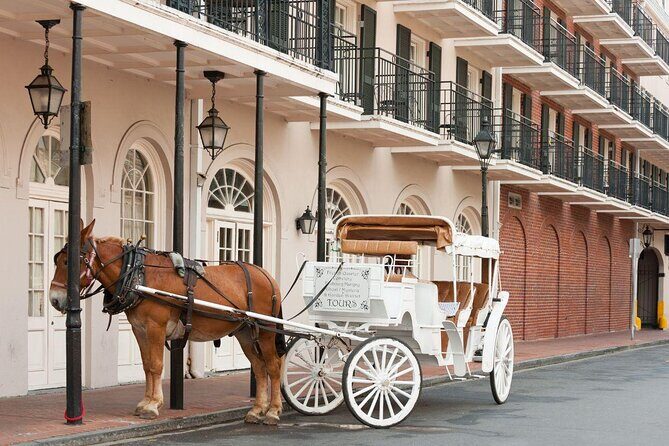
- Small group (max 8) keeps the ride calmer and the guide’s stories easier to follow.
- Covered top helps you stay comfortable if the sun is strong or the weather turns weird.
- Top French Quarter landmarks on one easy circuit: St. Louis Cathedral, French Market, Spanish Cabildo/Napoleon House, Pontalba Buildings, Place D’Armes, and Napoleon House.
- Real architecture-and-history explanations, including why brick and iron show up the way they do after major events like the Great Fire of 1788.
- Food and nightlife recommendations get you planning fast for the rest of your day.
Meeting at 700 Decatur St: your easy start
You’ll meet at 700 Decatur St in New Orleans, and the tour ends back at the same pickup spot. That sounds simple, but it’s a big deal in the French Quarter—once you’re done, you can hop right into your own plans without needing to figure out transportation or a second meetup.
In the first stretch, your guide typically sets the tone: what you’re about to see, what to notice, and how the neighborhoods connect. Even if you’re just visiting for the first time, this kind of “here’s how to read the streets” kickoff helps you turn random buildings into recognizable stories. And because the ride is small, you’re not stuck listening to ten different versions of where to go next.
If you’re the type who likes structure on day one (and who still wants freedom after), this is a good fit.
You can also read our reviews of more tours and experiences in New Orleans.


The covered mule carriage: comfort wins, with one smart seating tip
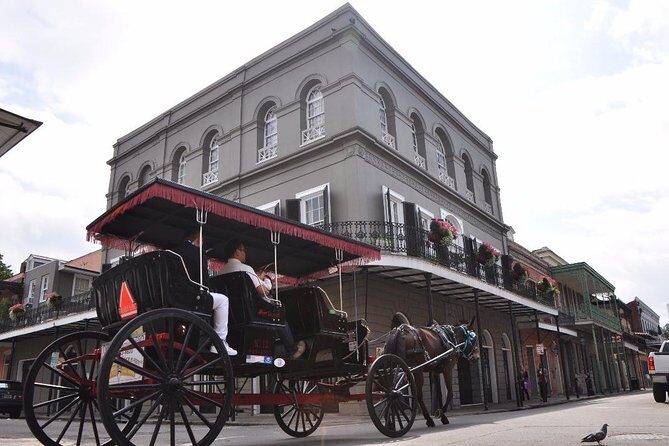
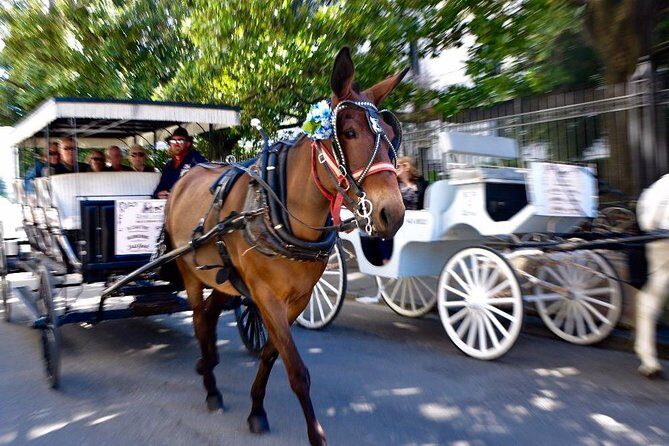
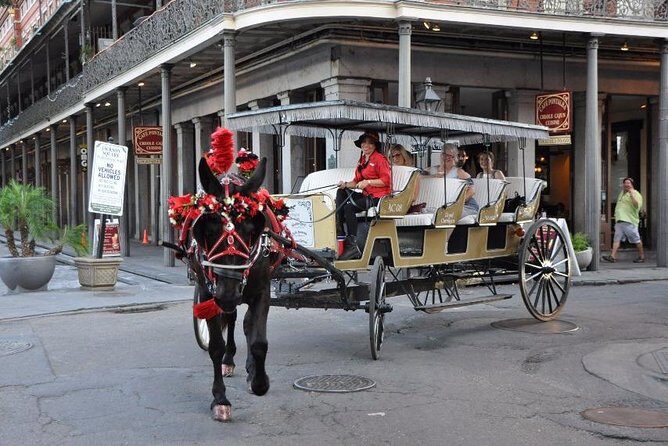
The ride is on a mule-drawn carriage with a covered top, which helps a lot in New Orleans—whether it’s bright sun, sudden drizzle, or that humid “why is it still warm” feeling. The covered canopy doesn’t make you immune to weather, but it does mean you’ll be less stressed and more able to enjoy the ride without constantly checking forecasts.
The other practical part is motion and safety. Most riders describe the experience as smooth and comfortable, and it’s a great option when you want the French Quarter experience without doing a long walking tour.
One note from past riders: if you’re hard of hearing, sit closer to the front. A few people found the narration easier to catch up there than from the back of the carriage. It’s a small choice, but it can make the entire hour feel more engaging.
French Quarter highlights: St. Louis Cathedral, French Market, and more
This tour is built around the French Quarter’s most recognizable sights, plus a set of story-linked stops that help you understand what you’re seeing.
Here’s what you’ll get as you ride:
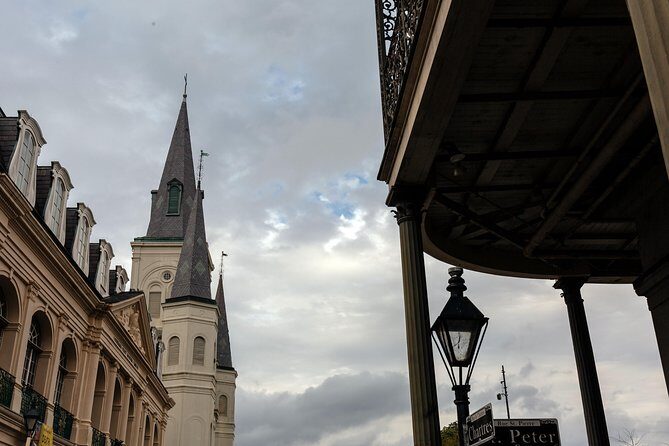
- St. Louis Cathedral: you’ll learn its significance as the oldest continuously active cathedral in the U.S. The guide usually points out what you’re looking at so it doesn’t feel like a “just another big church” moment.
- French Market area: you’ll see the historic market zone with views toward the Mississippi. It’s one of those spots where architecture, commerce, and everyday life meet.
- Spanish Cabildo / Napoleon House connection: you’ll hear the story behind the Spanish colonial building and the museum tied to Napoleon’s death mask.
- Pontalba Buildings: a pair of standout structures your guide uses to explain how the Quarter’s European influences mixed with local life.
- Place D’Armes and the surrounding landmark area: the guide connects the square to what’s happened around it over time, not just what’s standing there today.
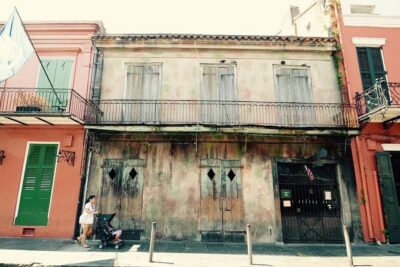
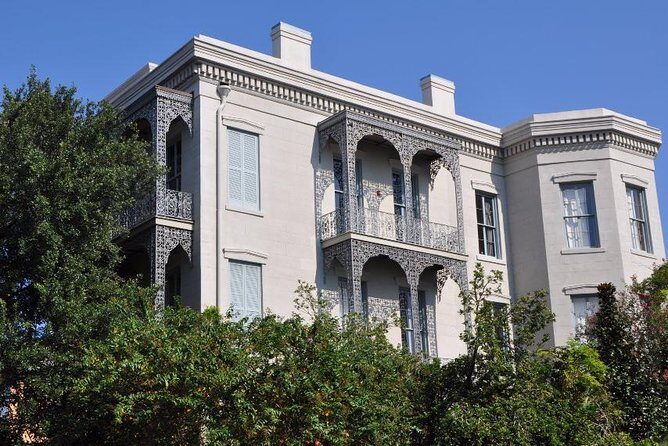
- Ironwork balconies, patios, and other architectural details: the commentary focuses on the visual language of the Quarter—things like ironwork, Spanish-style patios, and the rhythms of the streets.
What I like about this approach is that the ride is short, but it doesn’t feel like random sightseeing. You’re getting a guided “map in your head” as you go, so when you step off the carriage you know where you are and why it matters.
The legends and big events that shape the Quarter
One reason I think this tour works so well for first-timers is that it gives you a framework for the Quarter’s stories.
You’ll hear about major historical events such as the Great Fire of 1788 and the Battle of New Orleans. The guide uses these moments to explain why the Quarter looks the way it does—especially the shift toward materials and building styles tied to disaster and rebuilding. A number of riders noted that the narration includes details on fires and floods and how that history affects what’s built now, including the brick-and-iron feel you notice when you walk around.
You’ll also get cultural context through architectural stops like:
- Creole Esplanade
- Old Slave Quarters
- French coffee houses
- Spanish patios
- Ironwork balconies
These aren’t just names to memorize. The guide’s job is to help you understand why each place exists and what role it played. When you later return on foot, you’ll notice details faster—shapes, styles, and clues about the neighborhood’s past.
And if you like ghost stories or colorful anecdotes, you may hear some of those too. One rider specifically said the guide shared fun historical stories and even pointed out notable historic restaurants.
Marigny angle: seeing beyond the main strip
Even though the French Quarter is the headline, the tour also includes parts of Marigny. That matters because New Orleans isn’t just one postcard area. Marigny is often where you start to feel a different vibe—more local, less scripted, and a nice change of pace after the densest parts of the Quarter.
The route still keeps you in “easy mode.” You’re not stuck doing slow street-crossing and dodging crowds for a long time. Instead, you get a guided sweep that helps you decide what to explore later on your own.
If your plan is to spend the afternoon and evening wandering, this kind of neighborhood contrast is valuable. It turns your first ride into a smart preview: you’ll know where you want to linger and where you just needed a quick introduction.




Guide tips that actually help: food, jazz, museums
A carriage ride is nice, but it’s the guide that makes it useful. This tour includes recommendations for nightclubs, jazz, museums, and other must-sees, and that can shorten the time you spend googling or guessing.
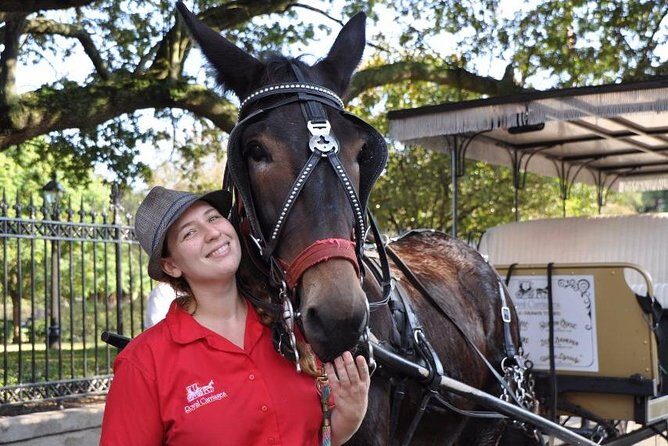
Past riders praised guides by name—like Sarah, Nate, and Marty—for being friendly and for sharing both historical tidbits and practical advice. Other guides were described as funny and full of facts (including Tony), and one rider mentioned a guide pair of Mike and Erma. Even if you get a different person, the goal is the same: you leave with a short list.
Here’s what that looks like for you:
- You’ll get suggestions that fit the neighborhoods you just saw.
- You’ll likely learn which places are worth revisiting and which areas to connect together on foot.
- If you’re traveling with kids, the ride aspect plus storytelling can be a bonus. One family noted their 4-year-old was enamored with the horse.
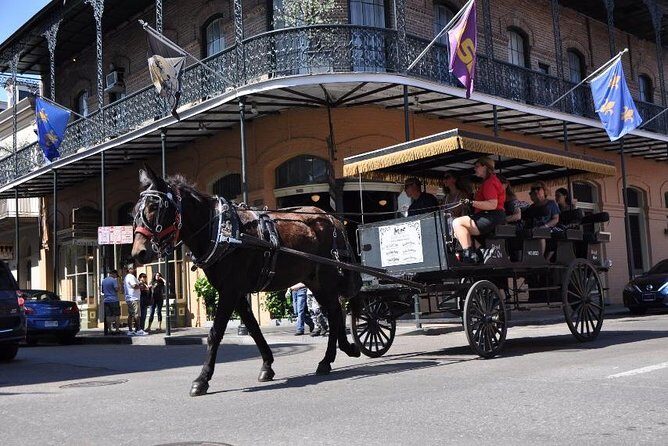
And those mule/horse details are part of the charm. Riders have even mentioned mule names like Praline and Kate—small touches that make the hour feel personal instead of mechanical.
Price and value: is $65 worth one hour?
At $65 per person for about 1 hour, this isn’t a freebie. But you are buying three things at once: guided storytelling, low-effort transportation, and an instant plan for what to do next.
If you’re spending money in New Orleans anyway (on food, drinks, or attractions), this tour can act like a “spend smarter” tool. You’ll likely use your guide’s recommendations for at least one evening stop, and that can make the cost feel more like a bargain than a splurge.
It also helps that the tour is limited to eight travelers. In many cities, “small group” is marketing. Here, the limit is clear enough that it can influence the experience: easier questions, better narration, and less crowd pressure during stops.
Main value drawback: if you’re expecting a long, deep history session, you might feel one hour is short. A couple of riders also felt the commentary was limited when the carriage was crowded, so go in with the right expectations: this is a sharp introduction, not a full-day lecture.
Who should book this carriage tour (and who might skip it)
This tour makes the most sense if:
- You want a first-time orientation to the French Quarter and nearby Marigny.
- You’d rather ride and listen than do a big walking loop.
- You like history delivered through stories tied to what you’re seeing—fire events, architecture details, and “why this building exists.”
- You want the guide’s help turning your day into a real plan, especially for jazz, museums, and nightlife.
You might think twice if:
- You’re the type who needs maximum legroom and long-term seat comfort.
- You’ll only enjoy it if you get very long commentary; a few people wished it ran longer.
- You’re extremely sensitive to audio quality—if you can’t hear well, you’ll want to position yourself toward the front.
Still, for most people, it’s an easy, low-stress way to get your bearings fast.
Should you book? My call
Yes, I’d book it—especially for your first day in New Orleans. The one-hour timing is perfect for getting key landmarks and understanding what you’re looking at, and the small group size keeps the experience relaxed instead of chaotic.
If you go in expecting a quick, story-driven intro with practical next-step advice, you’ll likely feel like your $65 turned into momentum for the rest of your trip.
If you want to make it as good as possible, pick a spot closer to the front for better hearing and bring a light layer in case the weather changes.
FAQ
How long is the New Orleans French Quarter and Marigny carriage ride?
It runs for about 1 hour.
What is the price per person?
The tour costs $65.00 per person.
How big is the group?
It’s limited to a maximum of 8 travelers.
Where do we meet the guide?
You meet at 700 Decatur St, New Orleans, LA 70116.
Is the tour offered in English?
Yes, it’s offered in English.
Is the carriage ride covered?
The carriage includes a covered top to help block out sun or difficult weather.
What major landmarks can I expect to see?
You’ll see places including St. Louis Cathedral, the French Market area, the Spanish Cabildo, Pontalba Buildings, Place D’Armes, and Napoleon House.
Is admission included for the stops?
The tour includes free admission ticket for the French Quarter stop, and the focus is on viewing landmarks as you ride.
Are snacks included?
No, snacks are not included.
What are the cancellation terms if weather is poor?
This experience requires good weather. If it’s canceled due to poor weather, you’ll be offered a different date or a full refund. You can cancel up to 24 hours in advance for a full refund.
Can I use a mobile ticket?
Yes, it uses a mobile ticket, and you’ll receive confirmation at booking.