REVIEW · NEW ORLEANS
New Orleans French Quarter Food Tour: Cajun, Creole and Culture
Book on Viator →Operated by Intrepid Urban Adventures - USA · Bookable on Viator
Your first French Quarter meal should start strong.
This New Orleans French Quarter Food Tour mixes Cajun and Creole culture with real street-level food stops, starting right at Jackson Square. I like how guides like Christy, Neil, Andre, Kaffey, and Chip turn classic dishes into a quick history lesson you can feel in every bite.
My favorite part is the way you get 5 food samples that are planned to add up to a full meal, not a few nibbles. Expect the kind of ordering help you wish you had when you’re standing in line—like what to try, what’s typical, and where the flavors come from—plus hot sauce tasting with Louisiana spice heritage.
One thing to consider: the tour has a clear culture-and-stories side, so if you want nonstop food the whole time, you may find some stops feel more explanatory than snack-heavy.
In This Review
- Key highlights worth planning around
- Jackson Square start: getting your bearings before you eat
- French Market stop: where the shopping culture is the attraction
- Cajun and Creole walking time: 14 blocks of flavors and stories
- What you’ll actually taste: gumbo, po’boy or muffuletta, and the sweet finish
- Starter: a cup of gumbo
- Main option: po’boy or muffuletta
- Main option (or additional savory): jambalaya or red beans and rice
- Dessert: beignets and pralines
- Hot sauce and spice heritage: learning without turning it into a lecture
- Guides, small groups, and getting your questions answered
- Price and value at $81.10: when it’s worth it
- Who this tour suits best (and who might want a different plan)
- Should you book the New Orleans French Quarter Food Tour?
- FAQ
- How much does the New Orleans French Quarter Food Tour cost, and how long is it?
- What food samples are included on the tour?
- Is dietary needs support available?
- How much walking is involved?
- How many people are in the group?
- Where do I meet the guide, and where does the tour end?
- Is the tour offered in English?
- What is the cancellation policy, and what if weather is bad?
Key highlights worth planning around
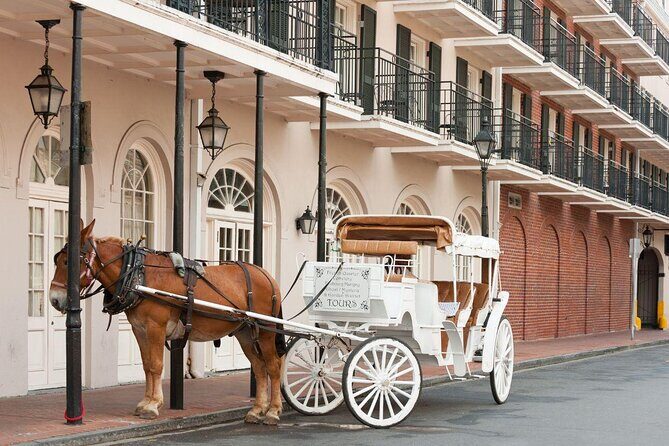
- Meet at Jackson Square by Andrew Jackson’s equestrian statue, with the guide facing St. Louis Cathedral
- French Market stop at America’s oldest public market
- Five tastings designed to equal a full meal, with gumbo, po’boy or muffuletta, and more
- Hot sauce tasting paired with stories about Louisiana spice traditions
- Maximum 12 travelers, which keeps the walk friendly and question-friendly
- About 1.5 miles total, paced for a relaxed stroll with regular breaks
Jackson Square start: getting your bearings before you eat
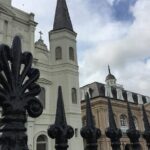
You begin near the center of the action, at 701 Decatur St, and your guide is waiting at Jackson Square beside the equestrian statue of Andrew Jackson. The directions are specific for a reason: you’ll be oriented fast, facing St. Louis Cathedral, which makes it easier to understand the Quarter’s layout as you walk.
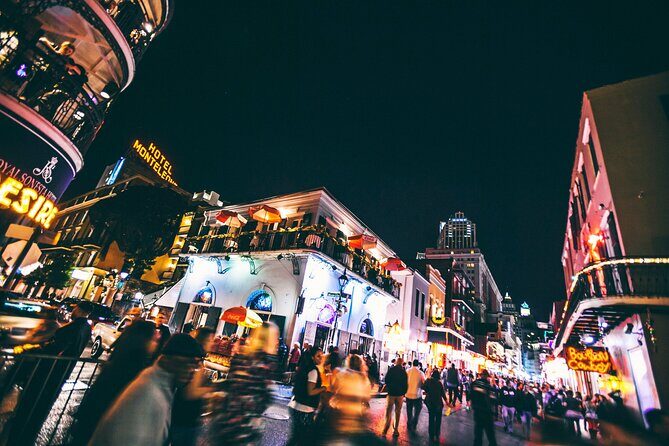
Jackson Square can be one of those places that looks instantly familiar but still feels confusing. Having a guide there helps you connect what you’re seeing—skyline lines, street patterns, and the way people move—to why this neighborhood became such a food-and-music crossroads.
Timing matters, too. You’ll spend about 30 minutes here, which is enough to set context without stalling the hunger train. If you tend to arrive stressed and hungry, this start helps you feel settled before your first tasting.
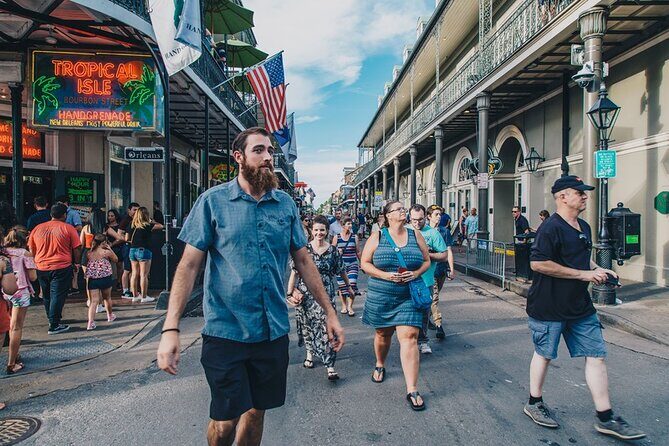
One practical note: since this is a walking tour, wear shoes you trust. The route is about 14 blocks / 1.5 miles, but the Quarter has its own rhythm—stoplights, corners, and crowds.
You can also read our reviews of more food & drink experiences in New Orleans


French Market stop: where the shopping culture is the attraction
Next you head to The French Market, described as America’s oldest public market. That label could sound like marketing fluff, but it actually changes how you experience the place. You’re not just visiting a landmark—you’re walking through a working food culture where the market energy has lasted for generations.
You’ll spend around 30 minutes here, with time to explore and sample local bites. This is a good moment to reset your palate. After the Jackson Square context, the French Market feels more hands-on: you’ll see how people choose food, how vendors present items, and how the Quarter’s culinary identity shows up in everyday purchases.
The market stop also breaks up the walk. It’s easy to think a food tour is only about eating, but pacing is part of the value. A mid-route break keeps you from feeling like you’re just checking boxes while your stomach files a complaint.
Also, the stops here involve free admission, so you’re not stacking entrance costs on top of your tour price. You’re paying for the guide’s storytelling and the tasting plan.
Cajun and Creole walking time: 14 blocks of flavors and stories
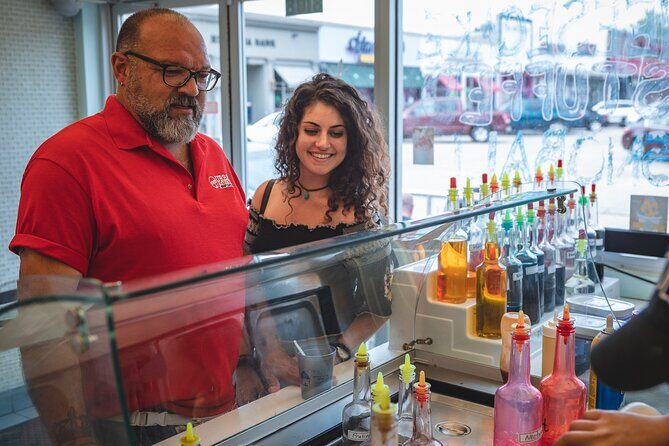
The heart of the experience is the French Quarter walk itself, where you spend about 1 hour 30 minutes strolling and sampling. This part is built around the idea that the Quarter’s food isn’t one single “thing.” It’s a blend—shaped by Cajun, Creole, and Southern traditions—and the guide connects the dots as you move.
Here’s what that usually feels like in practice: you’ll stop, try something, and then get just enough background to understand why it tastes the way it does. You also get a clearer sense of what makes a dish local. In other words, you’re not only eating; you’re learning to recognize flavor patterns.
The tour specifically includes a classic Cajun dish, a hot sauce tasting, and hearty gumbo as part of the Quarter segment. That’s smart, because it covers three core pillars:
- Cajun spice and comfort
- Creole-style depth and seasoning
- The Quarter’s love of sauce-forward, slow-simmered meals
Some guests really enjoyed the off-the-beaten-path vibe—stops that aren’t just the obvious parade routes. Small details like that can make the walk feel more personal and less like a theme park.
What you’ll actually taste: gumbo, po’boy or muffuletta, and the sweet finish
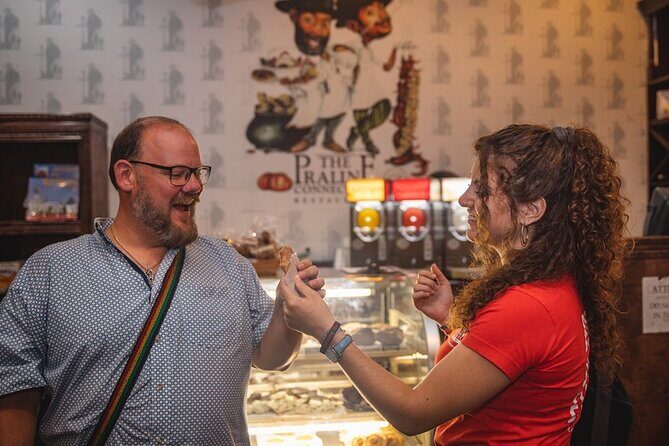
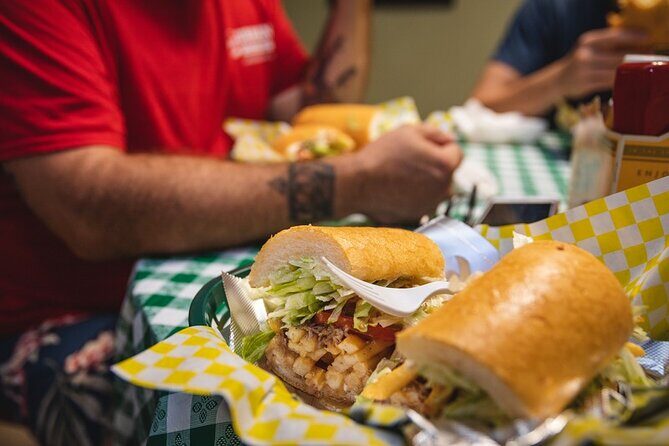
You’re promised five food samples total, and the tour says the amount included is designed to equal a full meal. That’s the big value point for me. Too many “food tours” are really dessert tours with a quick detour—this one is built as an actual meal plan, from savory to sweet.
A sample menu (which can change based on season and vendor availability) looks like this:
Starter: a cup of gumbo
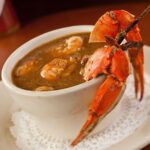
You may get chicken & andouille or seafood gumbo, depending on what’s available that day. Gumbo works well for a tour starter because it’s deeply local, and it’s also easy for a guide to explain. You’re tasting not only food, but technique: thickened sauces, layered seasoning, and that slow-warm comfort.
You can also read our reviews of more tours and experiences in New Orleans


Main option: po’boy or muffuletta
You’ll sample either a po’boy or a muffuletta. For the muffuletta, the tour describes olive salad and Italian meats, which is a helpful hint that this sandwich carries immigrant influence alongside local Louisiana flavors. Po’boy brings the classic casual Quarter feel.
Main option (or additional savory): jambalaya or red beans and rice
You can expect jambalaya (Creole rice with sausage) or red beans and rice. Both give you a sense of how Louisiana treats starch: rice isn’t a side dish here—it’s part of the identity, the binder for flavor, and the comfort factor.
Dessert: beignets and pralines
This is where the Quarter delivers. You’ll have beignet, described as iconic and fresh-and-hot, plus pralines (New Orleans-style candied pecans). The pairing is perfect for a walking tour because it ends your meal with high-satisfaction sweetness and a sugar reset.
Hot sauce tasting is also included, and it’s not just about “burning your mouth for fun.” The tour offers insights into Louisiana’s spice heritage, which helps you understand why heat is used the way it is—not just as a gimmick.
Hot sauce and spice heritage: learning without turning it into a lecture
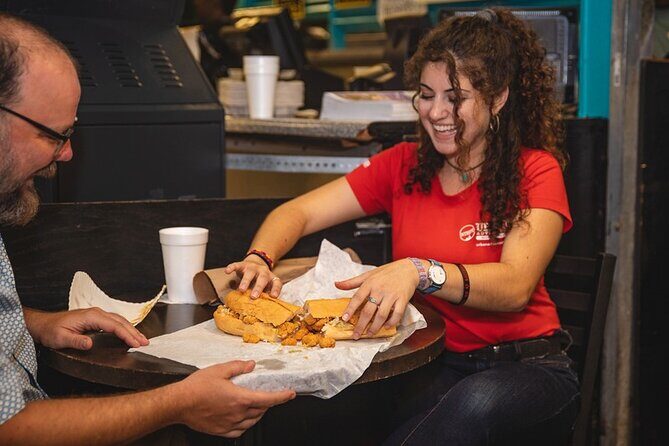
One reason this tour works for first-timers is that it explains flavor like a local would, not like a textbook. The guide’s role is to connect the dots between what you taste and where it came from—so hot sauce becomes a story, not just a condiment.
You get a hot sauce tasting with insights into Louisiana spice traditions. If you’ve never looked closely at Cajun and Creole cooking, this is where the penny drops. You’ll start to notice things like how heat pairs with rich bases (gumbo, rice dishes) instead of just overpowering everything.
This section also gives you context for what to order after the tour. You’ll leave knowing what kind of spice level you can handle, what to look for, and how to ask for it.
Guides, small groups, and getting your questions answered
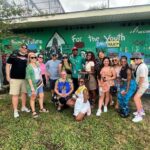
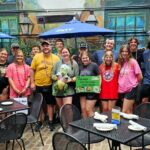
The tour caps at 12 travelers, which makes a huge difference in real life. With a small group, you’re less likely to feel lost or rushed. It also means you can ask follow-ups—about food, neighborhood history, or where to eat next—without the guide constantly scanning the group for timing.
The guide lineup shows up in the reviews in a way that matters: people mention guides like Christy, Neil, Andre, Kaffey, and Chip as energetic, personable, and helpful with recommendations for restaurants during the rest of your stay. That kind of post-tour advice is where a food tour turns into trip value, not just dinner with a script.
There’s also an important practical piece: the tour data says the guide can be helpful with dietary requests, but substitutions may not be available at every stop. That’s a normal constraint in a working food neighborhood, and it’s better to set expectations early than to assume every craving can be swapped on the spot.
Price and value at $81.10: when it’s worth it
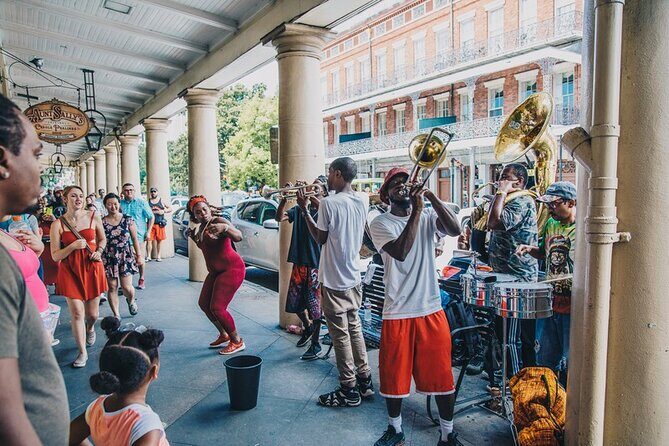
At $81.10 per person, you’re paying for three things:
- A guided walk with stories
- Five food samples planned to equal a full meal
- Entry-free stops plus added tastings like hot sauce
For me, the value question comes down to meal math. If a tour gives you a few snacks, you’re basically paying extra to be guided. But this one is structured like an actual eating plan, including gumbo, a sandwich (po’boy or muffuletta), another hearty rice dish, plus dessert.
Also, the tour includes a local English-speaking guide, and it’s a mobile-ticket experience. Those might sound small, but they reduce friction on a busy vacation day.
If you’re budgeting hard, the best approach is to compare this cost to what you’d spend on a full casual meal across multiple places plus the time you’d spend figuring out what’s worth it. This tour compresses that decision-making into one walk.
Who this tour suits best (and who might want a different plan)
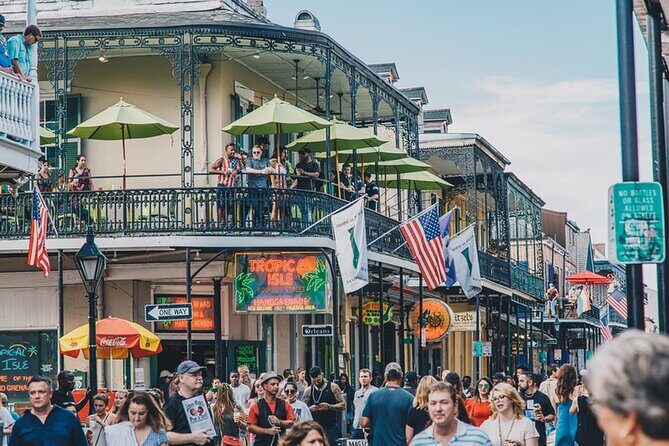
This tour is a great fit if:
- You want a first-day French Quarter orientation with food attached
- You like learning through tasting instead of reading menus
- You’re okay with a steady walk that’s paced and not a marathon
It may feel less ideal if:
- You want constant eating with minimal talking. The experience is explicitly part culture and part food, and some people have felt the food/tastings felt more concentrated later in the walk.
- You’re extremely sensitive to timing at each stop. The tour is relaxed, but like any walking tour, you’ll share time with the group and keep moving.
It’s also family-friendly. It’s suitable for families, and children under 4 can join free, with a reduced price for kids aged 4 to 11.
Should you book the New Orleans French Quarter Food Tour?
I’d book it if you want a guided way to eat your way through Cajun and Creole classics while also understanding what you’re walking past—Jackson Square and America’s oldest public market included. The small group size (max 12) and the fact that tastings are designed to equal a full meal make the $81.10 feel more like a food-plan purchase than a tour “tax.”
If your top priority is purely food quantity with no story time, you might prefer a more snack-heavy format. But if you want to leave with better taste instincts—what gumbo style to look for, why rice dishes matter, how hot sauce fits into the flavor logic—this is a strong, practical first pick for a New Orleans introduction.
FAQ
How much does the New Orleans French Quarter Food Tour cost, and how long is it?
It costs $81.10 per person and lasts about 2 hours 30 minutes.
What food samples are included on the tour?
You’ll get 5 food samples, which may include beignets, gumbo, a Po’boy or muffuletta sample, plus jambalaya or red beans and rice, and dessert like pralines. Exact choices can vary by day and vendor availability.
Is dietary needs support available?
The guide can accommodate vegetarian or special dietary requirements in some cases, but some stops may not be able to substitute. If substitutions aren’t available, the guide can suggest where you can purchase suitable alternatives during the tour.
How much walking is involved?
It’s a walking tour covering about 14 blocks, roughly 1.5 miles (2.4 km), with a relaxed pace and regular stops.
How many people are in the group?
The tour has a maximum of 12 travelers.
Where do I meet the guide, and where does the tour end?
You start at 701 Decatur St, New Orleans, LA 70116, near Jackson Square. The tour ends at Jackson Square.
Is the tour offered in English?
Yes, it’s offered in English.
What is the cancellation policy, and what if weather is bad?
You can cancel for a full refund up to 24 hours in advance. If the tour is canceled due to poor weather, you’ll be offered a different date or a full refund.