REVIEW · NEW ORLEANS
New Orleans’ Garden District 2 Hour Walking Tour (Small Group)
Book on Viator →Operated by Tours by Foot New Orleans · Bookable on Viator
Garden District history feels close enough to touch. In just 2 hours, this small-group walk mixes street-level architecture with New Orleans storytelling, from Lafayette Cemetery No. 1’s most-talked-about gates to the Anne Rice connection that still fuels the neighborhood mystique.
I like two things a lot. First, the live commentary comes with a natural, funny feel. One guide style that pops up in real feedback is Sarah’s easy, personable approach and the way the tour stays unscripted—plus harmless local gossip that makes the facts stick. Second, you don’t just look at pretty facades; you get architecture talk you can use, especially the Italianate home details—ornate brackets, grand porches, and the ironwork that defines the Garden District.
One consideration: Lafayette Cemetery No. 1 is closed for maintenance during this tour. You’ll still learn plenty, but the visit is discussion-at-the-gates rather than an interior walk. Also, this one runs on good weather, so dress for sun or mild rain.
In This Review
- Key points you’ll care about
- Garden District streets where architecture does the talking
- Lafayette Cemetery No. 1: why the gates still get the story
- The Rink and the Women’s Guild: the Garden District in movie mode
- Louise S. McGehee School: Second Empire character in a historic campus
- The Garden District stretch with 10+ homes: what to look for
- Anne Rice at Brevard-Clapp House: where story meets street
- Commander’s Palace finale: Creole and Cajun food history, with timing tips
- Price and value: is $39 worth a 2-hour walk?
- Who this tour is best for (and who might skip it)
- Should you book this Garden District walking tour?
- FAQ
- How long is the New Orleans Garden District walking tour?
- Where is the meeting point and where does the tour end?
- What is the group size limit?
- What ticket format do I need?
- Are there admissions or entry fees for the stops?
- What will I see during the tour?
- Why is Lafayette Cemetery No. 1 included if it is closed?
- Is weather a factor?
- Is there free cancellation?
Key points you’ll care about

- Small group pace (max 20) keeps the walk comfortable and question-friendly
- Italianate architecture focus with real, visible details on porches and brackets
- Lafayette Cemetery No. 1 at the gates (closed for maintenance) with lots of context
- Film and pop-culture connections tied to multiple stops, including Anne Rice
- Food-history finale at Commander’s Palace with practical advice on the best time to go
Garden District streets where architecture does the talking
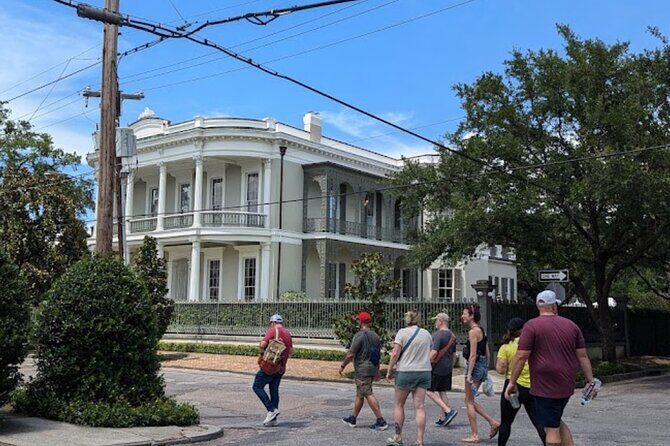
This tour is built for people who love seeing how a place got the way it is. The Garden District is famous for its historic homes, and the guide helps you read them fast. You’ll get a feel for the neighborhood’s development through features you can spot at sidewalk level: porch shapes, decorative brackets, and the kind of ironwork New Orleans does better than almost anywhere else.
Because it’s a walking tour, the whole thing moves at human speed. That matters. You’ll have time to stop, look, and listen without feeling like you’re sprinting between photo spots. And since the group caps at 20, it doesn’t turn into a noisy shuffle through residential streets.
Also, you’re starting mid-afternoon (1:30 pm). That’s a smart time for this kind of route: enough daylight to appreciate facades, with the option to end at a major landmark restaurant while your legs are still willing.
You can also read our reviews of more walking tours in New Orleans



Lafayette Cemetery No. 1: why the gates still get the story
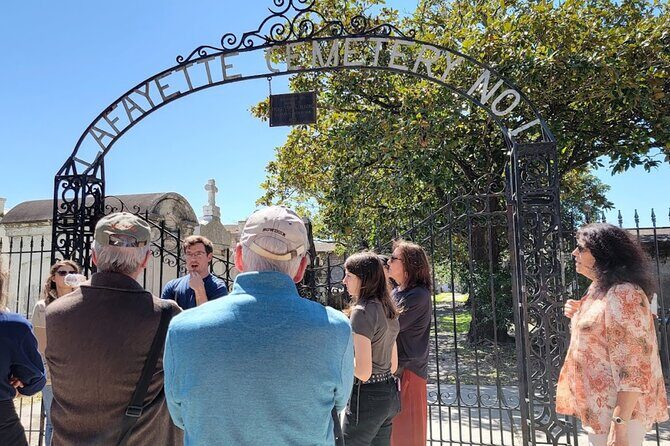
Lafayette Cemetery No. 1 is one of the city’s oldest cemeteries, and it’s also one of the most filmed in New Orleans. That combination makes it a magnet for movie magic and real-world curiosity alike.
But here’s what to expect: since it’s closed for maintenance, you won’t wander inside. You’ll talk about it at the gates, learning what makes it culturally important and why it’s such a recurring visual in New Orleans storytelling. Even from outside, cemeteries in this city aren’t just side attractions—they’re a window into local traditions around memory, space, and community.
Practical tip: this stop is short. You’ll want to stand where you can actually see what the guide is referencing. If you’re wearing sunglasses, keep them handy for contrast, but don’t block your view if you step around for photos.
The Rink and the Women’s Guild: the Garden District in movie mode
Next, the walk shifts into a more surprising side of the neighborhood. You’ll stop at The Rink, a building built in 1884 that was once the largest roller skating rink in the world. That’s the kind of detail that makes you look twice at ordinary-looking structures. It’s not only about what a building is now; it’s about what it used to host—how people gathered, played, and made memories in a different era.
From there, you’ll move to the Women’s Guild of the New Orleans Opera. This is described as a transitional home, and the guide connects it to architectural concepts and filming that occurred there. In plain terms: you’ll learn how the neighborhood’s buildings became sets, and how their style helped them fit the camera.
This portion of the tour works well if you like New Orleans for its layers—where the everyday and the cinematic overlap. It also keeps the pace varied. After cemeteries, a skating-rink story feels like a gear change that keeps the tour from feeling heavy.
Louise S. McGehee School: Second Empire character in a historic campus
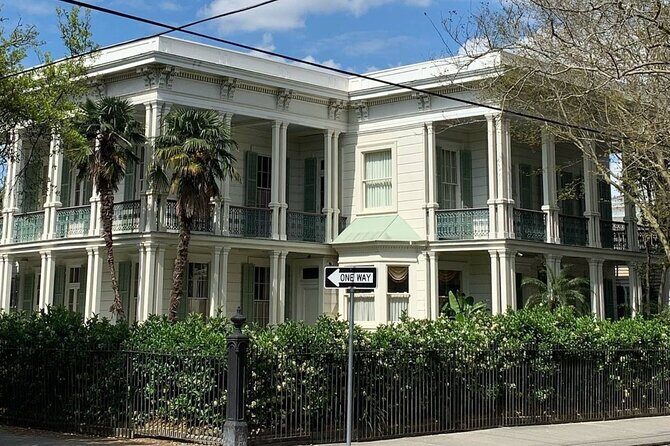
The next exterior stop is the Louise S. McGehee School, tied to a historic school property. The key architectural note here is that it’s a Second Empire home.
Second Empire style often reads in details—rooflines and decorative elements—but the guide’s job is to point out what to watch for so you don’t just guess. You’ll also see how institutional buildings fit into residential neighborhoods, and why the Garden District isn’t only about private mansions. It also includes education and community spaces that shaped daily life.
One small drawback to keep in mind: these are exterior stops and short segments. If you’re the type who wants a deep interior visit, you’ll still get context, but you won’t be stepping into buildings during this 2-hour format.
The Garden District stretch with 10+ homes: what to look for
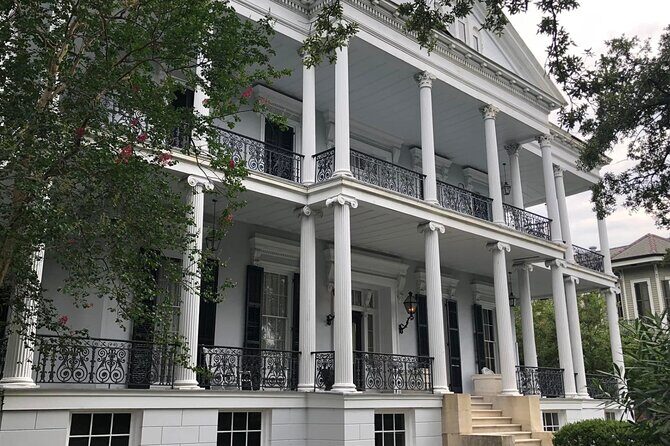
This is the core of the walk. You’ll stop at over 10 homes and talk architecture and history along the way. The guide focuses on visible elements that define the area, including ornate brackets, grand porches, and the ironwork that stands out even when you’re just casually looking.
This part becomes extra fun when you start noticing patterns:
- Some homes lean more formal with porch scale and symmetry.
- Others show off decorative bracket work that looks almost custom.
- Ironwork becomes a theme, not just a detail—railings, balcony edges, and design repetition.
You’ll also hear about notable local figures connected to the neighborhood. The tour includes the home of football royalty, the Mannings, and it points out the author Anne Rice’s home. Even if you’re not a superfan of either, spotting famous addresses gives you a new lens: the Garden District doesn’t feel frozen in the past. It’s been home to real people whose identities shaped modern New Orleans attention.
If you care about architecture, bring curiosity more than expectations. You won’t get a textbook lecture. You’ll get practical “look here, notice that” guidance so the neighborhood makes sense as you walk.
You can also read our reviews of more tours and experiences in New Orleans






Anne Rice at Brevard-Clapp House: where story meets street
You’ll end up at the Brevard-Clapp House, connected to Anne Rice’s Witching Hour novels. The guide discusses her prolific career and how she helped add to the mystique of New Orleans.
This stop is a nice reminder that New Orleans mythology isn’t only old. It’s also written. When a famous author ties specific places to storytelling, it changes how people experience those streets—long after the first publication or filming.
In a tour like this, the value is less about a single fact and more about the payoff: you’ll connect architecture, setting, and imagination. You start to see why New Orleans attracts writers, filmmakers, and visitors who want more than postcards—they want atmosphere.
If you’re a fan of gothic fiction, you’ll probably zoom through photos here. If you’re not, you can still enjoy it as cultural history: how a place becomes a brand, and how art reinforces the city’s reputation.
Commander’s Palace finale: Creole and Cajun food history, with timing tips
The walking tour finishes at Commander’s Palace (1403 Washington Ave). Since this is a famous Brennan’s restaurant, the guide uses it as a springboard into how Creole and Cajun cuisine developed in Louisiana—naming major chefs like Paul Prudhomme and Emeril Lagasse.
This is where the tour earns its practical value for your next step. A lot of history tours end with a vague recommendation. Here, you get information on the best time to visit and how to make reservations for Commander’s Palace.
That matters, because Commander’s Palace isn’t a quick grab-and-go stop. It’s a sit-down landmark, and timing can make the difference between a smooth meal and a frustrating wait.
If you’d like to turn this into a full afternoon plan: treat this as your cue to head in and make the reservation decision while the guide’s tips are still fresh in your head. You’ll also have the satisfaction of ending the walk at a place that represents New Orleans culture beyond architecture and film.
Price and value: is $39 worth a 2-hour walk?

At $39 per person for about 2 hours, the key question is what you get besides basic sightseeing. In this case, you’re paying for three things that add up:
- A professional, local guide with live commentary
The guide is the product here. The walking stops are mostly exteriors, so the interpretation is what turns them from “nice buildings” into “I get what I’m seeing.”
- Time-efficient storytelling across multiple landmark types
You hit cemeteries, a historic roller rink building, a school campus, classic Garden District homes, and ends at a major restaurant. In one afternoon, you cover a lot of territory without needing to plan transit or separate tickets.
- Access to context you’d miss if you just walk on your own
Film connections, architectural style pointers, and named links (like the Mannings and Anne Rice) create a guided map for your attention.
Also, it helps that this one is small-group. A capped group size often means fewer delays and more moments where you can actually hear the guide at each stop.
If you prefer self-guided wandering only, you can always do that. But if you like your New Orleans with interpretation—and you want to cover more than just facades—this pricing feels fair for what you’re getting.
Who this tour is best for (and who might skip it)
You’ll probably love this tour if you:
- enjoy architecture details and want help spotting what matters
- like cemeteries and the cultural reasons they draw attention
- want pop-culture connections without turning the walk into a theme park
- plan to visit Commander’s Palace and want help timing and reservations
You might decide to skip it if:
- you’re looking for long indoor visits or museum-style stops (this is mostly exterior viewing)
- you’re traveling in rough weather and hate walking outdoors (the tour needs good weather)
Most travelers can participate, and because it’s only about 2 hours, it’s also a manageable add-on even if you have other plans later.
Should you book this Garden District walking tour?
Yes, I’d book it if you want a guided, story-forward way to see the Garden District in a short time window. The biggest strength is the combination: architecture you can actually read, plus landmark stops tied to film and to Anne Rice’s New Orleans mythology. And the humor-friendly guide style—highlighted by Sarah’s personable, not-too-scripted delivery—seems to make the facts feel easier to remember.
The one reason to hesitate is the Lafayette Cemetery No. 1 closure. If cemeteries are your top priority and you were hoping for an interior experience, this format may feel like less than you wanted. Still, if you’re okay with gate-side context, you’ll get the “why it matters” part that makes the stop worthwhile.
FAQ
How long is the New Orleans Garden District walking tour?
It runs for about 2 hours.
Where is the meeting point and where does the tour end?
You meet at Prytania Street & Washington Avenue, and the tour ends at Commander’s Palace at 1403 Washington Ave.
What is the group size limit?
The tour has a maximum of 20 travelers.
What ticket format do I need?
You’ll use a mobile ticket.
Are there admissions or entry fees for the stops?
The stops listed are shown with admission ticket free. Lafayette Cemetery No. 1 is discussed at the gates because it is currently closed.
What will I see during the tour?
You’ll see Lafayette Cemetery No. 1 (at the gates), The Rink, the Women’s Guild of the New Orleans Opera, Louise S. McGehee School, multiple homes in the Garden District, Brevard-Clapp House, and you’ll finish at Commander’s Palace.
Why is Lafayette Cemetery No. 1 included if it is closed?
It’s currently closed for maintenance, so you’ll hear about its significance and filmed fame from the gates.
Is weather a factor?
Yes. The tour requires good weather, and if it’s canceled due to poor weather, you’ll be offered a different date or a full refund.
Is there free cancellation?
Yes. You can cancel up to 24 hours in advance for a full refund. If you cancel less than 24 hours before the experience starts, the amount paid is not refunded.