REVIEW · NEW ORLEANS
New Orleans: History, Culture & Architecture Guided Tour
Book on GetYourGuide →Operated by Southern style tours · Bookable on GetYourGuide
NOLA makes sense through its buildings. This 3-hour tour is a smart way to stitch together architecture and street-level history, from the French Quarter to Faubourg Treme, without getting lost in trivia. I especially like the stop-and-explain style of the route, where you learn what you’re looking at, not just where you’re standing. One drawback: food and drinks are not included, so you’ll want to plan for snacks if you’re doing beignets on your own time.
The biggest plus is the human factor: a real guide with live commentary keeps the facts moving, and you’ll hear stories you can’t pick up from wandering. In the best runs, guides like Joseph or Bob bring a mix of history and personality that makes the city feel less like a highlight reel and more like a place with lived-in layers. Still, it’s weather-dependent and you’ll be on an air-conditioned mini-coach with set stops, so it’s not the right choice if you want total free roaming.
In This Review
- Key things you’ll like
- Why this 3-hour New Orleans architecture route hits the sweet spot
- Pickup and the air-conditioned mini-coach: the practical win
- French Quarter first: seeing the starting point, not just the postcards
- Esplanade and the Garden District vibe: architecture you can read on the street
- City Park and the Besthoff Sculpture Garden: art in a New Orleans setting
- Warehouse District and the shift toward Faubourg Treme
- The American Sector views: WWII Museum and Contemporary Arts Center from the street
- Metairie Cemetery and Saint Louis Cathedral: two different kinds of history
- The guide factor: live commentary that keeps the story straight
- Value check: is $55 worth it for a 3-hour architecture-and-culture loop?
- Who should book (and who might skip)
- FAQ
- How long is the New Orleans History, Culture & Architecture Guided Tour?
- What does the tour cost?
- Is hotel pickup and drop-off included?
- Does the tour include food or drinks?
- What language is the live guide commentary in?
- What happens if the weather is bad?
- Can I cancel and get a full refund?
- Should you book this tour?
Key things you’ll like
- Hotel pickup and drop-off from selected downtown and French Quarter hotels, so you start on easy mode
- Air-conditioned mini-coach that keeps the pacing comfortable for 3 hours
- Faubourg Treme storytelling, including its roots back to the 1700s
- City Park + Besthoff Sculpture Garden paired with optional coffee and beignets at Morning Call Cafe
- Metairie Cemetery tombs—a quick stop that explains New Orleans’ above-ground burial logic
- Saint Louis Cathedral seen in context, with roots dating to 1720
Why this 3-hour New Orleans architecture route hits the sweet spot
New Orleans can feel like it has two speeds: the one that moves with music, and the one that moves with history. This tour is built to slow the second speed down just enough for you to catch what’s going on. You’re not stuck in one neighborhood, and you’re not racing from photo spot to photo spot either.
What I like most is that the route teaches you how the city is arranged. You’ll see how the French Quarter’s old bones connect to grander streets along the Esplanade, how the Victorian mood shows up near City Park, and how later cultural history shows up when you reach the Warehouse District and Treme. Even the brief cemetery moment matters, because New Orleans’ burial style is one of those details that stops you cold once you understand it.
The tour also focuses on themes that make the city make sense: architecture as social history, neighborhoods as living communities, and landmarks as reference points for bigger stories. If you’re here for only a day or you don’t want to piece the puzzle together yourself, this is an efficient way to get your bearings fast.
You can also read our reviews of more guided tours in New Orleans



Pickup and the air-conditioned mini-coach: the practical win
Hotel pickup and drop-off makes a big difference in New Orleans. Downtown and the French Quarter can be tricky for navigation, parking, and just getting your bearings. Here, you’re gathered from selected hotels, then you’re whisked out in an air-conditioned mini-coach while the guide sets the context.
That A/C detail sounds small until you’re sweating through the heat and humidity. In a 3-hour format, comfort affects how much you actually absorb. You get live commentary while you travel, so you’re not wasting the ride time staring out the window and hoping to remember what you just heard.
One thing to note: pickup times vary based on stop count. Plan to be curbside about 30 minutes before the scheduled time so you don’t miss the window. If you’re traveling with kids or your group likes a smoother start, this is one of the biggest “value per minute” parts of the experience.
French Quarter first: seeing the starting point, not just the postcards
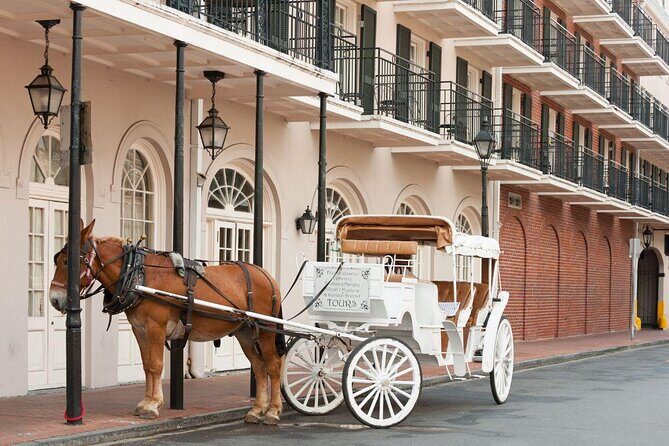
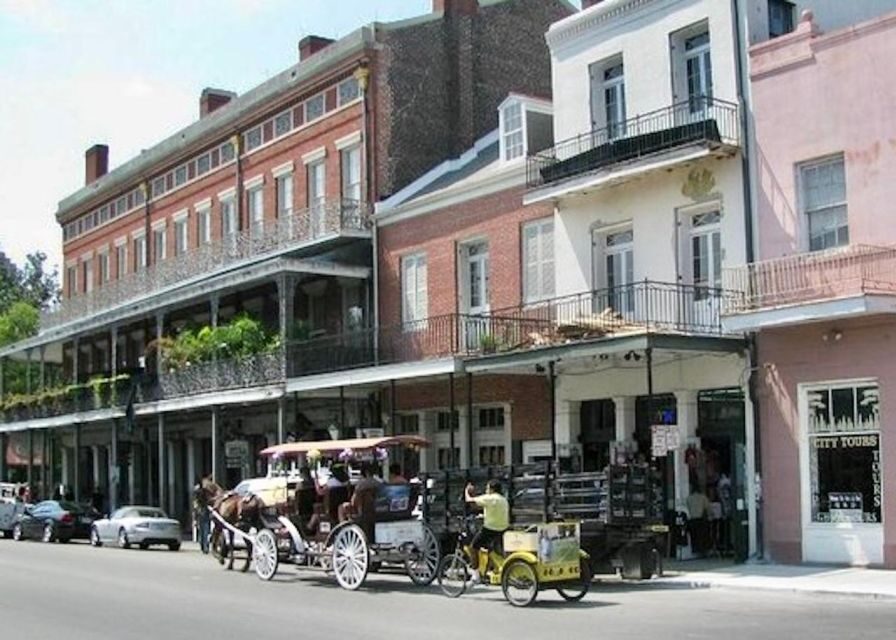
The tour starts by threading through the French Quarter. That matters because it’s the baseline for a lot of what follows. Even if you’ve already walked Bourbon Street, this kind of guided pass can help you understand why the Quarter’s layout and early structures shaped how later neighborhoods developed.
You’ll also get the sense that the French Quarter isn’t one single vibe—it’s a starting point, a reference library, and a magnet. The guide’s commentary keeps you from treating it like a theme park. Instead, you’re learning what to notice: street patterns, building scale, and the way major landmarks shape movement through the area.
A clever part of the route is that you don’t just hear about the famous places. You’re guided toward a bigger understanding of how the city’s identity is layered. That sets you up for the next segments, where the architecture changes and the stories shift from early settlement to later cultural chapters.
Esplanade and the Garden District vibe: architecture you can read on the street
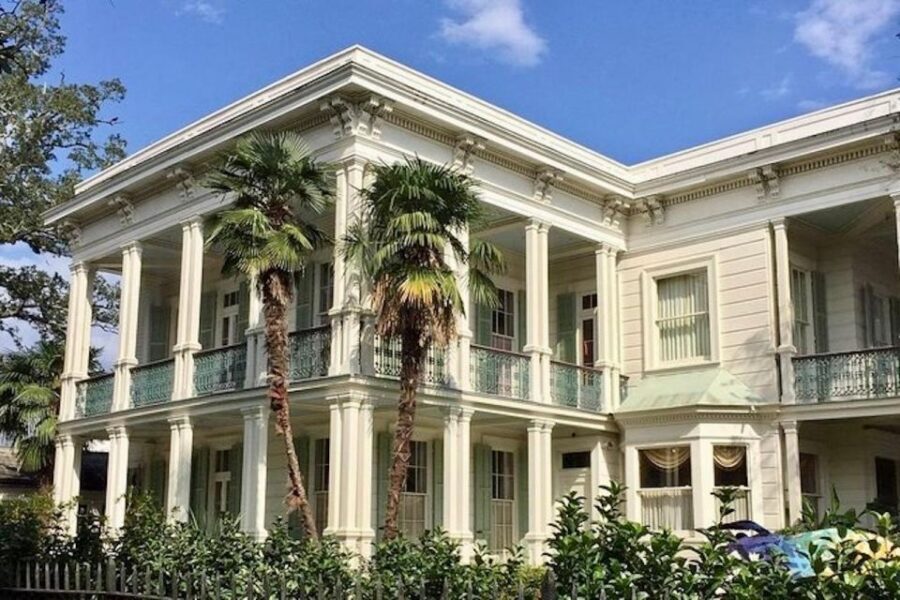
From the French Quarter, the tour moves along the Esplanade, where you’ll see oak-lined streets and stately mansions. This is where the tour shifts from “look at the landmark” to “read the neighborhood.” The guide shares tales of opulence and points out architectural gems, so you understand why these streets feel formal and dramatic compared with the Quarter.
As the route continues toward the feel of the Garden District, you’ll catch the Victorian mood in the way the area is laid out and how buildings sit in relation to gardens and tree-lined avenues. Even if you’re not an architecture nerd, this part helps you understand the city’s visual language: symmetry, façade details, and the relationship between greenery and grand housing.
The best outcome here is mental. You start to see that New Orleans architecture isn’t random. It’s social history—who built what, why, and how the city’s wealth and identity changed over time.
One consideration: if you’re hoping for lots of inside visits, this segment is more about street-level observation and narration than stepping into private spaces.
City Park and the Besthoff Sculpture Garden: art in a New Orleans setting
Next comes City Park, and that’s a smart pivot. New Orleans has a reputation for being loud and crowded, but City Park gives you a breather while keeping the tour moving toward its cultural highlights.
At City Park you can visit the Besthoff Sculpture Garden. This is where you’ll see how art and landscape work together in this city’s outdoors spaces. Even if sculpture gardens aren’t your thing, the garden setting helps you slow down and look at details in a calmer environment than the Quarter’s streets.
You also have an option to grab a coffee and beignets at Morning Call Cafe if you want a more food-focused break. Since food and drinks aren’t included in the tour price, this stop can be a great chance to eat, but it’s also where you’ll want to budget a little extra.
Practical tip: bring sunglasses and water. The park is pleasant, but you’re still outside in Louisiana conditions. If you’re someone who likes a photo break, this is a good place to pause without feeling like you’re falling behind.
You can also read our reviews of more historical tours in New Orleans





Warehouse District and the shift toward Faubourg Treme
After City Park, the route moves through the Warehouse District, a section where art, culture, and history mix in a way that’s obvious once the guide frames it. You’ll pass areas tied to creative life and post-industrial change, and the narration helps connect buildings you’re seeing with the stories that shaped this neighborhood.
Then comes Faubourg Treme, one of the oldest African American neighborhoods in the United States, dating back to the 1700s. This is a major emotional and historical pivot on the tour, and it’s also one of the best reasons to book. Instead of treating the city’s culture as a set of performances, you’re given a neighborhood-based look at community history and continuity.
If you’re the type of traveler who wants more than jazz and architecture photos, this segment gives you a grounded sense of where the city’s culture comes from. It also helps you understand why the city’s identity isn’t confined to the most touristed streets.
One drawback to expect: you’ll be learning on the move. If you want to sit and read every sign, this is still a guided drive/walk style, not a long museum session.
The American Sector views: WWII Museum and Contemporary Arts Center from the street
The tour also shows you the area once known as the American Sector, where you’ll pass by two standout institutions: the World War II Museum and the Contemporary Arts Center. The arts stop matters because the Contemporary Arts Center is one of the nation’s first art institutions, which positions it as part of a longer story about how New Orleans values public culture.
You won’t get an extended inside visit described here, but you will get context from the guide while you’re nearby. That makes the area feel less intimidating and more purposeful. If you later decide to come back for a dedicated museum visit, you’ll understand what you’re looking at and why it’s there.
This portion is a reminder that the city’s history doesn’t end at early settlement or old churches. New Orleans keeps building its identity through culture, education, and public institutions.
Metairie Cemetery and Saint Louis Cathedral: two different kinds of history

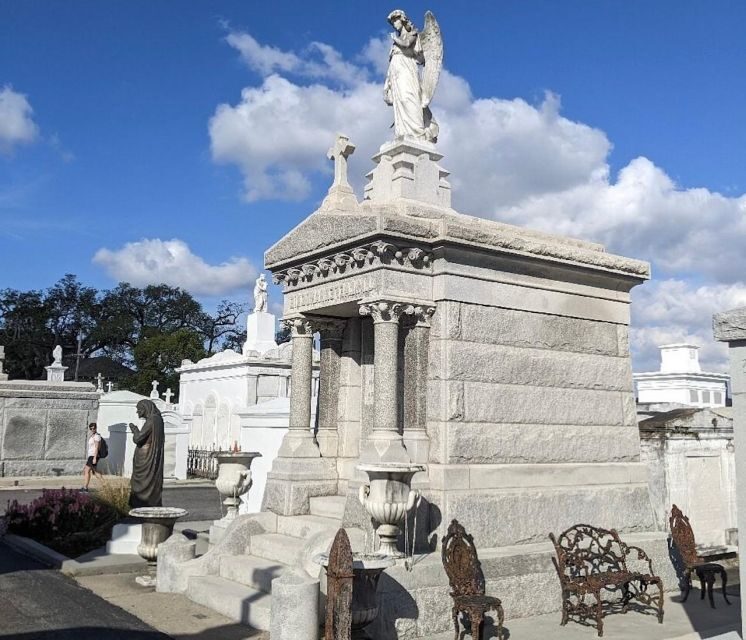
Toward the end, you get a brief stop at Metairie Cemetery, where you’ll see New Orleans’ distinctive above-ground tombs. This is one of those experiences that can feel odd at first—until the guide explains how burial practices work in a swampy, waterlogged environment.
That short explanation is valuable because it changes how you perceive the cemetery. Instead of treating it as just a photo stop, you understand the logic behind it. It’s history and design meeting real-world geography.
And later (as you continue), you’ll pass by Saint Louis Cathedral, which the tour describes as North America’s oldest cathedral, with roots dating back to 1720 along the Mississippi River. Even if you’ve seen cathedrals before, hearing that kind of time depth while you’re in the area adds weight to the skyline and street atmosphere.
This end section does two useful things for you: it grounds the trip in human life cycles, and it anchors the tour in a landmark that ties the city to the river and early era building.
The guide factor: live commentary that keeps the story straight
In a city where everything seems famous, the guide’s job is to connect dots without turning the walk into a lecture. This tour’s live commentary is the main reason people rate it highly, and it’s also why the pacing works. You’re not just collecting stops—you’re collecting meaning.
Guides like Joseph have been noted for covering New Orleans history, architecture, and culture in a way that keeps it practical and easy to follow. Bob has also been described as funny, with strong knowledge that makes facts land. The most helpful guides don’t just list facts. They give you a framework for what you’re seeing next.
For you, that means you’ll leave with clearer mental categories:
- architectural styles and what they suggest
- neighborhood identities and how they formed
- how major sites connect to larger national stories
- how New Orleans handles real-world geography in its traditions
If you like a tour that helps you make sense of a place quickly, this format is a strong fit.
Value check: is $55 worth it for a 3-hour architecture-and-culture loop?
At $55 per person for a 3-hour tour, you’re paying for more than sightseeing. You’re paying for three things that add real value in New Orleans: hotel pickup/drop-off, transportation in an air-conditioned mini-coach, and a live guide who handles the context while you move between neighborhoods.
Food and drinks aren’t included, which is normal for this type of city tour. But the option to stop for coffee and beignets at Morning Call Cafe gives you a reasonable way to add a personal break without the tour needing to build in a full meal.
Is it a bargain? It can be, depending on your comfort level with independent exploring. If you’d otherwise spend time figuring out routes between neighborhoods, parking, and what to prioritize, this tour compresses the planning. If you already know the city well and you prefer long, self-directed stops, the price might feel like you’re buying narration for a route you could walk in parts.
For most first-timers and many repeat visitors who want a structured refresh, the cost lines up with what you get: major areas in a short time, plus context you can’t always piece together alone.
Who should book (and who might skip)
This tour is a great match if you want:
- a guided route that connects French Quarter → Treme → City Park → cemetery and cathedral context
- architecture and neighborhood storytelling, not just surface-level photos
- an easy plan with hotel pickup and an A/C vehicle
- live commentary that keeps you from missing what matters
You might skip it if:
- you want long museum-style time inside buildings
- you prefer fully independent walking with no set stops
- you’re traveling during a period where weather is unstable and you hate plan changes
Also, bring a small note-to-self mindset. The tour is designed to teach you patterns quickly. You’ll get more from it if you pay attention to what the guide points out and then keep noticing it when you’re back out on your own.
FAQ
How long is the New Orleans History, Culture & Architecture Guided Tour?
The tour lasts 3 hours.
What does the tour cost?
The price is $55 per person.
Is hotel pickup and drop-off included?
Yes. Hotel pickup and drop-off are included, but pickup is available only from selected hotels in downtown New Orleans and the French Quarter.
Does the tour include food or drinks?
No. Food and drinks are not included.
What language is the live guide commentary in?
The live guide provides commentary in English.
What happens if the weather is bad?
Good weather is necessary. If conditions are adverse, you’ll have the option to reschedule for another date or receive a full refund.
Can I cancel and get a full refund?
Yes. You can cancel up to 24 hours in advance for a full refund.
Should you book this tour?
If you want a clear, efficient way to connect neighborhoods and architectural clues in a short window, I’d book it. You’ll spend three hours in a structured route with hotel pickup, A/C comfort, and live commentary that helps you see more than the obvious sights. If you’re the type who likes to understand a place’s background while you’re still there, this is a smart use of time in New Orleans.