REVIEW · NEW ORLEANS
The French Quarter History Tour
Book on Viator →Operated by Spectral City Tours · Bookable on Viator
Story time begins on Toulouse Street. This French Quarter history tour turns landmark-hopping into character-driven storytelling, with a local angle on how New Orleans became New Orleans.
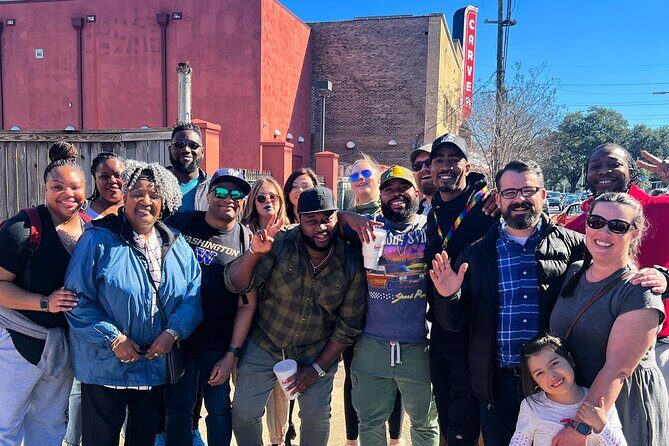
I love the fact that it’s a small group (up to 16), so the guide can actually shape the pace around what your group wants to hear. I also love the mix of stops, where you’re not only at the big-name sights, but also at places with surprising pasts—like a smoking bar and a back-alley legend spot.
One consideration: it runs on foot, and the experience requires good weather, so plan to dress for being outside for stretches of the morning.
In This Review
- Quick hits before you go
- A small-group morning in New Orleans, starting at Cuban Creations
- Cuban Creations cigar bar: cocktails and the only-smoking-bar vibe
- Washington Artillery Park: where the mud, river, and first settlers matter
- Cafe Du Monde and beignets: a quick hit of old-school sweetness
- St. Louis Cathedral: pirate prisons, dueling grounds, and an optional inside peek
- Pontalba Buildings and Jackson Square: Spanish nobles, a baroness, and Andrew Jackson’s spite
- Wandering the French Quarter with mini-stops that tie it together
- Lafitte’s Blacksmith Shop Bar: smugglers, the war of 1812, and Tennessee Williams
- Louis Armstrong Park finish: jazz roots and where to go after
- Price and pacing: what $35 gets you in two hours
- Should you book the French Quarter History Tour?
- FAQ
- How long is the French Quarter History Tour?
- What does the tour cost?
- Where do I meet, and where does the tour end?
- Is this tour offered in English?
- What’s the group size limit?
- Is admission to St. Louis Cathedral included?
- Does the tour depend on weather?
- Are service animals allowed?
Quick hits before you go
- Max 16 people: enough space to ask questions, not a crowded school bus.
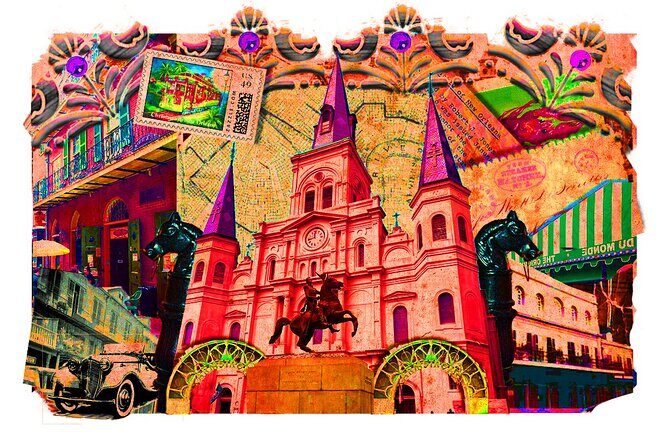
- Icon stops plus plot twists: St. Louis Cathedral, Jackson Square, and Lafitte’s Blacksmith Shop are all on the route.
- Guide-led characters: you’ll hear stories tied to founders, smugglers, and local figures—not just dates.
- St. Louis Cathedral admission included: you get access value built into the ticket.
- Mobile ticket, English only: simple to use, easy for most visitors.
A small-group morning in New Orleans, starting at Cuban Creations
The tour clocks in at about 2 hours, starting at 10:30am from Cuban Creations Cigar Bar at 533 Toulouse St. Ending near the Jazz Statue by Louis Armstrong Park keeps it moving forward instead of sending you back the way you came.
I like this start point because it puts you right in the action fast. You’re in the French Quarter from minute one, and you’re not waiting around for an intro in a classroom setting. Also, you’re not stuck in a huge group. With a maximum of 16 travelers, the guide can pause and answer questions when something hits.
If you’re planning ahead, note that the tour is often booked about 35 days in advance on average. If your dates are firm, it’s smart to lock in early—especially for the morning slots.
You can also read our reviews of more historical tours in New Orleans

Cuban Creations cigar bar: cocktails and the only-smoking-bar vibe
The first stop is Cuban Creations Cigar Bar, and it’s an easy place to like even if you don’t smoke. The setting is described as both inviting and classy, with comfortable indoor and outdoor seating.
This is also where the tour shows its style: mixing atmosphere with history. You’ll learn why this is the only smoking bar in the French Quarter, then settle in for a short visit (about 20 minutes) before you move on.
If you’re hoping for a coffee-and-cookie kind of tour, this is different—in a good way. Expect excellent cocktails to be part of the experience, and expect your guide to use the setting to launch into stories about the people who used to gather in places like this.
Washington Artillery Park: where the mud, river, and first settlers matter
From Cuban Creations you head toward Washington Artillery Park, and the vibe changes quickly—more open, more scenic, and better for framing the big story of how the city formed.
Here you’ll hear about the river and the bed of mud the city rests on. That physical reality matters, because New Orleans wasn’t built on convenience—it was built where water and land constantly negotiate.
Then the tour moves into the human layer: the early Chitimacha tribe who settled the area, followed by the “odd French colonists” who founded New Orleans in 1718. The guide uses those contrasts to help you understand the city as a coming-together of different peoples and power systems, not just a straight line of European settlement.
This stop is brief (about 15 minutes), so I’d treat it as your orientation checkpoint. You get context first, and then the tour gets more story-heavy as you walk back into denser history.
Cafe Du Monde and beignets: a quick hit of old-school sweetness
You’ll pass Cafe Du Monde, described as the oldest coffee house in the city, and you’ll get a short look at the sweet history of beignets.
This is only about 5 minutes, so don’t expect a full food break. Instead, think of it like a pop quiz your guide answers on your behalf: why this place became a symbol, and why the pastries stuck around as more than just a snack.
If you want to do a full beignet stop later, this tour won’t get in your way. It’s just enough to get you curious—and to connect the food to the place without derailing the walk.
St. Louis Cathedral: pirate prisons, dueling grounds, and an optional inside peek
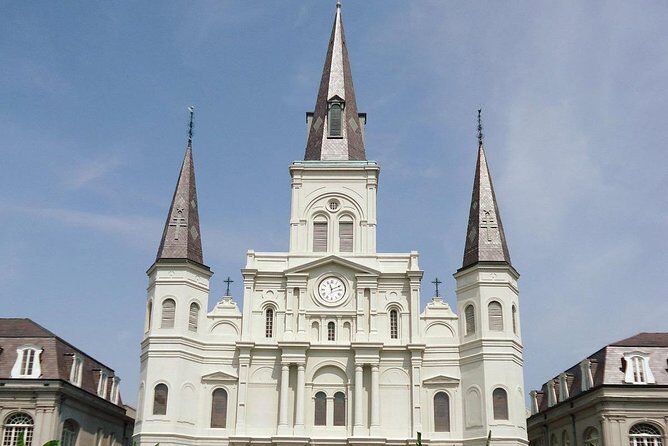
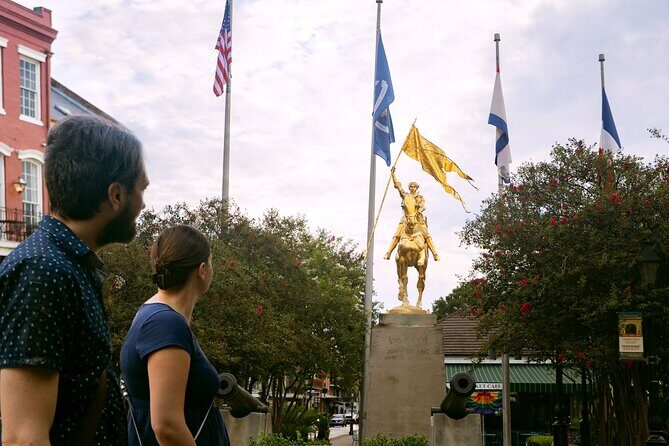
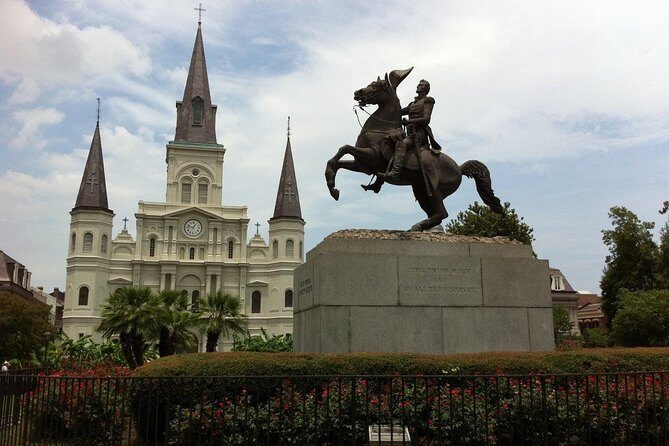
Next up is the St. Louis Cathedral, the iconic anchor of the area. Expect a major photo moment here. It’s also where the tour leans into the dramatic side of the city’s past.
Your guide connects the cathedral’s story to places and legends nearby, including Pirate’s Alley. You’ll also hear about history like pirate prisons and dueling grounds, which makes the building feel less like a postcard and more like a real stage where people lived, fought, and were punished.
Time here is about 10 minutes, and importantly, admission is included. If the cathedral is open at the time of your visit, the group gets a quick peek inside. That optional interior look is a good payoff for anyone who cares about architecture but still wants character-driven storytelling.
One practical note: if you’re the type who loves slow museum-style time, you may find the stop brief. But if you want the bigger storyline across the whole French Quarter, this length works.




Pontalba Buildings and Jackson Square: Spanish nobles, a baroness, and Andrew Jackson’s spite
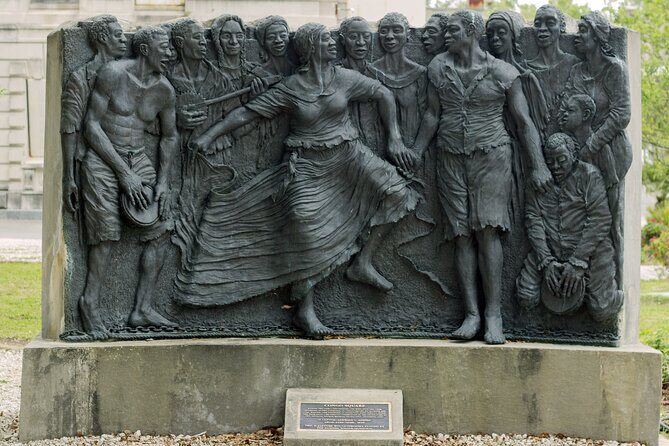
The tour next focuses on the buildings around Jackson Square in a way that makes the area feel like more than just a scenic hangout.
First, you’ll see the Pontalba Buildings and hear the story of the Baroness Pontalba. The guide shares how this family was the wealthiest New Orleans has ever seen, and you’ll also hear a surprising angle: Spanish nobles who paid for the construction of the buildings in Jackson Square.
The story is described as bizarre, almost like a psychological thriller. Even if you don’t latch onto every dramatic detail, you’ll probably remember the cause-and-effect lesson: the Quarter’s beauty is tied to money, ambition, and human decisions—often messy ones.
Then you’ll step into Jackson Square itself. Your guide points out the statue of Andrew Jackson and shares the idea that it’s the only statue in the city erected out of spite. During the French colonial period, it was also tied to bizarre punishments, which adds a darker edge to a space that looks peaceful from a distance.
This pair of stops (Pontalba Buildings, then Jackson Square) is about 25 minutes total, with Jackson Square around 10 minutes. I like that the tour gives you a quick way to understand the area’s meaning, without expecting you to already know all the names.
Wandering the French Quarter with mini-stops that tie it together
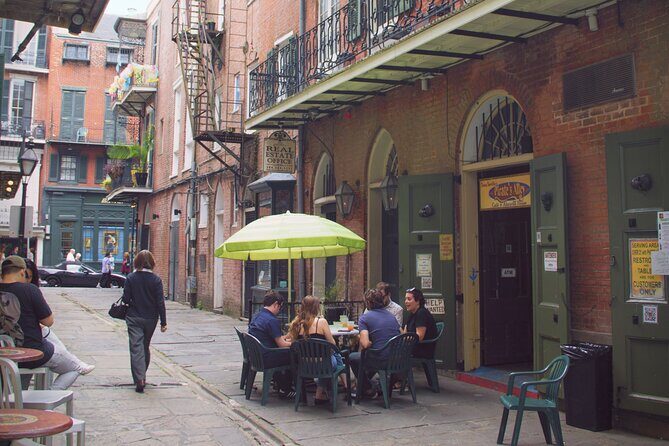
After the square, the tour continues through the French Quarter with mini-stops. This is the part where the guide stitches the morning into a single picture, using what you’ve already heard and what you’re seeing in front of you.
You’ll get about 20 minutes here, split among short pauses. That matters because the French Quarter is full of small details: street angles, building fronts, and alley-like connections that can feel random if you’re walking alone.
Instead, the guide uses the “learned” knowledge to help you connect the dots. I think this is where a local perspective does the most work. You start to notice patterns—what gets repeated, what gets hidden, and why certain stories survive.
If you’re someone who likes photos, this is your time to grab them. Just don’t get so stuck on a single shot that you miss the small explanation a guide offers at each pause.
Lafitte’s Blacksmith Shop Bar: smugglers, the war of 1812, and Tennessee Williams
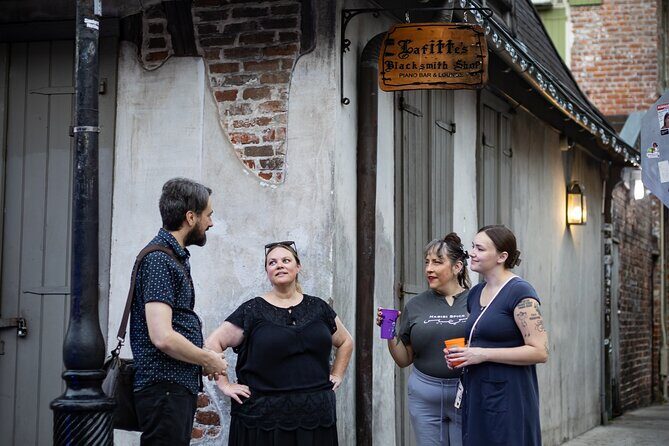
One of the most memorable stops is Lafitte’s Blacksmith Shop Bar, between the historic bar and a nearby coffee shop. The building is said to date to the 1780s, and the location is described as a dead-end of Bourbon Street—exactly the kind of spot where secrets feel plausible.
You’ll hear how it once worked as a business front for smugglers and pirates. The stories don’t stop at piracy either: the pirates are also tied to the war of 1812, and the tour shares that men who re-enact that battle come to drink afterward.
Then the history gets a later-life surprise. In the 1960s, the spot was popular as Cafe Lafitte, a gay bar frequented by Tennessee Williams. It’s a reminder that the Quarter is layered, not locked into one era.
This is a 10-minute stop, so again, it’s not a long sit-down. But it leaves you with a strong sense of how one location can hold different identities over time—pirate legend, then cultural magnet.
If you care about the stories behind the walls, this stop is the payoff for much of the earlier context.
Louis Armstrong Park finish: jazz roots and where to go after
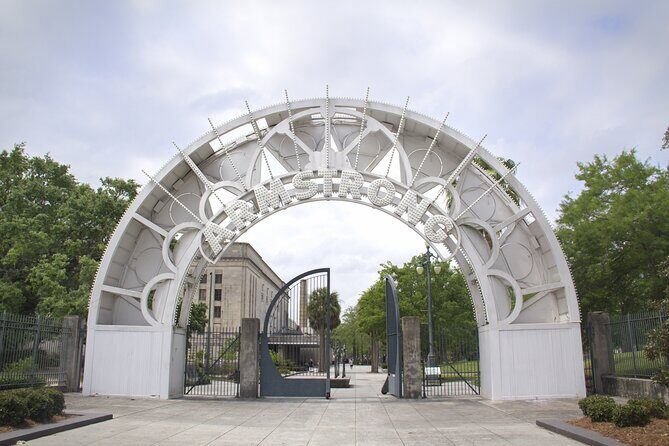
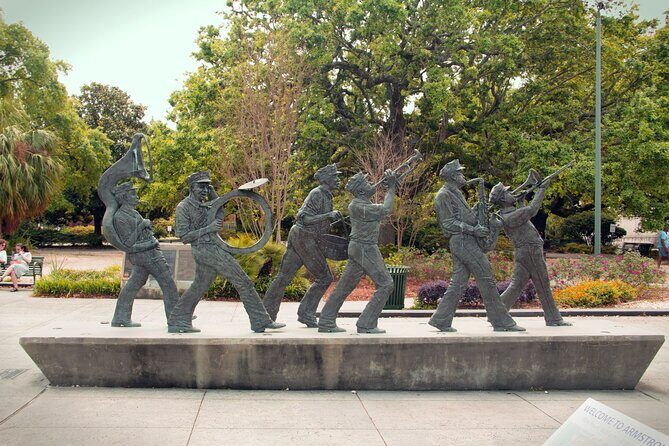
The tour ends with a stroll through Louis Armstrong Park, described as the birthplace of Jazz music. Here you get about 14 minutes, and the guide uses this moment to connect NOLA history back to where you are in the Quarter.
It’s a smart closing choice because it shifts from the older colonial and criminal-era stories into something the city is known for in the most recognizable way: music. You’ll also get “juicy stories” shared before heading into the heart of the French Quarter—so it doesn’t feel like an abrupt stop when the tour wraps.
The meeting setup reflects this finish: you start at Cuban Creations and end at the Jazz Statue by St Ann Street, near the park. It’s a great spot to re-enter the neighborhood with a better sense of what to look for as you keep exploring.
Price and pacing: what $35 gets you in two hours
At $35.00 per person for about 2 hours, this tour feels like good value because you’re paying for more than just walking between landmarks. You’re paying for interpretation: the guide turns architecture and locations into stories with people, motives, and conflicts.
You also get St. Louis Cathedral admission included, which helps make the price feel less abstract. Everything else you visit is listed as free admission at the stops where it matters, so your ticket is mostly about the guide’s time and the tour’s storytelling structure.
The pacing is also designed for motion. Stop durations range from quick passes (like Cafe Du Monde) to longer context bursts (like cigar bar and the Pontalba/Jackson Square segment). That works best if you want a guided “first read” of the Quarter rather than a slow, choose-your-own-adventure day.
If you hate walking or need long rests, this might feel tight. But if you like a structured route with enough flexibility to hear what matters, the timing fits.
English is the offered language, and since it’s near public transportation, it’s easy to build into a day of sightseeing. The mobile ticket also keeps things simple: you’re not stuck hunting for paper confirmations.
Should you book the French Quarter History Tour?
Book it if you want a story-first way to see the French Quarter—especially if you’re drawn to St. Louis Cathedral, Jackson Square, and darker legends like smuggling, piracy, and dueling. I’d also pick this tour if you like when history includes personality, not just dates.
Skip it (or adjust expectations) if you want a long, slow look inside buildings and you need lots of extra time at each stop. This tour is designed to move, and the stops are short by choice.
One more smart angle: because it requires good weather, check conditions before you head out. If the day looks shaky, the tour’s weather dependence is a key factor in how smooth the morning will feel.
FAQ
How long is the French Quarter History Tour?
It’s about 2 hours (approx.).
What does the tour cost?
The price is $35.00 per person.
Where do I meet, and where does the tour end?
You meet at Cuban Creations Cigar Bar, 533 Toulouse St. The tour ends near the Jazz Statue at 1298-1100 St Ann St by Louis Armstrong Park.
Is this tour offered in English?
Yes, it’s offered in English.
What’s the group size limit?
This experience has a maximum of 16 travelers.
Is admission to St. Louis Cathedral included?
Yes. Admission is included for the St. Louis Cathedral stop.
Does the tour depend on weather?
Yes. The experience requires good weather. If it’s canceled due to poor weather, you’ll be offered a different date or a full refund.
Are service animals allowed?
Yes. Service animals are allowed.